Skip to content
 cust@legendarchery.com
 302 503 5767
 Westfield IN 46074


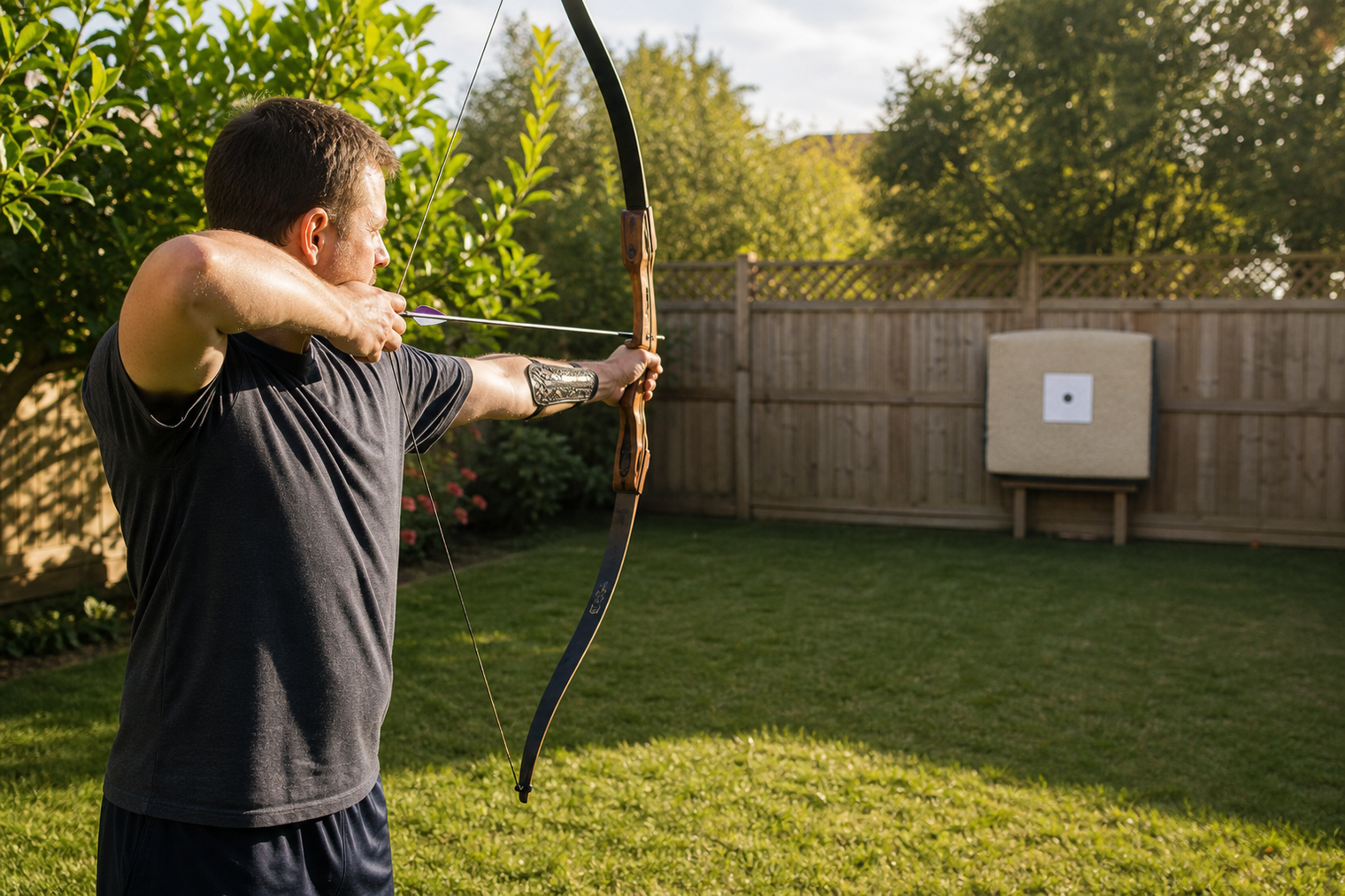
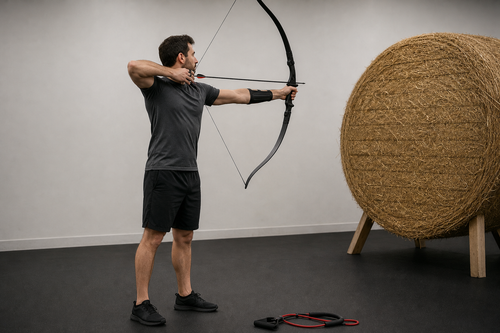
If you have a backyard, a safe backstop, and a bow you're comfortable shooting, you already have what you need to start experimenting with creative archery challenges. Trick shots aren't just for highlight reels — when practiced with discipline, they sharpen the fundamentals you rely on in every serious session. This guide breaks down which challenges are actually worth your time at home, how to structure your practice safely, and what holds most archers back from progressing.
Why Backyard Trick Shots Are Actually Good Practice
There's a reason experienced archers use unconventional drills to stay sharp. Routine target practice can become mechanical over time. When you introduce a new challenge — a tighter window, an unusual angle, or a moving target — your brain re-engages. You start paying attention to your anchor point, your grip pressure, and your release in ways that rote repetition doesn't demand.
That said, the goal isn't to replicate what you've seen on social media without context. Viral archery moments are the result of hundreds or thousands of repetitions under controlled conditions. The value for a home archer lies in the process — the deliberate problem-solving and the micro-corrections that happen shot by shot.
If you're curious what elite-level execution looks like, check out this look at Dude Perfect's insane archery trick shots — just treat it as inspiration, not a starting point.
Setting Up a Safe Home Practice Space
Before you shoot anything creative, your safety setup needs to be solid. No trick shot is worth a risky environment.
- Backstop is non-negotiable: A foam block target, a layered hay bale, or a commercial bag target rated for your draw weight should sit directly behind your target. Know what's beyond it.
- Clear your lanes: Trick shot practice sometimes involves off-angle shots. Walk the full path of any arrow's potential trajectory before you set up.
- Check your equipment first: Frayed strings, cracked arrows, or a bow with loose components are more dangerous during unconventional shots. Inspect everything.
- Shoot alone or keep bystanders well behind you: Creative setups can distract people nearby. Keep range discipline even in a casual backyard setting.
Trick Shots to Try at Home: A Progressive List
These challenges are organized from foundational to more demanding. Work through them in order rather than jumping ahead — each one builds a skill that the next requires.
1. The Small Face Drill
Replace your standard 40cm or 60cm face with a 10cm or 15cm dot at your normal distance. This isn't a flashy shot, but it forces a level of focus that translates directly to every other challenge on this list. Shoot groups of three and track your dispersion over sessions. When you can consistently cluster all three arrows inside the dot, move to the next challenge.
2. Shoot From a Chair
Sitting changes your anchor position, your draw shoulder mechanics, and your line of sight. It's a genuine test of whether your form is body-position-dependent. Set up at close range (five to seven meters) and work on replicating your normal shot sequence from a seated position. This also has practical value for hunters who may need to shoot from a ground blind.
3. The Balloon Pop
Hang a balloon at your standard shooting distance and aim at it rather than through it — balloons are smaller and less forgiving than a typical target face. The real trick here is managing the visual difference: a bright, round object against a plain backstop messes with your focal point. Practicing this teaches you to stay locked on the spot rather than the shape.
4. Instinctive Shooting at Unmarked Distances
Set up three or four targets at different distances without measuring them. Walk to a shooting line and shoot each one without consciously calculating yardage. This develops spatial awareness and arrow trajectory intuition that aiming systems can sometimes suppress. Start close (under 15 meters) and work outward as your confidence builds.
5. Shoot Around a Corner (Offset Angle)
Position yourself so that a barrier — a post, a tree trunk, a panel of foam — sits between you and the target, requiring you to shift your body angle significantly. This is a real-world skill for hunters navigating terrain, and it exposes how much your form depends on a square stance. Work this from both dominant and non-dominant sides.
6. Timed Shot Sequences
Use a stopwatch or a simple timer app. Give yourself a fixed window — start with eight seconds — to draw, aim, and release. Reduce the window by one second each week as your shot process becomes more automatic. This is one of the most underused home drills for archers who want to improve under any kind of pressure.
Common Mistakes When Practicing at Home
Most archers who plateau with creative practice are making one or more of these errors:
- Skipping the basics to get to the fun stuff: If your groups are inconsistent at 15 meters on a standard target, offset drills and balloon shots will only engrain bad habits faster.
- No structured feedback loop: Shooting creatively without tracking results is entertainment, not practice. Keep a simple log: date, drill, distance, notes on what went wrong.
- Using equipment that doesn't match the drill: Heavy hunting arrows are not ideal for small-face accuracy drills at close range. Match your setup to your goal.
- Ignoring mental reset between shots: Trick-shot practice can become rushed because it's enjoyable. Take the same pre-shot routine pause you would in a competition or a hunting scenario.
- Treating misses as failures rather than data: A miss that you can explain — a punched trigger, a dropped bow arm — is more valuable than a hit you don't understand.
Gear That Makes Home Practice More Effective
You don't need a purpose-built range to practice well. A few smart additions to your backyard setup make a real difference:
- A quality foam block or layered bag target that handles repeated close-range shots without blowing through
- A variety of small target faces — dots, animal silhouettes, and geometric shapes — to rotate between sessions
- A simple arrow puller to protect your hands and your shafts during high-volume sessions
- A rangefinder if you want accurate data for your instinctive shooting drills
If you're looking to expand your setup, browsing outdoor archery supplies can give you a sense of what's available without overcomplicating your home range.
Frequently Asked Questions
Are trick shots just for entertainment, or do they actually help your shooting?
They genuinely help when approached with structure. The drills that look impressive on video — tight groups at distance, unusual angles, rapid sequences — are all built on core skills: consistent anchor, clean release, and spatial awareness. The difference between a gimmick and a useful drill is whether you're practicing with feedback and intent.
What's stopping most beginners from progressing with home archery drills?
Usually it's skipping the progression. Beginners see a difficult shot, attempt it without the prerequisite accuracy, and get frustrated. The small-face drill and seated shooting challenges listed above aren't exciting, but they build the foundation that makes the harder challenges achievable.
How do I know when I'm ready to move to harder challenges?
Use consistency as your benchmark, not individual great shots. When you can complete a drill with a success rate of roughly 80 percent or better across multiple separate sessions, you're ready to add difficulty. One good day doesn't mean you've mastered something.
Can I practice these with a recurve, or are they compound-specific?
Every drill on this list works with any bow style. Recurve archers may find the instinctive distance drill especially valuable, since gap shooting and instinctive aiming rely heavily on spatial repetition. Compound archers benefit most from the timed sequences and the small-face drill for peep-and-sight refinement.
Building a Consistent Home Practice Habit
The archers who improve fastest at home are not the ones who shoot the most arrows — they're the ones who shoot with a clear purpose each session. Pick one drill from this list per session, set a measurable goal, and log your result. Rotate through the challenges every two to three weeks so no single skill stagnates.
If you want to explore additional equipment options to support your practice progression, new archery products at Legend Archery covers a broad range of gear worth reviewing as your setup evolves.
Creative home practice, done right, doesn't replace serious range time — it sharpens the edges of your game in ways that standard repetition rarely does. Start simple, stay safe, and let the progress guide what you try next.