Skip to content
 cust@legendarchery.com
 302 503 5767
 Westfield IN 46074


Point an arrow straight at a target, release the string, and the shaft bends around the riser before it even leaves the bow. By all logic, it should veer off course. Yet it hits where you aimed. That apparent contradiction is what physicists and archers call the archer paradox, and understanding the mechanics behind it will change how you think about tuning, spine selection, and release technique.
Why the Archer Paradox Actually Matters
Most beginners treat arrow flight as a straight-line problem. Nock goes on the string, point aims at the target, release happens. Done. But that model ignores the violent, dynamic process that occurs in the first few milliseconds after the string leaves your fingers.
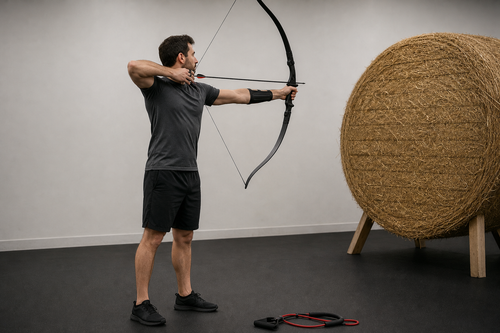
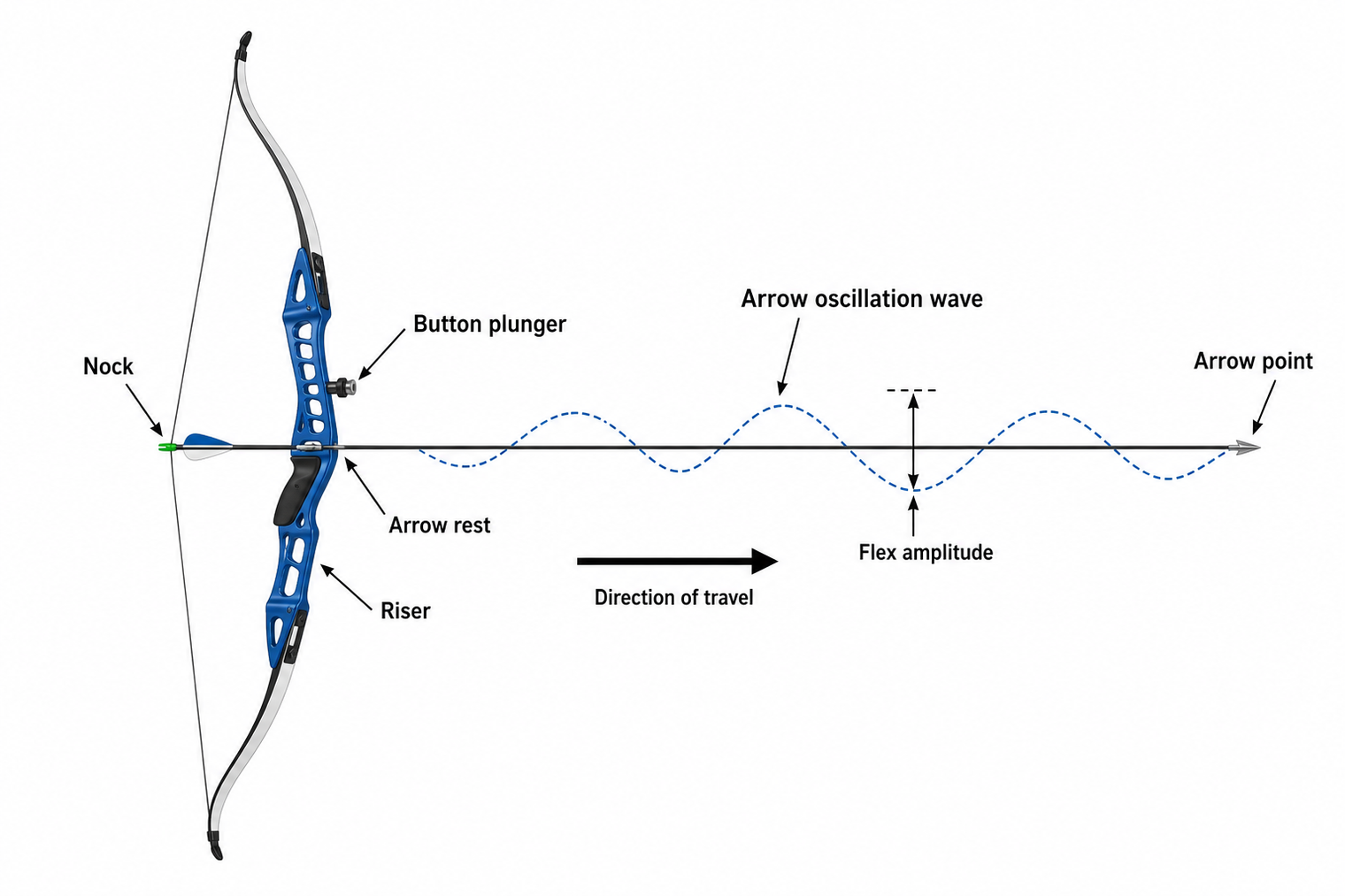
When a recurve or longbow archer releases, the arrow cannot travel in a perfectly straight line because the shaft is positioned against the side of the riser. The force from the string pushes the nock forward while the tip is still resting against the shelf or hand. This creates a bending, or oscillating, wave that travels through the shaft. The arrow wraps itself around the bow and then, as the oscillation dampens, straightens out and flies toward the target.
This is not a flaw. It is a physical process that bow designers, arrow manufacturers, and experienced archers all account for deliberately. If you ignore it, you will struggle to diagnose erratic arrow flight, choose the wrong spine, or set up your rest incorrectly. If you understand it, every tuning decision becomes clearer.
You can read a detailed breakdown of the physics on the Legend Archery archer's paradox glossary page as a companion reference.
Core Principles Behind Arrow Flex and Flight
How the Oscillation Works
The bending wave in the shaft is not random. It follows a predictable pattern governed by the stiffness of the arrow, the weight of the point, the draw weight of the bow, and the speed of the release. A stiffer shaft oscillates with a shorter, tighter wave. A more flexible shaft produces a wider, slower wave. The goal of tuning is to match the arrow's flex characteristics to your bow so that the shaft clears the riser cleanly at the exact moment in its oscillation cycle when it is straightening out rather than bending into the bow.
This is why spine charts exist. Arrow spine ratings are an attempt to match shaft stiffness to a given draw weight and arrow length so that the paradox works in your favour rather than against you.
Dynamic Spine vs. Static Spine
Arrow manufacturers measure and label spine as a static value, meaning how much the shaft deflects under a fixed load in a controlled test. But what actually matters during a shot is dynamic spine, which is the effective stiffness of the arrow under the real forces of release.
Dynamic spine is affected by several variables:
- Point weight — a heavier point makes the arrow behave as if it has a weaker spine
- Arrow length — a longer shaft behaves weaker than a shorter one at the same static spine rating
- Draw weight — more bow weight requires a stiffer shaft to control the oscillation
- Release style — a cleaner, crisper release produces less lateral impulse, effectively stiffening the arrow's behaviour
- Brace height — a lower brace height gives the string more time to push the arrow, which can increase the oscillation amplitude
Understanding that dynamic spine is a combination of all these factors is what separates archers who can tune a bow from those who simply buy arrows off a chart and hope for the best.
The Role of the Plunger and Arrow Rest
On modern recurve setups, a button plunger is one of the most important tools for managing the archer paradox. The plunger sits in the riser and makes contact with the shaft at the moment of release. By adjusting its spring tension, you fine-tune how much resistance the shaft meets as it flexes outward, effectively influencing the arrow's dynamic spine without changing the shaft itself.
Bare shaft tuning and paper tuning are two common methods archers use to see how well their arrow's oscillation is managed. Both techniques reveal whether the arrow is leaving the bow in a controlled manner or whether the paradox is creating inconsistent nock-left or nock-right tears in flight.
Practical Guidance for Working With the Paradox
Start With a Spine Chart, Then Refine
Use the manufacturer's spine chart as your starting point, not your final answer. Enter your draw weight and intended arrow length, find the recommended spine range, and buy a small test batch before committing to a full dozen. Then shoot bare shafts alongside fletched arrows at close range. If the bare shaft hits consistently to one side, your dynamic spine needs adjustment.
Stabilise Your Release
One of the most overlooked contributors to erratic arrow flight is an inconsistent release. If your fingers grip the string differently from shot to shot, the lateral force at the nock changes, which alters the opening phase of the oscillation. A smooth, relaxed finger release reduces unwanted lateral movement and gives the shaft a cleaner start to its oscillation cycle.
This is also why archers who are dealing with archer freeze often see their groups open up unpredictably. A hesitant or forced release introduces erratic string hand movement that amplifies the paradox in unintended ways.
Consider Your Setup as a System
Bow weight, arrow length, point weight, plunger tension, brace height, and release style all interact. Changing one variable changes how the others perform. When you adjust point weight, re-check your bare shaft alignment. When you change brace height, monitor whether your groups shift. Think of tuning as an iterative process, not a one-time calibration.
Common Mistakes Archers Make Regarding the Paradox
- Ignoring spine entirely — choosing arrows based only on length or price without considering draw weight compatibility leads to arrows that never stabilise properly in flight.
- Over-stiffening the plunger — a plunger set too stiff does not allow enough flex at release, pushing the arrow away from the riser at the wrong point in its oscillation cycle.
- Assuming the problem is form when it is tuning — wide, inconsistent groups are not always a technique issue. Mismatched spine is a common culprit that gets blamed on the archer.
- Changing too many variables at once — adjusting arrow length, point weight, and plunger tension simultaneously makes it impossible to isolate which change produced an improvement.
- Skipping bare shaft testing — fletching masks a lot of spine mismatch at short distances. Bare shaft testing removes that masking and shows you exactly how the arrow is leaving the bow.
- Applying recurve tuning logic to a compound setup — compound bows use a centre-shot rest that largely eliminates the classic paradox. The principles of dynamic spine still apply, but the mechanism is different. Do not transfer recurve tuning methods to a compound without understanding the distinction.
Frequently Asked Questions
What exactly is the archer paradox?
It is the phenomenon where an arrow bends around the riser at release and still arrives accurately on target. The shaft oscillates in a wave pattern as it leaves the bow, and if the arrow's spine is correctly matched to the bow, it straightens out during flight and hits where the archer aimed.
Does the archer paradox affect compound bows?
Compound bows use a centre-shot rest that positions the arrow directly in line with the bowstring, which largely eliminates the side-clearance issue that creates the classic paradox. However, dynamic spine still matters for compound setups because arrow flex under load still influences flight consistency. The effect is less dramatic but not irrelevant.
What mistakes do beginners commonly make when dealing with this?
The most common errors are choosing arrows without checking spine against draw weight, skipping bare shaft testing, and assuming that inconsistent groups are always a form problem. Spine mismatch is frequently the actual cause, and no amount of technique improvement will fully compensate for an arrow that is oscillating incorrectly for your bow.
How do you improve your understanding of arrow flight and paradox mechanics?
Start by learning to read bare shaft tests and paper tuning results. Practice with a consistent, relaxed release so that variables in your technique do not confuse your tuning data. Study how changing individual variables, such as point weight or plunger tension, affects your groups. Over time, pattern recognition builds into genuine tuning instinct.
Putting It Together
The archer paradox is not an obstacle. It is the mechanism by which traditional archery works, and every well-tuned bow is a system designed to manage it precisely. Match your arrow's dynamic spine to your setup, develop a consistent release, and use bare shaft feedback to verify your tuning rather than guessing. That is how the paradox stops being a mystery and becomes a tool you control.