Skip to content
 cust@legendarchery.com
 302 503 5767
 Westfield IN 46074


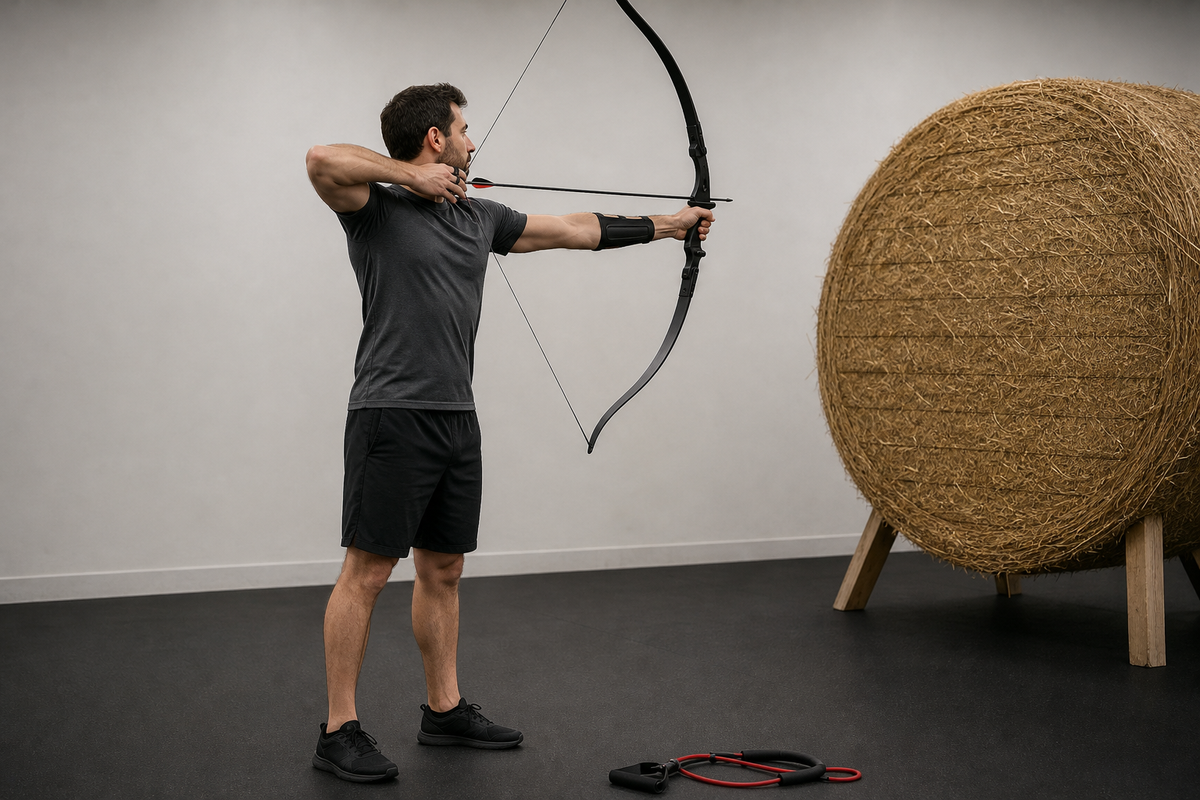
Archery drills and bow training exercises turn range time into measurable progress instead of just more arrows. This guide is for archers who already shoot regularly and want a structured way to fix specific weaknesses, from an inconsistent anchor to a flinch at release. It explains why structure matters, which drills and exercises are worth your time, and the mistakes that hold progress back.
Why Structured Training Separates Good Archers from Great Ones
Most archers improve fastest when they stop shooting randomly at targets and start training with intention. Consistent repetition of the right movement patterns is what builds lasting muscle memory. Without structure, bad habits quietly compound — and they become much harder to fix later. The drills and exercises covered here are used by coaches and experienced archers to address specific weaknesses, whether that's inconsistent anchor points, collapsing draw arms, or flinching at release.
Whether you shoot a compound or a recurve, the core physical and mental demands are similar. Strength, stability, timing, and focus all need deliberate practice — not just more arrows downrange.
Core Principles Behind Effective Bow Training
Before jumping into specific exercises, it helps to understand what good training is actually trying to achieve.
- Isolate before integrating. Break the shot cycle into segments — stance, draw, anchor, aim, release, follow-through — and practice each one separately before combining them.
- Slow down to speed up. Rushing through repetitions builds sloppy habits. Controlled, deliberate movement builds clean ones.
- Train the weak link. Identify the part of your shot that fails under pressure and target that specifically, not just your strongest elements.
- Volume has limits. Shooting fatigued reinforces poor form. Shorter, focused sessions outperform long, tired ones.
- Feedback matters. Filming your own shots, using a mirror, or working with a coach accelerates learning dramatically.
Foundational Drills for Building Consistent Form
Blank Bale Shooting
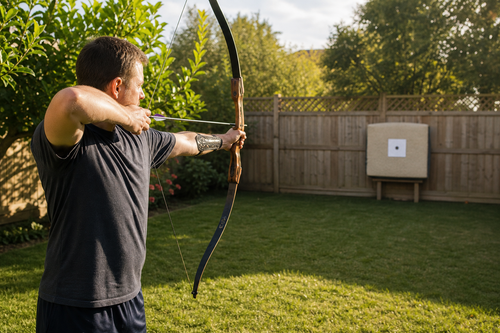
This is one of the most underused and most effective drills in archery. Stand very close to a bale — two to three meters — and shoot without any target face. The goal is to remove the psychological pressure of aiming and let you focus entirely on your shot process: stance, grip, draw, anchor, expansion, and release. Blank bale work is particularly valuable when you're ingraining a new technique or correcting a specific fault. It also highlights what your shot actually feels like versus what you think it feels like.
One-Arrow Drill
Shoot a single arrow, then stop. Walk to the target, retrieve it, and return to the line before shooting again. This forces full mental reset between each shot and prevents the common habit of shooting in autopilot. It builds deliberate focus and teaches you to treat every arrow as its own event — which is exactly how competition archery works.
Eyes-Closed Release
Draw, anchor, and aim as normal. Just before releasing, close your eyes and complete the shot. When you open your eyes, check where your bow arm is pointing. This reveals your natural point of aim and exposes any flinching or anticipation at release. If your bow arm swings wildly off-target after a closed-eyes release, that tells you something important about your shot timing and back tension.
The Shot Routine Drill
Elite archers use a consistent pre-shot routine for a reason — it anchors mental focus and triggers the correct physical sequence automatically. Build your own routine: breathing pattern, stance check, grip check, draw, anchor, settle, release. Practice it identically every single time. When you can execute the routine without thinking, it will hold up under pressure.
Strength and Conditioning Exercises for Archers
Archery uses muscles that most people rarely train — particularly the rotator cuff, rhomboids, serratus anterior, and the muscles of the upper back responsible for scapular retraction. Targeted conditioning reduces fatigue, improves stability, and protects joints from overuse injury.
Band Pull-Aparts
Hold a resistance band at shoulder height with arms extended in front of you. Pull the band apart until your arms are fully spread, squeezing your shoulder blades together at full extension. This directly mimics the scapular engagement used during a proper archery draw. Three sets of 15 to 20 repetitions as part of a warm-up or off-bow training session is a practical starting point.
Doorway or Band Rows
Single-arm rows with a resistance band or cable machine strengthen the mid-back and help establish the pulling mechanics that compound and recurve archers both rely on. Keep the elbow tracking close to the body and focus on initiating the pull with the back, not the bicep.
External Rotation with Band
Fix a light resistance band at elbow height. With your elbow bent at 90 degrees and tucked against your side, rotate your forearm outward against the band's resistance. This targets the external rotators of the shoulder — critical for draw arm stability and preventing impingement over time.
Dead Hangs
Hanging from a pull-up bar for 20 to 30 seconds decompresses the shoulder joint, improves grip strength, and builds the passive stability of the shoulder girdle. This is a simple but underrated exercise for archers who shoot frequently.
Mental and Focus Drills
Physical form is only half the equation. Archery at any competitive level demands mental control — the ability to focus under pressure, manage errors, and execute a clean shot even when your score or nerves are working against you.
The Ten-Second Window Drill
Give yourself exactly ten seconds from anchor to release on every practice arrow. Use a stopwatch or a training partner. This creates gentle time pressure that reveals where focus breaks down and builds the discipline needed to stay present inside your shot window rather than rushing or holding too long.
Error Indifference Practice
After a bad shot, physically reset, breathe once, and move on without analysis. This is a deliberate practice skill. Many archers develop patterns of emotional reaction to errors that compound into worse shots. Training indifference to individual outcomes — especially in practice — makes for much cleaner mental performance in competition.
Common Mistakes to Avoid in Bow Training
- Training volume without purpose. Shooting 200 arrows without a specific focus tends to reinforce whatever habits already exist, good or bad.
- Skipping warm-up. Cold muscles produce inconsistent shots and increase injury risk. A brief band warm-up before picking up the bow makes a real difference.
- Increasing draw weight too quickly. Jumping to heavier draw weight before the stabilising muscles are ready causes form breakdown and can cause shoulder injuries. Progress gradually.
- Neglecting follow-through. Many archers drop their bow arm or peek at the target before the arrow has fully cleared the rest. Follow-through is a genuine technique element, not a formality.
- Only training what feels comfortable. Archers naturally gravitate toward their strengths in practice. Deliberate improvement requires targeting weaknesses consistently.
- Ignoring equipment maintenance. Poor equipment performance skews feedback from practice. A well-maintained bow gives honest information about your shots.
Speaking of equipment — if you travel to competitions or outdoor sessions, protecting your gear matters as much as maintaining it. A quality bow case keeps your setup safe and competition-ready.
Building a Weekly Training Structure
There is no universal template, but a structured week for an intermediate archer might look something like this:
- Two to three range sessions per week, each focused on a specific skill area rather than general shooting.
- One or two off-bow strength sessions targeting the shoulder girdle, back, and core.
- One mental skills session — visualisation, routine rehearsal, or pressure simulation.
- At least one full rest day, especially for archers shooting heavy draw weights.
Beginners should shoot fewer arrows per session and focus heavily on form before adding volume. Fatigue-driven bad form in early stages creates deeply ingrained habits that require significant effort to correct later.
For archers exploring outdoor archery disciplines, field archery and 3D shooting add useful variation — shooting at unmarked distances and uneven terrain demands a different kind of adaptability that flat-range practice doesn't replicate.
Frequently Asked Questions
Do these drills work for recurve as well as compound archers?
Yes. While the equipment differs, the fundamentals — draw mechanics, anchor consistency, back muscle engagement, release timing, and mental focus — apply across both disciplines. Some drills like blank bale shooting are especially valued in recurve coaching, while others translate equally well to compound training.
How long before I notice real improvement from structured training?
Most archers notice meaningful changes in shot consistency within four to six weeks of deliberate, focused practice. Physical strength gains from conditioning exercises tend to become apparent within six to eight weeks. The timeline depends heavily on training frequency, how well faults are identified, and whether feedback mechanisms like video or coaching are used.
What mistakes do beginners most often make when starting a training programme?
The most common are: shooting too many arrows per session before conditioning is built, ignoring the follow-through, and focusing on score rather than process in early practice. Beginners also tend to increase draw weight too quickly, which disrupts form before it's had time to become stable.
Can I train archery effectively without going to a range?
Partially, yes. Resistance band exercises, shot routine visualisation, blank bale work at close distance in a safe outdoor space, and strength conditioning can all be done away from a formal range. However, live shooting at distance is irreplaceable for building real aiming skills and pressure experience.
Building the Habit of Intentional Practice
Archery drills and bow training exercises are only as effective as the consistency and intention behind them. A focused 45-minute session with clear goals will develop your shooting faster than two hours of unfocused repetition. Start with the fundamentals, train your weak points, and keep the feedback loop honest — whether that's a coach, a camera, or careful self-observation. The archers who improve steadily are rarely those who shoot the most arrows. They're the ones who train the most deliberately.