Skip to content
 cust@legendarchery.com
 302 503 5767
 Westfield IN 46074


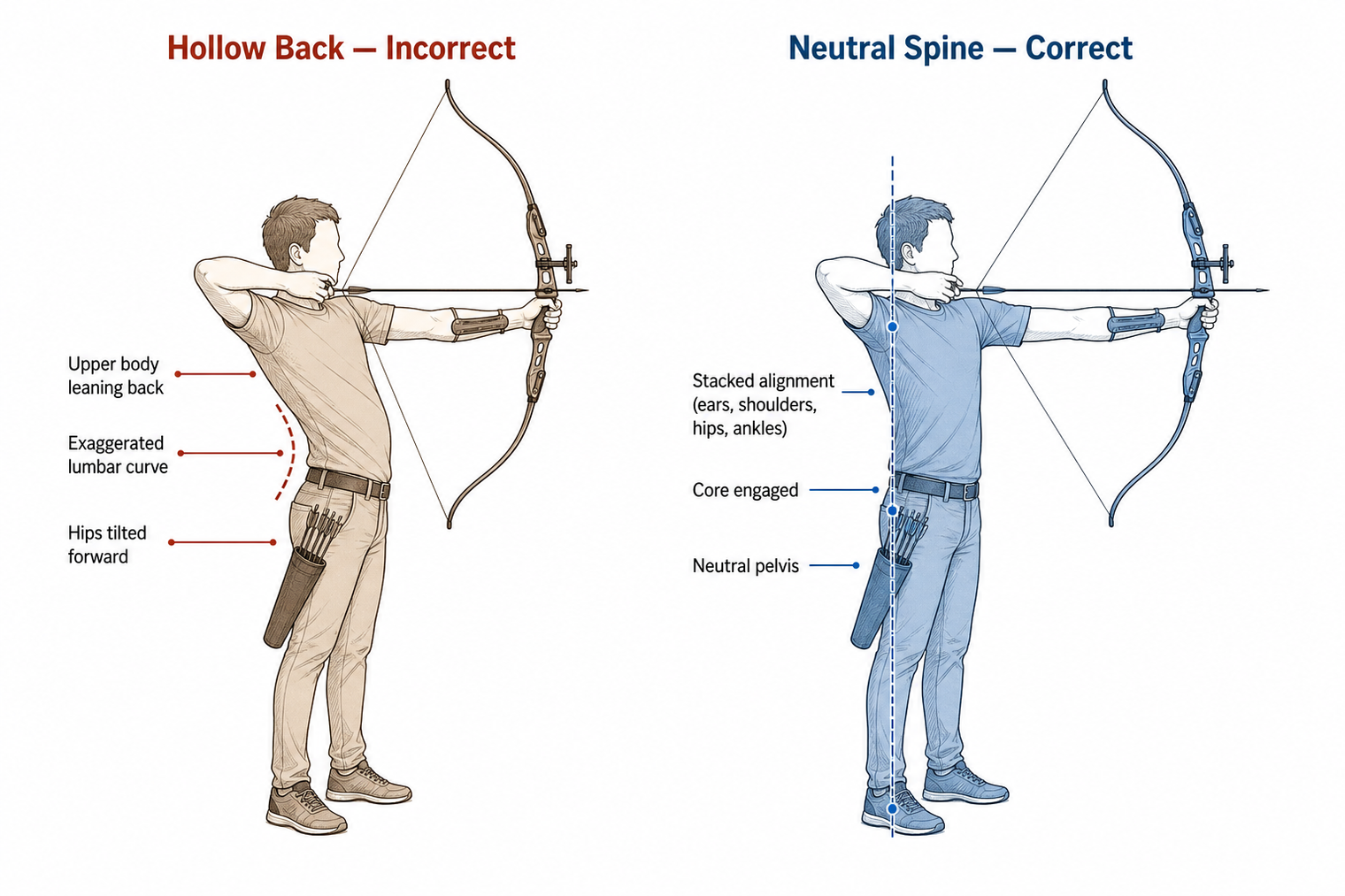
If a coach or experienced archer has ever told you not to be a hollow back archer, they were giving you some of the most important form advice you'll ever hear. Hollow back posture — where the lower spine arches inward and the hips tilt forward during the draw — is subtle enough that most beginners don't feel it happening, but significant enough to wreck consistency and lead to real injury over time. Here's what it means, why it creeps in, and how to get rid of it.
What Does "Hollow Back" Actually Mean?
In archery, a hollow back refers to an exaggerated inward curve of the lumbar spine during the draw or at full draw. Instead of maintaining a neutral, stacked spine, the archer tilts their pelvis forward and lets the lower back sink in. The chest often lifts, the shoulders shift back passively rather than engaging properly, and the whole upper body begins to lean away from the target.
It's sometimes called lordotic posture in biomechanics, and it's extremely common in beginners who are fighting a bow that's slightly too heavy for them, or who haven't yet learned to engage their core and back muscles correctly.
The result is a chain of problems: the draw arm and shoulder are working from an unstable base, the bow arm tends to collapse or torque, and the release becomes unpredictable. Over time, the repeated loading of a hyperextended lumbar spine can cause genuine discomfort or injury.
Why This Posture Pattern Develops
Understanding why hollow back posture happens makes it easier to prevent. It rarely develops from one single cause — it's usually a combination of factors:
- Draw weight too high: When a bow is too heavy for the archer's current strength, the body compensates by leaning away and using passive skeletal structure instead of active muscle engagement.
- Weak core and posterior chain: Without a stable midsection, the spine defaults to a passive locked-back position under load.
- No coaching on stance and posture: Many beginners self-teach, and hollow back posture doesn't feel obviously wrong — it can even feel powerful because it loads the lower back passively.
- Overreaching for back tension: Archers told to "use their back" sometimes misinterpret this and pull their shoulders back by arching, rather than engaging the scapulae through proper rotation.
- Rushing the draw: A hurried draw to full draw position often bypasses the deliberate muscle engagement that keeps the spine neutral.
The Core Principles of Neutral Spine in Archery
Fixing hollow back posture isn't about standing stiffly — it's about learning what a neutral, engaged spine actually feels like under load. These principles form the foundation of good archery posture:
Stack Your Skeleton
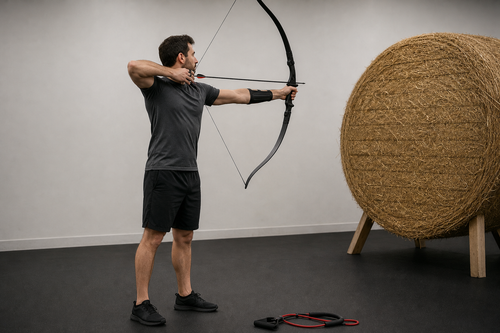
Your ears, shoulders, hips, and ankles should form a reasonably vertical line when viewed from the side. If your hips are pushed forward and your upper body is tilted back to compensate, you're already in trouble before you even raise the bow.
Engage the Core Before You Draw
Think of bracing your midsection gently — not a hard crunch, but a light, active tension that supports the lumbar spine. This engagement should be in place before you begin lifting the bow. Without it, the lower back has no protective muscular support.
Understand the Difference Between Back Tension and Back Arch
Genuine back tension in archery comes from the rotation and retraction of the scapula — the shoulder blade moving toward the spine as the draw elbow moves back and around. This is a controlled, deliberate movement originating in the mid-back muscles. Arching the lower back is a completely different action and provides no benefit to the shot; it only destabilises the platform your draw is built on.
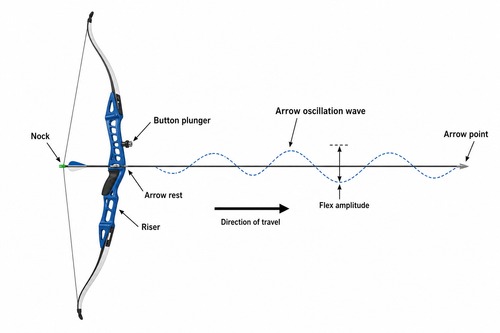
If you're still learning the basics of how archery movement works, the archer's paradox is another foundational concept worth understanding — it shows how much fine-detail body mechanics matter even after the arrow leaves the bow.
Keep a Slight Forward Lean
Many coaches teach a very slight forward lean from the hips — a few degrees at most — rather than a perfectly upright or backward-tilted torso. This subtle lean helps keep the weight centred over the feet and naturally discourages the lower back from hyperextending.
Practical Steps to Correct the Problem
If you've identified hollow back posture in your own shooting, here's a practical sequence to start correcting it:
- Drop the draw weight temporarily. If your current bow is straining your muscles at full draw, reduce the poundage until you can hold it comfortably for three to four seconds. Good form must be trained without fatigue interfering.
- Practice your stance without a bow. Stand in your shooting stance and consciously check your posture — pelvis neutral, core lightly engaged, shoulders relaxed and down, not elevated. Do this until it becomes automatic.
- Use a mirror or record yourself. Most archers are genuinely surprised when they first see their shooting posture on video. A side-on view is the most revealing.
- Slow the draw down. A deliberate, controlled draw gives your muscles time to engage correctly. Rushing is one of the fastest ways to fall back into compensatory patterns.
- Work on off-bow conditioning. Exercises that strengthen the glutes, hamstrings, and deep core — such as hip bridges, dead bugs, and bird-dogs — directly support the muscle groups responsible for maintaining a neutral spine under load.
Common Mistakes Archers Make When Trying to Fix This
Archers who become aware of hollow back posture sometimes overcorrect or focus on the wrong things:
- Flattening the back too aggressively: Forcing the lower back into a completely flat or even rounded position creates its own tension and interferes with natural movement. Aim for neutral, not flat.
- Focusing only on the lower back: Hollow back posture is usually a full-body alignment issue. If you only think about the lumbar spine, you miss the hip, shoulder, and stance corrections that actually solve the problem.
- Trying to fix it mid-session without rest: If you're already fatigued, form corrections don't stick. Better to end the session, rest, and restart with the new cues fresh.
- Confusing discomfort with effort: Muscle engagement should feel like controlled work, not pain. Any sharp or persistent pain in the lower back during archery is a signal to stop and assess, not push through.
Does Equipment Play a Role?
Yes, to a degree. Carrying a heavy or poorly fitted quiver can shift your centre of gravity and encourage compensatory posture. A well-designed back quiver that sits close to the body and distributes weight evenly makes it easier to maintain good posture during field sessions. If you're constantly counterbalancing a heavy or awkwardly positioned quiver, your spine will feel it — and hollow back posture is one of the common compensations.
For younger archers, properly sized, lightweight equipment matters even more. A kids' kids back quiver designed for their frame keeps the load manageable and helps develop good habits from the start.
Frequently Asked Questions
What exactly is hollow back posture in archery?
It's when the lower spine curves inward excessively during the draw or at full draw. Instead of a neutral spine, the hips tilt forward, the lower back arches, and the upper body tilts away from the target. It's a compensatory pattern that creates instability and increases injury risk.
Why does it matter so much for accuracy?
Your body is the platform your bow is mounted on. If that platform is unstable or shifting shot to shot, your anchor point, draw length, and release all change unpredictably. Consistency requires a stable, repeatable foundation — and a hyperextended lower back can't provide that.
Is it something beginners mostly deal with, or do experienced archers get it too?
It's most common in beginners, but experienced archers can develop it after a bow upgrade to higher draw weight, after time off, or when pushing for longer distances. Fatigue is also a common trigger even in skilled shooters.
How long does it take to correct this kind of form problem?
That depends on how ingrained the pattern is and how consistently you train. For recent beginners, a few deliberate sessions with conscious postural cues can make a visible difference quickly. For archers with years of hollow back habit, expect several weeks of patient, focused practice before the new pattern feels natural.
Final Thought
Hollow back posture is one of those form issues that rewards early attention. Catch it now, train through the corrections deliberately, and it won't follow you through your archery career. The goal is a neutral, engaged, repeatable foundation — everything else in your shot sequence builds on that.