Skip to content
 cust@legendarchery.com
 302 503 5767
 Westfield IN 46074


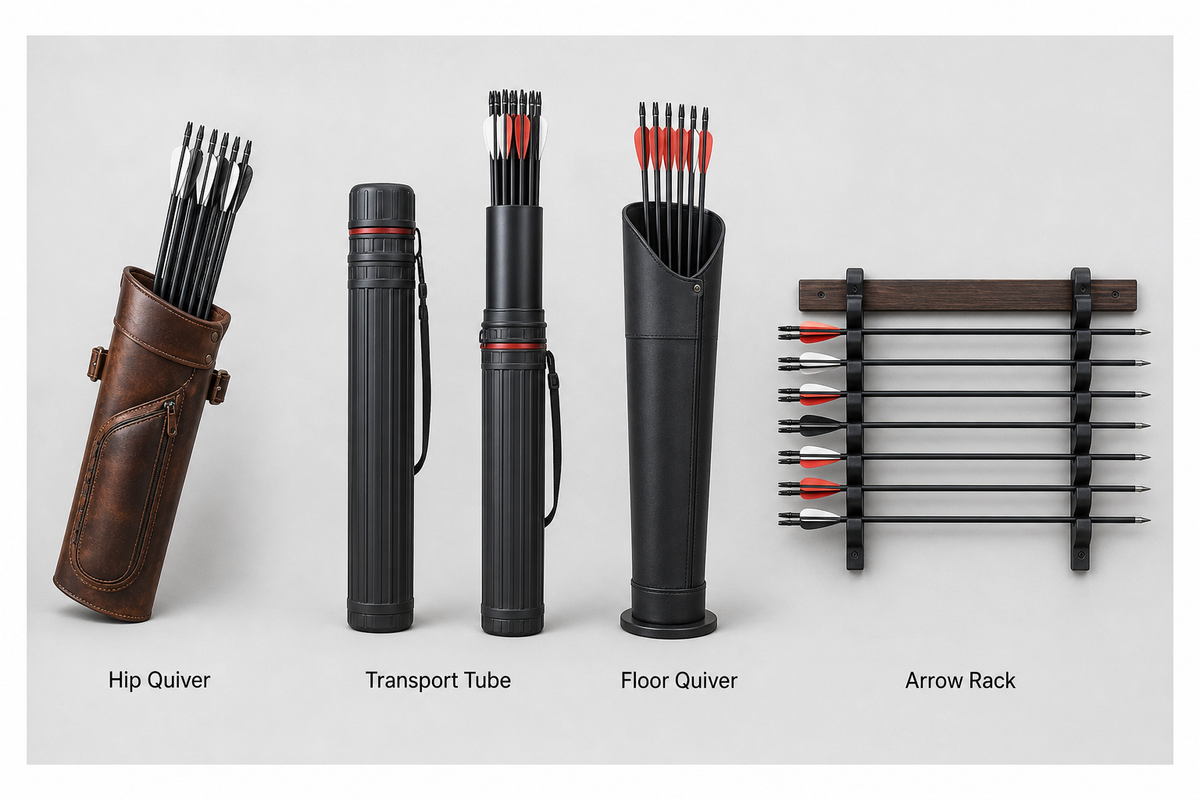
Arrow storage is easy to overlook until your fletching is crushed, a shaft is cracked mid-competition, or you spend five minutes hunting for arrows at a 3D range. The right solution depends on your discipline, how many arrows you carry, and whether you need something for transport, the shooting line, or both. This guide covers what to look for, the main categories, and which setup tends to suit which archer.
What Matters Before You Buy
Before comparing products, get clear on three things:
- Discipline and format. Target archery, field archery, bowhunting, and 3D shooting each place different demands on how arrows are carried and accessed.
- Arrow type and diameter. Carbon arrows with large-diameter shafts or fragile natural feather fletching need more protection than heavier aluminium shafts with plastic vanes. Check that any holder or quiver accommodates your specific arrows without contact that could damage the fletching.
- Fixed range vs mobile shooting. If you always shoot at a static target, a floor quiver or rack may be all you need. If you walk between targets, you need something worn or carried.
Sorting these out first stops you buying something that works in theory but frustrates you in practice.
Main Types and How They Differ
Arrow storage broadly splits into on-body carriers, range accessories, transport solutions, and home storage. Each solves a different problem.
Hip Quivers
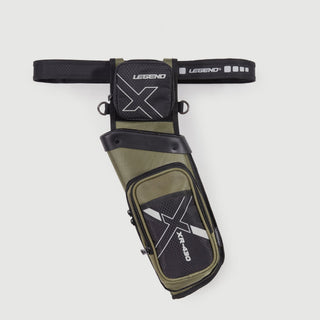
Hip quivers attach to a belt and hang at the side of your draw-arm hip. They are the standard choice for target archers at both club and competition level. Arrows sit point-down in individual tubes or a divided pocket, which protects vanes and keeps shafts separated. Hip quivers are fast to draw from, stable when walking, and available in configurations carrying anywhere from six to twelve or more arrows. The trade-off is that a loaded hip quiver adds noticeable side weight, which some archers find uncomfortable on a long field course.
Back Quivers
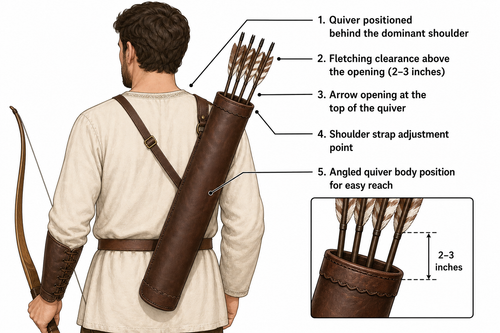
Back quivers carry arrows across the back and are common in traditional archery and bowhunting contexts. They have a classic look and distribute weight more evenly across the torso. The downside for most archers is draw speed — reaching over the shoulder is slower and less consistent than drawing from the hip, and fletching is more exposed to contact and weather.
Field and 3D Quivers
Field and 3D formats often use a combination: a hip or back quiver for carrying arrows between targets, and a ground quiver or stake quiver that holds spare arrows at the shooting peg. Some archers attach a small side quiver to a belt alongside a separate pouch for accessories. The key criteria here are durability, secure arrow retention on uneven terrain, and the ability to quickly drop and pick up the carrier between shots.
Arrow Tubes for Transport
A telescopic or rigid arrow tube is not a shooting accessory — it is a transport and storage solution. It protects shafts and fletching during travel, whether in a kit bag, car boot, or checked luggage. An arrow tube with holder is worth having separately from any quiver you use at the range, since it gives your arrows physical protection that a soft quiver cannot.
Floor Quivers and Ground Stakes
A floor quiver stands next to the shooting line and holds arrows point-up or point-down while you shoot. They are ideal for indoor target sessions and outdoor target rounds where you stay at one distance. They do not suit walking formats. A ground stake is a simple metal or plastic spike driven into grass with a ring or clip to hold arrows. They are inexpensive and compact but unsuitable for indoor or hard-surface ranges.
Home and Club Storage Racks
Wall-mounted or freestanding arrow racks keep shafts horizontal and separated for long-term storage. They prevent the warping that can happen when arrows lean at an angle for weeks. Arrow racks are particularly important for wooden shafts and for anyone who owns multiple arrow sets of different spine ratings.
Buying Criteria and Trade-offs
When you evaluate any arrow storage option, these are the factors that genuinely affect satisfaction after purchase:
- Arrow capacity. An end is usually three or six arrows, so most target archers carry six to twelve arrows in the quiver to cover an end plus spares. Field archers often carry fewer because sets are smaller. A quiver that is too small forces multiple trips; one that is too large is unnecessarily heavy.
- Fletching protection. Vanes that rub together or against the quiver wall wear out faster. Look for designs that separate each arrow individually or hold them loosely enough that fletching sits clear of other surfaces.
- Attachment and stability. A quiver that swings or rotates on the belt is a distraction during shooting. Rigid belt clips or double-attachment points reduce movement.
- Access speed. In competition, you want to nock an arrow in one smooth motion. Test (or look closely at) how arrows sit — slight forward angles, notched tops, or divided pockets all improve draw speed compared to a loose pile of shafts.
- Material and weight. Leather looks and feels good but absorbs moisture. Nylon and polyester are lighter and dry faster. Hard polymer tubes offer the best protection but add bulk. Match material to your shooting environment.
- Compatibility with accessories. Many hip quivers include side pockets for a scorecard, tab, pen, and small tools. If you carry accessories on the shooting line, factor this into the choice rather than buying a quiver and a separate pouch.
Which Type Suits Which Archer
There is no single correct answer, but these patterns hold up well across different experience levels and disciplines:
- Beginners at a target club are well served by a basic hip quiver. It teaches correct arrow handling habits, keeps equipment organised, and does not require any technical setup. Browse the range of arrow quivers to find entry-level and mid-range hip quivers in one place.
- Competitive target archers often want a hip quiver with individual arrow tubes to protect shafts, combined with a hard arrow tube for travel to events.
- Field and 3D archers do best with a compact hip quiver or a dedicated field quiver that sits firmly even when crouching and moving over rough ground, plus a ground stake for the shooting peg.
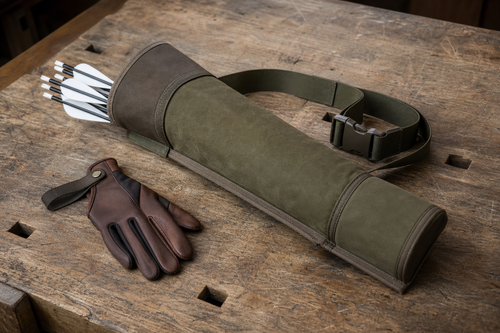
- Traditional and recurve archers shooting in a historical or instinctive style often choose a back quiver or a side quiver. Aesthetics are part of the experience for many traditional archers, and leather construction is a common preference.
- Bowhunters need a quiver that is silent (no rattling arrows), secure in thick cover, and quick to detach if needed. Many bowhunters use a bow-mounted quiver in the field and switch to a hip or back quiver for practice sessions.
- Archers who travel frequently should prioritise a robust transport tube regardless of what they carry at the range.
How to Set Up and Use Your Arrow Storage
Getting the positioning right makes a noticeable difference to comfort and draw consistency:
- Adjust a hip quiver so the top of the quiver sits roughly at waist height and arrow nocks sit between waist and chest when standing upright. Too low and you will have to dip to reach arrows; too high and the shafts will interfere with your draw arm.
- Thread the belt through the quiver clip before putting the belt on, or use a dedicated quiver belt rather than fitting it to a clothing belt that may stretch or shift.
- Load arrows point-down in most hip quiver designs. Keep vanes aligned in the same direction if your quiver uses individual tubes — it makes the draw smoother and reduces fletching wear.
- For transport tubes, load arrows tip-first into the tube and add a foam insert or divider if the tube allows, particularly for carbon shafts with broadheads or field points.
Mistakes Buyers Make
- Buying capacity they do not need. A twelve-arrow quiver sounds useful, but if you shoot six-arrow ends and it sits half empty, you are carrying unnecessary weight and bulk all session.
- Ignoring fletching clearance. A quiver looks the right size on paper but holds arrows so tightly that vanes are compressed against each other. Over time this permanently deforms plastic vanes or crushes feather fletching.
- Using a transport tube as a shooting quiver. Arrow tubes are protective containers, not quick-draw carriers. Using them at the line slows you down and makes access awkward.
- Skipping home storage. Many archers invest in a good quiver but then leave arrows leaning against a wall or loose in a bag. Consistent horizontal or supported storage extends the life of your shafts significantly.
- Choosing by appearance alone. Style matters, but attachment security, fletching protection, and arrow fit are more important to long-term satisfaction.
- Not accounting for the full kit. If you also carry a bow case, make sure your arrow transport solution fits inside or alongside it. A dedicated bow case may have an external pocket that fits an arrow case, so your arrows travel with the bow.
Frequently Asked Questions
What should I actually look for in arrow storage?
Start with capacity (how many arrows you carry per end), fletching protection (individual tubes or separated pockets), and attachment stability (a quiver that stays in place when you move). Secondary factors include material, accessory pockets, and compatibility with your arrow diameter. Do not let aesthetics override function for a first purchase.
Which features matter most?
Individual arrow separation matters most for protecting fletching. After that, a secure belt attachment or stable stand matters for reducing distraction on the line. Access speed — how quickly and naturally you can draw an arrow — becomes more important as your experience level and competition frequency increase.
What mistakes do buyers most often make?
Buying too much capacity is common and results in a heavy, unbalanced quiver. Equally common is ignoring how tightly a quiver holds arrows and discovering damaged vanes after a few sessions. A third mistake is treating a transport tube as a quiver, which creates a slow and awkward experience at the line.
What's a good starting point for a beginner?
A mid-size hip quiver with divided pockets or individual tubes — typically holding six to eight arrows — covers almost every beginner's needs at a target club. It is easier to use correctly than a back quiver, more practical than a floor quiver for most club formats, and leaves room to upgrade once you know how you prefer to shoot.
Conclusion
Good arrow storage protects your equipment, keeps you organised at the line, and matches how you actually shoot. Identify your discipline and arrow count first, then evaluate quivers or carriers against the criteria above — fletching clearance, attachment stability, and access speed matter more than brand or looks. Add a transport tube if you travel to events, and consider home storage if your arrows spend long periods between sessions.