Skip to content
 cust@legendarchery.com
 302 503 5767
 Westfield IN 46074



Pick the wrong archery target and you will either destroy arrows, wear out the target in weeks, or end up with something that cannot stop your draw weight safely. The right choice depends on what bow you shoot, how far you stand, and where you practice. This guide walks through every factor so you can make a confident decision.
What Matters Before You Buy
Before you look at price or brand, two questions should come first: what bow are you shooting, and at what draw weight? A light recurve at 25 lb and a compound at 70 lb behave very differently on impact, and most targets are designed with a draw weight ceiling in mind. Exceeding it leads to pass-throughs, damaged cores, and broken arrows.
- Draw weight: Always check the manufacturer's stated draw weight range for the target. This is not a guideline — it is a structural limit.
- Arrow tip type: Field points and broadheads stop differently. Most foam and bag targets are rated for field points only. Using broadheads in the wrong target tears the core apart quickly.
- Shooting distance: A target sized for 10–20 m practice is not the same as one built for 60–70 m range work. Arrow velocity at distance is lower, but scoring ring size matters more at longer ranges.
- Indoor vs outdoor use: Weather resistance varies significantly. A target that performs well indoors may deteriorate quickly when left outside in rain or UV exposure.
Main Types and How They Differ
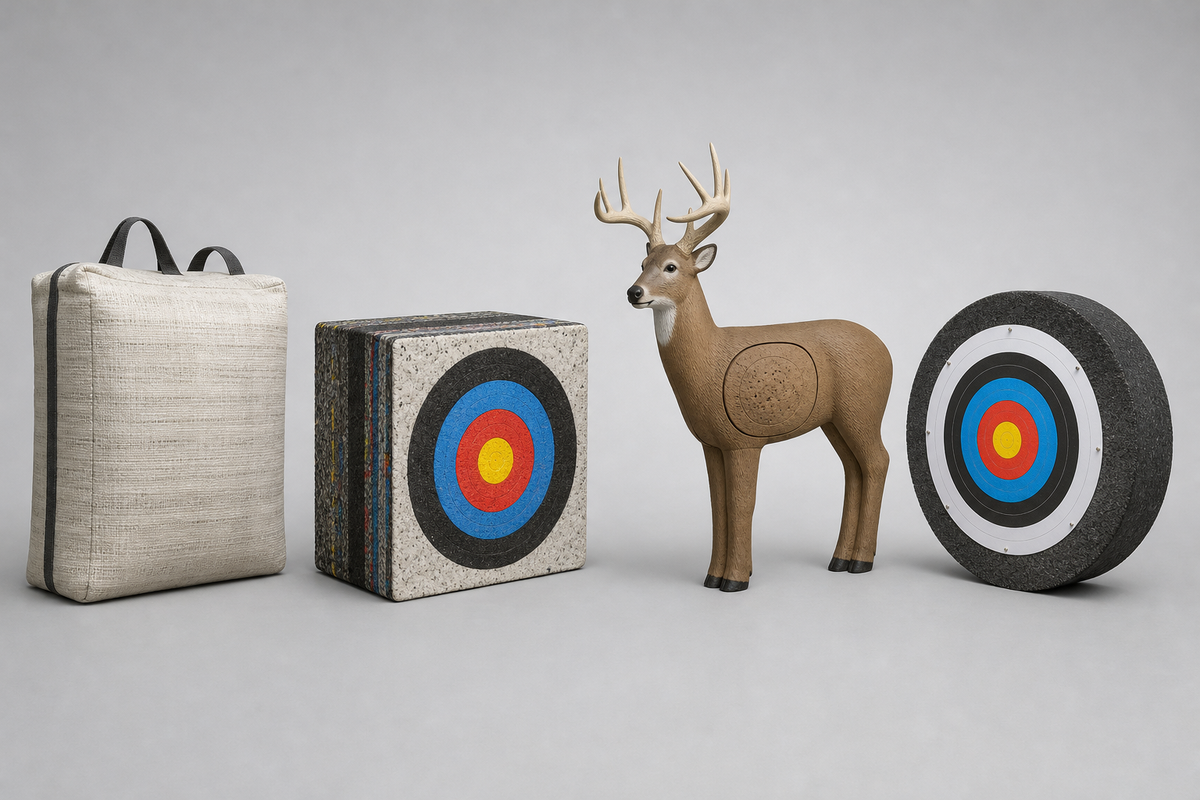
There are four broad categories worth understanding before you commit to a purchase.
Bag Targets
Bag targets are filled with compressed synthetic fibers or similar loose fill material. They stop arrows through friction rather than density. They are lightweight, affordable, and work well for field points at moderate draw weights. Arrow removal is generally easy, which makes them popular for high-volume practice sessions. However, they wear unevenly over time, particularly in the center where most shots land, and they are not suitable for broadheads.
Foam Layered Targets
Layered foam targets — sometimes called block targets or cube targets — use compressed foam in stacked or laminated sheets. They stop arrows cleanly, offer multiple shooting faces, and can handle higher draw weights than most bag targets. Arrow removal can require more effort as draw weight increases, but the shooting surface holds up well and self-heals to some degree with softer foam grades. These are among the most versatile options for both recurve and compound archers.
3D Archery Targets
Three-dimensional targets are molded foam shapes representing animals or abstract forms, used primarily for simulated field archery and hunting practice. They train shot placement and depth perception in a way flat faces cannot. Most 3D targets have a replaceable insert in the kill zone, which extends the life of the product significantly. They require more storage space and cost more upfront, but they add genuine value for archers preparing for field or hunting scenarios.
Foam Bosses and Competition Faces
A foam boss is a large, dense circular or square foam block designed to receive paper or card target faces. This is the standard setup for indoor and outdoor target archery, where a printed scoring face is pinned to the front. Bosses are available in a wide range of sizes to match different competition distances and discipline rules. They are the most purpose-specific option — outstanding for formal practice, less practical for anything else.
Buying Criteria and Trade-Offs
Once you know which category suits your discipline, the following criteria help you narrow down your options within that category.
Stopping Power and Draw Weight Compatibility
This is the single most important criterion. A target that cannot reliably stop your arrows at full draw is a safety hazard, not just a performance issue. Always select a target rated at or above your peak draw weight. If you are between two options, choose the heavier-rated one.
Arrow Removal Effort
High stopping power and easy arrow removal are often in tension with each other. Dense foam stops fast arrows well but can grip them tightly. If you shoot high volumes — several hundred arrows per session — difficult removal leads to hand fatigue and damaged fletching. Some manufacturers build a self-lubricating coating into the foam surface to address this. It is worth checking reviews specifically on this point.
Weather Resistance and Durability
If the target will live outdoors, look for UV-stabilized materials and a cover or casing that sheds water. Bag targets exposed to rain will rot from the inside. Foam can degrade in prolonged direct sunlight if not treated for UV resistance. Durability is directly linked to cost — cheaper targets cut corners in material quality and will show it within a season of regular use.
Size and Portability
A larger face gives a more forgiving practice experience and is necessary at longer distances. However, large targets are heavy and difficult to transport. If you shoot at a club, size is usually less of a concern because the target stays in place. For garden use or travel to field courses, portability matters significantly.
Value Over Time
The purchase price rarely tells the full story. A budget bag target that lasts one season may cost more over two years than a quality foam block that lasts five. Factor in how many arrows per week you intend to shoot and choose accordingly. Replaceable inserts on 3D targets are a particularly good value feature for archers who shoot the same zone repeatedly.
Which Type Suits Which Archer
- Beginners with light draw weights (up to 35 lb): A bag target or entry-level foam block works well. Easy arrow removal and low cost suit the early learning phase where shot groupings are still inconsistent.
- Recurve target archers: A foam boss with a paper scoring face is the closest match to competition conditions. Pairing it with a quality archery target stand ensures consistent height and stability across sessions.
- Compound archers at high draw weights: A dense layered foam target or a purpose-built high-poundage block is necessary. Bag targets rated below 60–70 lb will be penetrated or damaged quickly.
- Field and 3D archers: A 3D foam animal target is the most discipline-specific choice. It develops realistic shot placement instincts that a flat face cannot replicate.
- Hunters practicing with broadheads: A broadhead-rated foam target is essential. Standard foam blocks and bag targets are not designed for the cutting diameter of broadheads and will be destroyed rapidly.
Setting Up Your Target Correctly
Even a well-chosen target will underperform if it is set up poorly. A few practical points:
- Use a stable stand or mount that keeps the target at the correct height for your shooting style. An unstable target that shifts on impact creates inconsistent practice conditions.
- Position the target so there is a safe backstop behind it — a fence, earthen bank, or purpose-built backstop net. No target stops 100% of poorly aimed shots at all times.
- Rotate bag targets regularly so the fill distributes wear more evenly. This extends service life considerably.
- For foam bosses, swap the paper face before it tears through and exposes the foam surface, which then collects arrow impacts directly and degrades faster.
- Store targets under cover or with a protective cover when not in use. UV exposure and moisture are the two most common causes of premature degradation.
Mistakes Buyers Make
- Ignoring draw weight ratings: This is the most common and most consequential mistake. A target rated for 50 lb used with a 65 lb compound will not hold up, and arrows can pass through entirely.
- Choosing size based on budget alone: A smaller target costs less but forces tighter shot discipline before it is developed. Beginners especially benefit from a generously sized face.
- Using broadheads on non-rated targets: Broadheads destroy standard foam and bag targets quickly. Always confirm that a target is explicitly rated for broadhead use before shooting them into it.
- Skipping a stand: Propping a target against a wall or on the ground works short-term but creates height inconsistency, instability, and in some cases, ricochet risk. A proper stand is a worthwhile addition.
- Buying purely on price: The cheapest option rarely survives more than one serious season of practice. Investing slightly more upfront usually results in a lower per-session cost over time.
- Leaving foam targets outdoors indefinitely: Even weather-resistant foam degrades faster when permanently exposed. Bring the target under cover when not in regular use.
Frequently Asked Questions
What should I actually look for when buying an archery target?
Start with draw weight compatibility — this is non-negotiable. Then consider arrow tip type (field point vs broadhead), shooting distance, and whether the target will be used indoors or outdoors. Size, portability, and durability follow after those basics are met.
Which features matter most on a day-to-day basis?
Arrow removal ease and durability tend to matter most during regular practice. Stopping power keeps you safe; easy removal keeps your sessions efficient. For high-volume shooters, self-healing foam and a smooth surface coating can make a meaningful difference over hundreds of shots.
What mistakes do buyers most often make when choosing a target?
The most common are ignoring draw weight limits, using broadheads on targets not rated for them, and choosing the smallest or cheapest option without considering how quickly it will wear out. Skipping a proper stand is also a frequent oversight that affects both safety and practice quality.
Which type of target is best for a complete beginner?
A medium-sized bag target or entry-level foam block is usually the most practical starting point. Both are affordable, forgiving of inconsistent shot placement, and easy to set up. As technique develops and draw weight increases, it is worth upgrading to a denser foam target rated for the higher poundage.
Conclusion
The best archery target is the one that matches your bow, your arrows, and how you train — not the one with the most features or the lowest price tag. Getting those fundamentals right first makes every other decision straightforward.