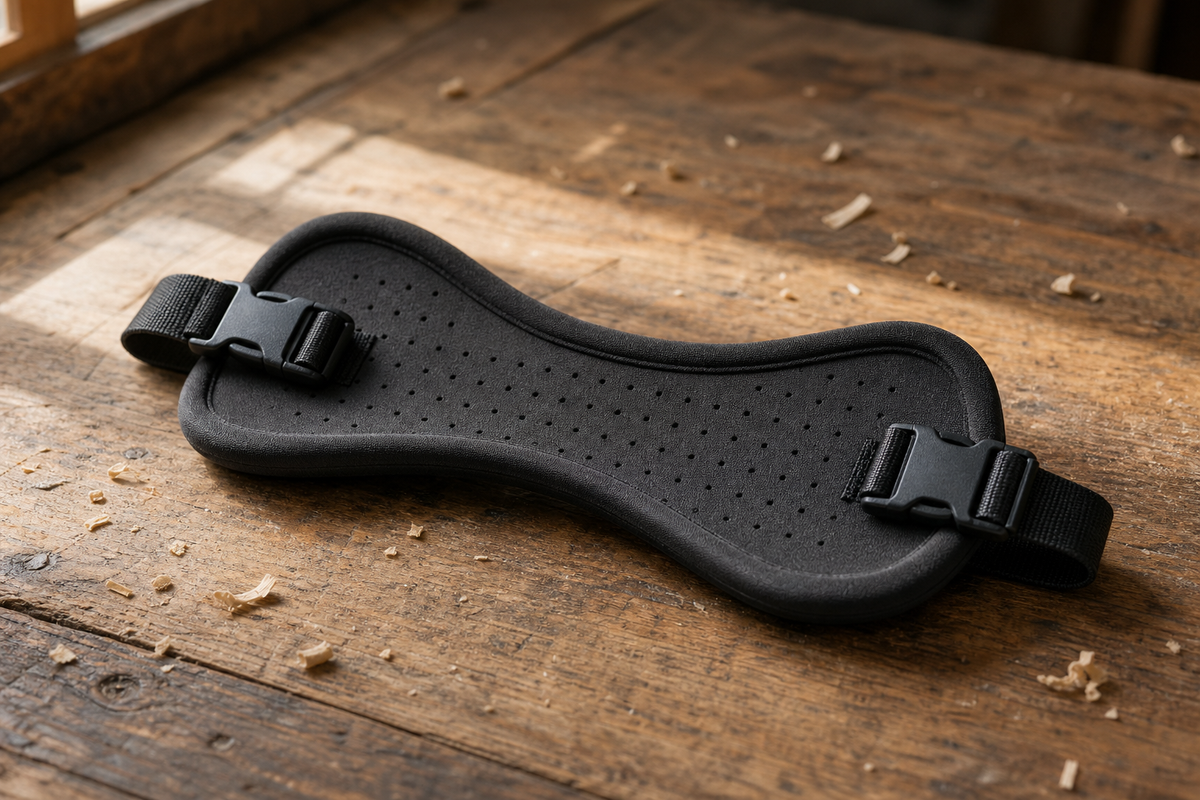
A poorly secured armguard is worse than no armguard at all — it shifts mid-draw, bunches under your sleeve, or pops open at full anchor. Choosing one that actually stays put requires understanding what drives real forearm protection: material construction, buckle design, sizing, and how those factors match your shooting style and experience level.
What Matters Before You Buy
Before comparing products, it helps to identify what you're actually asking an armguard to do. For most archers, the job is threefold: protect the inner forearm from string slap, keep loose fabric clear of the string path, and do both without restricting the bow arm's natural position.
The problem is that many archers focus entirely on protection and ignore retention. An armguard that doesn't stay locked in place through repeated draw cycles fails at the core task. Armguard security — meaning how reliably the guard stays positioned and buckled under real shooting conditions — should be near the top of your checklist, not an afterthought.
- Forearm size and shape: Guards come in multiple lengths and widths. A guard sized for a slim forearm will rotate on a larger arm, undermining any protection it offers.
- Sleeve situation: Bare-arm shooting, a thin base layer, and a thick hunting jacket are three completely different scenarios. Confirm the guard fits over what you'll actually wear.
- Discipline: Target archers typically want a low-profile guard that doesn't interfere with a relaxed bow arm. Hunters and field archers often need something that holds firmly over heavy clothing.
- Session length: A guard that feels fine for ten shots may become uncomfortable or start to migrate after a full day on the range.
Main Types and How They Differ
Armguards fall into a few broad categories. Understanding the construction differences helps you match the right tool to your needs.
Rigid and Semi-Rigid Guards
These use a stiff shell — typically hard plastic or a thermoshaped foam like EVA — to deflect string contact. The rigid face resists deformation on impact, which matters for archers still refining their bow-arm rotation. The trade-off is that a purely rigid guard can feel stiff if it doesn't conform to the forearm's natural taper. Semi-rigid designs, particularly those using ergonomically shaped EVA foam, solve this by molding loosely to the arm's contours while still providing impact resistance.
Soft and Leather Guards
Traditional archers, especially those shooting recurve or longbow, often favor leather or heavy fabric guards. These are lightweight and low-profile, but offer less impact resistance than a rigid shell. They work well for archers with solid technique who experience only occasional light string contact. If you're regularly taking full string slaps, a soft guard won't absorb the impact as effectively.
Long-Arm and Short Guards
Standard guards cover the lower forearm. Long-arm versions extend toward the elbow or beyond, providing coverage for archers who experience string contact higher on the arm — a common issue with certain draw lengths or elbow-out form habits. Short guards are minimal by design and prioritize low weight and unobtrusive fit for experienced target shooters.
Buying Criteria and Trade-offs
Once you know the type you need, these are the specific factors worth evaluating side by side.
Buckle and Closure System
This is the most direct expression of armguard security. Buckles should close firmly, stay closed under repeated tension, and release quickly when you need to remove the guard. Side-release buckles with a low profile are generally preferred over high-profile snaps or Velcro-only closures because they minimize snagging and sit flat against the guard. Check whether the buckle sits in a position that could contact the riser or your clothing — a bulky buckle in the wrong spot causes real problems at full draw.
Sizing and Adjustability
An adjustable guard should offer a genuine range, not just a token slot or two. Look for systems where you can tighten the guard snugly without it pinching, and loosen it enough to fit over a jacket without it flopping. Manufacturers who offer small, medium, and large sizing — rather than a single one-size approach — give you a much better starting point before you even adjust the straps.
Material and Ventilation
Sweat buildup under a non-breathable guard leads to skin irritation and, over time, can cause the guard to slip. Guards with ventilation channels or perforated surfaces allow moisture to evaporate during extended sessions. This is particularly relevant for warm-weather target shooting or any high-volume practice environment. If you're shooting in cold weather over thick clothing, ventilation becomes less critical — but the material still needs to be flexible enough to function in low temperatures without cracking.
Profile and Weight
A lower-profile, lighter guard is usually better for target archery and competitive shooting where the bow arm needs to remain relaxed and consistent. A slightly heavier, more robust guard may be appropriate for hunting situations where the extra protection is worth the added bulk.
Which Type Suits Which Archer
- Beginners: A semi-rigid guard with adjustable straps and multiple size options is the safest choice. String slap is common during the early learning stages, and the extra impact resistance matters. If it keeps happening past the first few sessions, our guide on stopping the bowstring from hitting your arm covers the form fixes that address it at the source. A guard that fits properly and stays put also reduces the temptation to remove it mid-session.
- Competitive target archers: A lightweight, short guard with a minimal buckle profile that won't interfere with consistent bow-arm positioning. Ventilation becomes a priority for long indoor or outdoor sessions.
- Hunters and field archers: A guard that fits over a base layer or medium-weight jacket without shifting. Side-release buckles and a secure fit over clothing are non-negotiable here.
- Traditional archers: Often prefer leather or soft guards for their low profile. If your form is solid and string contact is light, these work well. If you're still developing your technique, a more protective option is worth considering.
The XT Armguard - Forearm Protector from Legend is built from ergonomic thermoshaped EVA foam, comes in three sizes and multiple colors, and uses low-profile side-release buckles — making it a practical option across several of these use cases, including beginners and hunters who need reliable coverage over clothing.
How to Wear and Position an Armguard Correctly
Even the best guard fails if it's positioned wrong. The protective face should sit centered over the inner forearm, covering the area from the wrist toward the elbow — the precise zone the string travels past at release. Place it before nocking your first arrow, and do a dry run: draw to anchor without an arrow and check whether the guard has shifted or whether the buckle is now pressing into an uncomfortable spot.
- Tighten until snug but not restrictive — you should be able to slide one finger underneath.
- If shooting in sleeves, pull the sleeve smooth before securing the guard over it.
- After every few dozen shots, glance down to confirm the guard hasn't rotated.
Mistakes Buyers Make
- Buying based on color or looks alone: Aesthetics are a bonus, not a criterion. Focus on fit and closure quality first.
- Choosing one-size-fits-all without measuring: A guard that's too short leaves part of your forearm exposed. Too long and it may interfere with wrist movement.
- Ignoring the buckle position: High-profile or forward-positioned buckles can catch on clothing or affect your draw. Always check where hardware sits relative to your bow-arm position at full draw.
- Skipping ventilation considerations: A sweat-soaked guard will slide. This matters more than most buyers expect until they've lost a guard mid-session.
- Assuming it's a beginner-only item: Experienced archers who have dialed in their technique may rarely get string slap, but form breaks down under fatigue. A guard remains useful at every level.
- Not testing fit over shooting clothing: The guard you try on over a t-shirt in a shop may not fit the same way over your hunting jacket. If possible, test it over the layers you'll actually wear.
Frequently Asked Questions
What should I actually look for in a good armguard?
Start with sizing — a guard that doesn't fit your forearm will rotate or slip regardless of its other qualities. After that, evaluate the closure system (how securely it locks and how easy it is to adjust), the material's impact resistance and flexibility, and ventilation for longer sessions. Those four factors cover most of what separates a reliable guard from a frustrating one.
Which features matter most for staying protected during a full session?
Fit and buckle quality. A guard that shifts after twenty shots is delivering inconsistent protection. Side-release buckles with a low-profile design tend to stay put better than high-profile snaps. Semi-rigid materials like thermoshaped EVA foam hold their shape over time and absorb impact more effectively than soft fabric alone.
What mistakes do people most often make when picking one?
The most common is buying without trying it over the clothing they'll actually shoot in. The second is ignoring sizing charts and assuming one size covers everyone. Both lead to guards that rotate, slip, or simply don't cover the right area of the forearm.
Is a rigid armguard better for a beginner than a soft one?
Generally yes. Beginners are more likely to contact the string on a full slap while their form is developing, and a semi-rigid guard with real impact resistance handles that better than a thin leather or fabric option. As technique improves and string contact becomes rare, switching to a lighter or softer guard becomes a reasonable trade-off.
Closing Thoughts
Forearm protection works only when it stays where you put it. Prioritize fit, buckle security, and material construction over aesthetics, and match the guard's profile to your discipline and the clothing you shoot in. If you're updating your kit or just getting started, browsing Legend's range of new archery products is a practical next step.