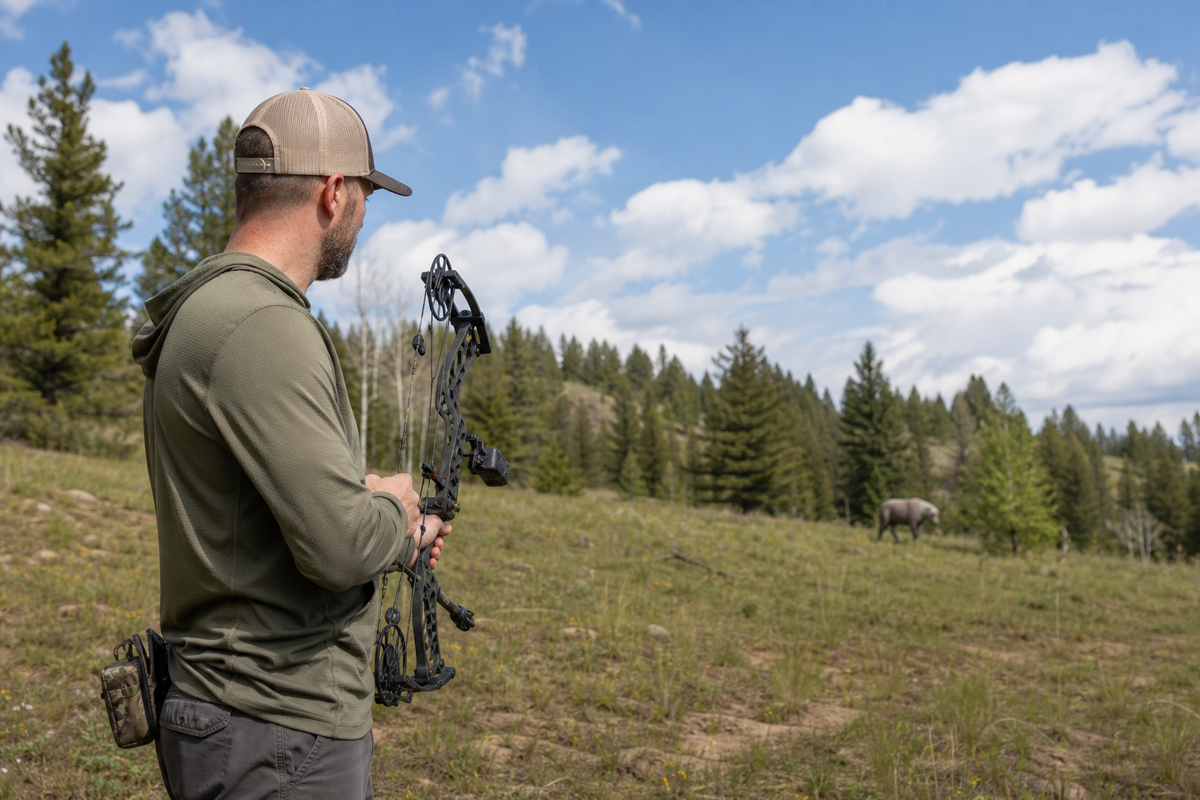
A rangefinding bow sight combines a traditional aiming pin or reticle with built-in distance-measuring technology, removing the need to carry a separate handheld rangefinder. For archers who shoot at variable distances — whether on a 3D course, in the field, or during unmarked-distance practice — understanding exactly how this technology functions helps you use it accurately and avoid costly errors at full draw.
What a Rangefinding Bow Sight Actually Does
At its core, a rangefinding bow sight serves two jobs simultaneously: it measures the distance to your target, and it gives you an aiming reference calibrated to that distance. Traditional fixed-pin sights require you to already know the range before you draw. A rangefinding sight removes that pre-draw guesswork by integrating the measurement step into the aiming unit itself.
Most models on the market use one of two general approaches:
- Laser-based rangefinding: A laser emitter fires an invisible pulse toward the target. A receiver inside the sight detects the reflected signal and calculates distance based on the time it takes for the pulse to return — a principle called time-of-flight measurement. The result is displayed in the sight's optic, usually in a digital or illuminated readout.
- GPS-assisted or app-integrated systems: Less common in standalone bow sights, but some hybrid units pair with a smartphone or external GPS unit to pull yardage data from mapping software. These are more relevant to course-based shooting where fixed yardages are known in advance.
The laser-based approach dominates the market because it delivers real-time, on-demand distance data without any pre-loading or mapping requirements.
The Optical and Mechanical Components
Understanding how a rangefinding bow sight works means looking at each functional layer separately.
The Rangefinding Module
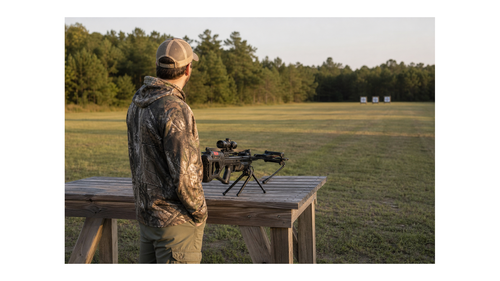
Inside the housing sits a miniaturized laser rangefinder — the same fundamental technology used in handheld hunting and golf rangefinders, but packaged to fit within a sight bracket. When the archer activates the rangefinder (typically with a button on the sight body or a remote trigger), the laser fires and returns a yardage reading within a fraction of a second. Many units display this reading inside the optic so you never need to look away from the target.
The Sight Head and Aiming System
The aiming component varies by design. Some rangefinding sights use a single adjustable pin that automatically moves to the correct elevation once the range is confirmed. Others use an illuminated reticle with multiple reference points. The key advantage of a single auto-adjusting pin is a cleaner sight picture — there is no cluster of pins to look through, which reduces visual confusion at longer distances or in low-light conditions.
Angle Compensation
This is one of the most important — and most misunderstood — features in modern rangefinding bow sights. When you are shooting uphill or downhill, the actual laser distance to the target is longer than the horizontal (true ground) distance your arrow's trajectory needs to account for. A sight with angle compensation calculates the corrected shooting distance automatically, so your pin or reticle reflects the hold you actually need rather than the raw line-of-sight measurement. Without this feature, an archer shooting steeply downhill at a laser-measured 40 yards might hit high because the effective ballistic distance is closer to 32 or 33 yards depending on the angle.
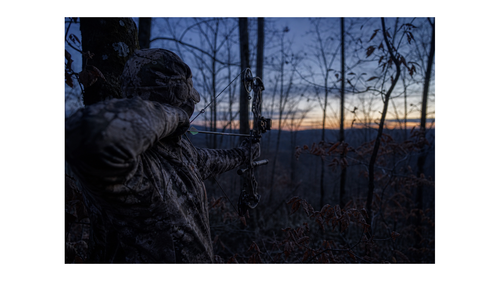
Angle compensation is especially valuable on elevated platforms, steep hillsides, and multi-level 3D courses where shot angles vary significantly from station to station.
How the Sight Translates Distance Into an Aiming Point
Once the sight has a confirmed yardage, it needs to translate that number into a usable aiming reference. The process depends on the sight's design:
- Auto-adjusting single pin: An internal motor or manually operated wheel moves the pin to a pre-calibrated position corresponding to the measured distance. The archer must have sighted in the bow across a range of distances beforehand so the sight's internal map of pin positions matches real arrow impact points.
- Fixed multi-pin with rangefinder overlay: Some systems keep traditional fixed pins and simply display the yardage in the optic as a reference. The archer still selects the appropriate pin manually. This approach is mechanically simpler but adds a mental step at full draw.
- Digital reticle systems: Higher-end models use an illuminated digital display inside the optic that shows a reticle at the computed hold point, with the yardage number displayed alongside it. These tend to have more moving parts and require battery management.
Setup and Calibration: Why It Matters
The technology only works as well as the calibration behind it. A rangefinding bow sight that has not been properly sighted in will give you accurate distance readings but inaccurate aim points — a frustrating combination. Proper setup involves:
- Sighting in your bow at multiple known distances (typically 20, 30, 40, 50, and 60 yards at minimum for field or 3D use).
- Programming or mapping those distances into the sight so its internal pin-position or reticle system corresponds to real-world impact points for your specific arrow and bow setup.
- Verifying the sight is level using a bow sight level — cant in the sight creates left/right error that compounds at distance.
- Testing the angle compensation feature at known uphill and downhill angles before relying on it in the field.
Even experienced archers often underestimate how much time proper calibration takes when switching to a rangefinding sight from a conventional setup. Plan for multiple range sessions, not just one.
Common Mistakes Archers Make With Rangefinding Sights
Even with accurate technology, user error is the most common source of missed shots. Watch for these pitfalls:
- Ranging the wrong object: Laser rangefinders lock onto the first reflective surface they hit. In dense brush or when shooting through gaps, the laser may read a branch or twig between you and the target instead of the target itself. Use the ranging button deliberately and confirm the reading makes sense for the visual distance.
- Skipping angle compensation: Forgetting to verify that angle compensation is active on a steep shot is a consistent cause of misses, especially for archers new to elevated shooting positions.
- Dead battery at the wrong moment: Rangefinding sights are electronics. Carry a spare battery and check charge level before every session. Many models have a low-battery indicator — learn where it is.
- Over-relying on the technology: A rangefinding sight does not replace good form, a solid anchor point, or consistent release. Archers who focus entirely on the yardage readout and neglect their shot process see inconsistent results even with accurate distance data.
- Ignoring sight cant: A canted sight shifts your impact point laterally. This error grows with distance. Level your sight carefully during setup and check it periodically, especially after transporting your bow.
Who Benefits Most From This Type of Sight
Rangefinding bow sights are not necessarily the right tool for every archer or discipline. They tend to offer the clearest advantage in situations where:
- Distances are unknown and vary shot to shot, as on a 3D archery course or in field archery.
- Shot angles vary significantly and angle compensation provides a meaningful accuracy benefit.
- Having both hands on the bow (rather than raising a handheld rangefinder) is practical or required by shooting conditions.
Target archers shooting at marked distances on a flat range often find that a high-quality conventional sight suits them just as well, without the added complexity and battery dependency. The right choice depends on your discipline, shooting environment, and how much value you place on integrated distance measurement versus simplicity.
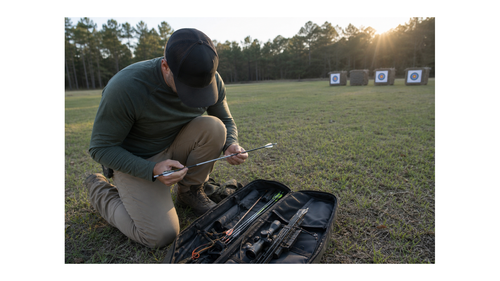
If you transport your setup regularly, protecting your investment matters as much as the sight itself. A well-fitted compound bow case keeps sensitive optics and electronics safe between sessions.
Frequently Asked Questions
How accurate are the distance readings on a rangefinding bow sight?
Most laser-based rangefinding bow sights are accurate to within one yard at typical archery distances, though accuracy can decrease in poor lighting, rain, or when the laser cannot find a clean reflective surface. Always confirm readings before committing to a shot, especially in challenging conditions.
Do I still need a separate handheld rangefinder if I have one of these sights?
Not usually, which is the main appeal of an integrated unit. However, some archers keep a handheld unit as a backup or use it for pre-scouting distances before a session. For most practical purposes, an integrated rangefinding sight replaces the need to carry a separate device.
What's the biggest mistake beginners make when switching to a rangefinding sight?
Skipping thorough calibration. Beginners often assume the sight works out of the box and are confused when shots do not land where expected. The rangefinder measures distance accurately, but the aiming system must be sighted in and mapped to your specific bow and arrow combination before the two halves of the system work together correctly.
Does angle compensation make a big difference at shorter distances?
At steep angles, yes — even at moderate distances. A 35-yard shot at a 30-degree downward angle has a meaningfully different ballistic requirement than a flat 35-yard shot. The difference shrinks at mild angles and shorter ranges, but on steep terrain it can be the difference between a clean hit and a miss.
Wrapping Up
A rangefinding bow sight is a genuinely useful tool when you understand what it does and how to set it up correctly. The laser measures distance, the sight's aiming system translates that measurement into a hold point, and angle compensation adjusts for terrain. Used well, it streamlines the ranging-and-aiming process into a single step. Used poorly — with skipped calibration, dead batteries, or unexamined cant — it adds complexity without improving accuracy. Take the time to learn the system thoroughly, and it rewards you with cleaner, more confident shooting at any distance.