Recurve crossbows and compound crossbows look similar at a glance but behave quite differently in the field, at the range, and on the workbench. Understanding those differences up front helps you understand what you're actually looking at before you ever pick one up.
Quick Answer: What Separates the Two Designs
A recurve crossbow stores all of its energy in curved limbs and fires through a single string, which keeps the mechanics simple but means the shooter feels the full draw weight when cocking it. A compound crossbow adds a cam-and-cable system that creates mechanical let-off, trading added complexity for higher arrow speeds and a narrower profile. The two platforms shoot, cock, and maintain differently as a result of this one mechanical choice.
Main Differences Between the Two Designs
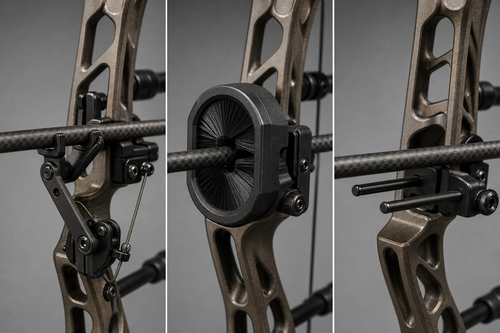
The core distinction comes down to the limb and cam system. A recurve crossbow uses long, curved limbs with no cables or cams — energy is stored entirely in the bend of the limbs, then released when the string is fired. A compound crossbow adds a cam (or cam-and-a-half) system connected by cables, which creates a let-off effect similar to a vertical compound bow. That mechanical advantage changes nearly every performance variable.
Limb Design and Overall Size
- Recurve crossbow: Longer limbs extend outward from the riser, making the bow wider from tip to tip. This wider profile requires more horizontal clearance when shooting from a blind or tight space.
- Compound crossbow: Shorter, stiffer limbs combined with the cam system allow a narrower axle-to-axle measurement, which is easier to maneuver in confined environments.
Draw Weight and Cocking Effort
- Both platforms require significant draw weight to generate usable arrow speeds. However, the cam system on a compound crossbow provides mechanical advantage throughout the draw cycle, meaning the peak weight is felt briefly before it eases at full draw.
- A recurve crossbow has no let-off. The shooter (or cocking aid) must overcome the full draw weight all the way to the cocked position. This makes cocking a recurve crossbow physically demanding without a cocking rope or crank device.
String and Cable Maintenance
- Recurve crossbow: Uses a single string. Inspection is straightforward, and string replacement is simpler — often something a confident shooter can handle without a bow press.
- Compound crossbow: Involves a string and multiple cables routed through cams. Replacement and tuning typically require a bow press and more technical knowledge, or a visit to a qualified technician.
Performance and Use Cases
Arrow Speed and Energy
Compound crossbows generally achieve higher feet-per-second (FPS) ratings at comparable draw weights because the cam system stores and releases energy more efficiently. This translates to a flatter trajectory and potentially more downrange energy. Recurve crossbows can still deliver plenty of power for most applications, but achieving equivalent speeds typically requires a higher peak draw weight.
Accuracy and Consistency
Both designs are capable of excellent accuracy in the hands of a practiced shooter. What influences accuracy most is the quality of the trigger, the rail, and the arrow — not the limb design itself. That said, compound crossbows tend to be more forgiving of slight form inconsistencies because the let-off reduces torque at full draw. Recurve crossbows reward clean technique and consistent cocking habits.
Noise and Vibration
Recurve crossbows generally produce more limb vibration and a sharper firing report due to the direct energy transfer from limbs to string. Compound crossbows, with their cam systems and limb stops, tend to have a smoother shot cycle and less felt recoil — though suppressor accessories and string dampeners can reduce noise on either platform.
Portability and Travel
Weight varies by model and materials, but compound crossbows often run heavier due to the cam hardware and shorter but denser limbs. Recurve crossbows can be lighter overall, though the wider limb span makes packing them a unique challenge. If you travel frequently with a crossbow, a quality crossbow case sized to your bow's dimensions makes a real difference — a case built for a narrow compound may not accommodate wider recurve limbs.
How the Differences Play Out in Practice
The mechanical differences above translate into different day-to-day experiences: a recurve crossbow tends to run lighter and simpler to maintain but wider and more physically demanding to cock, while a compound crossbow trades that simplicity for a narrower profile, a smoother shot cycle, and faster arrow speeds at the cost of needing a bow press and more technical service down the line. Shooters who already know recurve bow mechanics often find the transition to a recurve crossbow intuitive, while those prioritizing speed and a compact footprint for tight shooting positions tend to notice the compound's advantages most. If you already shoot a vertical recurve bow, some of the same instincts around form and consistency carry over, though crossbow technique has its own specific requirements — you can explore gear designed for recurve archers to see how accessories overlap across both disciplines.
Frequently Asked Questions
What's actually different between a recurve crossbow and a compound crossbow?
The fundamental difference is the limb and energy system. A recurve crossbow stores energy purely in its curved limbs and fires through a single string, while a compound crossbow adds cams and cables that create mechanical let-off, allowing more efficient energy storage and generally higher arrow speeds with a narrower physical profile.
Which one is easier to get started with as a beginner?
Many beginners find recurve crossbows more approachable because the mechanics are transparent — there is nothing hidden in a cable system, and basic maintenance is manageable without specialized tools. The tradeoff is that cocking a recurve crossbow without a cocking aid can be physically demanding. A compound crossbow with a built-in crank system reduces that effort but adds mechanical complexity.
Is one better than the other for target shooting at a range?
Both platforms perform well for recreational and competitive target shooting. Compound crossbows have an edge in arrow speed and can deliver a flatter trajectory at longer distances, which some target shooters prefer. Recurve crossbows are entirely competitive at standard range distances and are favored by shooters who enjoy the mechanical simplicity. Equipment class rules can also influence which platform is eligible if you plan to compete formally.
What's a common misunderstanding about these two types?
The most common misunderstanding is treating arrow speed as the whole story. Trigger quality, arrow weight, and overall balance affect real-world accuracy as much as the cam system does. It's also easy to underestimate how much more cocking effort a recurve crossbow takes without a cocking aid, and how much more service a compound's cams and cables eventually need.
Two Designs, Different Trade-Offs
The recurve crossbow vs compound crossbow comparison comes down to a trade-off between mechanical simplicity and performance specs: one favors ease of maintenance and a lighter package, the other favors speed and a narrower footprint. Understanding how the limb and cam systems actually work explains why the two platforms feel so different in the hand, on the bench, and on the range.