Skip to content
 cust@legendarchery.com
 302 503 5767
 Westfield IN 46074



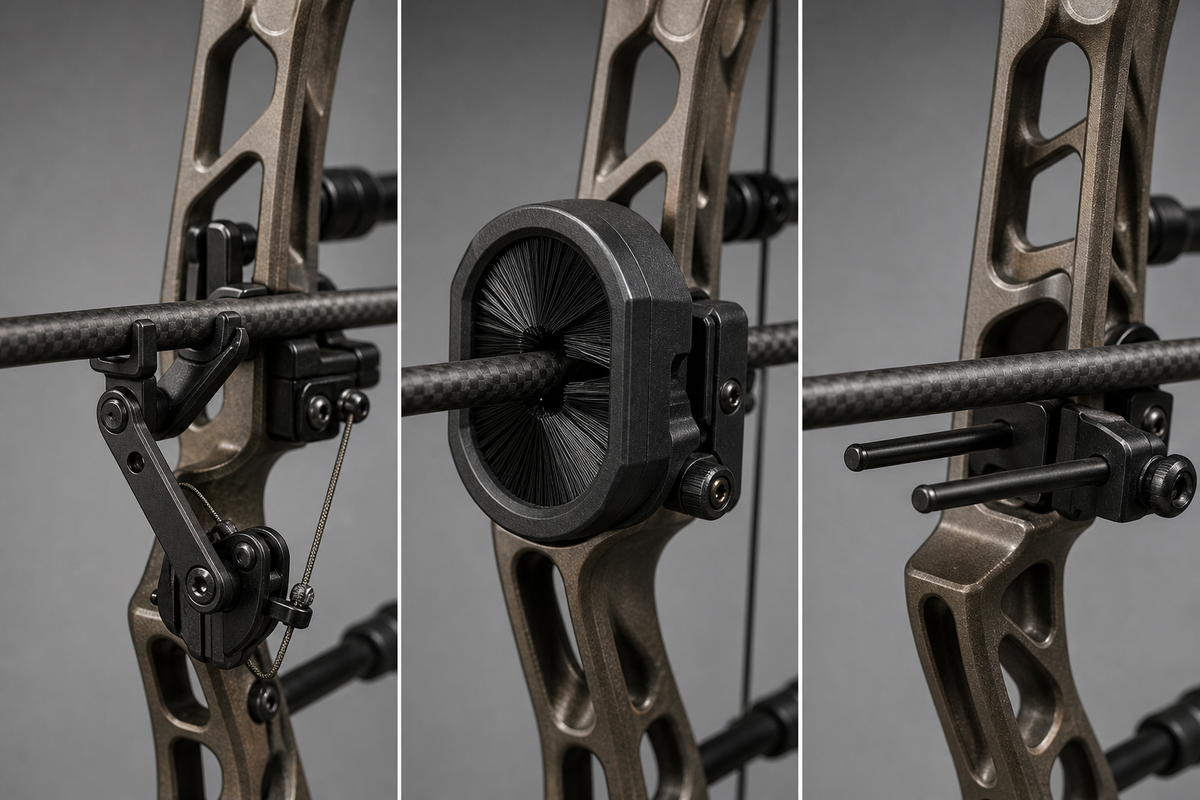
The arrow rest on a compound bow is one of the most influential components for shot consistency, yet it's often treated as an afterthought. Whether you're setting up your first bow or upgrading an existing rig, understanding how different rest designs work — and what trade-offs each one involves — will save you frustration on the range and in the field.
Why Your Arrow Rest Choice Matters More Than You Think
An arrow rest does more than hold your arrow in place. It determines how the arrow leaves the bow, how much contact occurs during the shot, and how forgiving the setup is for slight form errors. A poor match between your rest and your shooting style can introduce fliers, inconsistent nocking points, and clearance problems that no amount of tuning will fully fix.
Different disciplines also place very different demands on a rest. A competitive target archer shooting indoors wants something different from a bowhunter navigating thick brush. The good news is that the market offers well-developed solutions for each scenario — once you understand what you're choosing between.
The Main Types of Arrow Rests for Compound Bows
Drop-Away Rests
Drop-away rests — sometimes called fall-away rests — rise to support the arrow during the draw cycle and then drop clear of the arrow shaft the moment you release. Because the rest has physically moved out of the way before the arrow has fully left the bow, there is zero contact between the fletching and the rest during the shot. This produces exceptionally clean arrow flight and makes drop-aways a favorite for precision shooters and hunters running large-vane arrows or fixed-blade broadheads.
- Pros: Minimal fletching contact, excellent long-range accuracy potential, compatible with a wide range of arrow builds.
- Cons: More moving parts mean more potential for mechanical failure or noise; slightly steeper setup and timing process; the arrow can fall off the rest if you let down slowly without a containment system.
Within this category you'll find cord-driven designs (tied to the downward cable) and limb-driven designs (tied to the lower limb). Each has slightly different timing characteristics and tuning approaches.
Full-Capture and Containment Rests
Containment rests — the whisker biscuit being the most widely recognized example — fully surround the arrow shaft with bristles or a similar structure. The arrow cannot fall off at any angle, which makes these rests extremely practical for hunting, 3D archery, and beginners who are still building consistent nocking and loading habits.
- Pros: Arrow stays in place through brush, while drawing in the dark, or during an awkward shot angle; very simple setup; no timing or moving parts to worry about.
- Cons: The bristles do contact the fletching throughout the shot, which creates a small amount of drag and can cause slight vane wear over time; generally considered less precise at extreme distances compared to a properly tuned drop-away.
For most hunters and recreational shooters, the practical reliability of a containment rest outweighs the marginal accuracy difference at realistic shooting distances.
Shoot-Through and Prong Rests
Shoot-through rests use two horizontal prongs — sometimes called a V-prong or launcher — that support the arrow from below while allowing the fletching to pass between them. These are common on starter compound setups and remain popular for recreational target shooting. They offer a middle ground: simpler than a drop-away but with less fletching contact than a full-capture rest, provided the arrow is properly aligned so the vanes clear the prongs cleanly.
Blade-style launcher rests are a variation of this concept and are often found on mid-range target bows. They require careful tuning to ensure the arrow clears the blade without contact.
Key Features to Evaluate Before You Buy
Adjustability
A quality rest should offer independent micro-adjustment for windage (left and right) and elevation (up and down). This is essential for paper tuning and walk-back tuning. Rests with tool-free adjustment are convenient on the range; rests with locking set screws are more appropriate once your settings are dialed in.
Arrow Compatibility
Check that the rest is compatible with your arrow diameter and your fletching style. Large diameter vanes — popular with some hunting setups — need generous clearance. Helical fletching benefits most from a drop-away design where contact is eliminated entirely.
Noise and Vibration
Any metallic rattle, spring tension noise, or cord slap at full draw can alert game at close range. Look for rests with dampening materials integrated into the design if hunting is a priority. Test or research the sound profile before committing to a model.
Draw Cycle Integration
Drop-away rests require you to route a cord to either the buss cable or the lower limb. This affects how the rest times its fall and whether it stays elevated throughout the draw. Some archers find limb-driven designs more consistent on bows with significant limb deflection at full draw.
Matching Your Rest to Your Shooting Style and Experience
- Beginners: A full-capture containment rest is the most forgiving starting point. Arrow loading is simple, and there is no risk of the arrow falling off between drawing and shooting. Focus on form first; optimize later.
- Recreational target shooters: A prong or blade rest offers good value and adequate performance for indoor and outdoor target work at moderate distances. A basic drop-away also works well once you understand how to time it.
- Serious 3D or field archers: A well-tuned drop-away provides the clean arrow flight needed for consistent scoring at longer distances. Invest time in the setup process — it pays off.
- Hunters prioritizing reliability: A containment rest is often the sensible choice where silence and arrow retention through thick cover matter more than pushing the limits of accuracy at 80 yards.
Common Mistakes When Setting Up an Arrow Rest
- Not centering the arrow at the correct height: Set the nocking point so the arrow sits square to the string (or slightly nock-high) when it rests on the launcher. Getting this wrong affects tune from the start.
- Ignoring arrow spine: A rest cannot compensate for a poorly matched arrow spine. Before spending time tuning the rest, confirm your arrows are within the correct spine range for your draw weight and length.
- Over-tightening mounting hardware: Overtightening the riser mounting bolt can damage the rest body or strip threads in the riser. Snug and secure is the target — not maximum torque.
- Skipping the paper tune: Many archers mount a rest and go straight to distance shooting. Shooting through paper at close range first reveals whether the arrow is leaving the bow cleanly and shows you which adjustments to make before moving back.
- Failing to re-check after string stretch: New bowstrings and cables stretch during the break-in period. A drop-away cord tied to the cable may need re-timing after the first few hundred shots. Check the rest timing periodically.
- Assuming all rests fit all risers: Most rests mount to a Berger hole on the riser, but check the threading and hole position on your specific bow. Some bows have non-standard positioning that limits compatibility with certain models.
Protecting Your Setup Between Sessions
Once you've invested time in tuning your rest, protecting that setup during transport becomes important. Knocks and rough handling can shift windage and elevation settings, bend prongs, or disturb drop-away cord routing. A well-padded compound bow case keeps your bow — and all its tuned components — secure between sessions. If you're looking at transport options, Legend Archery's range of compound bow cases includes options built with thick closed-cell foam and internal fastening straps designed to protect your bow and accessories during travel.
For archers who spend time traveling to tournaments or hunting locations, the Boway Roller Bow Case features a TSA lock, airline-ready design, cam pockets, and padded impact protection that keeps everything where you left it. If you prefer a pack-style carry, the Gamma Bow Case (40in) can be worn as a backpack or carried over the shoulder, with padded cam protector pockets and interior mesh pockets to organize your accessories.
Frequently Asked Questions
What does an arrow rest actually do on a compound bow?
It supports the arrow on the riser during the draw cycle and through the moment of release. Without a rest, the arrow would sit against the riser shelf — a setup used on some traditional bows — but compound bows use dedicated rest mechanisms to guide the arrow cleanly off the bow and minimize contact with the riser during the shot.
Does the type of arrow rest affect accuracy at longer distances?
Yes, particularly beyond 40 yards where small inconsistencies in arrow flight become more visible on the target. Drop-away rests eliminate fletching contact, which reduces the variable of how the vanes interact with the rest on each shot. At shorter distances the difference is less pronounced, and a well-set-up containment rest can be perfectly adequate for most shooting scenarios.
What do beginners typically get wrong when fitting a rest for the first time?
The most common issues are incorrect nocking point height, skipping the paper tuning step, and not verifying that the arrow spine is appropriate for their bow setup. A rest can only work as well as the foundation underneath it — spine, nocking point, and draw weight all need to be in the right range before fine-tuning the rest position.
Can I switch rest types later without re-tuning my whole bow?
Changing rest types almost always requires at minimum a paper tune and probably a re-check of your nocking point height and center-shot alignment. A switch from a containment rest to a drop-away, for example, changes the arrow's vertical position and the way the fletching exits the bow. Plan for a full tuning session any time you change rest design.
Conclusion
Choosing the right arrow rest is a decision that should reflect your shooting discipline, experience level, and how much time you want to invest in the setup process. Containment rests reward simplicity and reliability; drop-aways reward precision and patience. Neither is universally superior — the best rest is the one that matches how and where you shoot. Get the basics right, tune it properly, and protect your setup between sessions, and your rest will rarely be the limiting factor in your accuracy.