A limb-driven arrow rest is one of the most popular rest styles among compound bow shooters, and understanding the mechanics behind it can make a real difference in how you set up and tune your gear. The core idea is straightforward: the rest is activated directly by the bow's limb movement, so the arrow support drops away at precisely the right moment in the shot cycle. Getting that timing right, however, takes a little more understanding than most beginners expect.
Why This Topic Matters for Consistent Shooting
Arrow flight begins the moment the string releases, and anything touching the arrow after that point can alter its path. A poorly timed or incorrectly installed rest introduces variables that no amount of aiming adjustment can fix. For anyone working toward tighter groups, whether at the range or in a field setting, understanding how a limb-driven arrow rest works is foundational knowledge — not optional fine-tuning.
Unlike a containment rest that holds the arrow in a fixed cradle throughout the shot, or a blade rest that relies on spring tension, a drop-away style rest removes itself from the arrow's path during the shot. This eliminates contact between the rest and the fletching, which is one of the primary causes of inconsistent arrow flight. The limb-driven design achieves this drop with mechanical reliability because it draws its energy from the limb itself rather than from a separate spring or cord attached to the cable.
Core Principles: The Mechanics Behind Limb-Driven Activation
To understand what separates a limb-driven rest from other drop-away designs, it helps to look at the two main categories of drop-away rests: cable-driven and limb-driven.
- Cable-driven rests attach a cord to the bow's downward-moving cable (the buss cable or control cable). As the bow is drawn, the cable pulls the rest into the upright, arrow-supporting position. When the string releases, the cable relaxes and the rest falls.
- Limb-driven rests attach a cord directly to a bow limb (the upper or lower limb, depending on the rest's design). At brace height the cord is taut, holding the rest down. As the bow is drawn, the limb flexes and the cord goes slack, letting an internal spring lift the rest. When the string fires and the limb snaps back to brace height, the cord pulls taut again and yanks the rest back down.
The practical result of the limb-driven approach is a rest that rises smoothly during the draw and falls confidently at the shot. Because the limb's movement is smooth and consistent from shot to shot, the rest's timing is equally consistent. There are no cable accessories or d-loop interference points to worry about, and the cord attachment point is typically less congested than the cable area on many modern compound bows.
The Role of Cord Length and Attachment Point
The cord that connects the rest housing to the limb is the most critical variable in the system. A cord that is too tight restricts how much slack can develop as the limb flexes through the draw, so the rest may rise late or not fully by the time you reach full draw. A cord that is too loose can leave slack in it even at brace height, so the rest doesn't seat firmly in its down position and may not snap fully clear of the arrow's path after the shot. The ideal cord length holds the rest in its full upright position when the bow is at full draw, and lets the cord pull taut again fast enough to drop the rest completely clear of the arrow's path before the fletching arrives at the rest position.
Most manufacturers route the cord around the limb bolt area or through a small tie-in point near the pivot of the limb it's designed to attach to. This keeps the cord out of the way of the hand and grip. The attachment point on the rest itself feeds into an internal arm or lever that physically raises the arrow support tine or launcher blade as the cord goes slack and lets the internal spring take over; pulling the cord taut again is what forces that same arm back down.
What Happens During the Shot
Breaking the shot cycle into stages makes the mechanics clearer:
- At rest (brace height): The bow limbs are under moderate pre-load. The cord is taut, holding the rest down in its lowered position. The arrow rests in the launcher or tines, supported partly by gravity and the nock on the string.
- During the draw: As the archer draws the string back, the limb flexes. The cord goes slack, and an internal spring pushes the rest's arm upward. The launcher rises, cradling the arrow more firmly.
- At full draw: The limb is at maximum flex. The cord is at its most slack and the spring-loaded rest is locked in its upright position. The arrow is fully supported and aligned with the berger hole.
- At the shot: The string releases. The limb immediately begins its return toward brace height. The cord pulls taut again almost instantly, yanking the rest back down. By the time the arrow has traveled only a few inches down the riser, the launcher has dropped well clear of the arrow's path.
- Fletching passes: With a correctly timed and installed limb-driven rest, the launcher blades or tines are completely out of contact with the arrow before the fletching reaches that position. The arrow exits with no fletching contact.
This sequence is what makes the design popular for archers focused on fletching clearance. For more background on how different arrow rest designs compare and what each one offers, the fundamentals are worth reviewing before committing to a rest style. Drop-away designs like this one suit target and hunting setups well, but they are not the right fit for every discipline -- bowfishing's wet, high-cycle conditions favor simpler gear, as Legend's guide to arrow rest setup for bowfishing explains.
Practical Guidance: Setting Up a Limb-Driven Rest Correctly
Even a well-made rest will perform poorly if it is installed without attention to a few key details.
- Mount the rest body first. Secure the rest to the riser's berger hole before attaching the cord. Set arrow height and horizontal position using the rest's adjustment screws, then leave those settings alone while you work on the cord.
- Attach the cord to the limb the rest is designed for. Start it snug, not yet at final tension. Draw the bow to full draw and observe how much slack develops in the cord. You want the rest to reach its full upright position just before you reach full draw — not halfway through the draw stroke.
- Check full draw position. At full draw, the launcher should be level and the arrow should be fully supported. If the rest is still partially raised or is at an angle, adjust the cord length.
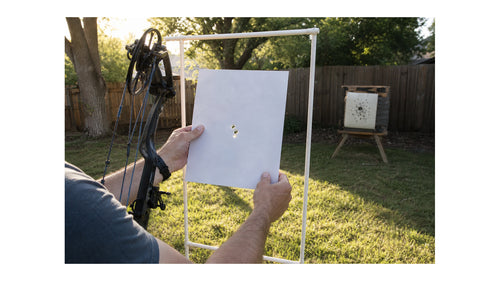
- Verify clearance at the shot. Use white foot powder or lipstick applied to the arrow shaft near the rest, then shoot into a target. Inspect the shaft for contact marks. Even slight smearing near the launcher indicates the rest has not fully dropped before that point on the shaft passed through.
- Check nock travel. Make sure the rest drops with enough authority that the launcher does not rebound upward and contact the arrow on the return. A slow or stiff internal arm can cause this on some designs.
Proper arrow nock positioning on the string also affects how the rest performs. A nock that sits too high or too low will change the arrow's angle at full draw, which affects the contact between the arrow and the launcher blades. These two adjustments — rest height and nock position — are always tuned together.
Common Mistakes Archers Make with Limb-Driven Rests
These are the errors that show up most often, particularly with shooters who are new to drop-away rest technology.
- Attaching the cord to the wrong limb. Each limb-driven rest is engineered for a specific limb, upper or lower, per the manufacturer's instructions. Tying the cord to the other limb inverts the timing — the rest rises during the draw and drops at full draw, the opposite of what you need.
- Using a cord that is too tight. Not enough slack develops during the draw for the internal spring to lift the rest fully, so the arrow has minimal support at full draw and groups open up without any obvious cause.
- Skipping the clearance check. Assuming the rest is timed correctly without verifying with powder or a contact test leads to undetected fletching interference that is often blamed on form.
- Ignoring cord stretch over time. New cord material stretches with use. If it isn't periodically re-tightened, slack creeps in even at brace height and the rest can start to ride up before the draw even begins, interfering with how the arrow seats in the launcher.
- Forgetting to re-check after a bow press. Any time the bow limbs are removed or the string is changed, the cord position can shift. A new bowstring — even one of the same length — can alter timing. Always re-verify the rest after any significant bow work.
- Ignoring the internal arm condition. Over time, the pivot arm inside the rest can wear or loosen. If the rest develops a wobble or inconsistent drop, inspect the housing before blaming other components.
Frequently Asked Questions
How is a limb-driven rest different from a cable-driven drop-away?
Both are drop-away designs, but the activation source is different. A cable-driven rest connects to the bow's buss cable or control cable, which moves as the bow is drawn. A limb-driven rest connects directly to one of the bow's limbs (upper or lower, depending on the rest's design) with a separate cord. Many archers prefer the limb-driven style because it keeps the cord away from the cable area and tends to be simpler to route on modern bows with tight cable clearances.
Does the rest need to fall completely before the arrow leaves the bow?
Not necessarily before the arrow leaves the bow entirely, but it does need to fall clear of the launcher position before the fletching reaches that point. The arrow travels down the riser before the fletching arrives at the rest, so the launcher has a brief window to drop. A correctly set up limb-driven rest achieves this easily because the limb begins its return the instant the string fires.
What can cause inconsistent groups even with a drop-away rest?
Several things can affect group consistency beyond the rest itself — including nock fit, spine selection, and release technique. Within the rest system, the most common culprits are a cord that is inconsistently tensioned at full draw, a worn internal pivot arm, or a launcher blade that is not fully seated. It is also worth checking that the rest screws have not loosened over time, as vibration from shooting can back out adjustment screws gradually.
Can a limb-driven rest be used on any compound bow?
Most limb-driven rests are designed for compound bows with limb pockets that allow a cord to be tied around the limb the specific rest model calls for. The vast majority of modern compound bows are compatible, but it is worth checking that the limb pocket design on your specific bow allows for a clean, low-friction cord path before purchasing a rest. Some parallel limb designs have tight limb pockets that make cord routing more difficult.
Final Thoughts
A limb-driven arrow rest is a mechanically elegant solution to one of archery's oldest challenges: keeping the arrow supported through the draw while getting completely out of the way at the shot. The key to getting the most from this design is understanding the cord-to-limb relationship, verifying clearance with a contact test, and re-checking timing any time the bow's string or limbs are serviced. When set up correctly, it removes one of the most common sources of inconsistent arrow flight and lets form and execution take center stage.