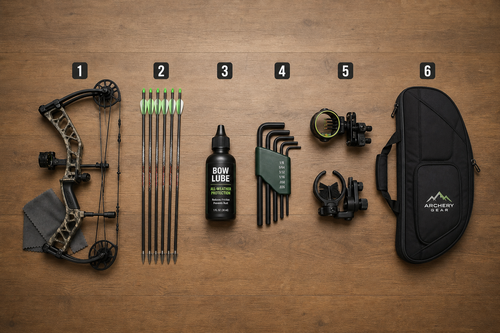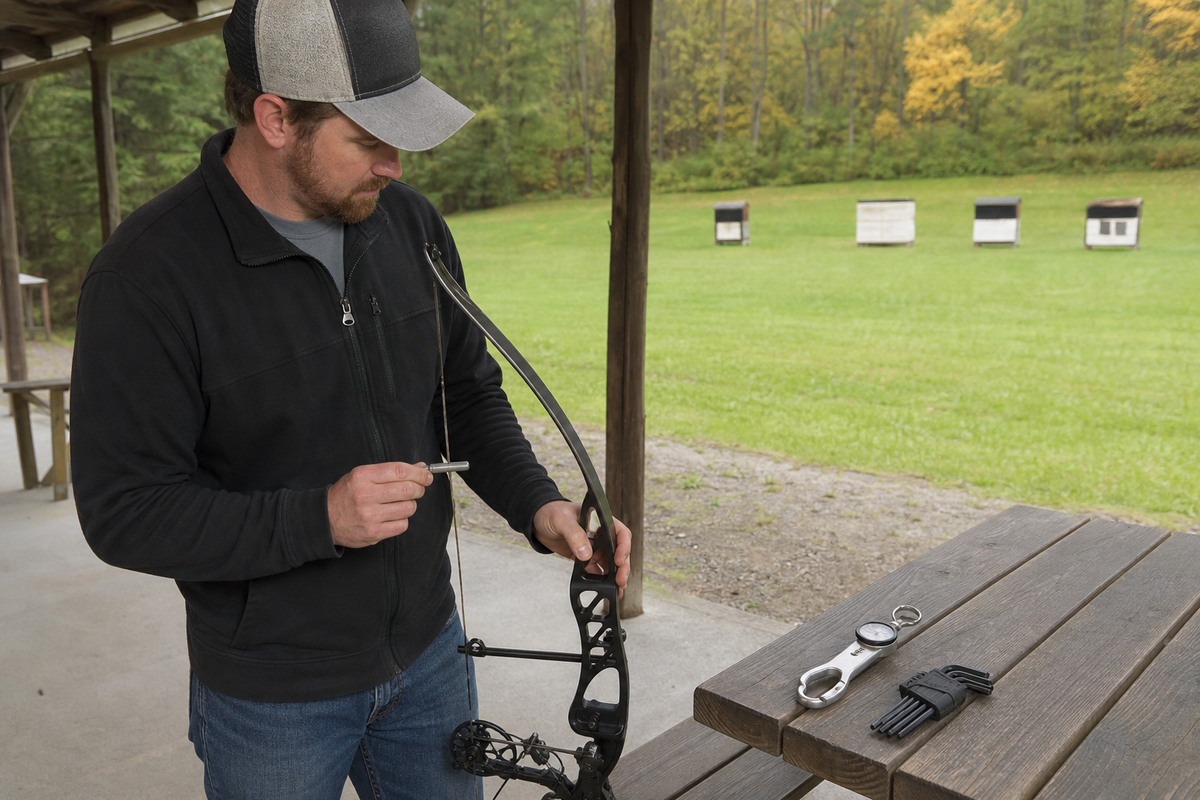
Getting clean arrow flight isn't just about shooting form — your bow has to be set up correctly before good technique can show up on the target. Bow tuning tools are the instruments that make that setup precise and repeatable. Whether you shoot compound or recurve, understanding these tools and how to apply them will save you time at the range and help you troubleshoot problems that form alone can't fix.
Why Tuning Your Bow Matters
Even a well-made bow will produce inconsistent arrow flight if the components aren't aligned and set within appropriate parameters. A rest positioned too high, a nock point set too low, or a draw weight that varies between sessions can all introduce variables that make groups open up. Tuning eliminates as many of those variables as possible so that when a shot goes wide, you can honestly look at your process rather than your equipment.
Tuning is also progressive. You don't do it once and walk away. As limbs wear in, as you change arrow spine, or as the temperature swings between seasons, your bow's behavior can shift. Keeping a small set of reliable instruments on hand means you can make quick, accurate adjustments rather than guessing.
The Core Bow Tuning Tools and What They Do
Bow Square
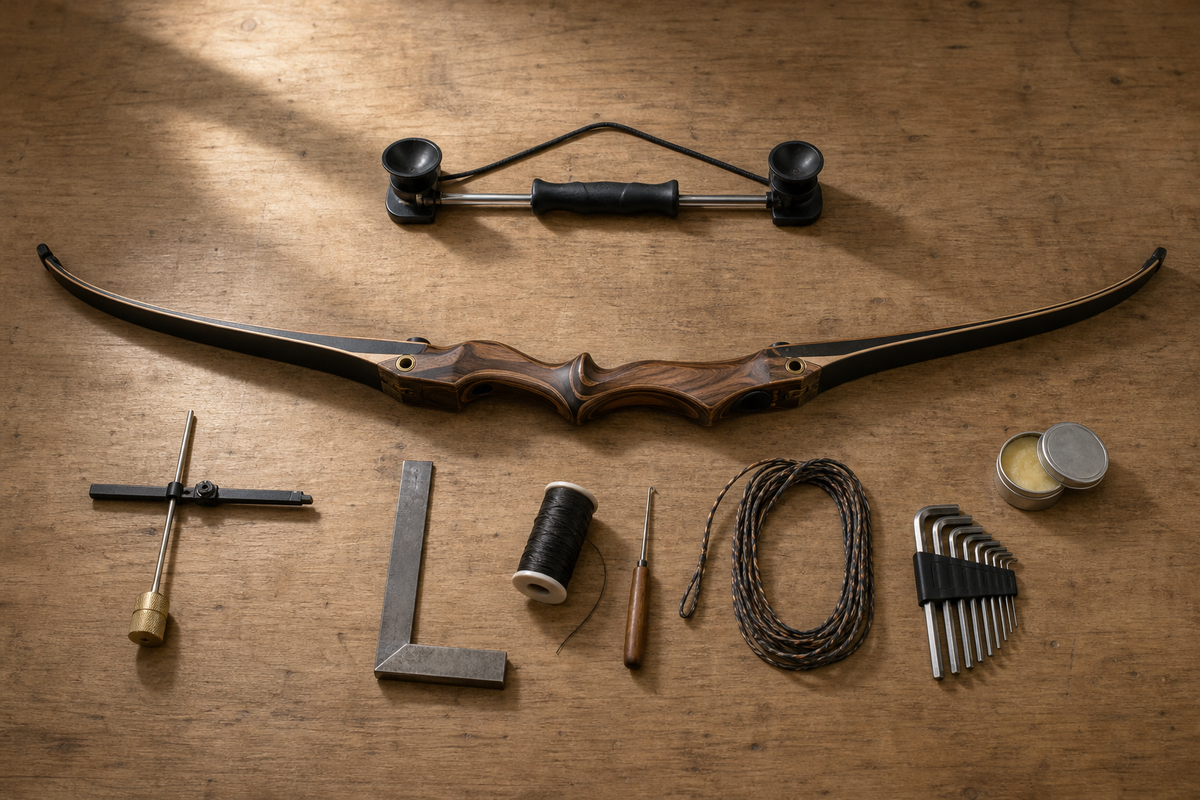
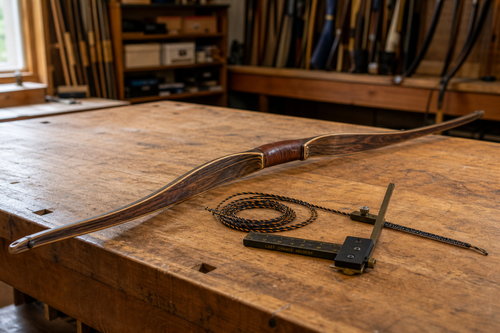
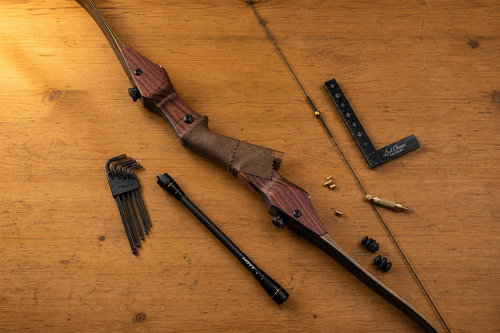
A bow square — sometimes called a T-square — attaches to the string and rests against the arrow shelf. It lets you measure brace height and set your nocking point at a precise, repeatable position relative to the arrow rest. Brace height affects how the string behaves through the power stroke and influences the bow's forgiveness. The nocking point position directly controls the angle at which the arrow launches, so getting this right is foundational to everything else.
Use your bow square at the start of every tune and again after changing strings or limbs. Small shifts in nock point height — even a millimeter or two — can produce a noticeable change in arrow flight.
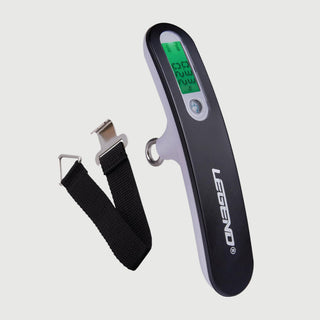
Draw Weight Scale (Bow Scale)
A bow scale measures actual draw weight at a given draw length. This matters for several reasons: limb bolts can creep, and two bows of the same nominal poundage often pull differently at the same draw length. For recurve archers, limb weight is the whole story; for compound shooters, a scale helps verify let-off and peak weight after any adjustment.
Consistency in draw weight also matters when you're matching arrows to spine charts. If you change your draw weight by several pounds, the spine recommendation for your arrows changes with it.
Paper Tuning Frame
Paper tuning is one of the most direct feedback methods available. You shoot an arrow through a sheet of paper mounted in a frame, and the tear pattern tells you how the arrow was oriented when it passed through. A perfect bullet hole means the arrow is flying nock-first and straight. Tears in specific directions point to specific problems — a high tear often means the nock point is too low, while a left tear (for a right-handed archer) often indicates a rest or center shot issue.
A paper tuning frame can be as simple as a wooden frame with paper stretched across it. What matters is that it's held at a consistent distance (typically six to eight feet from the bow) and the paper is taut.
Plunger or Pressure Button (Recurve)
For recurve archers, the plunger button sits in the riser to the side of the arrow pass and absorbs the lateral flex of the arrow as it clears the bow. Adjusting the plunger's spring tension and its outward extension is a core part of recurve tuning. Too stiff and the arrow kicks out; too weak and it kicks in. A properly set plunger works with the arrow's spine to produce a straight exit.
Allen Key / Hex Key Set
Not glamorous, but essential. The vast majority of adjustments on a modern compound or recurve setup — rest position, sight position, stabilizer mounts, limb pockets — require Allen keys. A complete set in both metric and imperial sizes prevents the frustration of stripping hardware by using the wrong size.
Knock Points and Nock Sets
Nock sets — either brass crimp-on sets or tied serving — establish the precise position on the string where your arrow nocks. Without a secure nock point, the arrow's starting position changes with every shot. Installing brass nock sets requires a nock plier, which applies even pressure without damaging the serving.
Bow Stringer (Recurve and Traditional)
For recurve and traditional archers, a bow stringer is both a safety tool and a tuning prerequisite. Stringing a recurve by hand can twist the limbs out of alignment, introducing a form of limb torsion that no amount of nock point adjustment will fix. Using a bow stringer ensures the limbs flex evenly and sit correctly in the limb pockets, which is the starting point for any reliable tune.
Practical Process: Putting the Tools Together
Tuning isn't a single step — it's a sequence. Working out of order wastes time and produces misleading results. Here's a logical progression:
- Set brace height first. Use your bow square to confirm the string is at the correct distance from the pivot point of the grip. This is your starting baseline.
- Set the nock point. Attach your nock set at the correct height above square (typically 1/8 to 3/8 of an inch for most setups, though this varies). Lock it in place.
- Verify draw weight. Use your bow scale to confirm you're at the poundage you've matched your arrows to.
- Adjust center shot. Position your rest so the arrow is aligned through the bow's centerline (or slightly past center for recurve). Many archers use a string alignment method or a laser tool for this.
- Paper tune. Shoot through paper at close range and read the tear. Make incremental adjustments and repeat until you get a clean bullet hole.
- Walk-back or bare shaft tune. These methods confirm that your tune holds as distance increases, not just at close range.
Common Mistakes Archers Make with Tuning Tools
- Skipping the sequence. Adjusting the rest before confirming brace height or nock point leads to chasing symptoms rather than causes.
- Making too many changes at once. Change one variable, shoot a few arrows, evaluate. Changing three things simultaneously makes it impossible to know what produced a result.
- Ignoring worn or damaged equipment. Old serving, a cracked nock, or a bent rest will produce inconsistent results that no tuning method can resolve.
- Using the wrong arrow spine. Tuning tools can refine a setup but can't fully compensate for arrows that are significantly mismatched in spine to your draw weight and draw length.
- Not re-tuning after equipment changes. Changing arrows, limbs, strings, or even just the type of release you use on a compound can require starting the process over.
- Reading paper tears incorrectly. Paper tuning results are affected by shooting form. If you're plucking the string or gripping the bow too tight, the paper will show that — not a tuning problem. Establish consistent form before drawing conclusions from paper tears.
Storing and Transporting Your Equipment Properly
A well-tuned bow can go out of alignment during transport if it's bumped or if the case doesn't support the limbs properly. This is easy to overlook, but it matters — particularly for recurve archers who have spent time dialing in limb alignment. A good bow case protects your setup between sessions so you're not starting from scratch each time you arrive at the range.
For recurve archers who carry their gear to the range on foot, having a system that keeps the bow and accessories organized and protected is just as important as the tuning itself. The Artemis Recurve Bow Backpack from Legend is built with thick expanded foam padding on all surfaces to protect against accidental drops and impacts, includes wide backpack straps for even weight distribution, and accommodates risers up to 27 inches along with a telescopic arrow case — keeping everything you need in one place for a range session.
Frequently Asked Questions
What exactly does a bow tuning tool do?
Bow tuning tools are instruments that help you measure, set, and verify the positions and tensions of the components on your bow. They don't shoot for you — they give you accurate reference points so your setup is consistent and repeatable rather than estimated by eye.
Why does tuning matter more than just practicing form?
Form and tuning work together. Even excellent form produces inconsistent results if the nock point is in the wrong position or the rest isn't aligned correctly. Tuning eliminates equipment variables so that when you improve your form, it shows up in your groups. The two reinforce each other rather than operating independently.
What's the most common beginner mistake when tuning a bow?
The most common mistake is making multiple adjustments at the same time. If you move the rest and change the nock point in the same session and your groups improve, you don't know which change helped. Adjust one thing at a time, verify the result, then move on.
How often should you re-tune?
At a minimum, check your tune whenever you change strings, arrows, limbs, or any component that affects the arrow's path or the bow's draw cycle. Many archers also do a quick paper tune check at the start of a new season, as temperature and humidity changes can subtly shift how components behave.
Can you tune a bow without specialized tools?
Some steps — like a rough nock point check or a visual center shot estimate — can be done without purpose-built tools. But a bow square and a draw weight scale are inexpensive and remove a significant amount of guesswork. For consistent, reliable results across sessions, the right tools are worth having.
Final Thoughts
Bow tuning tools aren't magic — they're precision instruments that give you accurate information at each step of the setup process. Work through the sequence methodically, change one variable at a time, and treat the process as ongoing rather than one-time. That approach, more than any single tool, is what produces a bow that performs the same way every time you pick it up.