Skip to content
 cust@legendarchery.com
 302 503 5767
 Westfield IN 46074


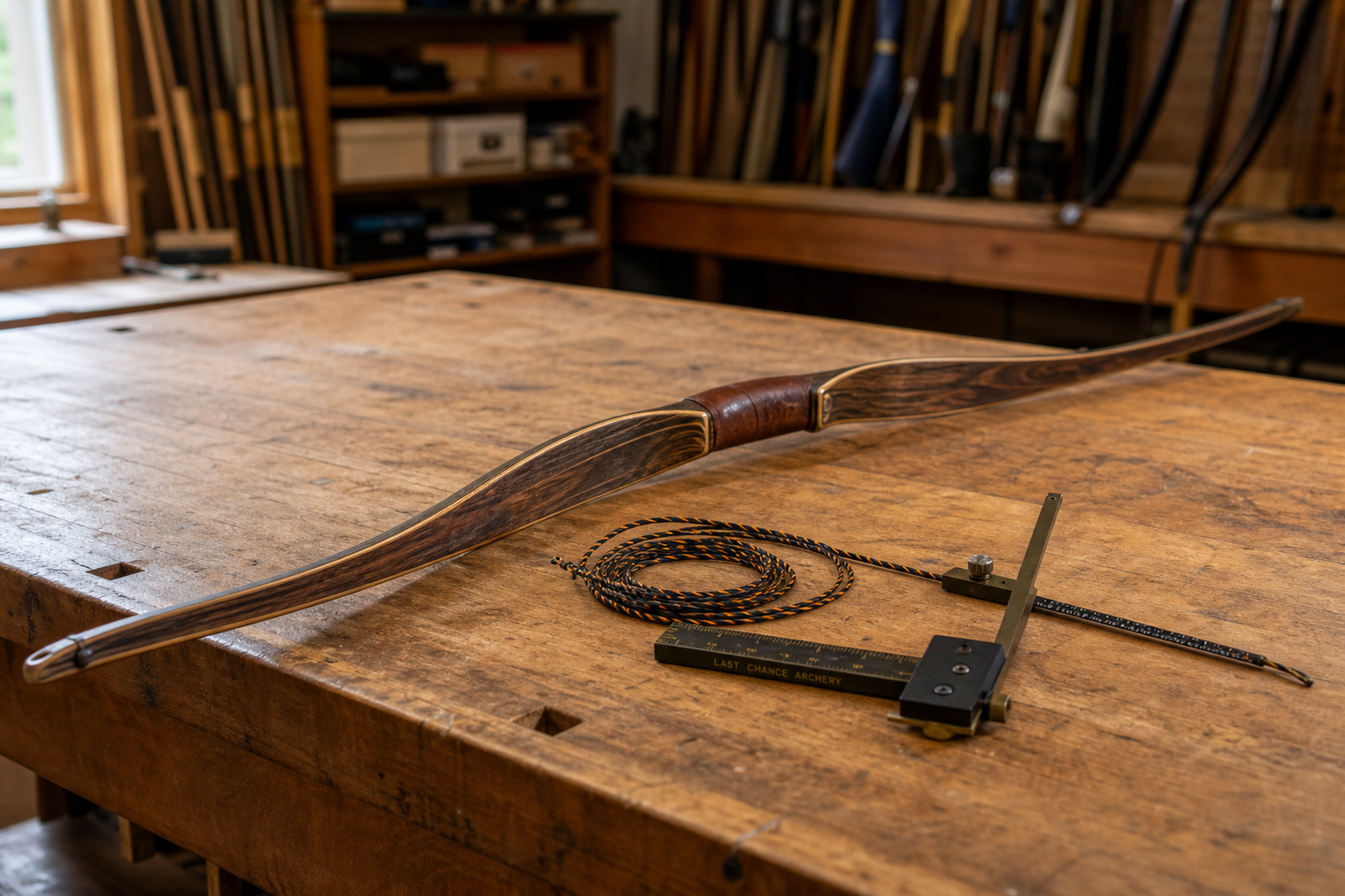
Whether you pulled it from a dusty garage, inherited it from a relative, or picked it up at a garage sale, an old bow raises a simple question: is it still safe and worthwhile to shoot? The answer depends entirely on what you find when you look closely. This guide walks you through assessing condition, understanding what you have, and deciding what to do next.
Why an Old Bow Deserves Careful Attention
Archery equipment can last decades when stored and maintained correctly. Many traditional recurves and longbows from the mid-20th century are still functional, and some are genuinely excellent shooters. The problem is that storage conditions vary wildly. A bow left in a hot attic, exposed to moisture, or stored strung for years may have suffered damage that is not immediately visible to the untrained eye.
The stakes matter here. A bow limb that fails under draw can cause serious injury. Before nostalgia takes over, give the bow a proper technical review. That is not pessimism — it is good archery practice.
Identifying What You Actually Have
Start with the basics. Look for any markings on the riser or limbs: a brand name, model, draw weight, and recommended brace height. These are often stamped near the limb pocket or printed on a sticker near the handle. If you can identify the manufacturer and model, you can usually find documentation online or through archery forums.
- Recurve or longbow? Recurves have limbs that curve away from the archer at the tips. Longbows are more continuously curved or straight. Both can age well, but their inspection criteria differ slightly.
- One-piece or takedown? A takedown recurve has limbs that detach from the riser. This affects how you inspect the limb bolt connections for wear or cracks.
- Wood, fiberglass, or laminate? Many vintage bows use laminated wood and fiberglass construction. All-wood selfbows are rarer and more sensitive to humidity changes.
If the bow has no markings at all, treat it as an unknown quantity and be conservative in your assessment. If you are curious about traditional designs that follow similar construction principles, traditional recurve bows give useful context for what quality construction looks like.
How to Inspect an Old Bow Properly
A thorough visual and physical inspection takes about ten minutes and tells you most of what you need to know before stringing the bow.
Limb Inspection
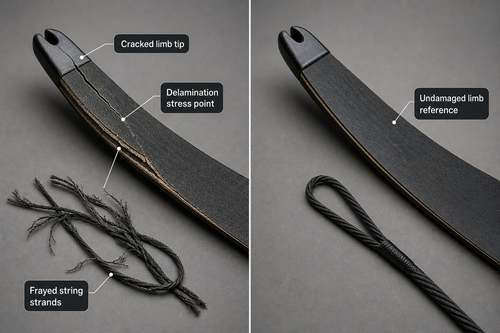
- Look for cracks, delamination, or separation between layers. Run your finger along each limb face and edge. Any raised bubble or separation is a red flag.
- Check for twists. Sight down each limb from tip to riser. A limb should track straight. Even a minor twist can affect arrow flight and increases stress on one side of the limb.
- Inspect the limb tips for chips, cracks, or worn string grooves. The grooves should be smooth and hold the string securely without sharp edges that could fray the bowstring.
Riser Inspection
- On a wooden riser, look for cracks near the limb pockets, around the sight window, and along the grip. These are high-stress areas.
- On a metal or machined riser, check for corrosion, especially at any threaded inserts or bolts.
- The arrow rest area and shelf should be intact and free from deep gouges that might affect arrow flight.
String and Brace Height
- Never shoot an old bow with an unknown or deteriorated string. Replace it before drawing. Old strings can snap unpredictably and are inexpensive to replace.
- Use the manufacturer-recommended brace height if you can find it. If not, start with a conservative mid-range measurement for the bow type and adjust from there.
- A too-low brace height stresses the limbs more than necessary and reduces forgiveness. A too-high brace height reduces performance.
Draw Weight and Your Own Fitness
Many vintage bows, particularly those made for adult men in the 1960s and 70s, were built at draw weights of 45 lbs and above. That was standard at the time. If you have not been shooting regularly, starting at that poundage is a reliable path to poor form and shoulder strain.
If the bow is adjustable or if you are considering alternatives, a modern recurve bow in an appropriate draw weight might be a smarter starting point while you rebuild strength and technique. The old bow can still be your project bow — just do not force your body to adapt to it before you are ready.
Practical Steps Before Your First Shot
- Replace the string. Fit a new string with the correct number of strands and length for the bow's AMO specification if known.
- Set correct brace height. Use a bow square and adjust the string twist until brace height falls within the recommended range.
- Do a flex test, not a full draw. String the bow and gently flex each limb by hand before drawing. Listen for any cracking sounds or watch for unexpected movement.
- Start at half draw. Draw the bow to roughly half your normal draw length first and hold for a second. If nothing concerning happens, gradually progress over a few sessions.
- Shoot at short range first. Begin at five to seven metres into a large target butt. This is not about accuracy — it is about confirming the bow behaves predictably under load.
Common Mistakes When Shooting a Vintage Bow
- Assuming age equals damage. Some shooters write off old equipment too quickly. A well-stored bow with clean limbs and a good string may perform excellently. Inspect before you judge.
- Assuming age means safety. The opposite mistake is equally common. Just because a bow looks intact does not mean internal delamination has not weakened the limbs. Touch and flex every surface.
- Using mismatched arrows. Vintage bows often have specific spine requirements based on draw weight and draw length. Shooting arrows that are too lightly spined for the bow causes erratic flight and can increase strain on release.
- Skipping the string replacement. Old strings are the single most common reason vintage bows fail dangerously. This is an easy, low-cost fix — do not skip it.
- Ignoring storage from here on. Once you have restored a bow to working condition, store it properly. Unstring it between sessions, keep it away from heat and moisture, and use a quality bow case for transport and long-term protection.
- Dry firing to test it. Never draw and release a bow without an arrow nocked. The energy has nowhere to go and transfers directly into the limbs, causing damage even in healthy bows.
When to Let It Go
Some old bows are simply not worth restoring. If you find significant delamination, multiple cracks across a limb, or the riser shows structural damage near the limb pockets, the bow has likely reached the end of its useful life. This is not a failure — it is a realistic assessment. A damaged bow that fails at full draw is far more costly than the sentimental value of the equipment.
If the bow belonged to a family member, keeping it displayed rather than shooting it is a perfectly valid choice. The craftsmanship in many vintage pieces is worth appreciating even when the bow is no longer safe for active use.
Frequently Asked Questions
How do I know if an old bow is still safe to shoot?
Inspect both limbs carefully for cracks, delamination, or twists. Replace the bowstring before drawing. Do a gentle half-draw test before progressing to full draw. If anything feels or sounds wrong at any stage, stop and have the bow evaluated by a professional bow technician.
Can an old bow be as good as a new one?
In some respects, yes. Many vintage recurves were built to high standards and shoot very well when properly maintained. They lack modern features like adjustable limb bolts or accessory mounting, but for traditional shooting, a well-preserved older bow can absolutely hold its own.
What are the most common problems beginners overlook with a used bow?
The most overlooked issues are internal delamination (which is invisible until failure), incorrect brace height, and a deteriorated string. Beginners often focus on visible surface condition and miss these three critical points.
Does draw weight decrease in an old bow over time?
Yes, limb fatigue is real. Bows that were stored strung for extended periods, or used heavily without rest, can lose some of their original draw weight and snap-back speed. This is called limb set or string follow, and it is generally permanent.
Bringing It Back to Life
An old bow that passes a proper inspection and gets a fresh string can offer a genuinely rewarding shooting experience. Take the time to identify what you have, go through the inspection steps methodically, and build up your shooting gradually. The history in the equipment is part of the appeal — just make sure the bow is ready to match your enthusiasm before you step to the line.