Bowfishing puts gear through conditions that target archery never does — water spray, slime, mud, and constant retrieval of heavy fiberglass or solid carbon arrows. Your arrow rest setup has to handle all of that without failing mid-session. Getting it right from the start keeps your shots accurate and your equipment functional, whether you're shooting from a boat deck or wading a shallow flat.
Why Your Rest Choice Matters More in Bowfishing Than in Target Shooting
In conventional archery, the rest's main job is to support the arrow at full draw and get out of the way cleanly at the shot. In bowfishing, the demands are different in a few key ways:
- Arrow weight: Bowfishing arrows are significantly heavier than standard hunting or target arrows. A rest that handles a 350-grain carbon arrow may wobble or fail under a fiberglass bowfishing shaft, which typically runs 1,400 to 1,800 grains.
- Constant cycling: You may shoot dozens of times in a single outing. The rest needs to reset reliably every time without manual fiddling.
- Wet conditions: Corrosion, warping, and debris fouling are real concerns. Rest materials and designs that trap water or dirt become a liability.
- Shot angle: Bowfishing often involves shooting down at steep angles toward the water surface, which changes how arrow weight loads onto the rest at full draw compared to a level shot.
Understanding these demands shapes every decision you make during setup.
Rest Types Used in Bowfishing and How They Differ
Not every arrow rest design suits bowfishing equally well. Here's how the main categories perform in this application:
Shoot-Through Rests (Prong or Whisker Biscuit Style)
Shoot-through prong rests — sometimes called catfish or V-prong rests — are by far the most common choice among bowfishers. The arrow sits in an open V or Y made of two flexible prongs, usually rubber or stainless wire. At the shot, the arrow passes between or over the prongs with minimal contact.
Why bowfishers favor them:
- Simple to wipe clean after a slimy retrieval
- No moving parts to corrode or jam
- Naturally accommodates heavier arrows without bending or shifting
- Fast arrow loading — important when you're spotting fish quickly
A whisker biscuit-style rest fully encloses the arrow shaft, which some bowfishers prefer for security when moving through brush or over rough water. Bowfishing arrows are unfletched, so the trade-off isn't fletching wear — it's bristle drag against the bare shaft and more surface area to collect grime.
Drop-Away Rests
Drop-away rests have mechanical components that drop the rest arm out of the arrow's path at the shot. They're excellent for hunting and 3D shooting, but their moving parts are vulnerable to corrosion in wet environments. Most experienced bowfishers avoid them unless they're committed to thorough cleaning after every use.
Simple Shelf Rests
Some recurve bowfishing setups use a basic stick-on shelf rest or even shoot off the shelf directly. This keeps things as simple as possible. The limitation is that arrow flight may be less consistent, especially with heavier arrows that flex more at the shot.
Core Setup Principles for Bowfishing
Once you've chosen a rest type, the actual arrow rest setup for bowfishing follows a logical sequence. Getting each step right before moving to the next saves frustration later.
1. Set Rest Height for Proper Arrow Alignment
The arrow should sit roughly at or just below the center of the bow's berger hole (the threaded hole in the riser where the rest mounts). Many bowfishing rests mount directly to this hole. Use a level or a nocking point gauge to verify that the arrow is sitting square — not tilted left, right, up, or down — relative to the riser.
Heavy bowfishing arrows exaggerate any misalignment. Even a few millimeters off-center will affect where the arrow goes, particularly at closer ranges where most bowfishing shots occur.
2. Establish Centershot
Centershot refers to the left-to-right position of the rest relative to the bow's string. Looking down from above at full draw, the arrow should appear to point straight through the string toward the target — not angled noticeably left or right. Most compound risers have an arrow shelf with a centershot mark or the rest mounts to a dovetail that allows side-to-side adjustment.
For recurve bowfishing setups, this adjustment is usually handled with the rest's mounting position or a small shim. Getting centershot correct means the arrow isn't fighting the riser on departure.
3. Set Your Nocking Point
Your nocking point (the position on the string where the arrow nock clips or sits) works in combination with the rest height. A common starting position is to set the nocking point so the back of the arrow sits approximately 1/8 inch above square (perfectly level with the rest). This slight upward tilt helps heavier arrows clear the rest cleanly on departure. From there, adjust based on where your arrows are hitting and how they're flying.
For more background on nocking mechanics, the Legend Archery arrow nock guide covers nock types and fitting in useful detail.
4. Account for Line Clearance
Bowfishing arrows attach to a line connected to your reel. That line runs forward from the reel (usually mounted near the stabilizer bushing or below the sight window) to the arrow. At the shot, the line must clear the rest, the riser, and any other components without snagging. Route the line so it doesn't loop around the rest or cross the riser face. Test this by going through a slow-motion draw before your first real shot.
5. Test and Paper-Tune
Even in bowfishing, a quick paper-tuning check is worth doing. Shoot through a sheet of paper held vertically at close range (about 6 feet). A bullet hole or near-bullet hole means the arrow is exiting the bow cleanly. Tears that extend left, right, up, or down indicate the rest position, nocking point, or centershot needs adjustment. With heavy bowfishing arrows, the tuning process is usually faster because the stiff shafts are less forgiving of setup errors — problems show up quickly.
Common Mistakes Beginners Make
Most setup problems come down to a handful of repeated errors. Watch for these:
- Using a rest designed for lightweight target arrows: Target arrow rests often have thin, springy arms that can't support heavy bowfishing shafts without deflecting. Use a rest rated for heavier draw weights and arrow weights.
- Ignoring line routing: The bowfishing line snagging on the rest or riser at the shot is one of the most common causes of missed fish and damaged equipment. Plan the line path before you shoot.
- Skipping rest height and centershot adjustment: Many beginners mount the rest and shoot immediately. Even 10 minutes spent on basic alignment improves accuracy significantly.
- Choosing a rest with too many moving parts: Complexity equals maintenance time in a wet environment. The simpler the rest, the more reliable it will be on the water.
- Not testing the setup before going out: Discovering a rest problem in the field — especially at night under lights — costs you shots. Run through several practice shots in a controlled setting first.
- Forgetting about refraction: This isn't a rest issue, but it's setup-related knowledge beginners often miss. Fish appear shallower than they are due to light refraction in water. Aim lower than the visual target. No rest adjustment compensates for this — it requires shot discipline.
Maintaining Your Rest Between Sessions
A bowfishing rest that isn't cleaned will degrade faster than almost any other archery accessory. After each outing:
- Rinse the rest with fresh water to remove debris, slime, and salt (if fishing saltwater).
- Check rubber prongs or whiskers for cracking or deformation. Replace them before they cause inconsistent arrow support.
- Inspect mounting screws for corrosion. Stainless hardware is worth the upgrade in wet environments.
- Confirm the rest hasn't shifted position — repeated heavy-arrow shots can loosen mounting hardware over time.
Organizing Your Bowfishing Kit
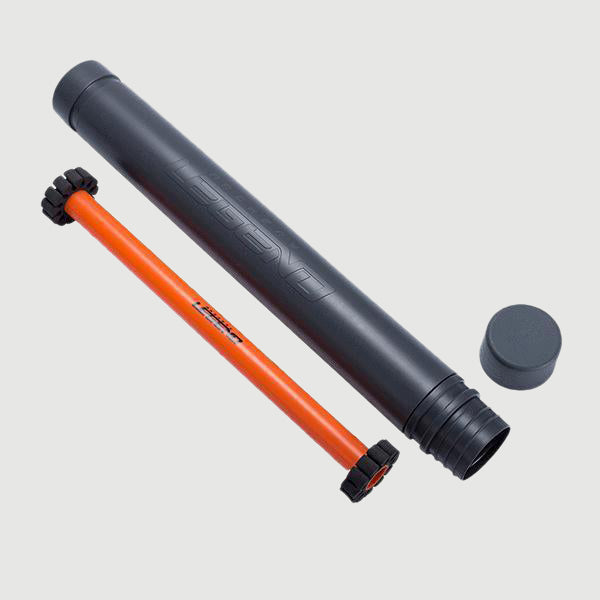
Beyond the rest itself, a well-organized setup makes for a smoother session. Keeping your arrows accessible but protected between shots is part of that. If you transport arrows to and from your fishing spot, the Arrow Tube with Holder from Legend Archery is a durable telescopic case that holds up to 12 arrows and extends to fit different shaft lengths — practical for protecting bowfishing arrows when they're not in use.
Frequently Asked Questions
Can I use a regular hunting rest for bowfishing?
Some hunting rests work in bowfishing contexts, but many aren't suited to the conditions. Drop-away rests with mechanical components can corrode or jam with repeated water exposure. A simple, robust prong rest or whisker biscuit designed for heavier arrows is usually the better starting point specifically for bowfishing use.
Why does my bowfishing arrow hit low even when I aim correctly?
There are two likely causes. First, refraction makes fish appear higher in the water column than they actually are, so you need to aim lower than the visual target. Second, check your nocking point — if the arrow is angled slightly nose-down on the rest, it will shoot low. Adjust the nocking point upward slightly and recheck.
What mistakes do beginners commonly make with rest position on a bowfishing bow?
The most common are skipping centershot adjustment (leaving the rest too far in or out from the riser face), not accounting for line routing around the rest, and using a rest that isn't rated for the heavier arrow weights bowfishing requires. These issues compound each other — fix them one at a time in the sequence described above.
How often should I replace a bowfishing arrow rest?
That depends on how often you fish and how well you maintain the rest. In heavy-use scenarios, rubber prongs may need replacing every season. Metal components typically last longer if rinsed and dried after each outing. If you notice inconsistent arrow support or visible wear on the prongs or arm, replace the rest before your next session.
Final Thoughts
Getting your arrow rest setup right for bowfishing isn't complicated, but it does require more attention to materials, weight capacity, and line clearance than a standard target or hunting setup. Start with a simple, corrosion-resistant rest, work through alignment methodically, and test before you go out. That foundation makes every other part of bowfishing — spotting fish, judging refraction, shooting quickly — that much easier to focus on.