Skip to content
 cust@legendarchery.com
 302 503 5767
 Westfield IN 46074


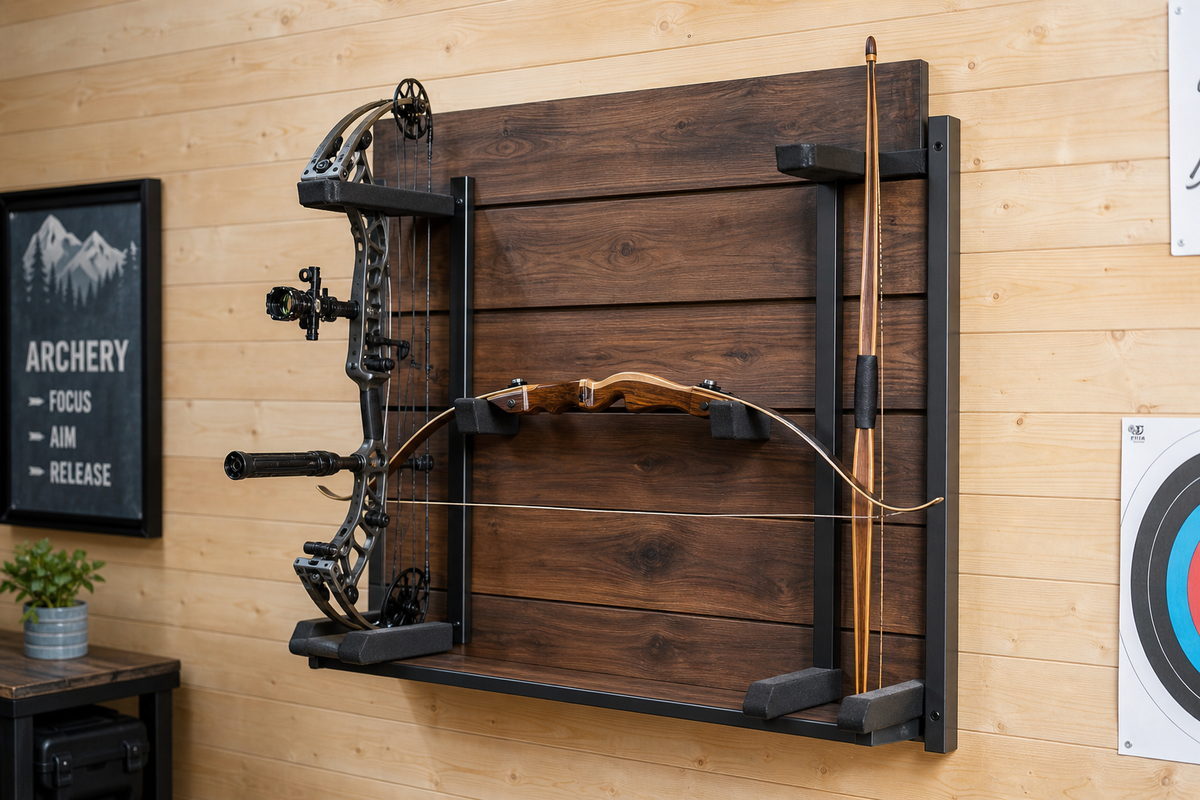
A bow rack sounds like a straightforward purchase until you start comparing options. Wall-mounted, freestanding, single-bow, multi-bow, foam-lined, peg-style — the choices multiply quickly. The right storage solution depends on what you're storing, how much space you have, and whether you're setting up a home range, a club corner, or just keeping one bow accessible between sessions. This guide breaks down what actually matters before you spend a cent.
What Matters Before You Buy
Before looking at products, answer three questions about your situation:
- What type of bow are you storing? A compound bow with mounted accessories needs different cradle geometry than a bare takedown recurve or a longbow. Size, weight, and limb shape all affect compatibility.
- How many bows do you need to store? A single archer keeping one bow at home has very different needs from a club storing ten or a family with multiple shooters at different draw weights.
- Where will the rack live? A dry indoor room, a garage with temperature swings, or a purpose-built archery space each create different requirements for materials and mounting options.
Getting clear on these three points will eliminate most of the options on the market before you even compare features.
Main Types and How They Differ
Bow storage comes in a few broad categories. Understanding what each does well — and where it falls short — is the foundation of a good decision.
Wall-Mounted Racks
Wall-mounted designs attach directly to a wall stud or backing panel. They keep bows off the floor, free up floor space, and can display equipment cleanly. They work especially well in dedicated archery rooms, garages with stud framing, or club facilities where wall space is available. The trade-off is permanence: drilling into walls isn't always an option in rental properties or shared spaces, and poor installation can result in damage to the wall or the bow.
Freestanding Racks
Freestanding units sit on the floor without any wall attachment. They're flexible — you can move them, reposition them, and take them to events or outdoor ranges. The downside is footprint: a freestanding rack holding six bows takes up meaningful floor space, and stability matters. A unit that tips easily is a real hazard for expensive equipment.
Single-Bow Holders and Pegs
Simple peg-style holders mount to a wall or surface and hold one bow vertically or horizontally. These suit archers who own one primary bow and want a clean, minimal solution. They're affordable and easy to install, but offer no organisation for accessories, arrows, or a second bow.
Multi-Bow Club Racks
Larger floor-standing or wall-panel racks designed to hold six, ten, or more bows are common in clubs and schools. These prioritise capacity and quick access over aesthetics. If you're outfitting a facility, capacity per unit of floor space becomes the key metric rather than any individual bow feature.
Buying Criteria and Trade-offs
Once you know which category fits your situation, compare options within that category using these criteria:
Material and Build Quality
Steel and aluminium frames are durable and stable. Timber can look attractive and is perfectly functional indoors where moisture isn't a concern. Cheap plastic components — particularly the contact points that touch the bow — can scratch limb finishes or fail under weight over time. Whatever the frame material, check what the contact points are made from. Foam padding, rubber coating, or felt lining protects limb and riser surfaces.
Weight Capacity and Stability
A compound bow with a sight, stabiliser, and quiver can weigh several kilograms. Multiply that by the number of slots and you're asking meaningful weight from the structure and its fixings. Always check the weight rating of any wall-mounted unit and confirm the fixings are appropriate for your wall type — plasterboard anchors behave very differently from screws driven into timber studs.
Bow Compatibility
Not every rack holds every bow type equally well. Compound bows usually sit in cradle-style supports that hold the cam or lower limb. Recurve bows — particularly those used in target archery — are often stored horizontally with limb support at two points. Longbows and traditional bows may need a taller vertical slot to accommodate their length without bending stress on the tips. If you shoot a recurve bow, confirm that the rack's contact points won't press against the string or limb tips at an angle.
Accessibility and Ease of Use
A rack you use every session needs to let you grab and replace your bow quickly without snagging strings, cables, or accessories. Over-engineered locking mechanisms or awkward slot angles slow this down. For casual home storage, convenience matters more than security. For club equipment shared by many archers, some form of organisation — slots labelled or colour-coded by draw weight — can prevent confusion and mix-ups.
Space Efficiency
Wall-mounted multi-bow panels can store a surprising number of bows in very little floor area. If storage space is genuinely limited, this is usually the most practical direction. Freestanding units are often more accessible from multiple sides but require more surrounding clearance.
Which Type Suits Which Archer
Different archers have meaningfully different storage priorities:
- Beginners and casual archers usually own one bow and shoot infrequently. A simple wall-mounted single-bow holder or a basic freestanding unit keeps things tidy without overcomplicating storage. If the bow is a youth bow for a child, check that the rack keeps it fully out of reach when not supervised.
- Competitive recurve or compound archers often own multiple bow configurations — different limbs, a training setup, or a backup rig. A multi-slot wall rack or a structured freestanding unit that also stores accessories makes daily range preparation faster.
- Traditional archers shooting longbows need to check clearance height and limb support geometry. A rack designed primarily for modern compound bows may not accommodate a 68-inch longbow without stressing the limb tips.
- Clubs and coaches need capacity, durability, and clear organisation above all else. Floor-standing multi-bow racks that hold equipment safely during sessions, allow quick student access, and withstand daily handling are the priority.
- Hunters and field archers who take their compound into the field are typically better served by a quality bow case for transport and a simple home rack for between-season storage rather than investing heavily in display-style solutions.
Setting Up and Using Your Rack Correctly
Even the best bow rack causes problems if it's installed or used poorly. A few practical points:
- Mount wall brackets into studs or use proper wall anchors rated for the total weight. Measure stud positions before drilling.
- Store bows with strings facing away from each other if slots are close together, to prevent string contact and tangling.
- Keep the storage area away from direct sunlight, heat vents, and damp — limb materials and string fibres are affected by prolonged temperature and humidity extremes.
- Don't hang accessories like quivers from the bow itself while it's racked. The added weight and leverage can stress mounting hardware over time.
- Check that limb tips aren't pressing against any hard surface. Consistent pressure at the tip, even from a poorly shaped foam slot, can cause limb deformation in some materials over extended periods.
Mistakes Buyers Make
- Buying for aesthetics rather than function. A rack that looks impressive in product photos but has inadequate limb support or sharp contact edges is a poor investment.
- Underestimating capacity needs. Archers tend to acquire more equipment over time. A single-bow holder that meets your needs today may feel limiting within a year.
- Ignoring wall type before ordering wall-mounted options. Hollow partition walls, brick, and concrete all require different hardware. Some racks ship without appropriate fixings for non-timber walls.
- Choosing a rack incompatible with their bow type. A rack designed for compound cams won't cradle a traditional recurve safely, and vice versa.
- Prioritising price over contact point quality. The frame material matters less than what actually touches your bow. Scratched limbs or a damaged riser finish from poor foam or bare metal contacts costs more to repair than the saving on a cheaper rack.
- Forgetting to account for accessories. A compound bow with a sight and stabiliser is significantly wider than a bare riser. Confirm slot width and clearance with accessories mounted.
Frequently Asked Questions
What should you look for in a bow rack?
Focus on three things: compatibility with your bow type, quality of the contact points that touch the limbs and riser, and appropriate weight capacity. Wall-mounted units also require you to check that your wall type suits the fixing method included or recommended.
Which features matter most in a bow rack?
For most archers, limb support geometry and protective contact surfaces matter most. A rack that holds your bow securely without stressing the limb tips or scratching the finish does its core job well. Secondary considerations are capacity, accessibility, and how it fits your available space.
What mistakes do buyers make when choosing a bow rack?
The most common mistake is choosing a rack without checking compatibility with the actual bow dimensions — particularly for compound shooters with mounted accessories or traditional archers with longer bows. Ignoring wall type before purchasing a wall-mounted unit is another frequent and frustrating error.
Which type of bow rack suits a beginner?
A simple single-bow wall holder or a compact freestanding unit is usually the right starting point for a new archer. It keeps things tidy, protects the bow, and doesn't require significant investment before the archer has established their long-term setup and storage needs.
Conclusion
The right bow storage comes down to matching the rack's design to your bow type, your space, and how you actually use your equipment day to day. Get the contact points and limb support right, confirm wall compatibility if you're going wall-mounted, and plan for slightly more capacity than you think you need today. Everything else is secondary.