Skip to content
 cust@legendarchery.com
 302 503 5767
 Westfield IN 46074


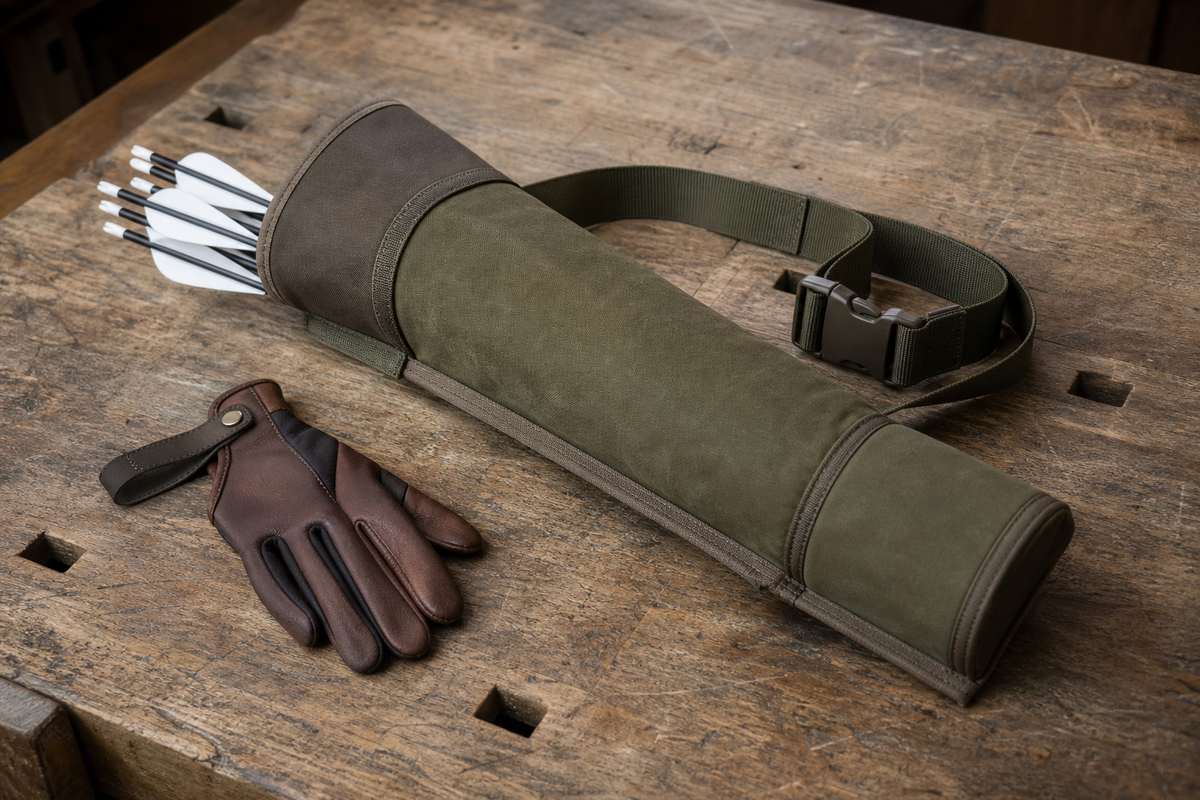
A hip quiver sounds simple — a tube or pouch that holds your arrows at your side. But hunters who have made the wrong choice know the frustration: arrows rattling in the blind, fletching catching brush on a stalk, or a quiver that shifts every time you draw. Choosing correctly from the start saves you that headache in the field. Here is what you actually need to think about before you buy.
What Matters Before You Buy
Before comparing products, get clear on your hunting context. A quiver that works brilliantly for a Western spot-and-stalk elk hunt can be a liability in a dense Eastern hardwood stand. Ask yourself:
- Hunting style: Are you stationary (blind or treestand) or mobile (stalking, still-hunting, backpack hunting)?
- Arrow count needed: Most bowhunters rarely shoot more than six arrows in a session, but competition archers or those who combine practice with hunting may want to carry more.
- Terrain and cover: Open terrain allows bulkier quivers; dense brush demands a compact, low-profile design.
- Noise discipline: In cold or high-pressure hunting situations, any rattle from loose arrows is a real problem.
- Dominant hand and draw style: Hip quivers are designed with right- and left-hand versions, and some work better for certain draw lengths and anchor points.
Nailing these answers first makes the rest of the buying decision straightforward.
Main Types and How They Differ
Hip quivers for hunting fall into a few distinct categories, each with a clear purpose.
Tube-Style Hip Quivers
These feature individual cylindrical tubes — typically three to six — that hold each arrow separately. The tubes prevent fletching contact between arrows, which protects vanes and keeps broadheads secure. They attach to a belt via a clip or strap system. Tube-style quivers are popular with hunters who want fast, quiet arrow access and predictable arrow placement. The trade-off is bulk: multiple tubes add visual profile and can snag on brush.
Hip Quivers with a Divided Hood
Instead of individual tubes, these use a single divided hood or separator that keeps arrow nocks and fletching organised while the shafts hang freely in a single compartment below. They tend to be lighter and slightly slimmer than full tube designs, with capacity often reaching eight to twelve arrows. They suit archers who carry a mix of field points and broadheads with a divider separating them for safety.
Compact or Minimalist Hip Quivers
Designed for mobile hunters and backpack archers, these strip the design back to the essentials: a small hood or clip system, minimal straps, and a light frame. Arrow capacity is usually three to six. What they sacrifice in carrying capacity they gain in silence and packability. If you are moving all day through rough terrain, reducing weight and snag points matters more than carrying a full dozen arrows.
Combination Hip-and-Field Quivers
Some designs bridge the gap between field archery and hunting use, featuring side pockets for accessories — calls, releases, gloves — alongside arrow storage. These add convenience but also add weight. If you already carry a hunting pack for accessories, the extra pockets may just be redundant weight you do not need.
Buying Criteria and Trade-Offs
Once you understand the types, evaluate each candidate against these criteria:
Arrow Capacity
More is not always better. A twelve-arrow hip quiver sounds practical but adds real weight and profile to your silhouette. For most bowhunters, six to eight arrows is a sensible range. Only go higher if you are combining a hunting trip with a practice session.
Arrow Retention and Noise Control
This is one of the most important and most overlooked criteria. The quiver must hold arrows firmly enough that they do not rattle during movement, but allow smooth, quiet withdrawal on demand. Look for foam grippers, rubber sleeves, or adjustable retention mechanisms. Avoid quivers where arrow shafts contact each other directly — that is the most common source of noise in the field.
Attachment System
How the quiver connects to your belt or harness matters more than most buyers expect. A simple belt clip is light and quick, but can twist or work loose over a long day. A full strap-and-loop system with a stabiliser is more secure but adds complexity. If you are wearing heavy hunting clothing with a wide belt, make sure the attachment hardware fits your setup before you buy.
Broadhead Safety
This is non-negotiable. Any quiver used for hunting with broadheads must securely enclose the broadhead tips. Exposed broadheads in a hip quiver are a serious safety hazard. Look for a deep hood with a foam gripper that captures the broadhead tip, or a dedicated covered slot for tipped arrows. If you are shooting expandable mechanicals, confirm the hood design does not pre-deploy blades during insertion or removal.
Material and Durability
Hunting quivers face wet conditions, temperature extremes, and rough handling. Look for weatherproof fabrics, rust-resistant hardware, and stitching at stress points. Matte or camo finishes reduce glare. Avoid hardware that is prone to creaking in cold temperatures — metal-on-metal contact points are the usual culprit.
Weight and Profile
For mobile hunting, every gram counts. For treestand hunting, a slightly heavier quiver with better organisation may be worth the trade-off. Think about the weight loaded with your typical arrow count, not empty on a shelf.
Which Type Suits Which Archer
Different hunting styles call for different solutions:
- Treestand or blind hunter: Tube-style or divided-hood quiver with six to eight arrows. Stability and silent access matter more than compact size. A quiver with a hook or hang point for the stand frame is a bonus.
- Stalking or still-hunting: Compact or minimalist design with a secure belt attachment. Fewer arrows, lower profile, less brush contact. Look for a quiver that sits tight to your hip rather than swinging freely.
- Backpack or mountain hunter: A lightweight, packable option that does not snag on pack straps. Some hunters in this category prefer to secure arrows directly to pack frame loops rather than using a dedicated hip quiver at all.
- New or youth bowhunter: A forgiving divided-hood or tube-style quiver with clear broadhead protection and simple attachment. Keep the design simple while you are still developing your setup and routine.
- High-volume or multi-session hunter: A larger-capacity quiver suits archers who practice extensively before a hunt or who want the flexibility to carry both broadhead-tipped and field-point arrows, provided the broadheads sit in an enclosed hood.
How to Set Up and Wear a Hip Quiver for Hunting
Even a well-chosen quiver performs poorly if it is worn incorrectly. A few quick setup points:
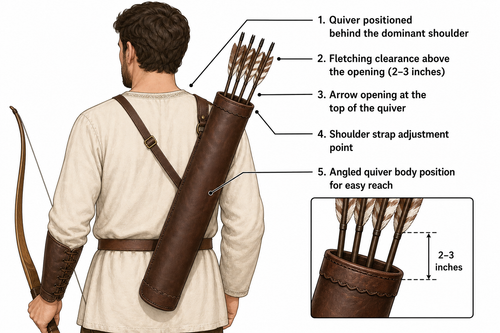
- Position the quiver so the hood sits just above your hip bone. Too high and it restricts your draw; too low and it swings during movement.
- Angle the quiver slightly rearward — roughly 15 to 20 degrees — so arrows clear your bow arm naturally during the draw without contact.
- Run through a full draw-and-anchor cycle before heading into the field to confirm nothing is catching on clothing or the bowstring.
- If the quiver rotates or slides, use a secondary stabiliser strap around the thigh or a second belt attachment point if available.
- Load broadheads last and always use an arrow puller or protective glove when withdrawing tipped arrows from a foam-grip hood.
Mistakes Buyers Make
- Choosing by capacity alone. Twelve-arrow capacity sounds like better value, but for most hunting situations it is unnecessary weight and bulk.
- Ignoring broadhead compatibility. A quiver designed primarily for field points may not safely secure fixed-blade broadheads. Always confirm the hood and retention system suits the broadhead type you shoot.
- Not checking hand orientation. Hip quivers are handed. A right-hand quiver worn by a left-hand archer will put arrows on the wrong side for a natural draw.
- Overlooking the attachment system. A light clip works at the range but loosens after a few hours of walking. Test the attachment system fully loaded before your first hunt.
- Buying a field archery quiver for hunting. Field and target quivers often have open hoods and no broadhead safety features. They are not designed for hunting use and should not be treated as equivalent.
- Not accounting for layered clothing. A quiver sized for a summer shirt belt may not fit over a heavy winter hunting jacket. Check belt width and attachment hardware against your actual hunting gear.
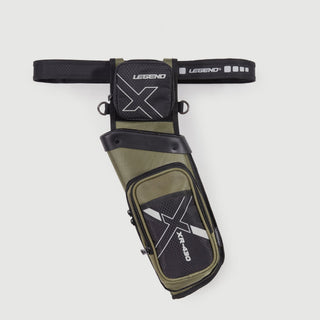
Legend's own hip quivers, the Hip Quiver First and the XT320 Hip Quiver, are built for target and range shooting rather than for carrying broadheads, so treat them as practice-session quivers. The arrow quiver collection shows the hip and field options side by side.
Frequently Asked Questions
What should I actually look for in a hip quiver for hunting?
Broadhead safety is the first priority — the hood must fully enclose tips and hold them firmly. After that, focus on arrow retention noise, attachment security for your belt type, and a capacity that matches how many arrows you realistically carry in the field. Weight and profile become more important the more mobile your hunting style is.
Which features make the biggest difference once you are in the field?
Silent arrow retention and a stable attachment system. A quiver that rattles will cost you shots; a quiver that rotates or slides at the hip will cost you time and frustration at the worst moment. Both issues are common with budget options that skimp on foam grippers and belt hardware.
What mistakes do people most often regret after buying a hip quiver for hunting?
The two most common regrets are buying the wrong hand orientation and underestimating bulk in dense cover. Many buyers also discover too late that their quiver is not compatible with the broadhead style they shoot — always confirm broadhead fit before committing to a quiver design.
Is a hip quiver a good starting point for a beginner bowhunter?
Yes, for most beginners it is one of the most practical options. A hip quiver keeps arrows accessible without the draw interference that a bow-mounted quiver can introduce while you are still learning form. Start with a straightforward tube or divided-hood design with clear broadhead protection, keep the arrow count modest, and adjust once you have more field time to understand what your specific hunting situation demands.
Conclusion
The right hip quiver for hunting comes down to your specific combination of hunting style, terrain, broadhead type, and how much you are willing to carry. Prioritise silent retention and broadhead safety above all else, match the capacity to what you actually shoot, and verify the attachment system works with your real-world gear before you head out. A well-chosen quiver disappears into your hunting routine — you will only notice the ones you got wrong.