Skip to content
 cust@legendarchery.com
 302 503 5767
 Westfield IN 46074


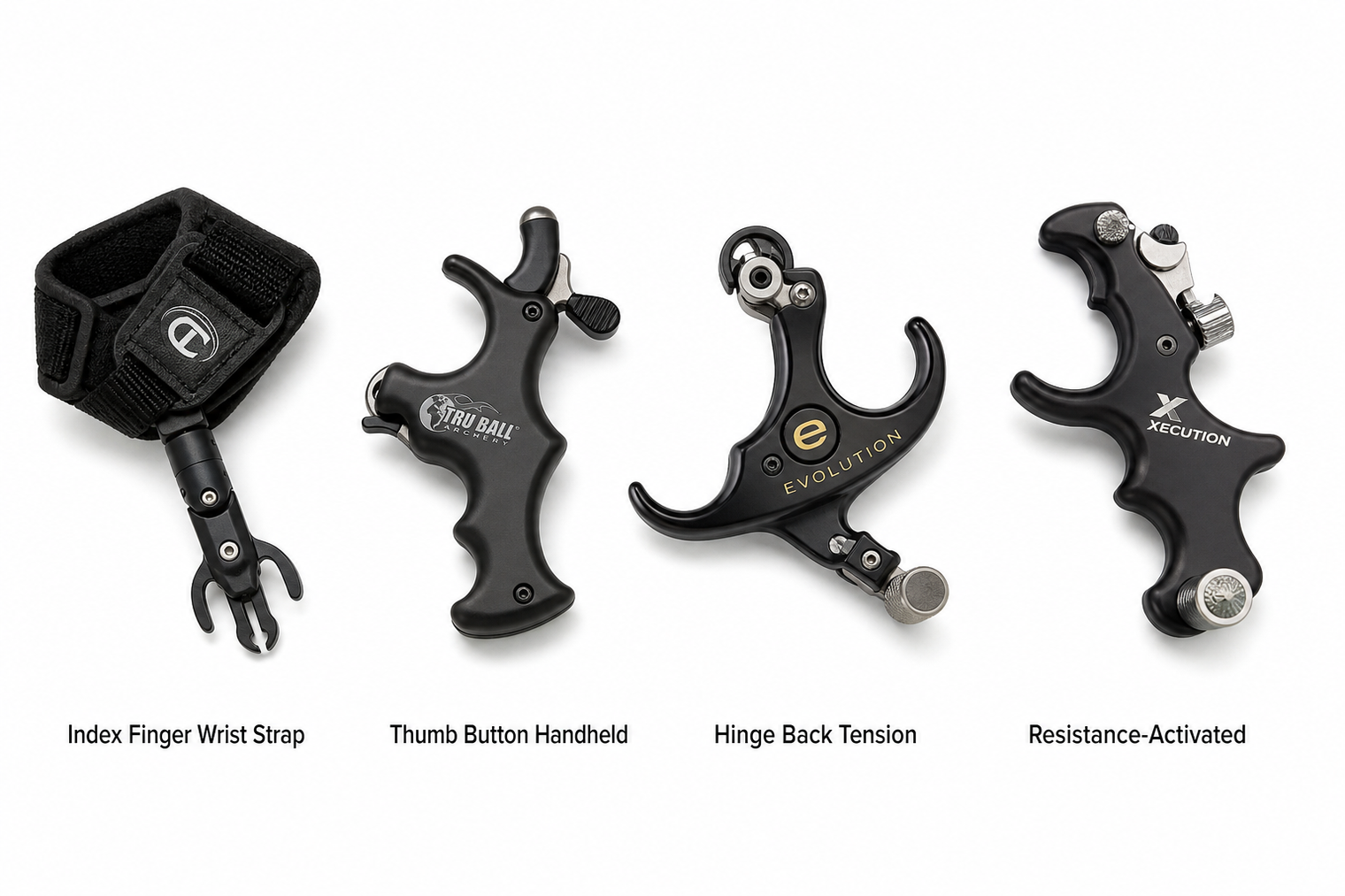
Picking a release aid feels straightforward until you are standing in front of a full rack of options. Wrist straps, thumb buttons, hinges, handheld activators — every category promises better accuracy, and none of them come with a universal answer. The truth is that which release aid is right for you depends on your shooting discipline, experience level, and how you naturally execute a shot. This guide cuts through the noise and gives you a clear framework for making that call.
Why Your Release Aid Choice Matters More Than Most Gear
A release aid is not a passive piece of equipment. It is the last point of contact between you and the bowstring at the moment of firing, which means any mechanical inconsistency or poor fit transfers directly into your groups. Archers often spend considerable money on arrows or sights while underestimating how much the release itself shapes their form, trigger timing, and shot execution. A release that does not match your shooting style can create flinching, punching the trigger, or anticipating the shot — habits that are genuinely difficult to unlearn once ingrained.
Understanding the different categories of releases before you buy is the most efficient investment you can make in your accuracy.
The Four Main Types of Release Aids Explained
1. Index Finger (Wrist Strap) Releases
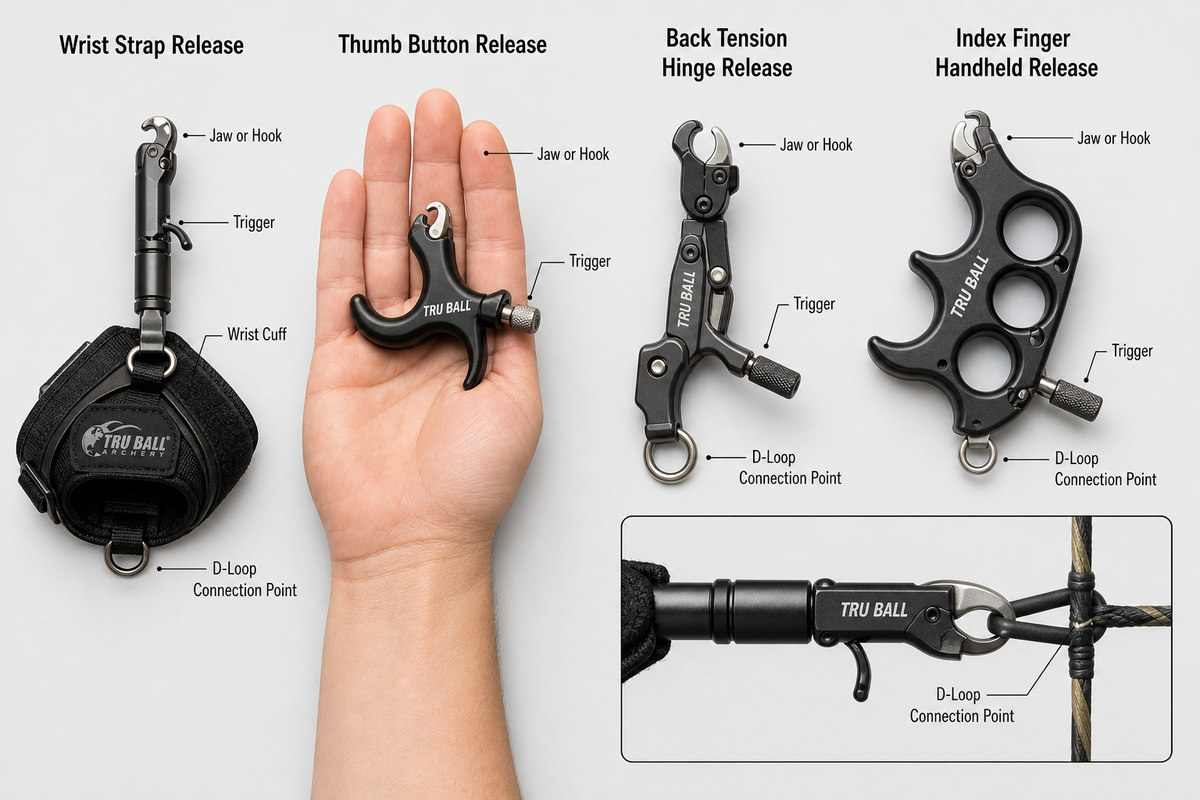
These are the most common entry point for compound archers. A wrist strap distributes the draw weight across your wrist and forearm rather than your fingers, reducing fatigue during long practice sessions or hunting days. The trigger is activated by your index finger, similar to a firearm trigger.
- Best for: Beginners, hunters, 3D shooters who want simplicity
- Strengths: Easy to learn, fast to connect at full draw, widely available at multiple price points
- Weakness: The index finger trigger makes archers prone to punching — firing the trigger with anticipation before the sight picture settles
If you are new to compound shooting or primarily hunting from a blind or treestand, a quality wrist strap release is a sensible starting point. Many archers use them for years without issue as long as they develop disciplined trigger control from the beginning.
2. Thumb Button (Handheld) Releases
Thumb button releases are held in the hand rather than strapped to the wrist. You hook the release onto the D-loop, come to full draw, and fire using your thumb. Because your hand is free, you can achieve a more relaxed grip and a cleaner bow hand position, which tends to improve consistency.
- Best for: Target archers, hunters who want more precision, archers transitioning away from wrist straps
- Strengths: Better hand position, thumb activation is easier to keep surprise-oriented, feels natural to many archers
- Weakness: Requires practice to hook consistently; can be dropped in hunting scenarios
Thumb releases have become extremely popular across competitive 3D and indoor target disciplines. They sit in a middle ground between the beginner-friendly wrist strap and the more advanced hinge or tension release.
3. Hinge (Back Tension) Releases
A hinge release has no trigger. Instead, it fires when the archer applies enough back tension through the draw cycle to rotate the release head past a set point. The shot breaks on its own — you do not choose the precise moment of firing, which is the entire point.
- Best for: Experienced archers working on shot process, target competitors, anyone battling trigger panic
- Strengths: Virtually eliminates punching and flinching; forces proper back tension and follow-through
- Weakness: High learning curve; not practical for hunting situations requiring instant, deliberate shots
Many coaches recommend hinge releases as a training tool even for archers who compete with a thumb button. Time spent on a hinge builds shot process habits that transfer across every other release type. If you are consistently punching your trigger, a hinge period can reset your execution.
4. Resistance-Activated (Tension) Releases
These handheld releases fire when a pre-set resistance threshold is exceeded by increasing back pressure. Unlike a hinge, they do not rotate — they release when you pull through a certain pound of resistance. They offer more control than a pure hinge for archers who need an intermediate step between trigger-based and fully tension-activated execution.
- Best for: Intermediate to advanced archers, those who want tension-based execution with more predictability than a hinge
- Strengths: Encourages back tension, reduces anticipation, adjustable sensitivity on most models
- Weakness: Less intuitive than trigger releases; requires deliberate practice to calibrate
How to Match a Release to Your Situation
Rather than chasing what top competitors use, start by identifying your primary archery activity and honest experience level. Here is a practical decision framework:
- Hunting from a elevated stand or blind: A wrist strap index finger release is practical. You need speed, reliability, and the ability to operate with gloves. Between shots, keep it in a belt pouch such as the XT520 Release Pouch, which has an interior divider and a drawstring closure, so the release stays protected and within reach.
- 3D or field archery: A thumb button release suits the varied shooting positions and distances you encounter. Try both wrist-strap and handheld versions before committing.
- Indoor target competition: A thumb button or hinge release is worth exploring once your form is established. Many competitive archers shoot a thumb button at indoor tournaments and use a hinge in practice.
- Working through trigger panic or punching: Move to a hinge release for at least four to six weeks of training. Do not rush back to a trigger release until the shot process feels genuinely automatic again.
- Total beginner: Start with a wrist strap. Master the basics of anchor, alignment, and follow-through before experimenting with more complex release types.
Key Fit and Feel Factors to Check Before You Buy
Beyond release type, several physical and mechanical factors determine whether a specific model works for you:
- Hand size: Handheld releases come in different lengths and grip widths. A release that is too long or too short will change your wrist angle at full draw.
- Trigger travel and sensitivity: Most quality releases offer some adjustment. Start with a heavier, longer trigger pull and reduce it only after your shot execution is reliable.
- Jaw or hook design: Some releases use a caliper jaw, others use a rope-style connection or a rotating hook. Each has a different feel when connecting to the D-loop under pressure.
- Material and durability: Consider the conditions you shoot in. Hunting scenarios demand weather resistance and reliable operation in cold or wet conditions.
If possible, handle releases in person before purchasing. A release that feels balanced and natural in your hand will be easier to shoot consistently. You can browse a broad range of options through Legend's current archery product range to get a sense of what is available.
Common Mistakes Archers Make When Choosing a Release Aid
- Buying based on what a pro uses: Elite tournament archers have thousands of hours refining their technique around a specific release. What works at that level may actively slow down a developing archer.
- Ignoring trigger sensitivity settings: Many archers leave their release at factory settings without realising the trigger is far too light for their current skill level. A hair trigger rewards experienced shooters and punishes beginners.
- Switching releases too often: Trying a new release every few weeks prevents you from adapting fully to any of them. Give each release type genuine training time before forming conclusions.
- Skipping the D-loop inspection: A worn or incorrectly tied D-loop changes how a release connects and fires. If your shots are inconsistent, check the loop before blaming the release.
- Choosing solely by price: The most expensive release is not automatically the best fit. Mid-range releases from reputable manufacturers often outperform premium options in the hands of archers who have not yet developed the technique to benefit from finer adjustments.
Frequently Asked Questions
Do I need a different release for hunting versus target shooting?
Not necessarily, but many archers prefer a wrist strap for hunting because it stays attached and operates quickly. Target archers often prefer handheld or hinge releases for the improved shot process they encourage. If you do both, consider keeping two releases and practicing with each in its relevant context.
Can a release aid fix target panic or punching?
A release type change — especially switching to a hinge or tension-activated release — can disrupt the trigger-anticipation cycle and help you reset your shot process. But the release is a tool, not a cure. Consistent, mindful practice and ideally some coaching are required alongside the equipment change. Understanding what a mechanical release is and how it interacts with your form is a good starting point.
How long does it take to get used to a new release type?
Expect a genuine adjustment period of four to eight weeks if you are switching from an index finger release to a thumb button or hinge. Your groups may temporarily worsen before they improve. This is normal and not a sign that the release is wrong for you.
Should I adjust the trigger sensitivity right away?
No. Start with a heavier, more deliberate trigger and only lighten it once your execution is consistent and your groups are tight. A lighter trigger exposes any weakness in your form and can accelerate bad habits in less experienced archers.
Choosing the Right Tool for Your Shot
Figuring out which release aid is right for you is ultimately a process of honest self-assessment combined with hands-on experimentation. Start with the release type that suits your current activity and experience level, give it enough range time to form a genuine opinion, and adjust from there. No single release works for everyone — but with a clear understanding of what each type offers, you are well positioned to make a choice that genuinely improves your shooting.