Skip to content
 cust@legendarchery.com
 302 503 5767
 Westfield IN 46074


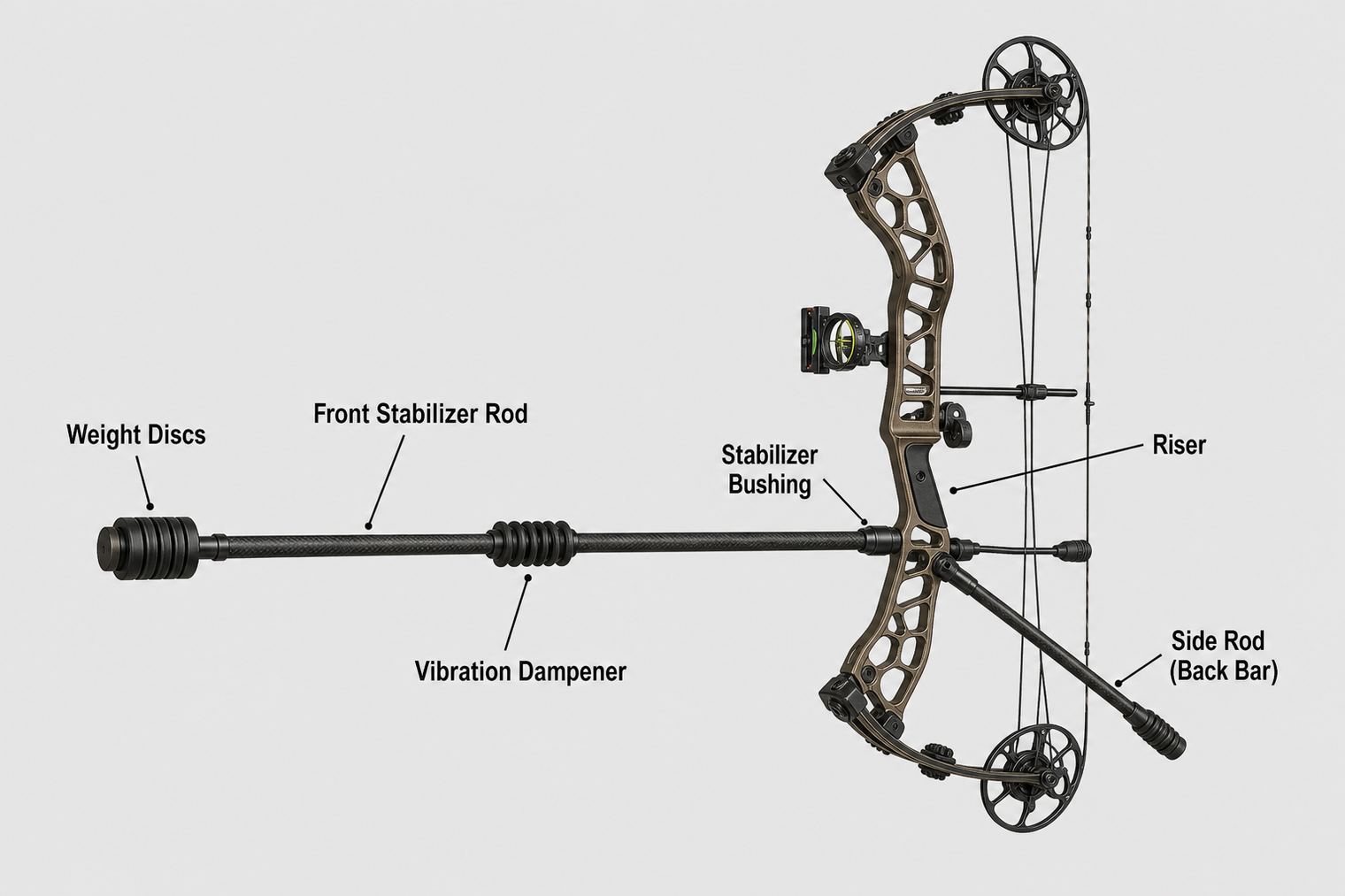
If you've ever watched a competitive archer or a serious bowhunter shoot, you've noticed rods and weights attached to the bow. Those are stabilizers, and they're not just for looks. What stabilizers do comes down to three core jobs: reducing hand torque, dampening vibration, and shifting the bow's balance point for a steadier hold at full draw. Whether you're punching paper or sitting in a blind, understanding this piece of equipment helps you make a smarter buying decision.
Why Stabilizers Actually Matter
Every archer introduces some degree of movement into the bow during the shot cycle. Even small amounts of grip torque — the subtle rotation of your wrist — send an arrow off course. Vibration from limb flex and cam movement also travels through the riser and into your hand, affecting both comfort and consistency.
A stabilizer addresses these issues mechanically, not through technique alone. That's important because no amount of form work fully eliminates the physics of a moving bow. Adding a properly weighted stabilizer gives you a physical tool that works alongside good form, not instead of it.
For hunters, this translates directly to tighter groups at hunting distances. For target archers, it means more gold-line hits during long competition rounds when fatigue sets in. The payoff is real and measurable in your shot-to-shot consistency.
Core Principles: How a Stabilizer Works
Torque Reduction
When you grip the bow and break the shot, your hand wants to rotate. The stabilizer's extended length creates a moment of inertia — essentially, it makes the bow harder to twist quickly. The longer and heavier the front rod, the more resistant the bow becomes to that rotational force. This is why competitive target archers often use long front rods of 30 inches or more.
Vibration Dampening
Most stabilizers include dampening materials — rubber, foam, or internal fluid — inside the body of the rod. When the bow fires, energy travels through the riser. The stabilizer absorbs a portion of that energy before it reaches your hand and wrist. This reduces the sharp sting of shot shock and helps the bow settle into a consistent follow-through position.
Balance and Forward Weighting
A bow that tips or leans at full draw forces you to compensate with grip pressure, which reintroduces torque. Adding weight to the front of the bow creates a slight forward lean — a "positive bow lean" — that many archers find easier to hold steady. Side rods, also called back bars or V-bars, allow archers to fine-tune left-right balance, especially useful when a mounted sight or quiver throws the setup off-center.
Front Stabilizer vs. Side Rods: What's the Difference?
Most setups involve at least a front stabilizer. More advanced configurations add one or two side rods. Here's how they each contribute:
- Front stabilizer: Primarily handles torque resistance and forward balance. Available in short hunting lengths (4–8 inches) and longer target lengths (24–36+ inches).
- Side rods (back bars): Used to correct lateral tipping. Positioned at an angle off the riser, they counterbalance weights added to the other side, like a heavy sight or quiver.
- Short hunting stabilizers: Compact designs that reduce noise and bulk in a treestand or ground blind while still offering meaningful vibration dampening.
For most recreational and hunting archers, a quality front stabilizer in the 6–10 inch range is a solid starting point. You can always add side rods later as your shooting becomes more refined.
Practical Guidance for Choosing the Right Stabilizer
Choosing a stabilizer isn't about buying the most expensive option. It's about matching the tool to your shooting context. Consider these factors:
- Shooting environment: Hunting from a treestand or blind demands a short, lightweight stabilizer that won't snag brush or limit movement. 3D and target shooting benefits from longer rods with more weight.
- Bow weight and balance: Heavier bows may benefit from less added weight up front, while lighter bows often perform better with a moderately weighted stabilizer to settle the hold.
- Budget: Entry-level stabilizers use basic rubber dampeners and aluminum rods. Mid-range and premium options incorporate carbon fiber (lighter and stiffer) and advanced dampening systems. Start with a mid-range option if budget allows — the step up in performance is noticeable.
- Adjustability: Some stabilizers use modular weight systems, letting you add or remove disk weights without buying a new rod. This flexibility is especially useful when you're still dialing in your setup.
If you're outfitting a new bow from scratch, it's worth browsing new archery products at Legend Archery to see current stabilizer options alongside compatible accessories.
Common Mistakes Archers Make with Stabilizers
Even experienced archers misconfigure their stabilizer setups. Here are the most frequent errors worth avoiding:
- Adding too much weight too soon: Piling on front weight before you've developed consistent form can actually mask issues and make them harder to diagnose later. Start lighter and work up.
- Ignoring lateral balance: Shooting with a heavy sight on one side and no counterbalance creates a tilt at full draw. A short side rod with modest weight often fixes this cleanly.
- Using a hunting setup for target shooting: Short stabilizers don't provide meaningful torque resistance at longer distances. If you're shooting 50+ yards regularly, a longer rod will serve you better.
- Skipping dampener replacement: Rubber dampeners degrade over time. If your bow feels sharper or louder than it used to, the dampening material inside the stabilizer may need replacement before blaming other components.
- Tightening the stabilizer bushing too hard or too loose: Over-tightening can strip the bushing; under-tightening causes wobble and inconsistency. Hand-tight plus a quarter turn is usually appropriate — check your bow's manual.
For hunters running compact setups, pairing a short stabilizer with quality outdoor archery supplies makes the overall kit more cohesive and field-ready.
How Stabilizers Fit Into Your Broader Setup
A stabilizer doesn't operate in isolation. It's one part of a tuned system that includes your sight, arrow rest, arrows, and release. Changes to any one component can affect how your stabilizer performs. If you add a heavier sight, for example, the bow may tip toward the sight side, requiring a side rod or weight shift on the front rod to rebalance.
Hunters who invest in precision shooting at distance often pair their stabilizer work with accurate distance measurement. Using a quality rangefinder alongside a tuned bow with a proper stabilizer closes the gap between guesswork and confident shot placement. If that's part of your setup, check out the rangefinders available at Legend Archery.
Frequently Asked Questions
Do I really need a stabilizer, or is it just extra gear?
You can shoot without one, but most archers notice a meaningful improvement in consistency once they add even a basic stabilizer. The torque reduction alone makes it worth the investment for anyone shooting beyond close range.
Why do target archers use such long stabilizers compared to hunters?
Length increases resistance to torque significantly. Target archers shoot from stable positions at fixed distances, so a long rod is practical. Hunters need to stay mobile and quiet, which makes a short, compact stabilizer the better trade-off.
What mistakes do beginners usually make when first adding a stabilizer?
The most common mistake is adding too much weight before developing a consistent grip. Heavy front weight can temporarily hide torque issues rather than teaching you to eliminate them. Start with a lighter weight and increase gradually as your form locks in.
How do I know if my stabilizer weight is set correctly?
At full draw, the bow should feel balanced and the front should have a slight natural lean forward. If the bow tips aggressively to one side, or feels like you're fighting it to hold level, the weight placement needs adjustment. A qualified pro shop technician can evaluate this quickly.
Final Thought
Stabilizers are one of the more straightforward upgrades in archery — the physics behind them are clear, and the benefits show up in your groups fairly quickly. Match the rod length and weight to your shooting style, avoid overloading your setup early on, and revisit the configuration as your form and equipment evolve.