Skip to content
 cust@legendarchery.com
 302 503 5767
 Westfield IN 46074


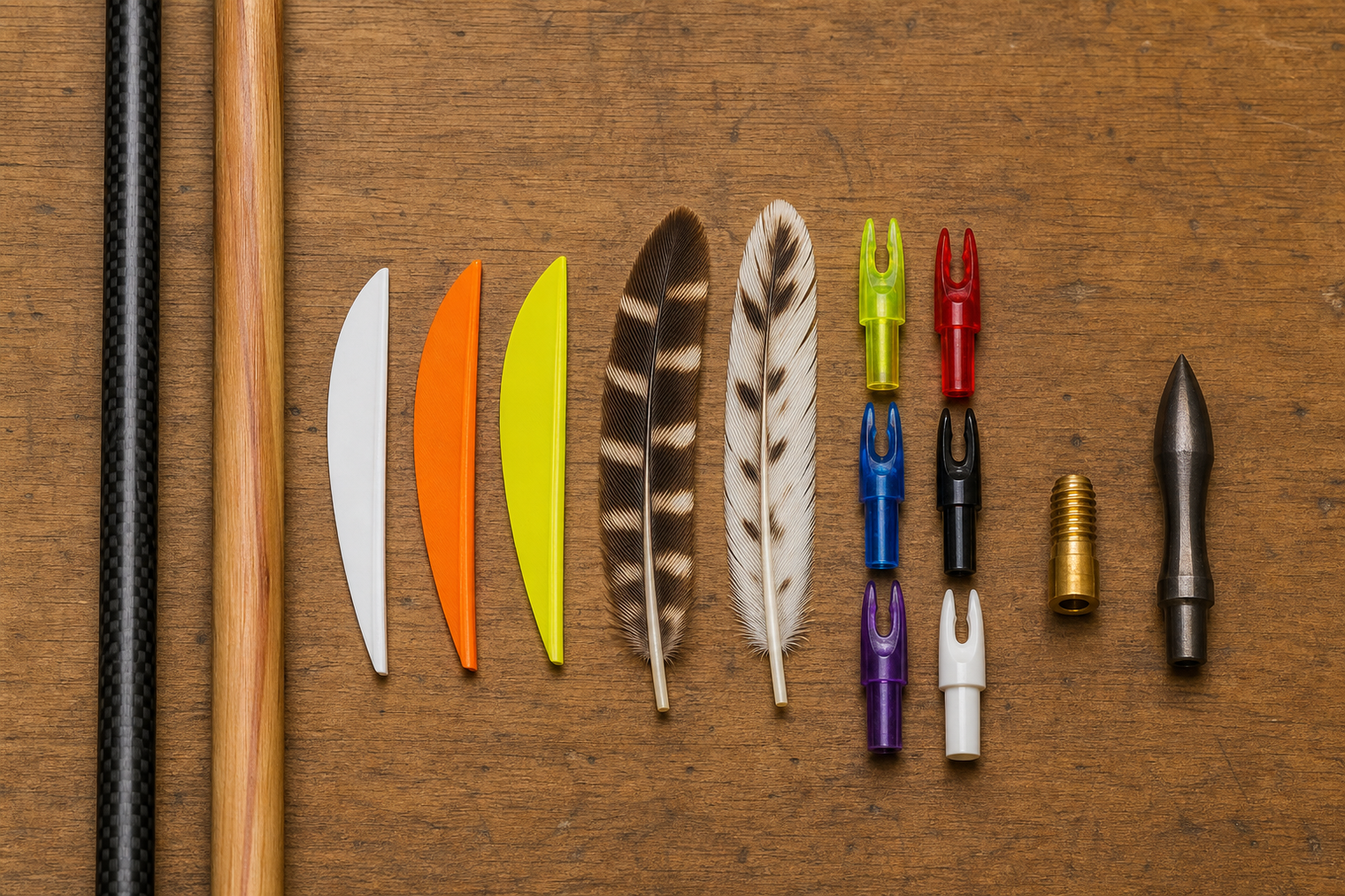
Whether you pull a recurve or a compound, the arrow doing the work is the product of deliberate engineering. A maker of arrows — whether a large manufacturer or a hobbyist fletcher — must balance spine stiffness, weight, straightness, and tip selection to produce a shaft that flies true. This guide breaks down that process so you understand what you are shooting, not just how to shoot it.
What Does a Maker of Arrows Actually Do?
Arrow-making sits at the intersection of traditional craft and modern materials engineering. At its core, the job is to produce a shaft that leaves the bow consistently, recovers from the archer's paradox quickly, and arrives at the target with predictable energy. To do that, every component is a deliberate decision — not a default.
The main components a fletcher or manufacturer works with are:
- Shaft: The tube or rod that forms the body of the arrow. Material choices include carbon fibre, aluminium alloy, wood, and hybrid laminates.
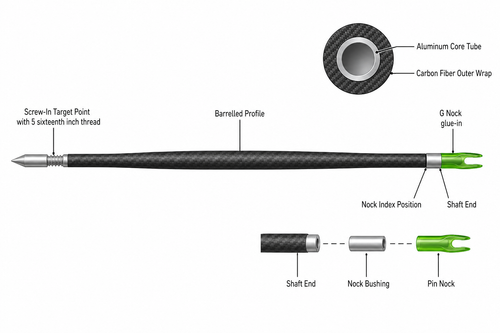
- Nock: The clip that connects the arrow to the bowstring. Fit, weight, and alignment all affect release consistency.
- Point or tip: Field points, broadheads, blunts, and specialty tips each serve a different purpose and change the forward weight distribution.
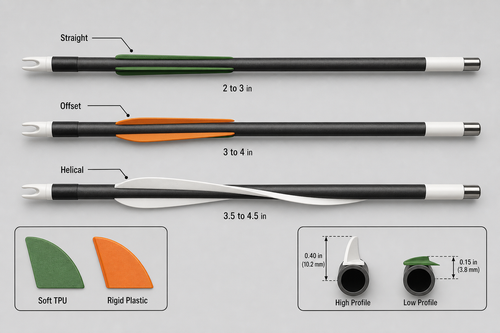
- Fletching: Vanes or feathers that stabilise flight. Shape, height, helical angle, and material affect drag and rotation.
- Insert: The threaded collar glued inside the shaft that accepts screw-in points.
Each of these parts interacts with the others. Change one and you may need to reconsider the rest.
Why Shaft Material Is the Starting Point
Before anything else, the shaft material defines what is possible. Different materials suit different draw weights, shooting styles, and budgets.
Carbon Fibre
Carbon shafts dominate modern target and hunting archery. They offer a high strength-to-weight ratio, consistent spine across batches, and resistance to permanent bending. A carbon shaft that takes a hard hit may crack rather than bend, which is actually safer — a bent shaft can cause dangerous arrow flight, while a cracked one is usually visibly damaged and discarded before it is shot again. Carbon is the most common choice for competitive and recreational archers today, and you can explore different shaft formats in the archery arrows overview.
Aluminium
Aluminium shafts have been a reliable option for decades. They are heavier than carbon at equivalent spine ratings, which can benefit indoor archers who want a slower, more dampened trajectory. They are also easier to cut and customise with basic tools, which makes them popular in school programmes and entry-level setups. The trade-off is that aluminium can bend permanently on impact with a hard surface. Learn more about how these shafts are specified in the aluminum arrows guide.
Wood
Traditional archers shooting longbows or primitive recurves often prefer wood — typically pine, cedar, or birch. Wood is biodegradable, renewable, and provides a shooting experience that connects to the historical origins of the craft. Spine consistency between individual wooden shafts is lower than manufactured materials, so traditional fletchers sort and grade shafts before building sets.
Hybrid and Composite Shafts
Some manufacturers wrap carbon around an aluminium core to combine the lightness and stiffness of carbon with the dent resistance of metal. These are often found at the higher end of the market and are tuned for elite target competition.
Understanding Spine: The Most Critical Measurement
Spine refers to the stiffness of the shaft — specifically how much it bends under a standard load. This is measured in two ways: static spine (a physical deflection test) and dynamic spine (how the shaft actually behaves on release).
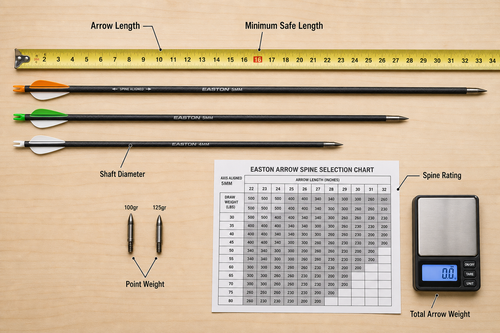
A shaft that is too flexible for the bow's draw weight will oscillate excessively and miss left or right. A shaft that is too stiff will not bend enough during the archer's paradox and will also fly poorly. Matching spine to draw weight, draw length, point weight, and arrow length is the primary tuning problem every arrow builder must solve.
The key variables that affect dynamic spine are:
- Draw weight at your specific draw length
- Arrow length (longer arrows behave as weaker spine)
- Point weight (heavier points weaken effective spine)
- Bow type and cam system (compound cams create different release dynamics than recurve or longbow)
- Nock fit and release aid versus finger shooting
Getting spine selection right is more important than brand choice. A premium arrow with the wrong spine will outperform nothing.
Fletching: Stability vs. Speed
Fletching is where aerodynamics enter the picture. Larger vanes or feathers create more drag, which stabilises the arrow faster but slows it down. Smaller, lower-profile vanes preserve speed but require a longer distance to stabilise — which matters less at indoor distances and more in field or 3D courses.
Helical fletching (applied with a twist rather than straight) adds rotation to the shaft in flight, which improves stabilisation, especially for broadhead-tipped hunting arrows. Straight fletching is often used for target archers shooting through a rest with minimal clearance concerns.
Feathers are the traditional material and remain preferred for longbow and barebow archers because they collapse on contact with the shelf or rest, reducing erratic flight caused by clearance problems. Plastic vanes are more weather-resistant and durable for modern equipment.
Common Mistakes When Building or Selecting Arrows
Whether you are building your own shafts or selecting pre-made ones, certain errors come up repeatedly:
- Ignoring total arrow weight: Spine charts are helpful, but they assume a certain point weight. Swapping from a 100-grain point to a 125-grain point on the same shaft changes dynamic spine and point of impact.
- Cutting arrows too short: A shaft that does not extend past the rest at full draw is a safety hazard. Always cut to a length that keeps the point well beyond the rest at full draw.
- Using mismatched nocks: Nock fit should allow the arrow to hang on the string with light grip but release cleanly. Too tight and the nock can cause string torque; too loose and the arrow may fall off during draw.
- Inconsistent fletching adhesion: Vanes that are not properly bonded will peel under stress or in wet conditions. Surface preparation — cleaning the shaft and roughing the contact area — is not optional.
- Buying spine on feel rather than calculation: Many beginners choose a spine that "feels" right based on how stiff the shaft is in hand. Spine selection must come from a chart that accounts for your actual draw weight and length.
- Assuming all arrows of the same label shoot the same: Even within one product line, a barrelled arrow profile will behave differently from a parallel shaft of the same nominal spine due to mass distribution differences.
How Arrow-Making Has Evolved
Historically, arrow-making was a specialist trade. Medieval fletchers were guild members who supplied armies with standardised warshafts. Their job required knowledge of wood grain, goose feather quality, and glue preparation — all skills that took years to develop. Modern manufacturing has automated the consistency that once took decades to master, but the underlying physics have not changed. What a medieval fletcher understood about the importance of a stiff, straight shaft still applies today.
What has changed is the precision available. Modern straightness tolerances on carbon shafts are measured in thousandths of an inch. Weight sorting allows archers to build matched sets where every arrow in a dozen has nearly identical mass. These advancements are why competitive target scores have increased — equipment consistency reduces the human error that comes from the arrow itself.
Frequently Asked Questions
What exactly is meant by the term "maker of arrows"?
A maker of arrows — historically called a fletcher — is anyone who constructs arrows, from traditional craftspeople working with wood and feathers to modern manufacturers producing carbon shafts at scale. The skills involved include shaft selection, spine matching, component assembly, and quality control. The term covers both individual craftspeople and commercial producers.
Why does the person or company that makes your arrows actually matter?
Manufacturing consistency is everything in archery. Inconsistent spine, uneven wall thickness, or poor fletching adhesion in a batch of arrows introduces variables that no amount of form correction can fix. Choosing arrows from a maker with tight quality tolerances removes a source of variability that would otherwise appear as unexplained shot spread.
What do beginners typically get wrong when choosing or building arrows?
The most common mistake is selecting shaft spine based on the draw weight printed on the bow without accounting for draw length, arrow length, or point weight. A second common error is cutting arrows too short. A third is using arrows built for a different bow type — for example, shooting arrows spined for a compound out of a recurve, where the release dynamics are completely different.
How can I improve my understanding of arrow construction without building from scratch?
Start by learning to read a spine chart for your bow setup. Then experiment with point weights on your current arrows and observe how it shifts your point of impact. Watching experienced fletchers work — through club resources or archery educators — gives practical context that written guides cannot fully replace. Understanding what is inside your equipment builds better shooting instincts over time.
Putting It Together
Arrow-making is a discipline in its own right, and even archers who never build a shaft from scratch benefit from understanding it. When you know why spine stiffness matters, why point weight changes your impact point, and why fletching geometry affects stabilisation, you become a better troubleshooter of your own shot. That knowledge turns equipment problems into solvable puzzles rather than frustrating mysteries. If you are exploring shaft options, the arrows section is a practical starting point for understanding what is available and how different designs compare.