Skip to content
 cust@legendarchery.com
 302 503 5767
 Westfield IN 46074


If you shoot with fingers — whether on a barebow, recurve, or traditional longbow — the tab you choose directly affects how cleanly you release the string. A poorly fitted or wrong-style tab creates drag, inconsistency, and discomfort. The best archery finger tab for you depends on your draw style, discipline, and how seriously you're developing your technique. Here's what actually matters when comparing your options.
What Matters Before You Buy
Before looking at any specific tab, get clear on three things:
- Your shooting discipline. Olympic recurve, barebow, and traditional archery each have different conventions and legal equipment rules for competition. Some tabs are designed specifically for one discipline.
- Your draw hand. Tabs are handed — right-hand shooters need a right-hand tab and vice versa. This is one of the most common ordering mistakes.
- Your anchor point style. If you use a deep hook and a high anchor like most recurve archers, a tab with a shelf or lip helps you achieve a consistent cheek anchor. If you shoot instinctively with a low anchor, a simpler flat tab may work better.
Understanding these basics before comparing products saves you from buying something that technically looks fine but doesn't suit how you actually shoot.
How to Compare Your Options
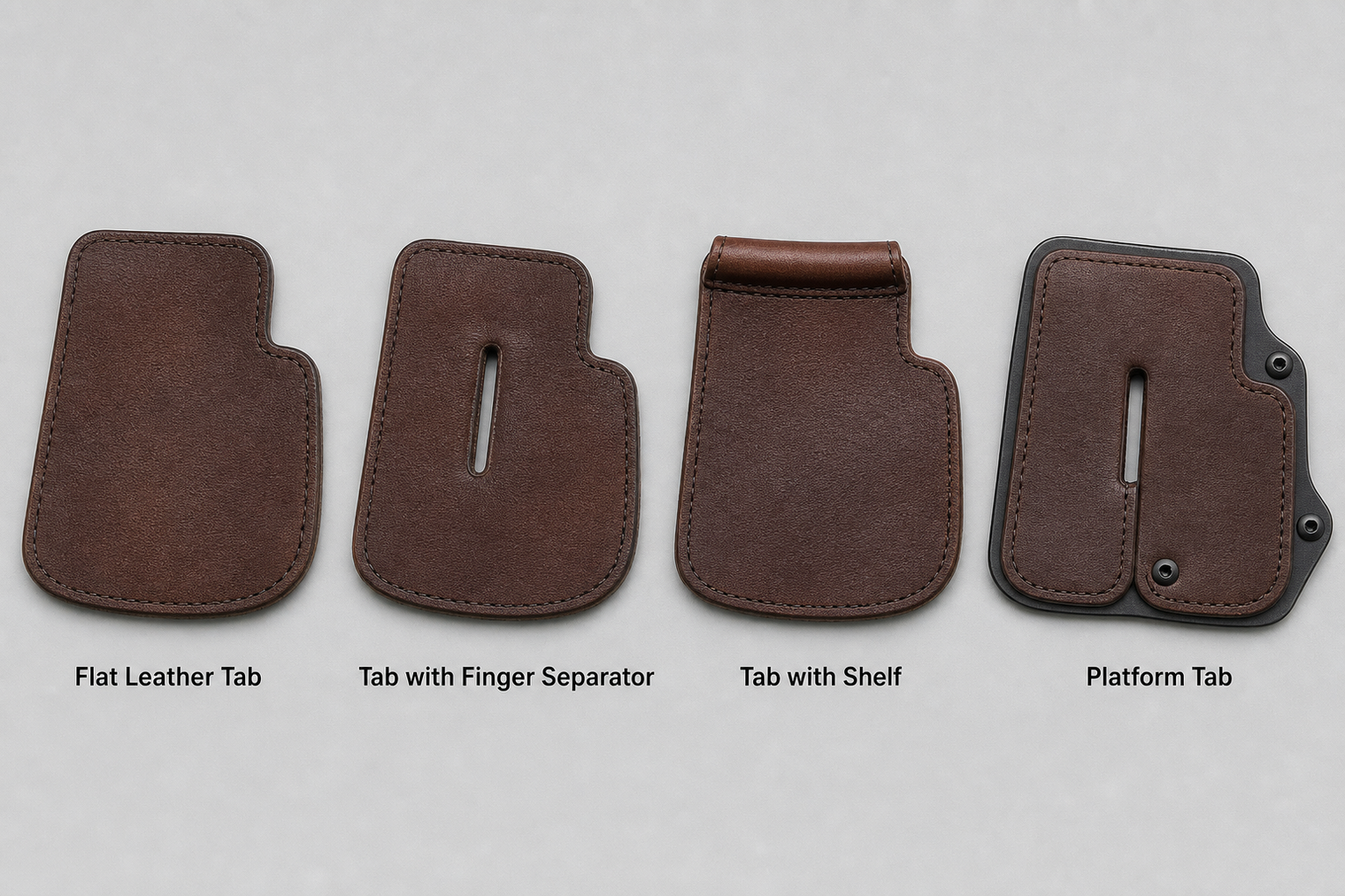
Finger tabs broadly fall into a few categories. Knowing the differences helps you filter quickly.
Flat Leather Tabs
These are the simplest and most traditional option. A flat piece of leather — usually cow, calf, or cordovan — sits between your fingers and the string. They're affordable, easy to break in, and work well for traditional and barebow shooting. The downside is that they offer no built-in separator or shelf, so archers who need that structure need to look elsewhere.
Tabs with a Finger Separator
A finger separator (or spacer) sits between your index and middle finger to keep them evenly spaced on the string and reduce pinching on the arrow nock. This is the standard setup for most recurve and barebow archers. If you're shooting a split-finger (Mediterranean) draw, a separator is strongly recommended.
Tabs with a Shelf or Lip
Higher-specification tabs include a small shelf or ledge that rests against your chin or cheekbone at full draw. This adds a repeatable reference point for your anchor, which is particularly useful in target archery where consistency is everything. These tabs are typically used by more experienced recurve archers and are common at club and competition level.
Platform Tabs
Platform-style tabs have a rigid or semi-rigid backing plate that gives the leather face additional structure. This reduces the tab folding or twisting under string pressure during the draw. They're heavier and more expensive than basic flat tabs, but they reward shooters who want a more consistent feel shot after shot.
Key Features That Matter
Once you know which category suits your style, compare individual tabs on these specific features:
- Face material. Leather remains the most popular choice. Calf leather is soft and breaks in quickly. Cordovan (horse butt) is denser and more durable, preferred by many competition archers. Some tabs use synthetic materials, which are consistent but feel different under the finger.
- Adjustability. Better tabs have adjustable straps, buckles, or hook-and-loop closures. A tab that fits snugly without constricting circulation gives you better proprioceptive feedback during the draw.
- Number of layers. A single-layer tab is lighter and gives more string feedback. Double or triple layers add cushioning and are kinder on fingers during high-volume training sessions.
- Size. Tabs come in small, medium, and large. Sizing usually refers to finger length. A tab that's too small exposes the edges of your fingers to the string; one that's too large bunches under the string and disrupts your release.
- Weight and bulk. Lighter tabs give you more sensitivity. Heavier structured tabs give you more support. Neither is universally better — it depends on your draw weight and training volume.
If you're unsure where to start browsing, the finger tab guide at Legend Archery gives a useful overview of the main types available.
Mistakes Buyers Make
These are the most common errors archers make when selecting a tab, regardless of budget:
- Buying the wrong hand. Always double-check. Your draw hand is the hand that pulls the string, and that's the hand the tab goes on.
- Choosing by price alone. A very cheap tab may save money upfront but wear out quickly, distort under load, or give inconsistent surface texture. Equally, the most expensive tab on the market won't fix technique problems.
- Ignoring fit. A loose tab rotates during the draw. A tab that's too tight causes circulation issues and discomfort that builds over a session. Fit matters more than brand.
- Skipping the shelf on a recurve setup. Archers who shoot recurve with a high facial anchor and then use a flat tab without a shelf miss out on a significant consistency tool. It's not mandatory, but it helps.
- Over-conditioning the leather too early. New leather tabs benefit from being broken in gradually. Applying heavy conditioners before the leather has formed to your fingers can change the surface texture in ways that affect your release feel.
Who Each Option Suits Best
Here's a practical breakdown by archer profile:
Beginners and Junior Archers
Start with a mid-range flat tab that has a finger separator and a basic strap. You don't need a shelf yet — focus on learning a clean release and consistent anchor first. A simple, well-fitted leather tab is the right tool at this stage. Spending a lot on a platform tab before your form is established is wasted money.
Intermediate Recurve Archers
Once you're training regularly and working on anchor consistency, a tab with a shelf becomes genuinely useful. Look for one with a separator, an adjustable backing, and a good quality leather face. This is where most archers find the step up makes a noticeable difference in anchor repeatability.
Traditional and Barebow Shooters
Many traditional archers prefer a simpler flat leather tab or a shooting glove, depending on their style. Barebow archers who use a string-walking technique often need a tab that allows precise finger placement on the string — a structured tab with a clean separator works well here.
Competitive Target Archers
At this level, personal preference and fine-tuned fit dominate. Many competitive archers use platform tabs with replaceable leather faces so they can swap worn leather without replacing the whole tab. If you're shooting at this level, visit a well-stocked archery shop where you can handle options and get sizing advice in person or from an experienced team.
How Much Should You Spend?
Entry-level tabs from reputable brands typically sit in a modest price range and serve beginners and recreational archers well. Mid-range tabs with separators, shelves, and better leather are suitable for regular club shooters and are worth the step up if you're training more than once a week. High-end platform tabs represent a meaningful investment and are most appropriate when your technique is stable and you're competing or training at volume.
Don't let price drive the decision entirely. A well-fitted mid-range tab outperforms an expensive one that doesn't fit properly. If you're sourcing equipment alongside other kit, browsing new archery products at Legend Archery lets you compare tabs alongside other gear without juggling multiple suppliers.
Frequently Asked Questions
What should I actually look for in a finger tab?
Fit comes first — the tab should cover your string fingers fully without excess bulk. After that, look at whether you need a separator (recommended for split-finger draws), whether a shelf would help your anchor consistency, and what face material suits your shooting volume and preference. Leather quality and strap adjustability round out the key criteria.
How much should I spend on a finger tab?
For beginners, a mid-range tab from a reliable brand is the right starting point. You don't need to spend a lot until your form is established and you know exactly what features you want. As you progress and train more frequently, investing in a better-quality tab with more features pays off in consistency and durability.
What mistakes do buyers make when choosing a tab?
The most common are buying the wrong hand, ignoring sizing, and choosing purely on price. Many archers also underestimate how much a shelf helps anchor consistency in recurve shooting, or buy a high-spec platform tab before their technique is at a level where it makes a difference.
Which type of tab is best for someone just starting out?
A straightforward flat leather tab with a finger separator and an adjustable strap is the right choice for most beginners. It's affordable, easy to use, and gives you the feedback you need while learning. Save the shelf and platform features for when your anchor and release are more developed.
Conclusion
The best archery finger tab is the one that fits your hand properly, suits your shooting style, and matches where you are in your development as an archer. Prioritise fit and function over brand or price, and revisit your choice as your technique and training volume grow. A tab that served you well as a beginner may not be the right tool once you're competing regularly — and that's exactly how it should be.