Skip to content
 cust@legendarchery.com
 302 503 5767
 Westfield IN 46074


Getting arrow sizing right is one of the most practical skills in archery, and one of the most commonly skipped. Whether you shoot recurve, compound, or barebow, the wrong arrow length or spine can quietly ruin your groups, stress your equipment, and in extreme cases create a safety hazard. Here is a straightforward breakdown of how to choose the right arrow size for each situation you are likely to encounter.
Why Arrow Size Actually Matters
Many beginners assume arrows are roughly interchangeable. They are not. Arrow spine — the stiffness of the shaft — must match your bow's draw weight and your draw length. A shaft that is too weak will flex excessively at the shot, sending the arrow off course in an unpredictable direction. A shaft that is too stiff will not flex enough to clear the riser cleanly, which also hurts accuracy.
Arrow length has its own role. A shaft cut too short can slide behind the rest or arrow shelf at full draw, creating a genuinely dangerous situation. One cut too long simply adds unnecessary weight and reduces speed without any benefit.
Beyond spine and length, total arrow weight influences kinetic energy and trajectory. For hunting, heavier arrows carry more energy into the target. For indoor target shooting, lighter arrows can reduce drop and tighten groups at shorter distances. These are not minor differences — they change how your setup actually performs.
Core Principles for Sizing Arrows
Start With Your Draw Length
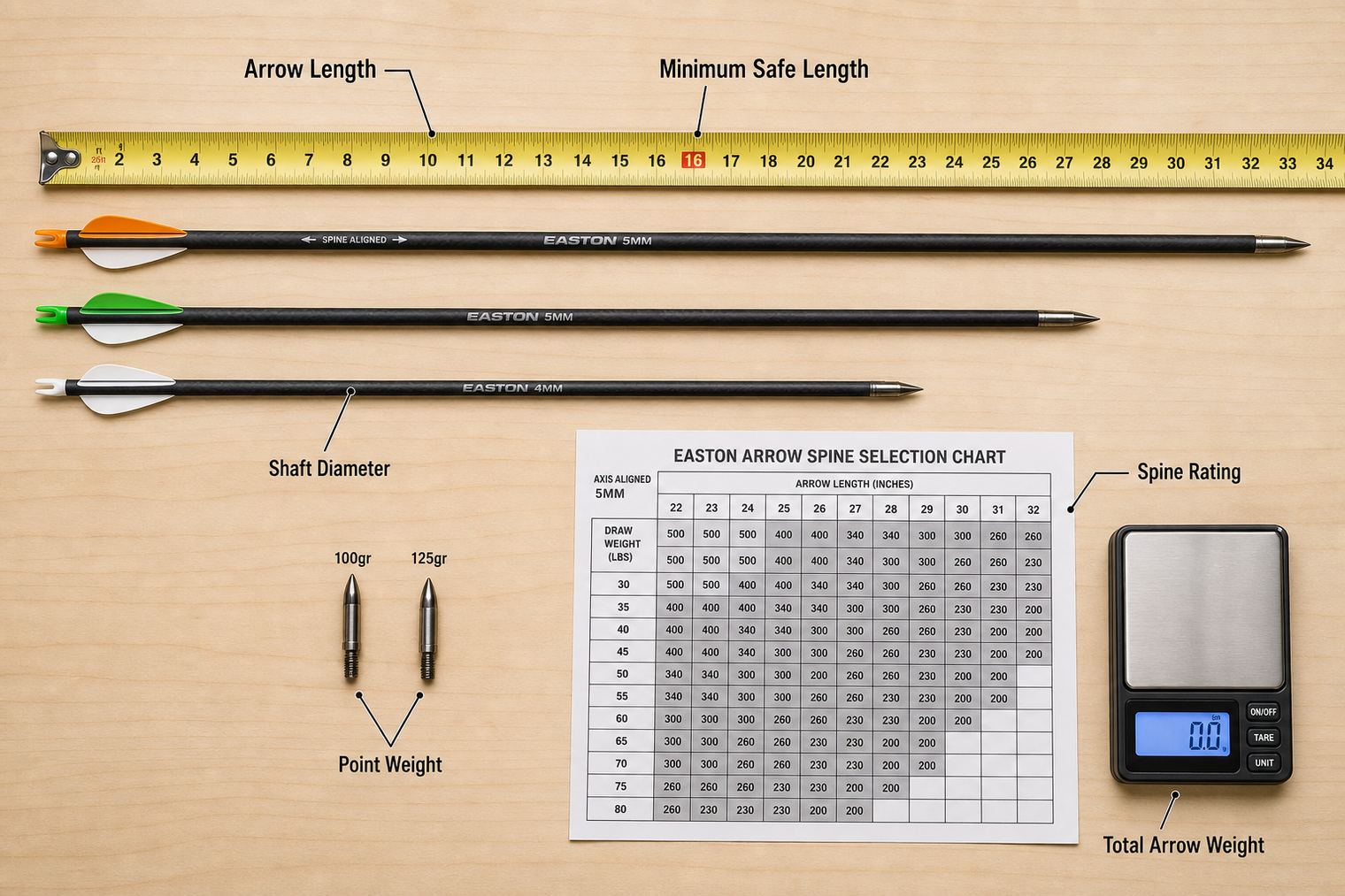
Your draw length determines the minimum safe shaft length. A common rule is to add one to two inches to your draw length to find the minimum arrow length you should shoot. This gives the arrow enough clearance over the rest at full draw. If you are still developing your form or shooting with a coach, err toward the longer end until your draw is consistent.
Match Spine to Draw Weight and Draw Length
Spine charts from shaft manufacturers are the most reliable starting point. You cross-reference your bow's draw weight with your arrow length to land in the correct spine window. However, a few adjustments shift where you land on that chart:
- Point weight: Heavier points (over 100 grains) effectively weaken the dynamic spine, so you may need a stiffer shaft.
- Cam aggressiveness (compound): More aggressive cams generate faster energy transfer and require stiffer arrows than a smooth single cam at the same draw weight.
- Recurve finger shooting: Fingers add a horizontal push at release that increases dynamic flex, generally requiring a weaker spine compared to a release aid at the same draw weight.
- Arrow length: Longer shafts are weaker for the same spine rating. Cutting arrows shorter stiffens them.
Diameter and Weight Class
Arrow diameter affects wind drift and penetration. Narrow-diameter carbon shafts are popular for outdoor target archery because they cut through wind better and leave smaller holes in paper targets, which can score better in some disciplines. Wider shafts are sometimes preferred indoors where wind is not a factor and a wider kerf can nudge a line-cutter into the higher scoring ring.
For hunting, total arrow weight matters more than diameter alone. Most experienced bowhunters aim for a finished arrow weight (shaft, nock, insert, point, and fletching combined) that delivers adequate penetration for the game being pursued.
Matching Arrow Size to the Shooting Situation
Indoor Target Archery
Distances are short and conditions are controlled. You have more flexibility here, and many archers prioritise a slightly heavier or wider arrow to maximise scoring potential on the face. Spine still needs to be correct, but the margin for error is a little more forgiving than outdoors because wind is eliminated.
Outdoor Target and Field Archery
Wind becomes a real factor at distances from 30 to 90 metres. Narrower, stiffer shafts are generally favoured. At longer distances, even small deviations in arrow flight compound significantly. Field archery adds the variable of sloped terrain and varying distances, which means consistent arrow weight becomes especially important for reliable holdover calculations.
3D and Roving
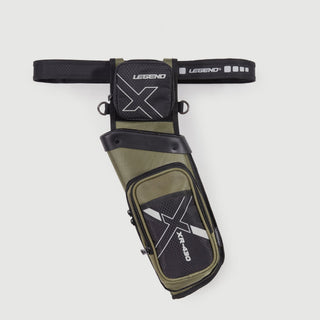
Here you are shooting at unknown or marked distances at life-size animal targets. Durability matters. Shafts take more abuse from foam targets and occasional misses into the ground. Carbon shafts with good abrasion resistance are a practical choice. Keeping arrows organised between stations is much easier with a well-designed arrow quiver that keeps your shafts secure and accessible on the move.
Bowhunting
The priority shifts from scoring rings to kinetic energy and reliability. You need an arrow that is stiff enough to fly cleanly from your setup, heavy enough to carry energy effectively, and built tough enough to handle field conditions. Broadhead selection also interacts with spine — fixed-blade heads plane more on an underspined arrow than field points do, so hunting arrows often need to be tuned more carefully.
Common Arrow Sizing Mistakes
- Buying arrows based on bow draw weight alone: Draw weight is one input, not the full picture. Your draw length and point weight must also factor in.
- Cutting arrows too short too early: Some archers chase maximum speed by cutting arrows as short as possible before their form is settled. If your draw length changes, short arrows can become dangerous.
- Ignoring the effect of point weight changes: Swapping from 100 grain to 125 grain points changes the dynamic spine of the arrow. Always re-check your spine selection when changing point weight significantly.
- Using the same arrows for vastly different bow setups: An arrow tuned and sized for a 45 lb recurve is almost certainly wrong for a 65 lb compound, even if the shaft looks identical.
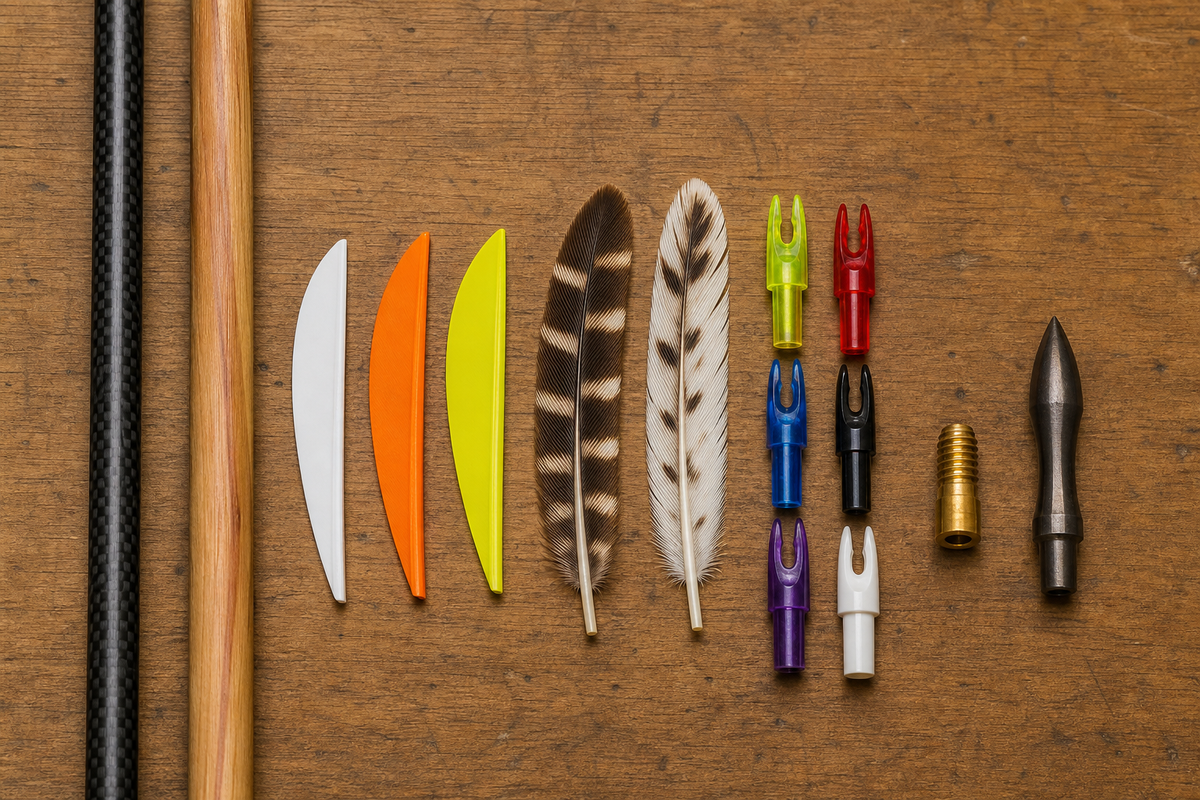
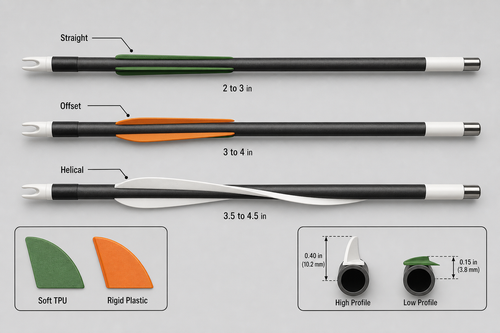
- Overlooking total finished arrow weight: Archers sometimes obsess over spine and forget that the complete build — including arrow feathers or vanes, nocks, and inserts — contributes to the final weight and balance of the arrow.
- Skipping a paper tune after sizing: Even correctly sized arrows should be paper tuned or walk-back tuned with your specific bow. Spine charts get you close; tuning gets you accurate.
Practical Steps to Find Your Arrow Size
- Measure your draw length accurately with a properly set-up bow or with the help of a qualified coach.
- Note your bow's actual draw weight at your draw length, not just the peak weight on a compound.
- Decide on your point weight before consulting a spine chart.
- Use the manufacturer's spine chart for the specific shaft series you are considering — different brands label spine ratings differently.
- Order arrows at full length first, paper tune, then cut to final length once your form and tune are stable.
- Weigh a completed arrow, including all components, before declaring a build finished.
If you need to transport finished arrows safely between sessions or to a competition, an arrow tube with holder keeps shafts protected and prevents damage to fletching and points in transit.
Frequently Asked Questions
How do I know what spine to use for my bow?
Start with the spine chart for the shaft you are considering. Enter your draw weight at your draw length and your intended point weight. The chart will point you to a recommended spine range. From there, paper tuning or bare shaft tuning with your actual bow confirms whether you need to go stiffer or weaker from that starting point.
Does it matter if my arrows are a bit too long?
Slightly long arrows are safer than slightly short ones, especially while your form is still developing. They are a little heavier and slower than they need to be, but they will not create a safety risk. Once your draw length is consistent and you have confirmed your tune, cutting to the correct length is worth doing for the performance gain.
What mistakes do beginners usually make when sizing arrows?
The most common errors are relying on draw weight alone without accounting for draw length, changing point weights without rechecking spine, and cutting arrows short before establishing a consistent draw length. Many beginners also skip paper tuning, which means they never confirm whether the sizing actually works with their specific bow.
Do I need different arrows for hunting and target shooting?
In most cases, yes. The priorities are different enough that most archers benefit from purpose-built setups. Hunting arrows are typically heavier with broadhead-compatible tuning. Target arrows are often lighter and narrower. Some archers use one all-around shaft for both, but performance compromises are unavoidable when you try to optimise for two very different purposes with a single arrow build.
Final Thoughts
Arrow sizing is not complicated once you understand the variables involved. Start with draw length, cross-reference draw weight and point weight on a spine chart, and confirm with tuning before making permanent cuts. Matching your arrows to the specific discipline you are shooting — whether that is indoor target, field archery, or bowhunting — gives every other aspect of your technique a solid foundation to build on.