Skip to content
 cust@legendarchery.com
 302 503 5767
 Westfield IN 46074


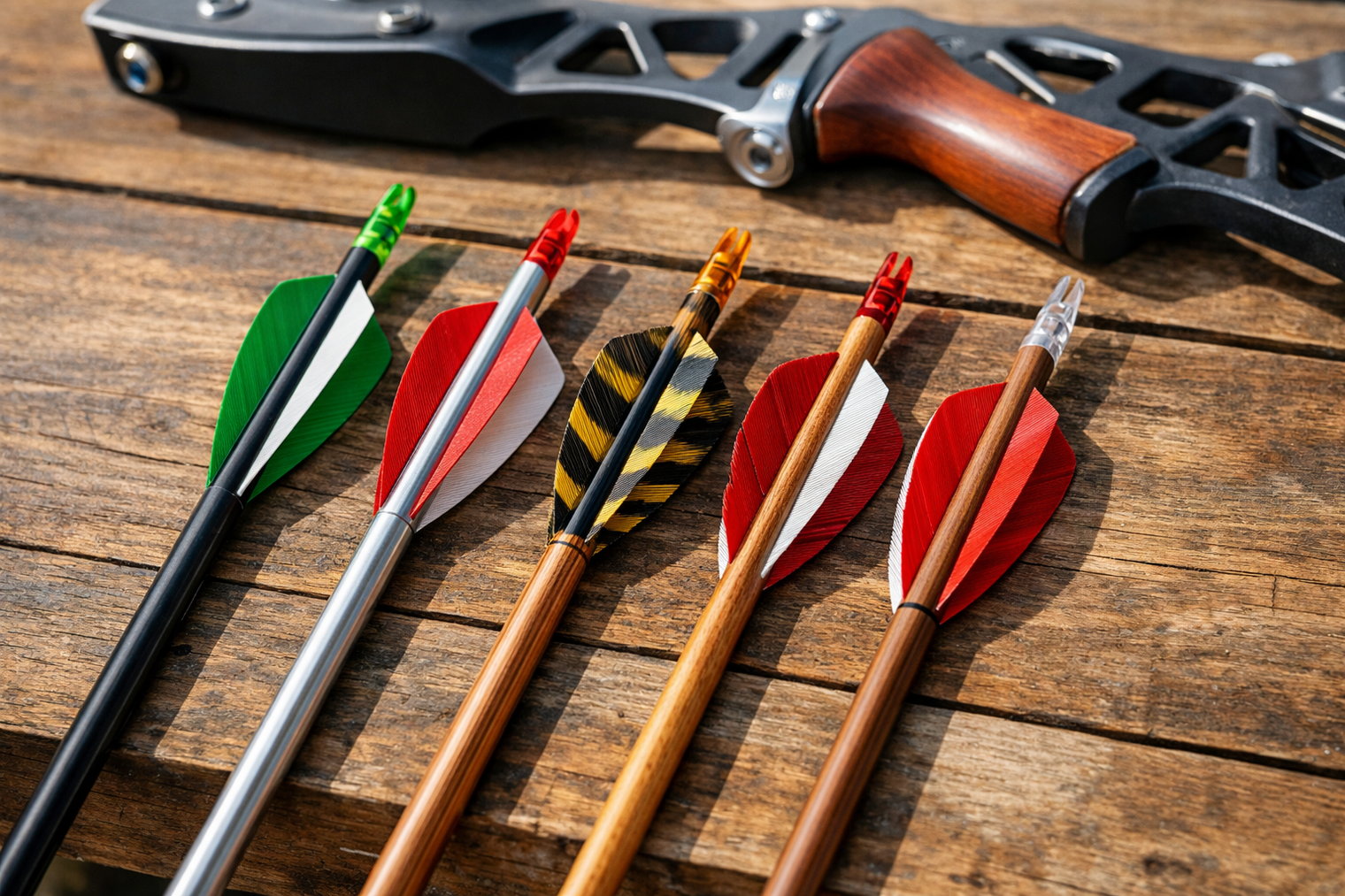
Getting your arrows wrong can sabotage your accuracy no matter how good your form is. When selecting arrows for your recurve bow, three variables do most of the heavy lifting: spine stiffness, arrow length, and material. Get those right and everything downstream — groupings, tuning, consistency — becomes easier. This guide breaks it down practically so you can make a confident purchase.
Why Arrow Selection Matters More Than Most Beginners Expect
A recurve bow is a dynamic system. Energy travels from the limbs through the string, into the arrow, and ideally — with the right arrow — it flies straight and true. An arrow that is too stiff or too weak for your setup will flex incorrectly as it leaves the bow, a phenomenon known as the archer's paradox. The result is inconsistent flight, poor groups, and difficulty tuning your bow no matter how many adjustments you make.
This is why experienced coaches and bow technicians always recommend sorting arrows before you spend money on sights, rests, or stabilisers. The arrow is the single most performance-critical consumable in your kit.
Understanding Arrow Spine: The Most Important Number
Arrow spine refers to the stiffness of the shaft. It is measured by how much a standardised shaft deflects under a specific load — the lower the deflection, the stiffer the arrow. Spine is expressed as a number (e.g. 500, 400, 340) and is typically printed on the arrow or packaging.
Here is the key principle: heavier draw weights require stiffer arrows. A 30 lb recurve needs a significantly more flexible shaft than a 45 lb recurve. If you use an arrow that is too weak (too flexible) for your draw weight, it will kick sideways off the shelf. Too stiff, and the arrow will struggle to recover from the initial flex and group left or right of centre depending on your dominant hand.
How to Find the Right Spine
- Start with your draw weight at your specific draw length — not the peak weight marked on the bow limbs.
- Use the arrow manufacturer's spine chart, which cross-references draw weight and arrow length to suggest a spine rating.
- If you shoot off the shelf without a rest, lean toward a slightly weaker spine. With a centre-shot riser and a rest, lean toward the recommended spine or slightly stiffer.
- Point weight affects spine too — heavier points (100 grain+) effectively weaken the dynamic spine of your arrow, so factor this in.
Arrow Length: Measure Before You Buy
Arrow length is measured from the bottom of the nock groove to the end of the shaft, not including the point. The correct length for your arrows is determined by your draw length, not your height or arm span directly.
A commonly used starting point: measure your draw length and add 1 to 2 inches. This ensures the arrow clears the rest or shelf at full draw without dangerously short overhang. Arrows that are too short can slide behind the rest at full draw — a genuine safety risk. Arrows that are too long simply add unnecessary weight and drag, but they are far safer as a starting point for beginners.
If you are still developing your draw length or shooting on a recurve bow for the first time, err on the side of slightly longer arrows until your form is consistent.
Carbon, Aluminium, or Wood: Choosing the Right Material
The three main shaft materials each have practical trade-offs worth understanding before you buy.
Carbon Arrows
Carbon shafts are the most popular choice for modern recurve archers at every level. They are lightweight, consistent in spine from shaft to shaft, and resistant to bending. A bent carbon shaft will usually crack or splinter rather than stay kinked — this makes damage inspection straightforward. They perform well in both indoor and outdoor environments and are generally the most cost-effective option for anyone shooting regularly.
Aluminium Arrows
Aluminium arrows offer a heavier, slower arrow that some archers prefer for indoor target archery where penetration into the boss is more important than flat trajectory. They can bend rather than break, which means you need to roll them on a flat surface regularly to check for warps. They are often used by beginners because they are affordable and available in a wide range of spines. However, consistency between shafts can vary slightly compared to carbon.
Carbon-Aluminium Hybrid
These shafts combine an aluminium core with a carbon wrap. They offer very tight tolerances and consistent spine, making them a favourite among competitive indoor archers. They are more expensive and generally unnecessary for recreational or development-stage shooting.
Wood Arrows
Wood arrows are traditional and are typically paired with a traditional recurve bow or longbow setup. They require careful spine matching and regular inspection for cracks and warps. They are not recommended for modern riser setups with metal shelves, as they can splinter and cause injury.
Fletching, Nocks, and Points: The Supporting Details
Once you have the shaft sorted, the remaining components matter more than beginners often realise.
- Fletching: Vanes (plastic) are more durable and weather-resistant than feathers. Feathers are preferred when shooting off a traditional shelf or rest because they compress more easily around the riser. For most modern recurve setups, plastic vanes work well. Three-fletch configurations are standard; four-fletch is occasionally used for broadhead stabilisation in hunting contexts.
- Nocks: The nock must fit your string snugly but release cleanly. A nock that is too tight can cause the string to drag the arrow sideways. A nock that is too loose will fall off. Check the fit by hanging the arrow from the string — it should stay put but drop away with a light tap.
- Points: For target shooting, bullet or field points are standard. The weight of your point (typically 70–125 grain) should match what your spine chart assumed. Changing point weight without adjusting spine or bow setup will shift your point of impact.
Common Mistakes When Buying Recurve Arrows
- Buying arrows based on price alone. Cheap arrows in the wrong spine will always underperform. A matched set of mid-range arrows will outshoot mismatched premium shafts every time.
- Using draw weight from the bow label, not actual measured draw weight. Recurve limb weights are marked at a standard draw length (usually 28 inches). If you draw shorter or longer, your actual weight differs significantly.
- Ignoring arrow length safety margins. Short arrows are a safety hazard. Always confirm your draw length before cutting arrows or ordering pre-cut sets.
- Mixing different arrow models in one set. Even minor differences in spine, weight, or length between arrows in the same quiver will create inconsistency at the target. Buy matched dozens from the same production batch where possible.
- Not inspecting arrows before each session. A cracked carbon shaft or a kinked aluminium can fail on release. Run your fingers along each shaft and flex-test carbons lightly before shooting.
- Overlooking the effect of accessories on spine. Adding a heavier point, a different nock, or a different fletching style all shift the dynamic spine of the arrow in flight. Any significant component change should prompt a re-evaluation of your arrow's suitability.
Frequently Asked Questions
How do I know which spine rating to start with?
Use your actual draw weight at your actual draw length, then consult the spine chart from the arrow manufacturer you are considering. Most brands publish these charts on their websites or product pages. When in doubt, your local pro shop or bow technician can help you measure both and recommend a range of options.
Does it matter if my arrows are a bit too long?
For safety and development purposes, slightly long arrows are fine and far preferable to short ones. As your form stabilises and your draw length becomes consistent, you can have arrows cut to length. Never cut arrows without confirming your draw length is set.
Why are my arrows grouping to one side even with good form?
Consistent left or right grouping (rather than scatter) often indicates a spine mismatch. If your arrows are flying weak (too flexible), groups typically appear on the dominant hand side. Too stiff, and they appear on the opposite side. Check your spine selection before adjusting your sight.
Can I use the same arrows if I upgrade my bow?
Not necessarily. A new bow with different limb weight, draw length, or riser geometry may require a different spine or length. Treat a bow upgrade as a prompt to re-evaluate your entire arrow setup before assuming your current shafts will work.
Bringing It Together
Arrow selection is genuinely one of the highest-impact decisions a recurve archer makes. The right shaft — matched in spine, length, and material to your specific setup — will make tuning easier, improve consistency, and help you understand what your form is actually producing. If you are setting up a new bow or replacing worn arrows, take the time to measure properly and consult a spine chart rather than guessing. Legend Archery stocks a broad range of recurve setups and arrow-compatible accessories to help you build a matched, well-tuned kit from the start.