Skip to content
 cust@legendarchery.com
 302 503 5767
 Westfield IN 46074


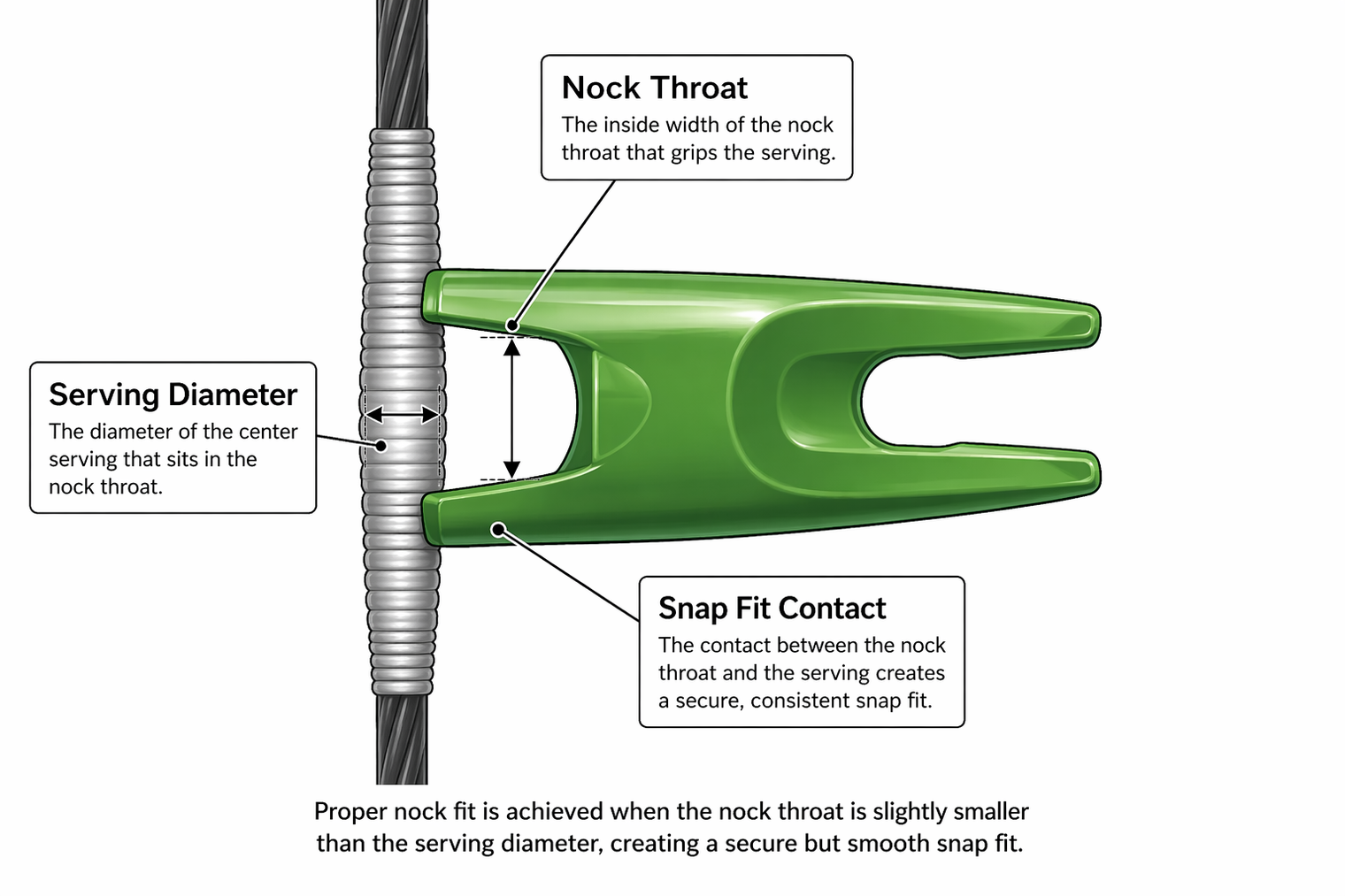
Nock fit is one of the smallest details in archery with one of the biggest impacts on consistency. A nock that is too tight can cause erratic releases. One that is too loose can fall off mid-draw or produce unpredictable arrow flight. Before you buy a batch of nocks, it pays to understand what correct fit actually looks and feels like — and what variables control it.
Why Nock Fit Matters More Than Most Archers Expect
Most beginners focus their attention on bow draw weight, arrow spine, or sight setup. Nock fit tends to be an afterthought. But in practice, a poor fit introduces inconsistency at the exact point where the arrow interfaces with the bowstring — meaning every shot starts compromised.
[product-tabs]
The consequences range from minor to serious:
- Too tight: The nock grips the string beyond the point of clean release. This causes the arrow to hesitate at the string before separating, adding erratic sideways movement to the shot.
- Too loose: The arrow can slide or rotate on the string during the draw cycle, or fall off completely. This is not only inaccurate — it can be dangerous if the arrow drops inside the bow on release.
- Incorrect alignment: Even a well-fitting nock placed at the wrong orientation on the shaft will cause inconsistent contact with the arrow rest and affect clearance.
Understanding the arrow nock — its role, its variations, and how it interacts with the string — is the foundation of getting this right.
Core Principles of Correct Nock Fit
The Click Test
The most commonly referenced standard for recurve and traditional setups is the "click fit" — the nock should click onto the serving and hold in place under its own grip, but release cleanly with a light downward tap on the string. This is sometimes called a "snap fit." It means the nock throat diameter is closely matched to the string's serving diameter.
For compound bows, the standard can differ. Many compound shooters prefer a slightly looser fit because the D-loop handles most of the retention, and a tight nock on a compound can actually work against clean arrow departure.
Nock Throat Diameter vs. Serving Diameter
Every nock has a throat — the opening that sits on the string. The diameter of that throat must match the diameter of your bowstring serving, not the bowstring itself. Serving diameter varies depending on thread material and how thickly it has been wrapped. This is why nocks are not universally interchangeable even when they look identical.
Before buying nocks, measure your serving diameter with a digital caliper if possible. Common sizes include 0.098", 0.166", and others depending on the bow and string setup. Match this measurement to the nock's listed throat size, not a general size label.
Shaft Diameter and Nock Size
The other dimension to match is the outside diameter of your arrow shaft. Nocks seat either inside the shaft (for hollow carbon arrows using a bushing or insert system) or directly over the shaft end (for certain shaft types). The fit here must be snug but not forced. A nock that requires heavy pressure to seat fully may crack the shaft over time.
For indoor target archers running large-diameter aluminum or carbon arrows, this distinction becomes especially relevant when selecting between pin nocks, press-fit nocks, and glue-on styles.
Index Vane Alignment
Most nocks have a visual index — either a small raised line, a flat on the throat, or a colored index point — that tells you how the nock is oriented relative to the fletching. When installing nocks, this index must align consistently so that the cock vane (or odd-colored vane) is in the correct position relative to the arrow rest on every single arrow. Inconsistency here produces grouping problems that are hard to diagnose without inspecting the nocks themselves.
Practical Steps Before Buying Nocks
Use this checklist to avoid buying the wrong nocks for your setup:
- Measure your serving diameter with a caliper, not by eye. Different string makers use different serving thread thicknesses.
- Check your arrow shaft outside diameter and confirm which nock interface your shafts use — pin system, press-fit, or glue-on.
- Identify your bow type — recurve, traditional, or compound — since each has different fit preferences, particularly around how tight or loose the throat grip should be.
- Check the bowstring nock point location on your string before deciding on nock style. A brass nock set or tied nock point affects how much clearance sits above and below your arrow nock.
- Buy a small test quantity first if switching brands or sizes. Fit can vary between manufacturers even when the stated specifications appear identical.
Nock Types Overview
Knowing the general categories helps narrow down what suits your setup:
- Standard press-fit nocks: Fit directly over the shaft end. Common on aluminum and some carbon arrows. Easily replaced without tools.
- Pin nocks: Seat onto a separate pin bushing installed inside the shaft. Popular in target archery because they can be replaced individually if a nock is damaged without discarding the shaft.
- Glue-on nocks: Used primarily on wooden arrows for traditional and longbow shooting. Require fletching cement and careful alignment during installation.
- Lighted nocks: Battery-powered nocks designed for bowhunting visibility. These require a specific internal diameter and are not interchangeable with target nocks.
Some setups also involve a nock piece, which is the riser component on certain recurve bows that the bowstring sits in at rest. This is a different component from the arrow nock, but understanding both helps when troubleshooting clearance and string contact issues.
Common Nock Fit Mistakes
Even experienced archers make these errors when changing equipment:
- Assuming all nocks of the same brand fit the same. A manufacturer may produce several throat sizes within the same product line. Always verify the specific size, not just the product name.
- Testing fit on a new string without accounting for serving stretch. Some serving materials loosen slightly after a break-in period. A nock that snaps firmly on day one may be loose after a few hundred shots.
- Forcing a tight nock onto the string repeatedly. If a nock requires force to click on, the throat is undersized for your serving. Forcing it stresses both the nock and the serving threads.
- Ignoring index alignment after nock replacement. After swapping nocks mid-season, re-check that every arrow in the quiver has its index vane in the same position before returning to competition or hunting.
- Mixing nock styles across the same set of arrows. Pin nocks and press-fit nocks have slightly different mass and seating depths. Using both styles within the same set will introduce weight inconsistency across the arrow set.
Frequently Asked Questions
What does this nock fit guide actually cover?
This guide focuses on how to evaluate and match nock throat diameter to your serving, how shaft diameter affects nock selection, and the practical steps to take before purchasing nocks for a new or existing setup. It covers recurve, compound, and traditional contexts where relevant.
Who needs this kind of information most?
Archers building a new arrow set, switching string materials, or upgrading from a beginner setup to a more dialed-in configuration tend to benefit most. Beginners often receive arrows with nocks already installed and never investigate fit until they start troubleshooting grouping problems.
What beginner mistakes does understanding nock fit help prevent?
The most common beginner mistake is buying nocks based on visual appearance or brand recognition alone, without checking serving and shaft diameter. The second is not performing the click test at all — simply assuming the nock is correct if it stays on the string. Both errors are easy to avoid with a caliper and a few minutes of checking before committing to a full set.
What should you understand before buying any archery gear?
Before purchasing components like nocks, it helps to understand how the different parts of your arrow and bowstring system interact. Knowing the difference between arrow nock, nock point, and serving — and how each affects arrow departure — prevents buying components that work fine in isolation but cause problems together.
Conclusion
Nock fit is a small variable that compounds across every shot you take. Getting the throat size right for your serving, confirming shaft compatibility, and maintaining consistent index alignment across your arrows takes only a few minutes of preparation — and removes a source of inconsistency that is otherwise easy to overlook. If you are building or updating a set of arrows, start with these fundamentals before choosing a style or brand.