Skip to content
 cust@legendarchery.com
 302 503 5767
 Westfield IN 46074


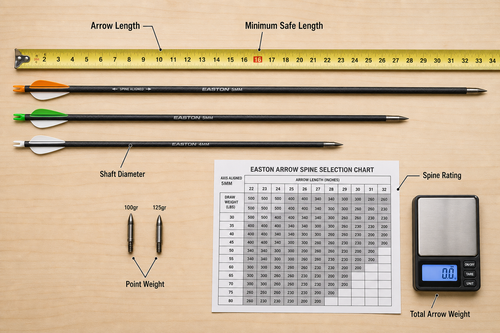
If you've ever wondered why two arrows that look identical fly completely differently, weight is usually the answer. Knowing how to calculate arrow weight gives you control over consistency, tuning, and performance — whether you're shooting targets, hunting, or competing. This guide is for archers who want to stop guessing and start building setups they can actually trust.
Why Arrow Weight Matters More Than Most Archers Realize
Arrow weight influences almost every performance variable in your shot. A heavier arrow carries more momentum, hits harder at close range, and is generally quieter from the bow — useful for hunting. A lighter arrow flies faster and shoots flatter over distance, which can benefit target archers working at known yardages.
Beyond preference, weight directly affects how your bow behaves. Shooting arrows that are too light for your draw weight can stress limbs and create excessive vibration. Arrows that are too heavy will drop quickly and may not carry enough energy at range. Getting this number right is foundational to a properly tuned bow.
Weight is measured in grains — a unit used throughout archery and ballistics. One gram equals roughly 15.43 grains. Understanding this unit is essential before you do any calculation. For a deeper look at the unit itself, the grain arrow weight measurement page covers the basics clearly.
[product-tabs]
What You Need Before You Start
Before calculating total arrow weight, gather the following:
- A grain scale — a digital scale accurate to at least 0.1 grain. Kitchen scales are not precise enough.
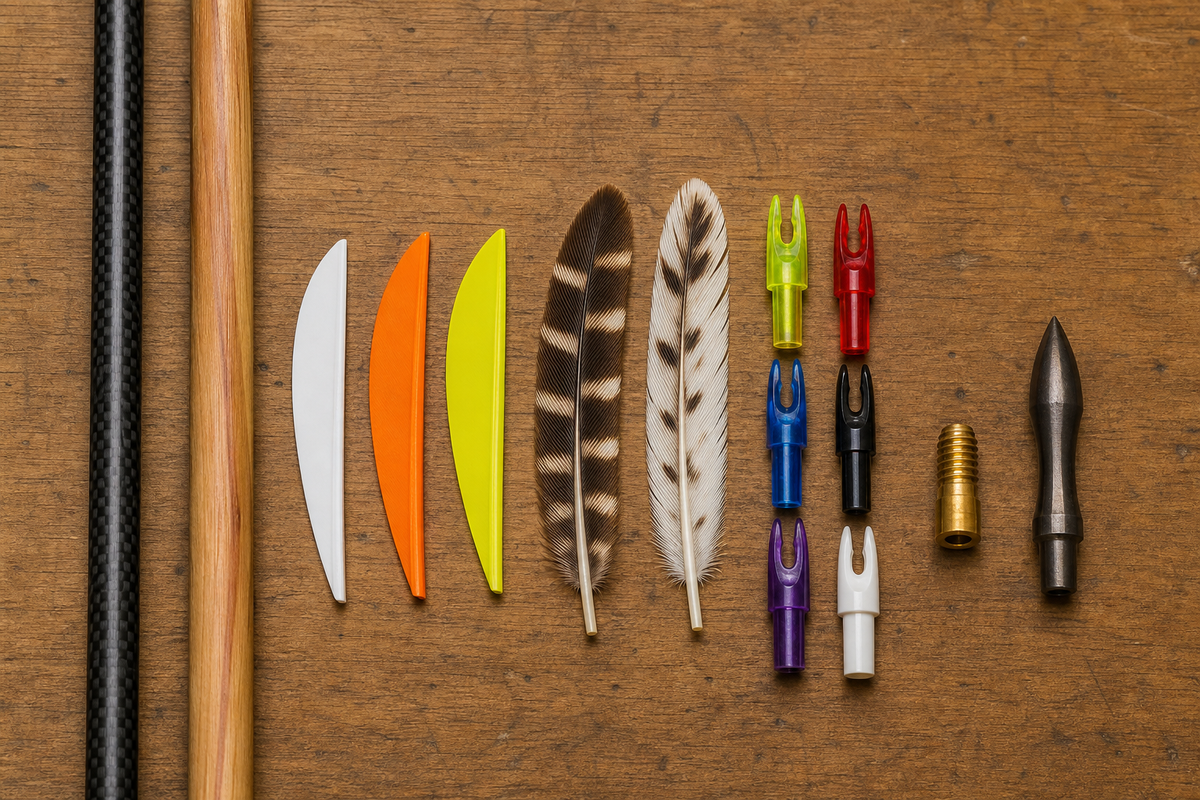
- All arrow components — shaft, nock, insert, point or broadhead, and fletching.
- The manufacturer's GPI rating for your shaft (grains per inch).
- A ruler or tape measure — to measure your finished arrow length accurately.
- A notepad or spreadsheet — to log each component so you can repeat the process across your full set.
You don't need expensive equipment, but you do need a proper grain scale. This is the single most important tool in the process. Everything else supports it.
How to Calculate Arrow Weight: Step by Step
Total arrow weight is the sum of every component on the finished arrow. Here is the process broken down:
Step 1 — Determine Shaft Weight Using GPI
Every arrow shaft has a published GPI (grains per inch) value from the manufacturer. Multiply this number by your finished shaft length in inches — measured from the bottom of the nock groove to the end of the shaft, not including the point.
For example: a shaft with a GPI of 8.5 cut to 28 inches gives you 8.5 × 28 = 238 grains for the shaft alone.
Step 2 — Weigh Each Component Individually
Using your grain scale, weigh each component separately before assembly:
- Nock
- Insert (bushing)
- Point or broadhead
- Each piece of fletching (then multiply by the number used)
Manufacturer specs can be a useful reference, but weighing components yourself is more accurate. Tolerances exist, and real-world weights sometimes differ from published figures.
Step 3 — Add Everything Together
Once you have the shaft weight from GPI and the individual component weights, add them all:
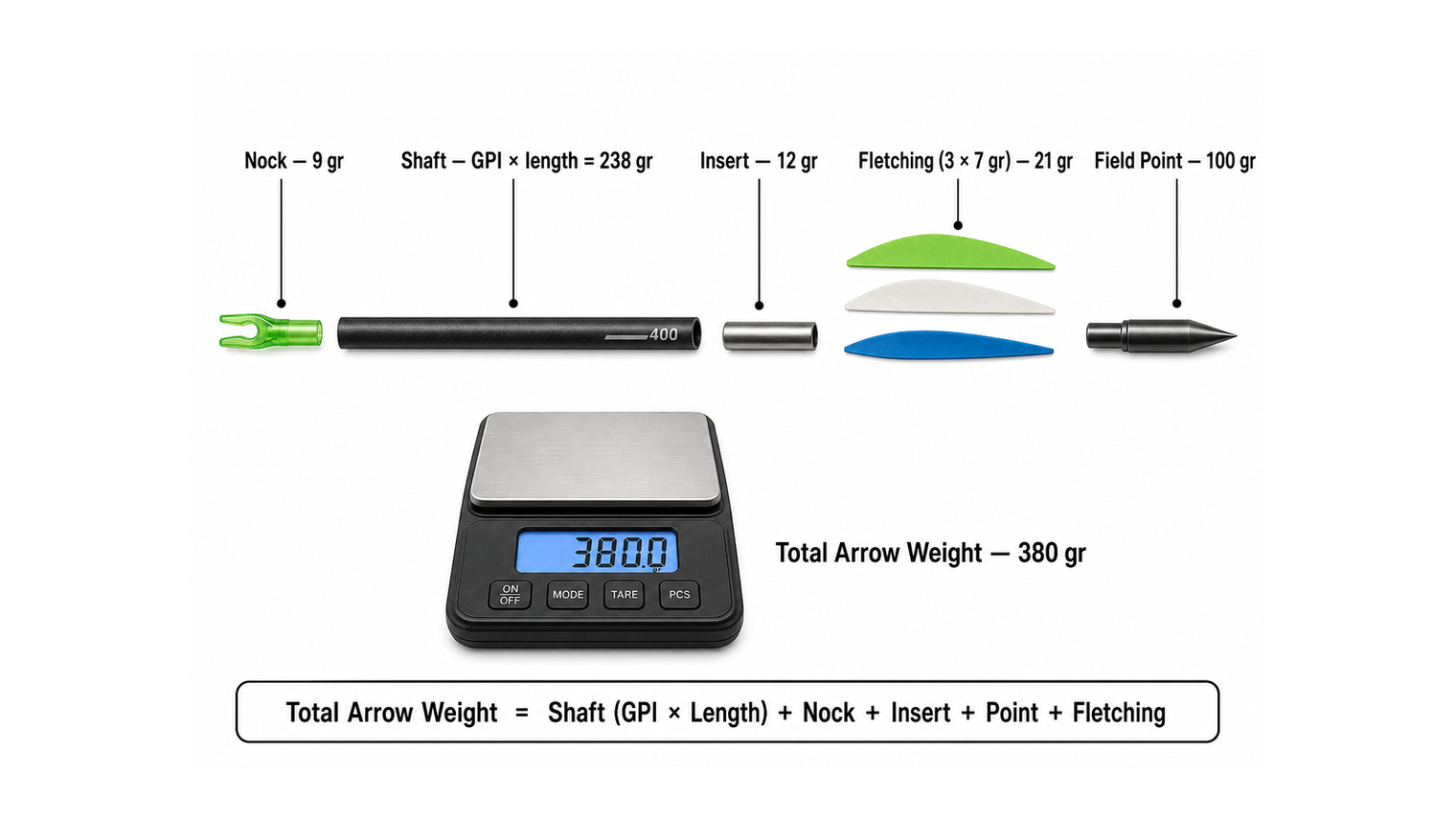
Total Arrow Weight = Shaft Weight + Nock + Insert + Point + Fletching (all pieces)
Example breakdown:
- Shaft: 238 gr
- Nock: 9 gr
- Insert: 12 gr
- Point: 100 gr
- Fletching (3 × 7 gr): 21 gr
- Total: 380 gr
Step 4 — Verify on the Scale
After assembly, weigh the completed arrow on your grain scale. This final number should match your calculated total closely. A small difference of 1 to 3 grains is normal due to adhesive. A larger discrepancy means you've missed a component or made a measurement error — go back and check your shaft length and GPI source.
Step 5 — Calculate FOC (Optional but Recommended)
Front of Center (FOC) tells you where the arrow's balance point sits. Higher FOC generally improves flight stability and penetration. To find it:
- Find the physical balance point of the finished arrow by balancing it on a thin edge.
- Measure from the throat of the nock to the balance point.
- Divide that measurement by the total arrow length (nock throat to tip).
- Subtract 50% and multiply by 100 to get your FOC percentage.
Most target archers aim for 10 to 15% FOC. Hunters often prefer higher values — 15% and above — for penetration. Adjusting point weight is the easiest way to tune FOC after you've set your shaft length.
Common Mistakes to Avoid
- Using kitchen or postal scales. These are not sensitive enough. You need a dedicated grain scale to get usable numbers.
- Forgetting the insert weight. Inserts are small but they add real grains. Leaving them out skews your total.
- Measuring shaft length incorrectly. GPI calculations depend on the cut shaft length, not the full arrow length with the point installed.
- Trusting published GPI without verifying. GPI values are averages. Weigh your actual shafts if precision matters.
- Not accounting for adhesive. Hot melt and fletching cement add a small amount of weight. For most setups this is negligible, but competitive archers building matched sets should be aware of it.
- Calculating for one arrow and assuming the rest match. Always weigh each finished arrow individually. Shafts from the same batch can vary slightly. Building matched sets requires checking every arrow.
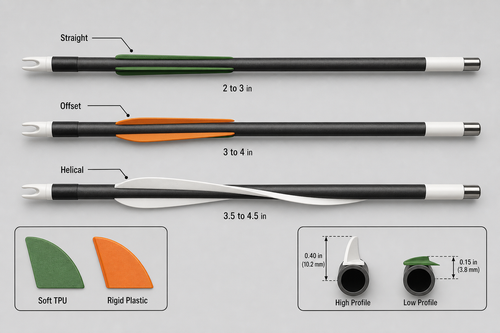
- Ignoring fletching type. Vanes and natural arrow feathers differ significantly in weight. Switching fletching type without recalculating will change your total.
How to Check If Your Calculation Is Correct
There are a few reliable ways to verify your result:
- Scale confirmation: Your calculated weight and your scale reading should be within 2 to 3 grains. If the gap is larger, recheck your shaft length and every component.
- Consistency across your set: Weigh all your finished arrows. In a well-matched set, the range from lightest to heaviest should be 5 grains or less. Wider variation points to inconsistent components or measurement errors.
- Chronograph check: If you have access to a chronograph, arrow weight and bow speed are related through a known relationship. Unusual speed readings can flag a weight problem.
- Flight consistency at distance: Arrows of significantly different weights will not group together. If your arrows are scattering at longer distances despite good form, weight inconsistency could be a factor.
Frequently Asked Questions
How do I actually calculate arrow weight — what's the formula?
Multiply your shaft's GPI rating by the cut shaft length in inches to get the shaft weight. Then add the individual weights of your nock, insert, point, and fletching. The sum is your total arrow weight in grains. Always verify the result by weighing the fully assembled arrow on a grain scale.
What tools do I actually need for this — can I use a regular scale?
You need a dedicated grain scale accurate to at least 0.1 grain. Regular kitchen or postal scales do not have the resolution required. A ruler for measuring shaft length and the manufacturer's GPI data for your shaft are also essential starting points.
What are the most common mistakes archers make when calculating arrow weight?
The most frequent errors are forgetting to include the insert, measuring total arrow length instead of cut shaft length for the GPI calculation, and trusting only published specs without physically weighing components. Building your entire set based on one arrow's weight without checking the others is another common issue.
How do I know if I calculated it right?
Weigh the completed arrow after assembly. It should match your calculated figure within 2 to 3 grains. If you're building a matched set, weigh every arrow and look for a tight range. Significant variation across the set is a sign that something was measured or assembled inconsistently.
Putting It Together
Calculating arrow weight is a straightforward process once you have the right tools and understand what each component contributes. The grain scale is non-negotiable. Everything else — GPI, shaft length, individual component weights — feeds into a simple addition. Where most archers go wrong is skipping the verification step or building a set based on one arrow's numbers. Take the time to check each finished arrow individually, and your bow will reward you with consistent, predictable performance downrange.