Skip to content
 cust@legendarchery.com
 302 503 5767
 Westfield IN 46074


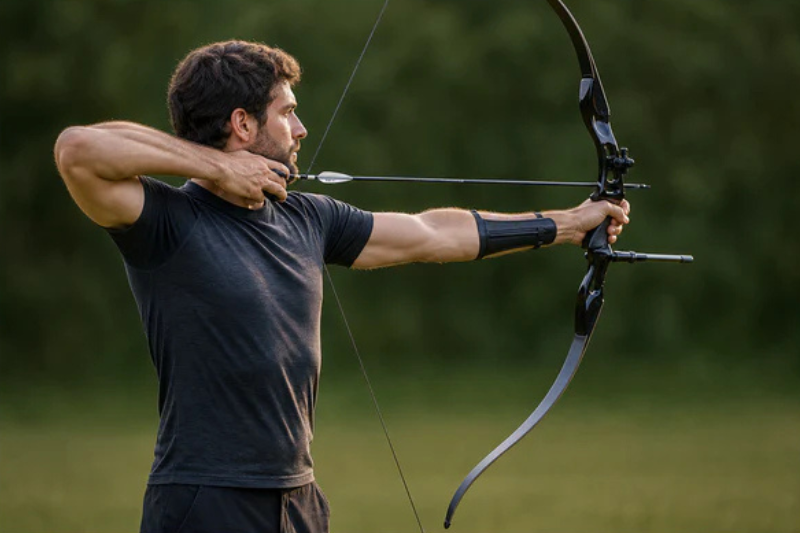
How you draw a bow determines almost everything that follows — your aim, your release, and where the arrow lands. Yet the draw is one of the most overlooked parts of an archer's form. Whether you're shooting recurve or compound, getting this phase right is the foundation of consistent, accurate shooting. This guide covers what actually matters when pulling back a bow, what goes wrong for most beginners, and how to build cleaner habits from the ground up.
Why the Draw Phase Shapes Every Shot
Most accuracy problems in archery trace back to the draw, not the release. If your body isn't loaded correctly before you reach full draw, no amount of careful aiming will compensate. The draw phase builds tension in the right muscle groups, sets your anchor point, and determines the angle of the string at release. A clean, repeatable draw creates a mechanical baseline your body can return to shot after shot.
Think of it this way: a shaky or inconsistent draw introduces variables before the arrow even leaves the bow. Those variables compound quickly. A small difference in elbow position, shoulder engagement, or draw length can shift your point of impact significantly at longer distances.
Core Principles of a Correct Draw
1. Shoulder Position Comes First
Before you pull back an inch, your drawing shoulder needs to be set low and back. Many archers let the shoulder rise toward the ear as they draw, which shortens the effective muscle chain and creates tension in the neck and trap muscles. Keep the shoulder blade engaged downward from the very start of the draw and maintain that position all the way to anchor.
2. Lead with the Elbow, Not the Hand
A common coaching cue that genuinely works: imagine pulling your elbow through a wall rather than pulling with your fingers. This shifts the work from the forearm and bicep into the larger back muscles — specifically the rhomboids and lower trapezius. Drawing from the back produces more stable and repeatable shots than drawing from the arm.
3. Establish a Consistent Anchor Point
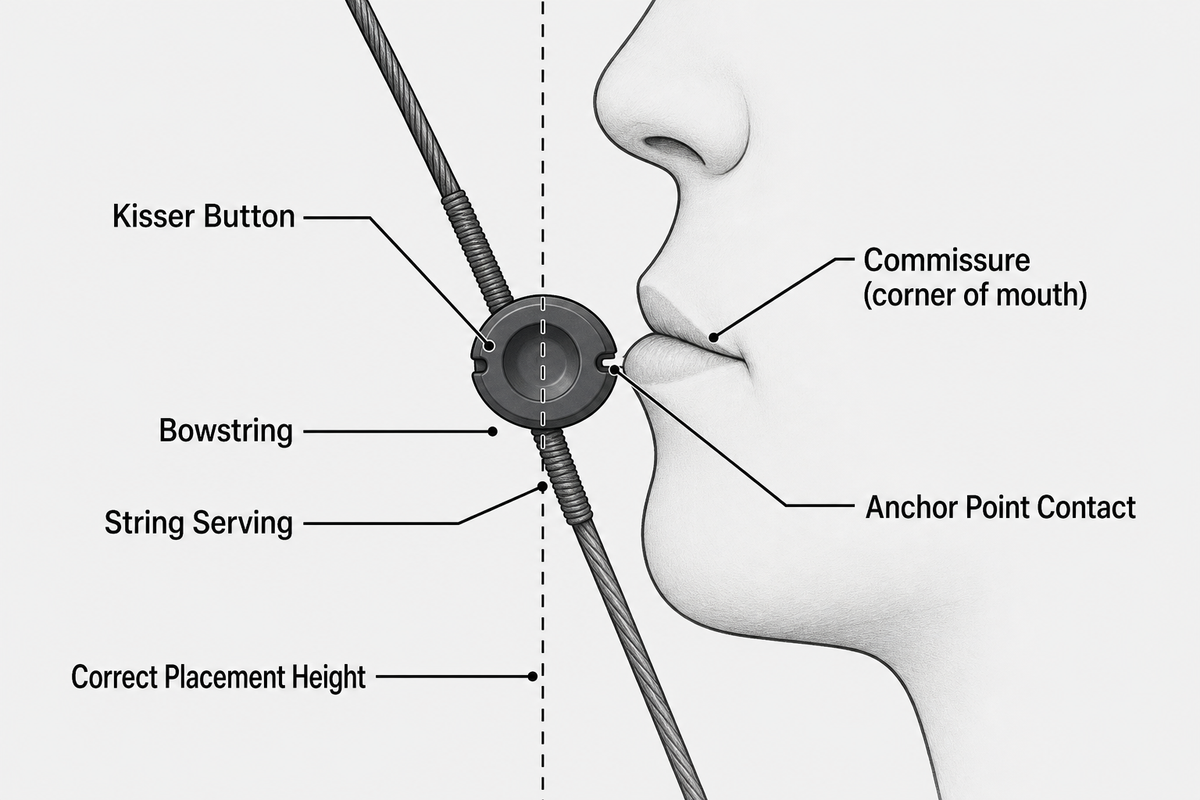
Your anchor point is where your drawing hand (or the string) meets your face at full draw. It must be the same every single time. Most recurve archers anchor with the string touching the nose and the index finger touching the corner of the mouth or under the chin, depending on style. Compound shooters typically use a mechanical release and anchor at the jaw or cheekbone. Whatever your style, the anchor must be a hard, physical reference — not an approximation.
4. Engage Back Tension Before the Release
Full draw is not the end of the draw phase — it's the beginning of the shot cycle. Once at anchor, continue applying gentle rearward pressure through the back muscles. This is often called back tension, and it's what allows the release to happen naturally rather than being punched or snatched. An archer who stops actively drawing at full draw will almost always pluck or jerk the string.
5. Draw Length Must Match Your Anatomy
Drawing too short collapses your form and limits power. Drawing too long overstretches the shoulder joint and causes the bow arm elbow to lock awkwardly. Your draw length should allow a slight bend in the bow arm elbow and a comfortable, sustainable anchor position. If you're consistently overextending at full draw, it's worth reviewing whether your equipment is matched to your body. Learn more about the risks of pulling beyond your optimal range by reading about overdrawn archery technique.
Practical Steps to Build a Better Draw
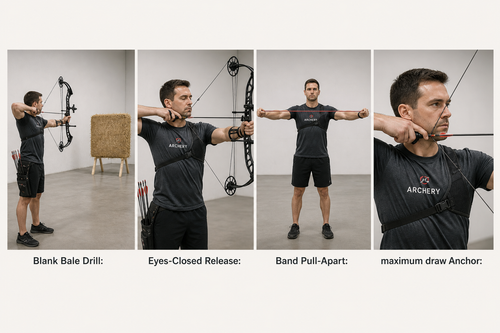
- Use a mirror or video: Film yourself from the side and from behind. Watching your own draw in slow motion reveals shoulder creep, elbow flare, and anchor inconsistencies that you simply cannot feel in real time.
- Blank bale practice: Shoot at a target from very close range (one to two metres) with no aiming intent. Focus entirely on the draw sequence, anchor, and back tension. Remove the pressure of hitting a target so you can concentrate on mechanics.
- Use a resistance band: Rehearse the drawing motion with a band away from the range. This builds muscle memory for the correct back-engaged movement pattern without the weight of a live bow.
- Check your grip on the bow: A tight bow hand creates torque and can mask draw problems. A relaxed, open grip on the riser lets you see your draw errors more clearly because there's less noise in the system.
- Work with a coach on anchor consistency: Even experienced archers benefit from an external eye checking whether the anchor is truly repeatable or just feels repeatable.
Common Mistakes When Drawing a Bow
- Creeping forward before release: Allowing the draw hand or elbow to move forward as you aim bleeds tension from the back muscles and drops draw weight at the critical moment before the arrow leaves the string.
- Drawing with the arm instead of the back: This is by far the most common beginner error. It causes early fatigue, inconsistent power, and puts unnecessary strain on the rotator cuff over time.
- Rising shoulder: As mentioned earlier, a shoulder that climbs during the draw disrupts your anchor point and introduces string clearance issues on the way through.
- Punching the trigger: For compound shooters, anticipating the release and jabbing the trigger instead of squeezing through it is directly linked to poor draw execution — specifically the absence of continued back tension at full draw.
- Ignoring the heel of the bow hand: How force transfers through your bow hand matters more than most archers realise. Understanding heel technique in archery can help reduce torque and make your draw-to-release transition smoother.
- Inconsistent head position: Turning or tilting the head to meet the string instead of bringing the string to a fixed anchor position introduces different string contact against the face and inconsistent arrow flight.
Recurve vs. Compound: Key Differences in Draw Execution
The fundamental principles are the same across both disciplines, but the execution differs in a few practical ways.
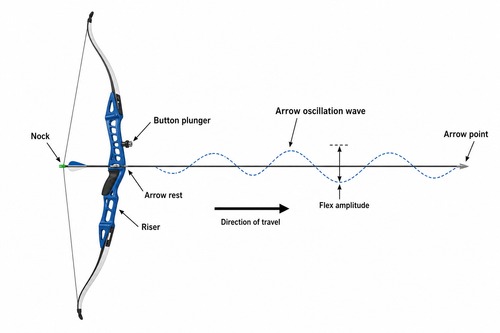
With a recurve bow, you're drawing and holding the full draw weight throughout the aim. This makes back tension and efficient muscle use even more critical, because there's no let-off. Recurve archers also typically use a finger tab or glove, which means the finger pressure on the string during the draw affects the arrow's initial spine behaviour at the shot.
With a compound bow, the cam system provides let-off, meaning the holding weight drops dramatically once you reach full draw. This makes it physically easier to hold at anchor, but it also makes it easier to develop lazy back tension habits. Compound archers must be deliberate about continuing to load the back muscles even though the weight drops off — otherwise the release mechanics suffer.
Frequently Asked Questions
What actually happens during the draw in archery?
The draw is the phase where the archer pulls the string rearward from brace height to full draw. During this movement, energy is stored in the limbs of the bow, and the archer's body loads the posterior shoulder chain — the muscles across the upper back — to hold and control that energy until the shot is executed.
Why does an inconsistent draw make aiming harder?
If your anchor point shifts even slightly between shots, your sight picture changes even when your aim feels identical. This is why aiming feels harder on some shots than others — the problem usually isn't the aim itself but an unstable foundation created earlier in the draw phase.
What do beginners most commonly get wrong when drawing a bow?
The most frequent beginner error is drawing with the arm muscles rather than engaging the back. This leads to shoulder fatigue, poor anchor consistency, and a tendency to collapse or creep forward before the shot goes. A close second is allowing the drawing shoulder to rise, which compresses the neck and shortens the effective draw.
How long does it take to build a reliable draw habit?
There's no single answer, but most archers see meaningful improvement in draw consistency within four to eight weeks of deliberate, focused practice — particularly if they use blank bale drills and get regular feedback from a coach or video review. The challenge isn't learning the movement once; it's overriding existing habits that feel normal even when they're inefficient.
Building Your Draw Over Time
A reliable archery draw technique isn't built in a single session. It develops through repetition with intention — not mindless volume, but deliberate attention to shoulder position, back engagement, and anchor contact on every single shot. Start with the fundamentals covered here, identify the one or two errors most present in your current form, and work on those specifically before adding complexity. Consistency compounds; fix the draw, and accuracy tends to follow naturally.