Skip to content
 cust@legendarchery.com
 302 503 5767
 Westfield IN 46074


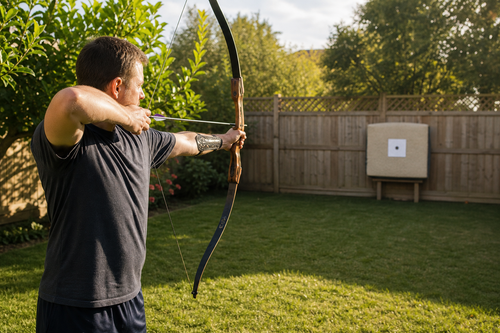
Range time is valuable, but most archers can only access a lane or field a few times a week at best. The good news is that a significant portion of what makes a skilled archer — muscle memory, anchor consistency, mental focus, and equipment familiarity — can be developed without ever drawing a full arrow at a target. Here are five practical methods that actually move the needle.
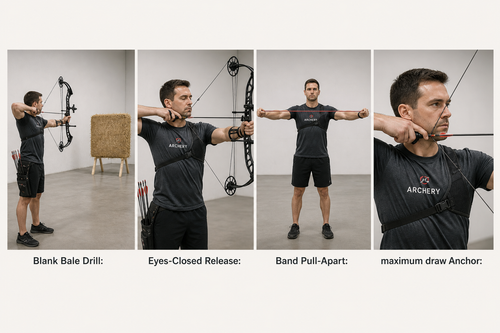
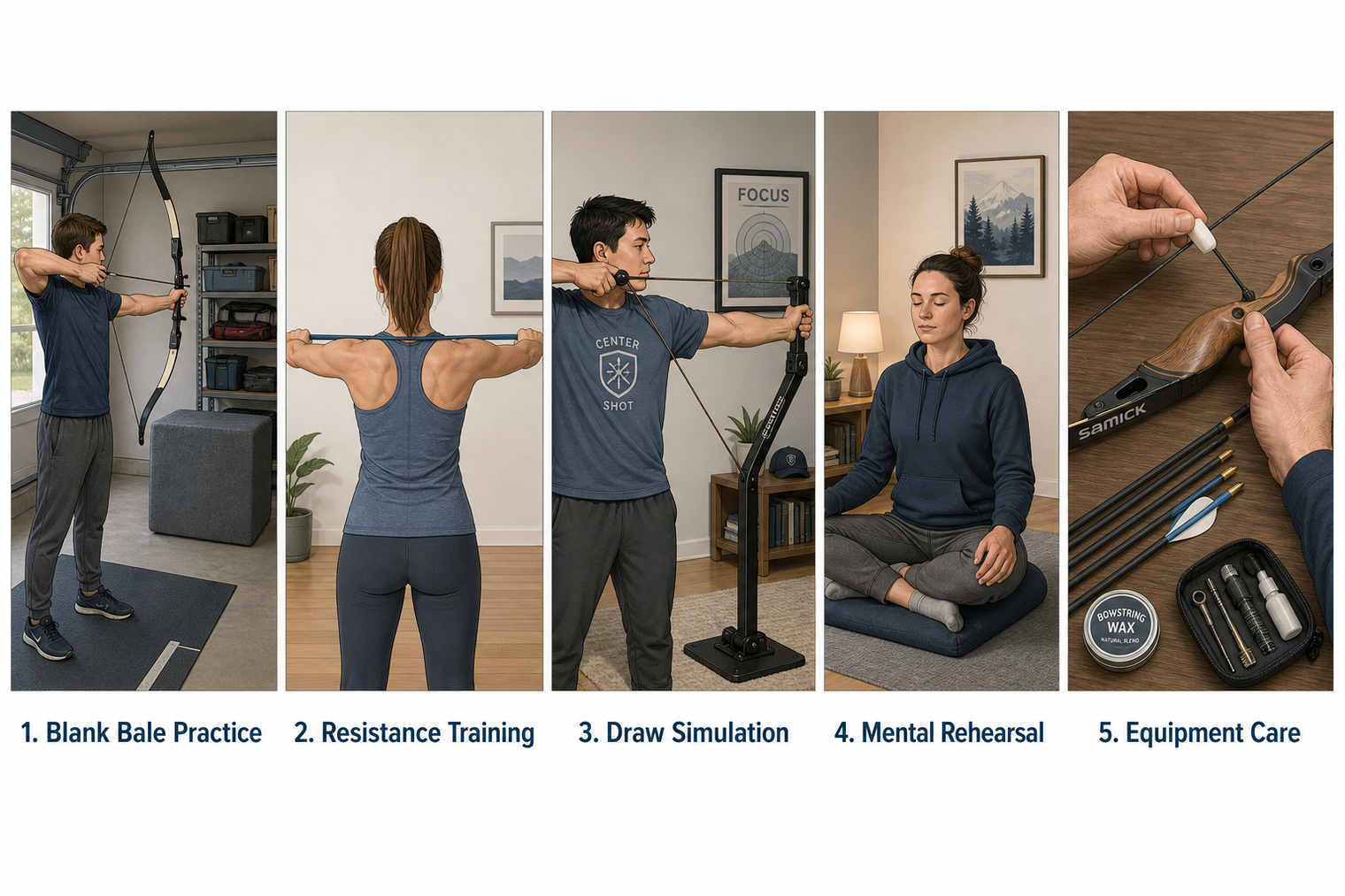
1. Blank Bale Practice
Blank bale training means shooting at a plain, unmarked target from a very short distance — typically one to three metres. Without a scoring face to aim at, your conscious mind stops obsessing over where the arrow lands and your attention shifts entirely to form.
This is one of the most effective tools used by coaches working with archers at all levels. Focus on:
- Anchor point consistency — does your hand land in exactly the same position every shot?
- Scapular engagement — are you drawing with your back muscles or muscling through with your arm?
- Relaxed bow hand — unnecessary grip tension is easier to feel when you are not worried about score.
- Follow-through — does your bow arm hold position, or does it drop the moment you release?
Even ten focused shots on a blank bale can reinforce better habits than fifty distracted shots at a target face. If you have a small outdoor space or a garage, a quality foam target block is all you need to run this drill regularly.
2. Resistance Band and Draw-Weight Training
The muscles that control a clean draw and a stable anchor — the rhomboids, rear deltoids, and rotator cuff — respond well to targeted resistance work. Many archers neglect this and end up relying on their dominant arm instead of their back, which creates inconsistency under fatigue.
A simple resistance band routine can replicate the draw motion and build the specific strength you need. A few exercises worth including:
- Band pull-aparts — hold a band at shoulder width and pull it apart horizontally, squeezing the shoulder blades together at full extension.
- Single-arm row — anchor the band and perform a slow, controlled pull that mimics your draw elbow path.
- External rotation drill — with the elbow at ninety degrees, rotate outward against resistance to strengthen the rotator cuff.
These are not generic gym exercises added for filler — they directly address the mechanical weaknesses that show up as string torque, bow arm collapse, and poor shot timing on the range.
3. Dry Fire Simulation with a Training Aid
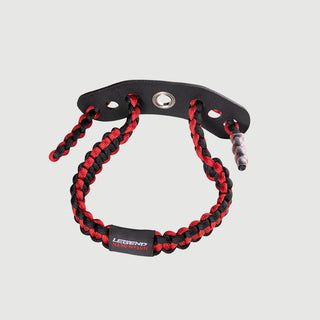
True dry firing — releasing a bowstring with no arrow — can seriously damage a bow and should never be done with your actual equipment. However, dedicated archery training aids are designed specifically to allow a full draw-and-release cycle safely, letting you rehearse the shot sequence without any projectile.
These tools are especially useful for working on:
- Release timing and surprise versus punching the trigger
- Bow arm alignment and elbow rotation
- Breathing pattern before and through the shot
If you are in the market for training equipment, browsing new archery products from a reputable supplier is a good starting point to see what training aids are currently available.
4. Mental Rehearsal and Visualisation
Sports psychology research consistently shows that mentally rehearsing a physical skill activates similar neural pathways to actually performing it. For archers, this means you can log genuine practice time without touching your equipment.
Effective visualisation for archery is not vague daydreaming about hitting gold. It requires deliberate, sensory-specific mental runs through the entire shot process:
- Feel the grip of the bow in your hand and the texture of the string at your fingers or release.
- Hear the ambient environment and consciously set it aside as you focus on your anchor.
- See the sight picture — or the instinctive reference point — settle on the target.
- Feel the back tension build and the shot break cleanly.
- Hold the follow-through in your mind until the arrow lands.
Ten minutes of this before bed or in a quiet moment produces measurable returns in shot consistency, particularly when preparing for a competition or a new discipline.
5. Equipment Maintenance and Familiarity Work
Understanding your equipment at a mechanical level is a genuine archery skill, and one that many recreational archers overlook. Time spent off the range working on your gear pays off in fewer malfunctions, better tuning, and faster problem diagnosis on shooting days.
Useful off-range equipment tasks include:
- String waxing and inspection — checking for fraying strands before they become a safety issue.
- Arrow spine and fletching checks — identifying bent shafts or damaged vanes before they affect your groups.
- Rest and nock point inspection — small shifts in these can cause unexplained inconsistency.
- Limb and riser cleaning — maintaining the physical condition of your bow extends its working life.
Getting comfortable with your setup also builds confidence. An archer who knows their equipment intimately shoots with less hesitation. If you are looking to expand your kit or replace worn components, outdoor archery supplies from a dedicated archery retailer will typically offer more relevant options than a general sporting goods store.
Common Mistakes When Practising Off the Range
Off-range training only works if it is approached with the same intention as real range sessions. Here are the pitfalls that undermine results:
- Practising bad form at speed — resistance band work with sloppy technique reinforces exactly the wrong patterns. Slow and controlled always wins.
- Visualising outcomes instead of process — imagining arrows in the gold is not visualisation training. Walk through every step of the shot, not just the result.
- Neglecting blank bale in favour of targets too soon — archers returning from injury or a long break often rush back to target shooting before their form has re-stabilised.
- Skipping equipment checks until something fails — reactive maintenance wastes range time. Regular off-range inspection prevents avoidable problems.
- Treating off-range training as second-best — elite athletes in many disciplines use off-field training as their primary development tool. The same mindset applies here.
Frequently Asked Questions
Can I actually improve my shooting without going to the range?
Yes, meaningfully. Shot mechanics, back muscle conditioning, mental focus, and equipment knowledge can all be developed away from the range. What you cannot replicate is live arrow feedback — which is why off-range work is most effective when combined with regular, intentional range sessions rather than replacing them entirely.
How often should I be doing blank bale practice?
There is no universal rule, but even two or three short sessions per week adds up quickly. The key is quality over quantity — ten shots with full attention to anchor and back tension is more productive than fifty mindless ones. Coaches often recommend blank bale work at the start of any range session as a warm-up for the same reason.
Are resistance bands safe for archery training, or can they cause injury?
Resistance bands are generally safe when used with controlled movement and appropriate resistance levels. The risk comes from moving too fast, using too much resistance too soon, or ignoring pain signals. Start light, focus on the correct muscle groups, and build gradually. If you have a shoulder history, consulting a physiotherapist before starting draw-specific resistance work is sensible.
What is the biggest mistake beginners make with off-range training?
Rushing it. Beginners tend to pick up resistance bands or a training aid and immediately try to replicate their fastest range speed. Off-range drills are most effective when you slow the movement down enough to actually feel what each muscle group is doing. Speed and volume come after the pattern is correct, not before.
Keeping Your Skills Sharp
The five methods above — blank bale drilling, targeted resistance work, safe draw simulation, mental rehearsal, and equipment care — cover the key areas of archery development that do not require a full range setup. Used consistently, they reduce the skill loss that comes from gaps in range access and often accelerate progress in ways that pure shooting practice cannot. If you want to build out your training toolkit, Legend Archery's online shop carries a range of equipment suited to both range and home practice.