Skip to content
 cust@legendarchery.com
 302 503 5767
 Westfield IN 46074


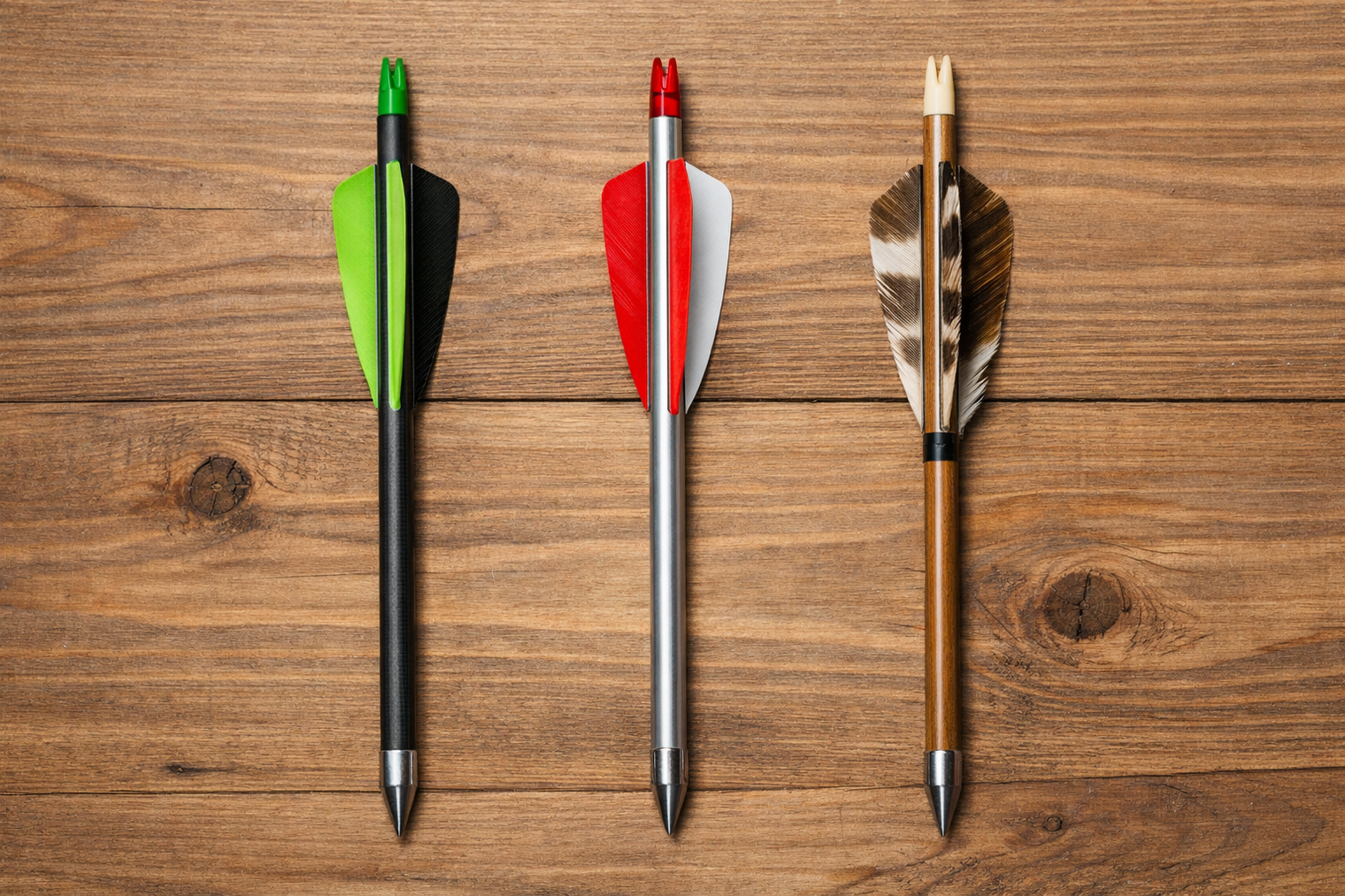
Arrow material is one of the most practical choices you'll make as an archer. Whether you're just getting started or switching disciplines, the shaft material you shoot affects flight consistency, durability, and how well your setup performs at the range or in the field. Here's a straightforward breakdown of carbon, aluminum, and wood to help you decide what actually suits your shooting.
Why Arrow Material Matters More Than Most Archers Realise
The shaft is not just a stick that carries your point to the target. It flexes on release, recovers during flight, and delivers energy from the bow to the arrow in a sequence that has to be matched to your draw weight and draw length. Get the material wrong and you get inconsistent flight, poor groupings, or worse — a dangerously under-spined arrow that can shatter mid-shot.
Each material behaves differently under load. Carbon, aluminum, and wood each have distinct stiffness-to-weight profiles, and that changes how they need to be tuned. Understanding these differences means you can make an informed choice rather than just copying what someone at your club is shooting.
Carbon Arrows: Consistent, Lightweight, and Popular for Good Reason
Carbon arrows have become the default choice across most modern disciplines — target archery, field archery, bowhunting, and 3D shooting. The reasons are practical rather than trendy.
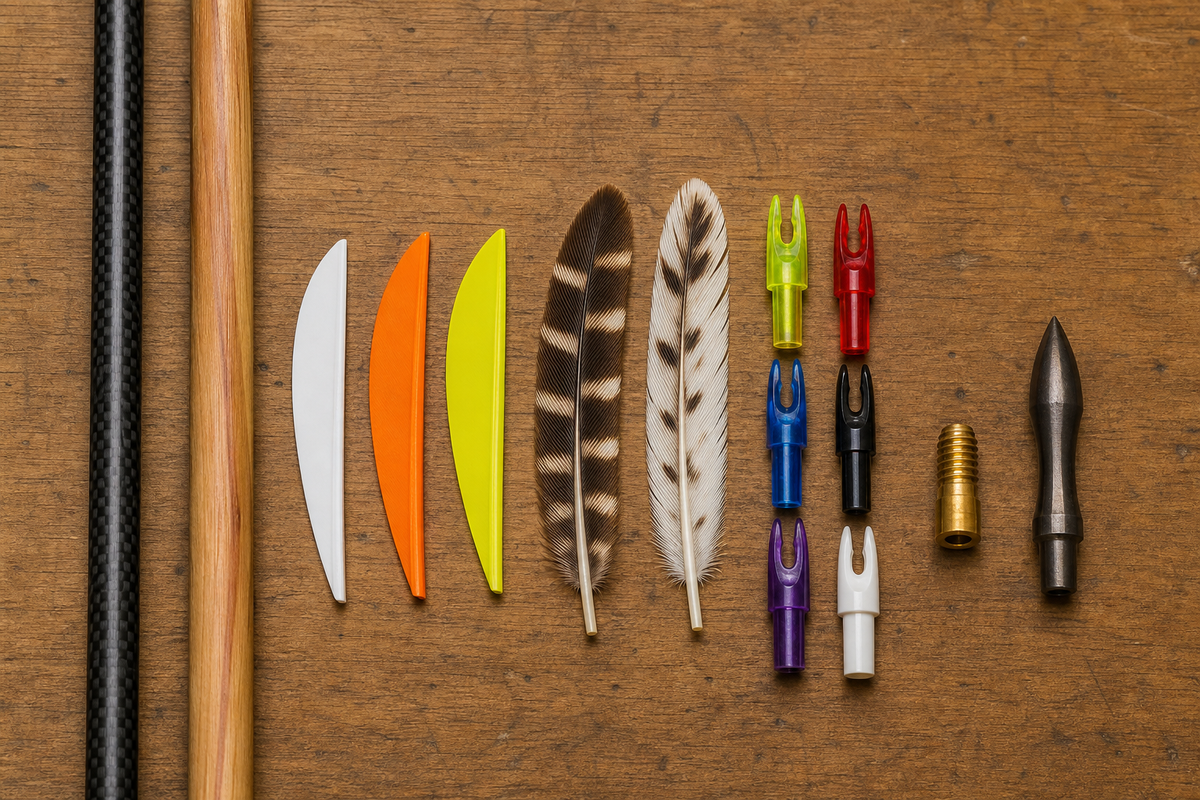
- Spine consistency: Carbon shafts are manufactured with tight tolerances, which means the stiffness rating is reliable across the batch. This matters when you're buying a matched dozen.
- Lightweight for speed: Carbon shafts tend to be lighter than equivalent aluminum shafts, which can increase arrow velocity and flatten trajectory at longer distances.
- Durability: Carbon doesn't bend. An arrow that hits a hard surface either survives intact or breaks cleanly. You won't be shooting a bent carbon shaft without noticing.
- Wide diameter range: From slim indoor competition shafts to larger-diameter shafts designed to cut closer to scoring lines, carbon comes in more profiles than any other material.
The main caveat with carbon is inspection. A shaft that has taken a hard impact may develop micro-fractures that are invisible to the eye but can cause the arrow to splinter on the next shot. Always flex-test carbon arrows before shooting and retire any that feel or sound different when flexed.
Aluminum Arrows: Predictable, Tunable, and Still Widely Used
Before carbon became dominant, aluminum was the performance standard. It's still a serious option for indoor target shooting and for archers who want the most consistent diameter control available.
- Uniform diameter: Aluminum arrows are drawn through a die during manufacture, which produces an extremely consistent outer diameter. This makes them ideal for indoor scoring formats where the edge of the shaft on a line counts.
- Ease of tuning: Aluminum bends rather than breaks on impact. While a bent shaft needs to be discarded, the process of identifying a bent arrow is straightforward — it will visibly wobble or roll unevenly on a flat surface.
- Heavier overall weight: Aluminum shafts are typically heavier than carbon equivalents at the same spine rating. For some setups, especially slower traditional recurves, this added weight can actually improve arrow flight stability and reduce the impact of bow hand movement on the shot.
- Cost: Mid-range aluminum shafts are generally accessible in price and offer a good quality-to-cost ratio for club archers and beginners.
The weakness is that aluminum bends. A bent shaft may not be immediately obvious after a poor angle hit, so always roll your aluminum arrows on a flat surface after range sessions to check for deformation before shooting them again.
Wood Arrows: The Right Tool for Traditional and Instinctive Shooting
Wood shafts are not outdated — they are purpose-built for certain styles of archery. If you're shooting a traditional longbow, a selfbow, or a historical recurve with a shelf cut for wood arrows, there are strong reasons to stick with the material those bows were designed around.
- Weight and feel: Wood arrows are heavier than carbon and aluminum at equivalent lengths. For low-poundage traditional bows, this added mass helps the arrow clear the bow cleanly and absorb energy without over-spining or producing a noisy release.
- Aesthetics and heritage: In traditional archery, historical recreation, and roving, shooting wood arrows is part of the experience. The look, sound, and tactile quality of a cedar or pine shaft is part of why many archers choose the style.
- Spine variability: Unlike carbon and aluminum, wood shafts are natural materials and can vary in stiffness even within the same batch. Spine testing and sorting individual shafts by stiffness before building a matched set is standard practice with wood.
- Not suited to high draw weights: Wood arrows are generally not recommended for modern compound bows or high-poundage recurves. The forces involved can cause the shaft to fail in ways that are dangerous to the archer and bystanders.
Practical Guidance: How to Choose for Your Setup
The right shaft material follows from how and what you shoot. Use these pointers as a starting framework:
- Compound bow for target or hunting: Carbon is almost always the right call. The speed, consistency, and range of available spines make it the practical fit for compound setups across most draw weights.
- Recurve for Olympic-style or indoor target: Either carbon or aluminum works well. Many competitive indoor recurve archers choose large-diameter aluminum for line-cutting advantage. Outdoor recurve archers tend to prefer carbon for wind resistance.
- Traditional recurve or longbow: Wood is the natural match if your draw weight is moderate and you're shooting for the experience of traditional archery. Carbon shafts with low spine can also work on some traditional bows, but this needs careful matching.
- Beginner on a budget: A mid-range carbon or aluminum shaft is generally more forgiving than wood for beginners who are still developing consistency. The tight tolerances reduce variables while you're building your form.
If you're still narrowing down what type of shaft suits your bow and discipline, browsing a well-structured guide to archery arrows can help you connect the specs to your actual setup.
Common Mistakes Archers Make When Choosing Arrow Material
- Choosing material based on what looks impressive rather than what matches the bow: A high-performance carbon shaft is only useful if it's matched to your draw weight and length. Spine choice matters far more than brand or finish.
- Shooting bent aluminum without checking: Many archers continue shooting a slightly bent shaft without realising it. This produces inconsistent groupings that get blamed on form when the issue is the arrow.
- Not flex-testing carbon after hard impacts: A carbon shaft that's taken a direct hit against a hard surface can appear fine but be compromised internally. Skipping this check is a safety risk.
- Using wood arrows on a high-poundage bow: Wood shafts have physical limits. Using them on a bow they're not designed for risks catastrophic failure.
- Matching arrows to a friend's setup instead of your own: Arrow selection is specific to your draw length, draw weight, point weight, and bow type. What works perfectly for someone else may be dangerously under- or over-spined for your setup.
Frequently Asked Questions
Can I switch from aluminum to carbon without retuning my bow?
Usually not without at least checking your tune. Carbon and aluminum shafts with the same spine rating behave differently due to differences in weight, diameter, and how they flex through the shot. When you change shaft material, shoot a paper tune or bare shaft tune to confirm your rest and nocking point position still produce clean arrow flight.
Are wood arrows safe to shoot from a modern recurve?
It depends on the draw weight and the quality of the shafts. Traditional recurves at moderate draw weights — typically under 40 to 45 pounds — can generally handle well-spined and properly matched wood arrows. Higher draw weights increase the risk of shaft failure. If you're unsure, consult an experienced traditional archery coach or bow technician before making the switch.
Why do some indoor archers still prefer aluminum over carbon?
Indoor target scoring at short distances rewards shaft diameter. A larger-diameter aluminum shaft sitting on a scoring line counts as the higher score. Some carbon shafts are manufactured with large outer diameters to compete with this, but aluminum has historically offered the most consistent diameter control at an accessible price point.
How do I know if my arrows are the right spine for my bow?
The most reliable method is a combination of using a spine chart matched to your draw weight and draw length, then confirming the result through paper tuning or bare shaft testing. Arrow flight that fishtails or consistently hits left or right of point-of-aim (after ruling out form issues) is often a sign of incorrect spine.
Choosing the Right Material Is About Matching, Not Upgrading
Arrow material selection is not about what's most expensive or what competitive archers are using — it's about what matches your bow, your draw, and your shooting style. Carbon suits most modern setups for its consistency and range of options. Aluminum remains a strong choice for indoor target archers and those who want a familiar, tuneable shaft. Wood belongs in traditional archery where it performs exactly as intended. Match the material to the purpose and your groupings will reflect it.