Skip to content
 cust@legendarchery.com
 302 503 5767
 Westfield IN 46074


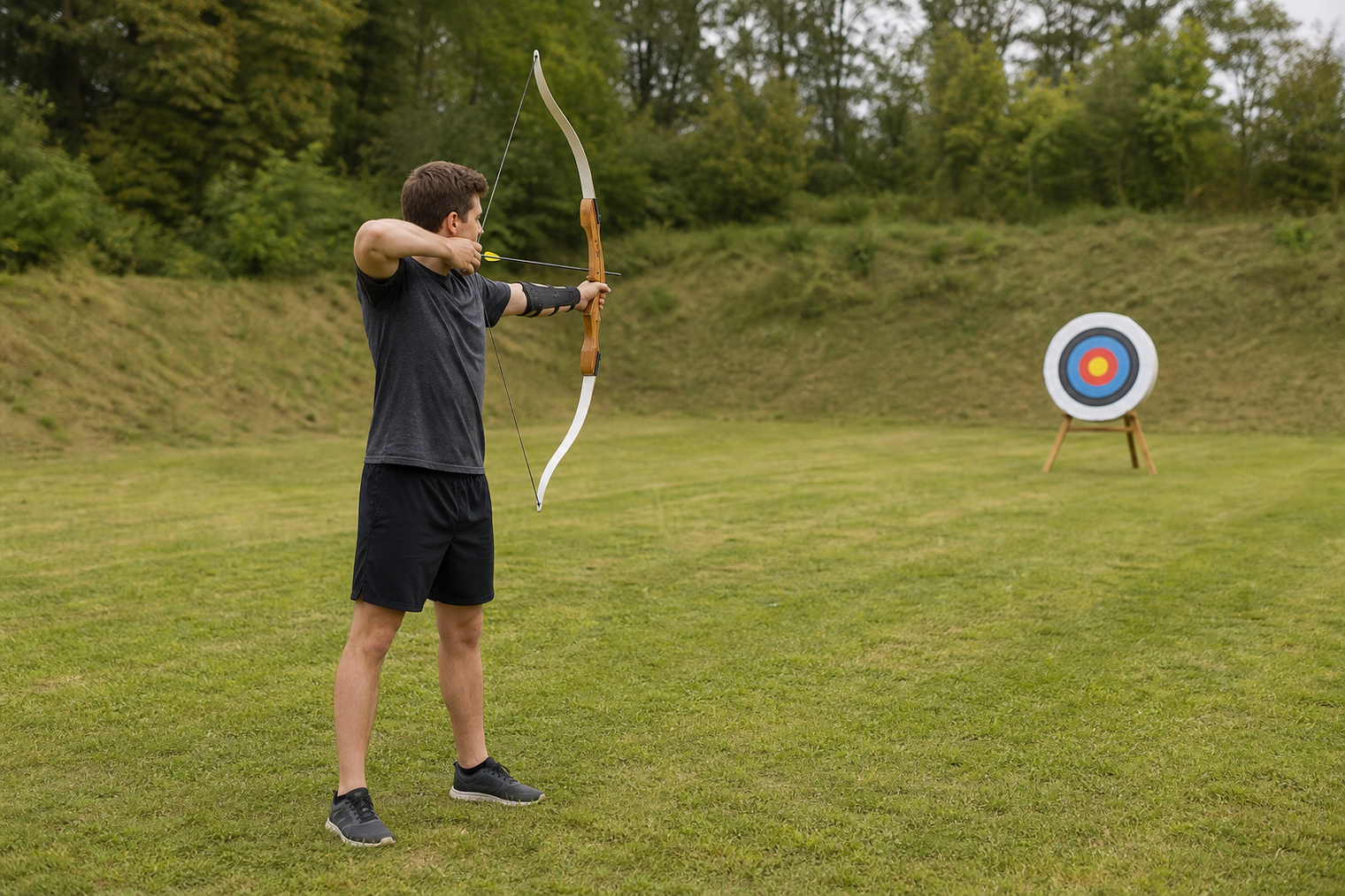
Getting started in archery is more straightforward than most beginners expect, but it does require learning a few fundamentals in the right order. Skip the basics and bad habits form fast. Get them right early and you will progress quickly and safely. This guide walks you through what actually matters in the first few months of shooting.
Why Your First Decisions Shape Your Progress
Archery is a precision sport built on consistent, repeatable movement. The choices you make at the beginning — which bow type, what draw weight, how you set up your stance — create the foundation every future shot is built on. A mismatch between your physical ability and your equipment is one of the most common reasons beginners plateau or develop injuries early.
The good news is that quality beginner equipment today is genuinely capable. You do not need to spend a fortune to learn properly, but you do need gear suited to your body and your goals.
Choosing Your First Bow: Recurve or Compound?
This is the first real decision new archers face, and it matters more than most people realize.
Recurve Bows
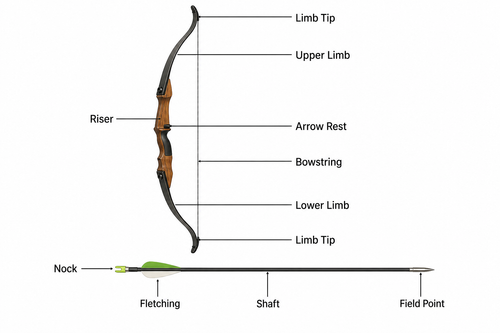
A recurve bow is the traditional limb design used in Olympic archery. It offers no mechanical advantage at full draw, meaning you hold the full draw weight throughout the shot. This makes it physically demanding but also an excellent teacher of core archery form — if your technique breaks down, your arrow will tell you immediately. Most archery coaches recommend starting on a recurve for this reason.
Compound Bows
A compound bow uses a cam and cable system that creates let-off, reducing the holding weight at full draw significantly. This allows shooters to hold at full draw longer while aiming, which suits bowhunting and target shooting at longer distances. Compound bows require more initial setup and tuning, but they are highly forgiving of physical limitations once properly configured.
For most new archers shooting recreationally, a recurve between 20 and 30 lbs is the most practical starting point. Bowhunters with a specific goal often move directly to a compound setup. Neither choice is wrong — it depends on what you want to do with archery.
Draw Weight: Start Lower Than You Think You Need
Draw weight is arguably the most critical variable for beginners to get right. The instinct is almost always to choose a bow that feels challenging to draw. Resist that instinct.
- Too much draw weight causes form to break down. Archers compensate by using poor body mechanics, which embeds bad habits quickly.
- It increases injury risk. Shoulder and elbow strain from overbow is one of the most common beginner complaints.
- You cannot feel what correct form is supposed to feel like when you are struggling to draw the bow.
A draw weight that allows you to come to full draw smoothly, hold briefly, and release without straining is the right starting point. You can increase draw weight once your form is consistent. Progress on a lighter bow is always faster than struggling on one that is too heavy.
Core Form Principles Every Beginner Should Understand
Archery form is not complicated, but it is sequential. Each element needs to be in place before the next one matters.
Stance
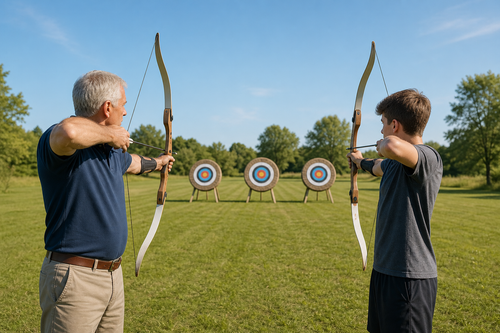
Stand perpendicular to the target with your feet shoulder-width apart. Your body should be relaxed and balanced, not rigid. A square stance (both feet parallel to the shooting line) is the easiest to learn consistently. Some experienced archers prefer an open stance, but start square.
Grip
The bow hand should apply minimal pressure. Place the bow grip against the meaty pad at the base of your thumb, keep your fingers relaxed, and allow the bow to fall forward on release. Gripping the handle tightly is one of the most common causes of left-right inconsistency.
Anchor Point
Your anchor point is where your draw hand comes to rest at full draw — typically with the index finger touching the corner of the mouth, or the thumb behind the jaw depending on the shooting style. What matters most is that it is the same every single shot. Consistency here is accuracy.
Back Tension and Release
The release should come from relaxing the draw hand fingers after building tension in your upper back and shoulder blade. Many beginners pluck the string or open their fingers too aggressively, which moves the bow before the arrow leaves the string. Think of the release as the natural result of pulling through the shot rather than a deliberate finger movement.
Essential Equipment Beyond the Bow
A bow is only part of what you need to shoot safely and effectively. Before your first session, make sure you have:
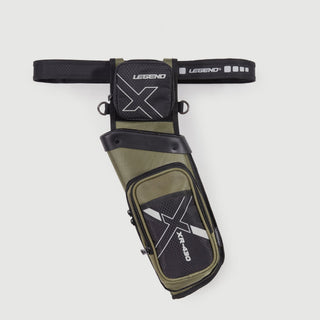
- Arrows matched to your draw length and bow type. Arrows that are too light or too stiff for your setup will fly unpredictably regardless of your form.
- An arm guard. String slap on the forearm is painful and distracting. An arm guard removes that variable while you are learning.
- A finger tab or shooting glove. Bare fingers fatigue quickly and affect your release consistency. A tab is standard for recurve shooters; a mechanical release aid is used with compound bows.
- A target rated for your bow type. Never shoot into an unsuitable backstop. Penetrating a target that cannot stop your arrows is both dangerous and damaging to equipment.
If you are putting together your first setup, browsing a well-stocked archery shop that carries beginner-specific gear will save you a lot of trial and error.
Safety Rules That Are Non-Negotiable
Archery is one of the safest sports when the rules are followed. These are the ones that matter most at any level:
- Only nock an arrow when you are on the shooting line and the range is clear.
- Always point your bow toward the target. Never draw toward people or anywhere other than the intended shooting direction.
- Wait for a clear signal before retrieving arrows from the target.
- Check every arrow for cracks or damage before shooting. A broken arrow can shatter on release and cause serious injury.
- Know what is behind your target before you shoot.
Common Mistakes Beginners Make
Most early-stage problems come from the same set of avoidable errors:
- Choosing too much draw weight. Covered above, but worth repeating — this single mistake is behind a large proportion of beginner struggles.
- Inconsistent anchor point. If your hand lands in a slightly different place every shot, your point of impact will shift unpredictably. Drill the anchor before worrying about groups.
- Gripping the bow too hard. Causes lateral movement through the shot. Relax the bow hand.
- Rushing to longer distances. Master 10 and 15 metres before moving to 20. Every metre of added distance magnifies form errors.
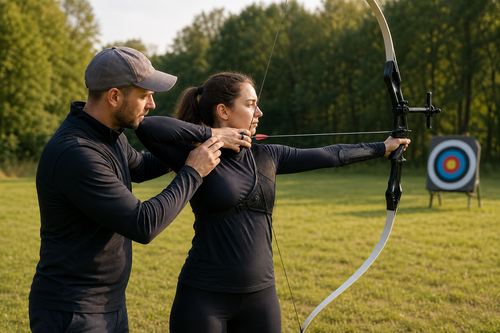
- Skipping a lesson or structured coaching. Even one session with a qualified coach can correct issues that would otherwise take months to diagnose on your own.
- Shooting too many arrows per session early on. Fatigue causes form breakdown. Fewer quality arrows are worth more than high volume with degrading technique.
For a deeper breakdown of technique from qualified instructors, the expert guide to getting started with archery on the Legend blog covers coaching perspectives worth reading alongside this article.
Building Consistency Over Time
The biggest predictor of progress in archery is not natural talent — it is regular, deliberate practice. Shooting once a week with focused attention on form will outperform shooting every day without intention. Set a specific goal for each session, whether that is anchor point consistency, grip pressure, or back tension, and measure success on whether you practiced that element well, not just on where your arrows landed.
Keeping a simple practice log helps more than most beginners expect. Even brief notes on what felt correct and what did not create a feedback loop that accelerates improvement significantly.
When you are ready to expand your kit or replace starter equipment as your skills develop, exploring a wide range of new archery products helps you make informed upgrades without overspending.
Frequently Asked Questions
How long does it take to get reasonably accurate as a beginner?
Most beginners shooting consistently once or twice a week will achieve reliable groupings at short distances within four to eight weeks. Accuracy at longer distances develops over several months of focused practice. The timeline shortens significantly with coaching and proper equipment from the start.
Do I need to join a club to start archery?
Not necessarily, but a beginner course at a local club is one of the most efficient ways to learn. You get access to loaner equipment, supervised range time, and immediate feedback on form. Clubs also remove the upfront cost of buying gear before you know what style of archery you want to pursue.
What is the biggest form mistake that holds beginners back?
Inconsistent anchor point and grip pressure cause more ongoing accuracy problems than anything else. Many beginners focus entirely on where the arrow lands rather than diagnosing the mechanics causing the miss. Fix the anchor and relax the grip hand before changing anything else.
Is archery physically demanding for beginners?
At appropriate draw weights, archery is accessible to a wide range of fitness levels. The muscles used — primarily the upper back, shoulders, and rotator cuff — do need to be conditioned over time, which is another reason to start light and build gradually. Overexerting those muscles early is how beginners develop repetitive strain issues.
Final Thoughts
The fundamentals covered here — bow selection, draw weight, form mechanics, safety, and consistent practice — are what separate archers who progress smoothly from those who stall and get frustrated. Get the basics right from the beginning and the sport rewards you quickly. Take shortcuts and the same mistakes resurface at every level.