Skip to content
 cust@legendarchery.com
 302 503 5767
 Westfield IN 46074


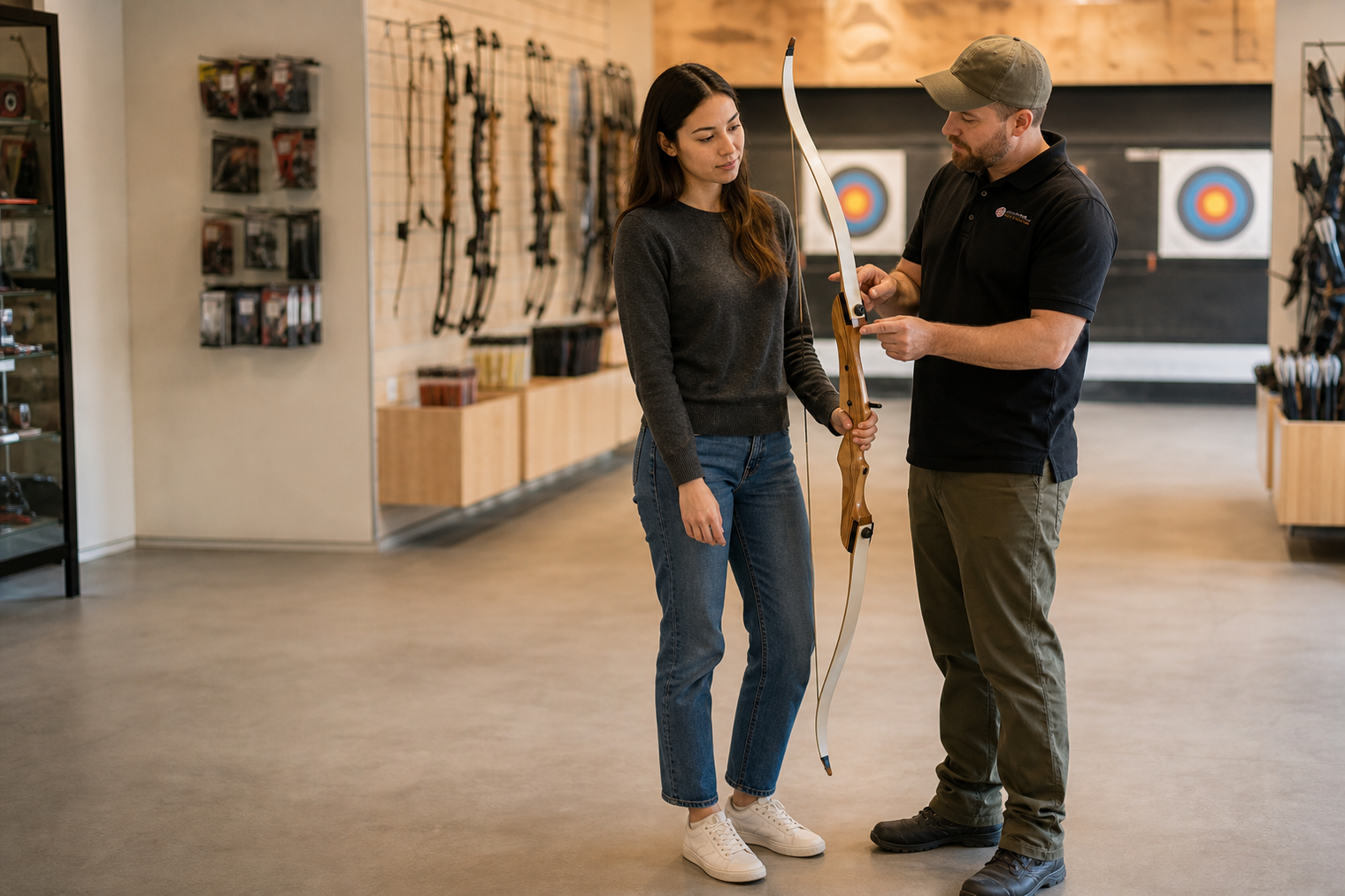
Walking into an archery shop or browsing online for your first bow can feel overwhelming fast. There are dozens of styles, weight ratings, and brand claims pulling in every direction. What most beginners do not realise is that the wrong bow choice does not just slow progress — it can cause injury or kill the enjoyment of the sport entirely. This guide breaks down what genuinely matters so your first purchase is one you will not regret.
Bow Style Comes First, Budget Comes Second
The single most important decision is which type of bow suits your goals, not which one is on sale. There are three main categories for new archers to understand:
- Recurve bows — The most widely recommended starting point for new archers. They are mechanically straightforward, widely taught in clubs and Olympic programs, and easy to service yourself over time. If you are drawn to traditional technique or competitive target shooting, a recurve bow is usually the smartest entry point.
- Compound bows — These use a cam-and-cable system to reduce the holding weight at full draw, making them popular for hunting and 3D archery. They require more initial setup and benefit from a professional press during maintenance. They are a solid choice if hunting or bowhunting is your end goal.
- Traditional longbows — No sights, no stabilisers, pure instinctive shooting. These reward patience and repetition. They are not beginner-unfriendly, but they do demand a longer learning curve.
Choosing style based on what you actually want to do with the bow — target, hunting, recreation — will guide every other decision you make from here.
Understanding Draw Length and Why It Cannot Be Guessed
Draw length is the distance from the grip to full draw anchor point, measured in inches. Getting this wrong is one of the most costly beginner mistakes because it directly affects your form, accuracy, and long-term joint health.
A rough starting estimate is to measure your arm span fingertip to fingertip and divide by 2.5. However, this is only a starting point. The most accurate way to find your draw length is to visit a pro shop or experienced coach who can watch you draw and measure properly. For compound bows especially, draw length is fixed at the cam level and must be dialled in before you shoot consistently.
Recurve archers have slightly more flexibility since they are not mechanically locked at full draw, but shooting a bow that is too long or too short will still compromise your anchor and release.
Draw Weight: Start Lower Than You Think You Need
This is where most new archers get it wrong. Draw weight is the peak force — measured in pounds — required to pull the string to full draw. The temptation is always to go heavier, assuming more power means better shooting. It does not.
For beginners, starting too heavy causes:
- Poor form because the muscles are fighting the bow instead of executing technique
- Flinching and anticipating the shot, which destroys accuracy long before any strength issue kicks in
- Overuse injuries in the shoulder, elbow, and rotator cuff that can sideline you for months
A general starting guideline for adults is 20 to 30 lbs on a recurve and 40 to 50 lbs on a compound, though this varies by body size and physical conditioning. The goal is to be able to shoot 50 to 100 arrows in a session with clean, controlled form. If you are grinding on every draw, the weight is too high.
Draw weight can be increased over time as your back and shoulder muscles develop. Many recurve bows allow limb upgrades, meaning you can keep the riser and simply swap limbs as you progress — a cost-effective way to grow with the sport.
Fit Matters as Much as Specs on Paper
A bow that fits a 6-foot adult is not the right bow for a 12-year-old, and vice versa. If you are buying for a younger shooter, look specifically at youth bows designed with shorter draw lengths and lower starting weights. Trying to stretch a child into an adult bow creates bad habits that are extremely difficult to undo later.
For adult beginners, the key fit factors are:
- Draw length matching your natural reach
- Grip width and shape feeling comfortable without torquing the wrist
- Overall bow length proportionate to your draw length (longer bows are typically more forgiving)
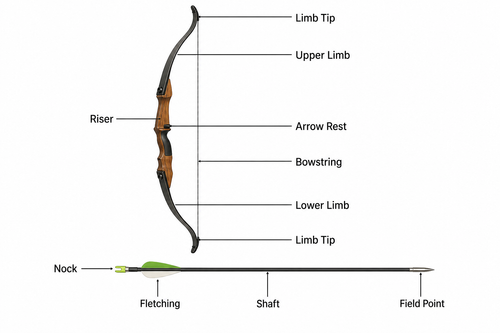
- Brace height — the distance from the string to the grip — which affects forgiveness and speed
If possible, try before you buy. Most reputable archery retailers and clubs will let you shoot a few arrows on a demo bow before committing.
What Comes With the Bow — and What Does Not
Entry-level packages often include a sight, arrow rest, and sometimes arrows. These are useful to get started, but they are rarely the components you will stick with long-term. What you should confirm is included or plan to budget for separately:
- Arrows — Arrow spine (stiffness) must be matched to your draw weight and length. Mismatched arrows fly erratically and can be dangerous. This is not optional — it is a safety consideration.
- Arm guard — Protects your forearm from string slap while you develop consistent form.
- Finger tab or release aid — Recurve and traditional shooters typically use a finger tab; compound shooters use a mechanical release. Both protect your fingers and improve consistency.
- Bow case — Essential for transport and storage. A good case protects your investment and makes it practical to take your bow to a range or club.
Do not overlook storage and transport. A quality bow case keeps your equipment protected and makes regular practice far more convenient.
Common Mistakes First-Time Buyers Make
Even with good intentions, beginners fall into predictable patterns. These are the most common ones worth avoiding:
- Buying too much bow too fast — High-end gear will not fix form issues. Master the basics on a simpler setup first.
- Skipping professional setup — A bow that is not properly tuned will not shoot consistently no matter how good the archer. Basic bow setup from a pro shop is worth every dollar.
- Choosing based on aesthetics — Colour and looks should be last on the list. Fit and draw weight should be first.
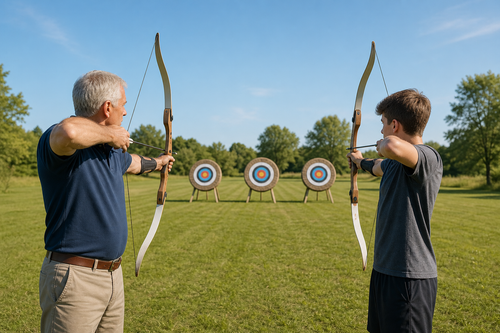
- Ignoring lessons — Even a single session with a qualified coach can eliminate habits that would otherwise take years to unlearn.
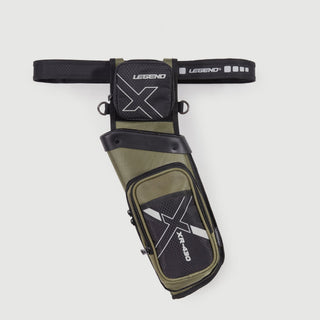
- Not accounting for accessories in the budget — The bow is only part of the cost. Arrows, a release or tab, a quiver, and a case add up quickly.
Frequently Asked Questions
Do I need to go to a pro shop, or can I buy online?
Both are valid, but for your very first bow, having someone measure your draw length and check your fit in person is genuinely valuable. Once you know your specs and understand what you are looking for, buying online becomes straightforward. If you do buy online first, make sure the retailer offers clear return or exchange options.
How do I know if the draw weight I chose is too heavy?
If you cannot hold the bow at full draw for two to three seconds with relaxed shoulders, or if you are shaking, leaning back, or collapsing on the draw, it is too heavy. Come down in weight. There is no benefit to struggling — lighter and consistent beats heavy and sloppy every time.
Is a recurve or compound better for a complete beginner?
It depends on your goals. Recurve bows are generally easier to learn form fundamentals on and are the standard in beginner coaching programs worldwide. Compound bows offer a mechanical advantage that makes holding at full draw easier, which some beginners find helpful. Neither is universally superior — your intended use matters most.
What should my total budget be for a first setup?
A realistic beginner setup — bow, arrows, arm guard, tab or release, and a basic case — typically ranges from a few hundred dollars to more depending on brand and bow type. It is better to plan for the full kit upfront than to buy the bow alone and get stuck without the accessories you need to actually shoot.
Final Thoughts
Knowing what to expect when buying your first bow means you spend less time fixing mistakes and more time actually shooting. Get your draw length measured properly, start at a manageable draw weight, choose a style that matches your real goals, and budget for the accessories from day one. The sport rewards patience and good foundations — and it all starts with the right equipment choice.