Skip to content
 cust@legendarchery.com
 302 503 5767
 Westfield IN 46074


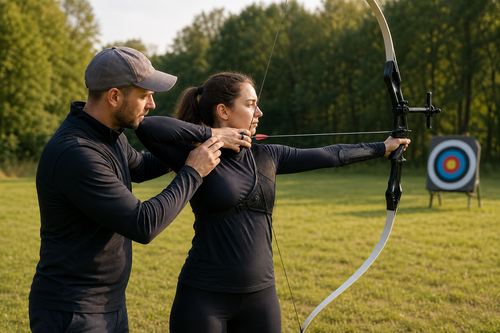
Archery kits for beginners range from bare bows to complete bundles, and it is hard to tell from a product listing which one will actually fit you. This guide is for new archers choosing a first setup, whether for a club, a backyard range or a first season in the field. It covers the main kit types, the criteria that decide fit and value, and the mistakes that cost beginners money.
What to Consider Before You Buy Anything
Before spending a dollar on equipment, answer two questions honestly: where will you shoot, and what do you want from archery? A beginner who plans to shoot at an indoor club twice a week has completely different needs from someone who wants to practise in the backyard or eventually compete. Your answers will filter out most of the wrong options before you ever look at a price tag.
Also consider your physical build. Draw length — the distance from your grip hand to your anchor point — varies significantly between people, and a bow sized for the wrong draw length will hurt your form, accuracy, and enjoyment from day one. Most archery shops or clubs can measure your draw length for free, and it is worth doing before committing to any specific kit.
Main Types of Beginner Bow Kits and How They Differ
The market broadly divides into three categories that beginners encounter. Understanding what each one is designed to do makes the choice much clearer.
Recurve Kits
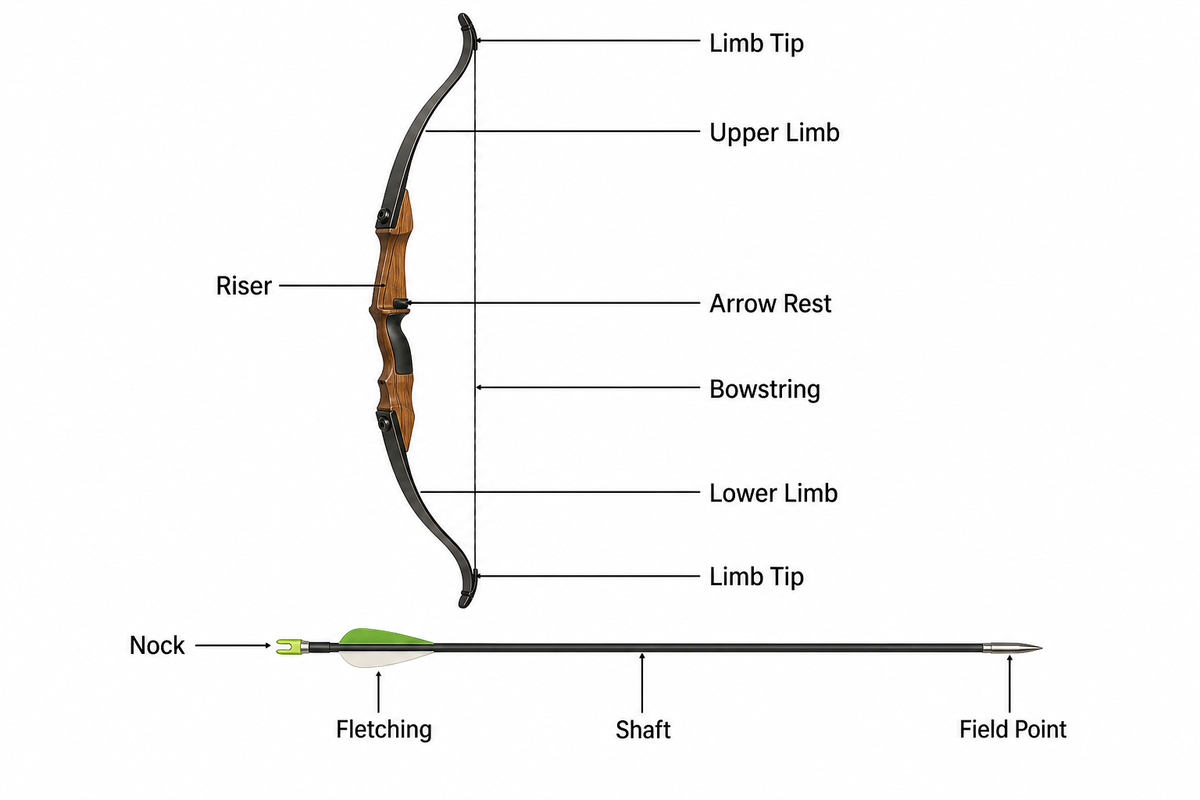
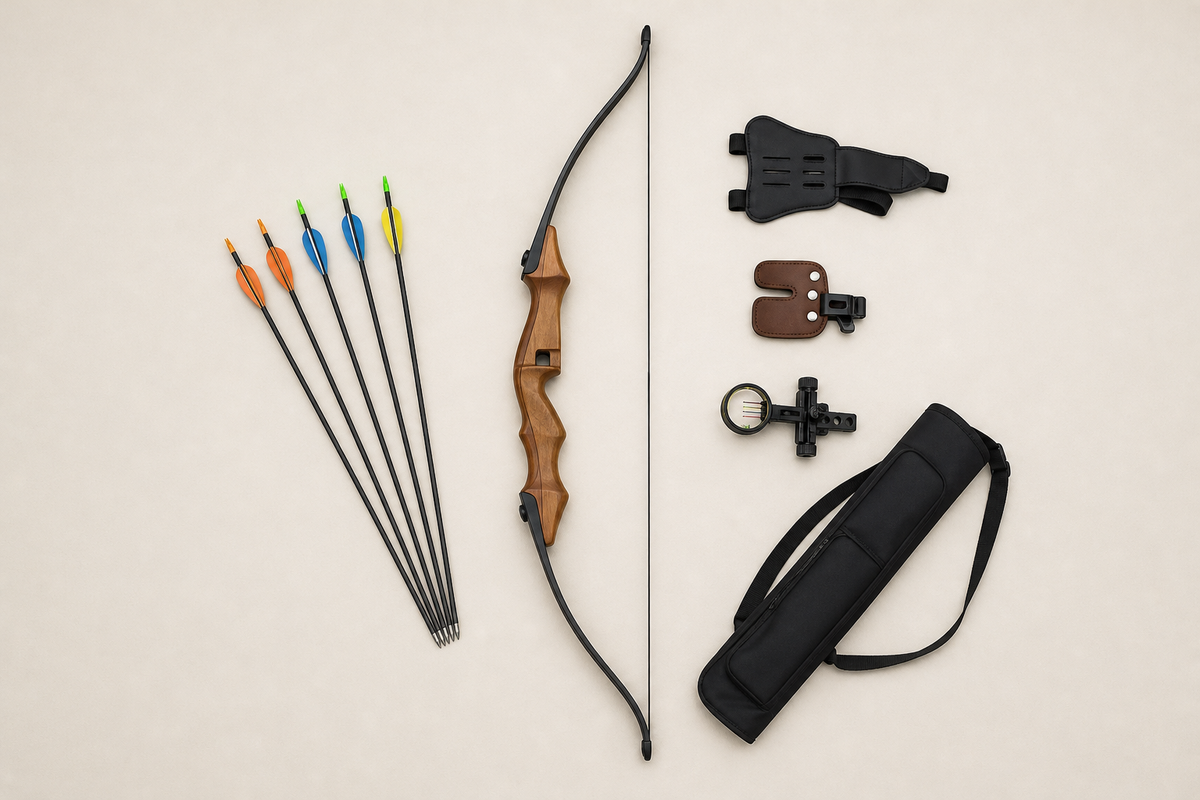
Recurve bows are the most widely recommended starting point for new archers, and the only bow style used in Olympic competition. A traditional recurve has limbs that curve away from the archer at the tips, storing more energy than a straight-limbed bow of the same draw weight. Entry-level recurve kits typically include the riser (the central handle section), limbs, a basic arrow rest, a sight, and a finger tab or arm guard. The riser and limbs are often sold separately on takedown models, which means you can upgrade individual components as your skills improve without replacing the entire bow.
Compound Kits
Compound bows use a cam and pulley system to reduce the holding weight at full draw — a feature called let-off. This allows archers to hold at full draw longer while aiming, which some beginners find helpful. Compound kits tend to be more expensive at entry level, require a more precise fit to the archer's draw length, and typically need a press for certain adjustments. They suit beginners who are specifically interested in bowhunting or 3D archery and want to start on the platform they intend to continue with.
Traditional Kits
Longbows and traditional recurves without sights or accessories appeal to archers drawn to instinctive shooting. These kits are typically simpler and lighter, but they have a steeper learning curve because there are fewer mechanical aids to support accuracy. For most beginners looking for a structured path to improvement, traditional kits are better picked up after establishing some fundamental technique on a sighted recurve or compound.
Buying Criteria and Trade-Offs
Once you have settled on a bow type, the following criteria determine whether a specific kit is genuinely good value for a beginner or just aggressively marketed.
- Draw weight: This is the force required to pull the bowstring to full draw, measured in pounds. Beginners consistently make the mistake of choosing too much draw weight. A draw weight that is too high leads to poor form, muscle strain, and slow progress. Most coaches recommend starting between 20 and 30 lbs for adults on a recurve, and 30 to 40 lbs on a compound. Children and younger teens should start lower.
- Draw length compatibility: Entry-level compound bows should offer an adjustable draw length range rather than a fixed setting. Recurve kits are more forgiving here because draw length is influenced by technique, but you should still confirm the riser length suits your size.
- Arrow compatibility: Kits that include arrows often bundle low-quality shafts. Check whether the included arrows match your draw length and whether they are the correct spine (stiffness) for your draw weight. An arrow that is too stiff or too flexible will fly erratically no matter how good your form is.
- Adjustability: Good starter kits grow with you. Takedown recurves with interchangeable limbs and compounds with adjustable draw weight and length ranges offer meaningful longevity.
- Included accessories: A quality starter kit should include at minimum an arm guard, a finger tab or mechanical release, and a basic sight. Kits that include targets, arrows, and a quiver add convenience but vary widely in quality — inspect each component individually rather than assuming value from the bundle price.
- Build quality of the riser: Aluminium or wood risers on recurves hold up better long-term than plastic. On compounds, look for machined aluminium risers over cast alternatives at the entry level.
Which Type Suits Which Archer
There is no universally correct answer, but there are clear patterns based on goals and circumstances.
- Recurve kits suit most beginners because the technique is transferable, the equipment is widely supported at clubs, coaches are familiar with it, and upgrading individual parts is straightforward and cost-effective.
- Compound kits suit beginners who are already committed to a specific discipline like bowhunting or 3D target shooting, who can access a shop or technician for setup and tuning, and who have a slightly higher starting budget.
- Traditional kits suit archers who have already shot before, who are returning to the sport after experience on another platform, or who are drawn to the meditative, unassisted style of shooting and accept a longer early learning curve.
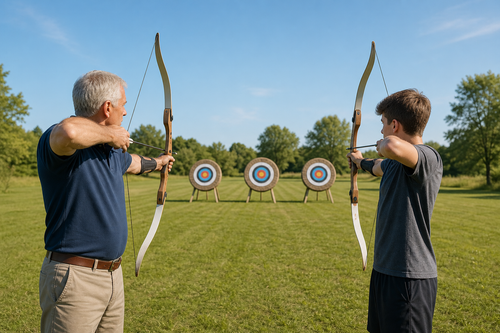
- Youth beginners almost always benefit from a recurve kit with a very low draw weight, ideally with coach guidance on sizing. Many clubs offer loaner equipment before purchase, which is worth exploring.
Getting Started: A Few Practical Setup Notes
Even a well-chosen kit can underperform if it is set up poorly. A few points new archers often overlook:
- Check brace height — the distance between the string and the deepest part of the grip — against the manufacturer's specification. On a recurve, this affects arrow speed, noise, and forgiveness.
- On compound bows, have a shop verify that the draw length is set correctly for your measurements before you shoot. An incorrect draw length affects not just comfort but also the cam timing and arrow flight.
- Use the arm guard every time while you are still building consistent form. String slap on the forearm is a common beginner experience that disappears with better technique, but the guard prevents discouraging bruises in the meantime.
- Nock your arrows consistently at the same point on the string. A simple nocking point marker or brass nock set, available from any archery shop, keeps this consistent from shot to shot.
Mistakes Beginners Make When Choosing a Kit
- Choosing too much draw weight: The most common and most damaging mistake. High draw weight before adequate strength and technique is built causes compensatory form habits that are genuinely difficult to unlearn.
- Buying a kit sized for someone else: A kit purchased without measuring draw length — especially online without guidance — is frequently the wrong fit. Arrow length, bow draw length, and riser height all interact.
- Prioritising aesthetics over function: Colour, finish, and brand identity are not quality indicators. A modest-looking recurve with solid limbs and a well-machined riser will outperform a flashy kit with poor components every time.
- Skipping the accessories: Buying only the bow and expecting to figure the rest out later adds frustration. The arm guard, tab or release, and a basic quiver are not optional extras — they are part of functional use from day one.
- Not accounting for ongoing costs: Arrows break and get lost. Strings wear out. Budget for consumables, not just the initial purchase.
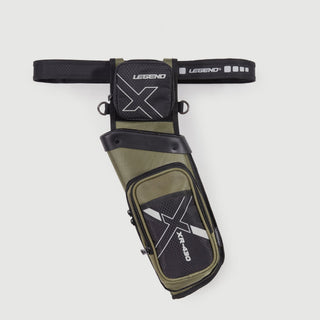
- Ignoring storage and transport: A beginner who travels to a club or range needs a way to carry and protect their equipment safely. Archery backpacks and purpose-built cases keep gear organised and protected — something worth factoring in before the first session, not after.
Frequently Asked Questions
What should I actually look for in a starter archery kit?
Focus on appropriate draw weight for your size and strength, adjustability as your technique develops, and whether the included accessories cover the basics (arm guard, tab or release, sight, quiver). Build quality of the riser and limb material matters more than price alone.
Which features matter most for a complete beginner?
Draw weight adjustability and draw length compatibility are the two most important factors. A kit you can grow into — rather than outgrow in three months — gives you far better value and keeps you progressing without having to reinvest early.
What mistakes do most people make when buying their first kit?
Starting too heavy on draw weight, buying without measuring draw length, and underestimating the importance of basic accessories. Many beginners also buy for aesthetics rather than function, which rarely leads to good outcomes at entry level.
Is a recurve or compound kit better for a complete beginner?
For most beginners with no prior experience and no specific discipline in mind, a recurve kit is the more practical starting point. It is widely supported by coaches and clubs, more forgiving during the learning phase, and easier to upgrade incrementally. A compound kit is a strong choice if you have a clear target discipline and access to a qualified technician for setup.
Choosing Well From the Start
The right beginner archery kit is not the most expensive one or the most visually impressive — it is the one correctly sized for your body, appropriate for your goals, and complete enough to let you practise without constant frustration. Take your time with the criteria above, get your draw length measured if at all possible, and resist the urge to chase draw weight before your technique is ready for it. If you are also exploring what accessories and carrying solutions you need beyond the bow itself, the archery shop at Legend Archery is a useful starting point for rounding out your setup.