Skip to content
 cust@legendarchery.com
 302 503 5767
 Westfield IN 46074


A lot of people talk themselves out of trying archery before they ever pick up a bow. They assume it's reserved for people who are strong, coordinated, or already fit. The truth is almost the opposite. Archery rewards patience, focus, and repeatable technique — qualities that have nothing to do with how fast you can run or how much you can lift. If you've been sitting on the fence, this guide is written for you.
Why Archery Doesn't Require Athletic Ability
Unlike team sports or activities that rely heavily on cardiovascular fitness, explosive power, or raw coordination, archery is built around a fundamentally different skill set. The core of the sport is consistency — doing the same thing the same way, over and over. That's a trainable habit, not an inherited gift.
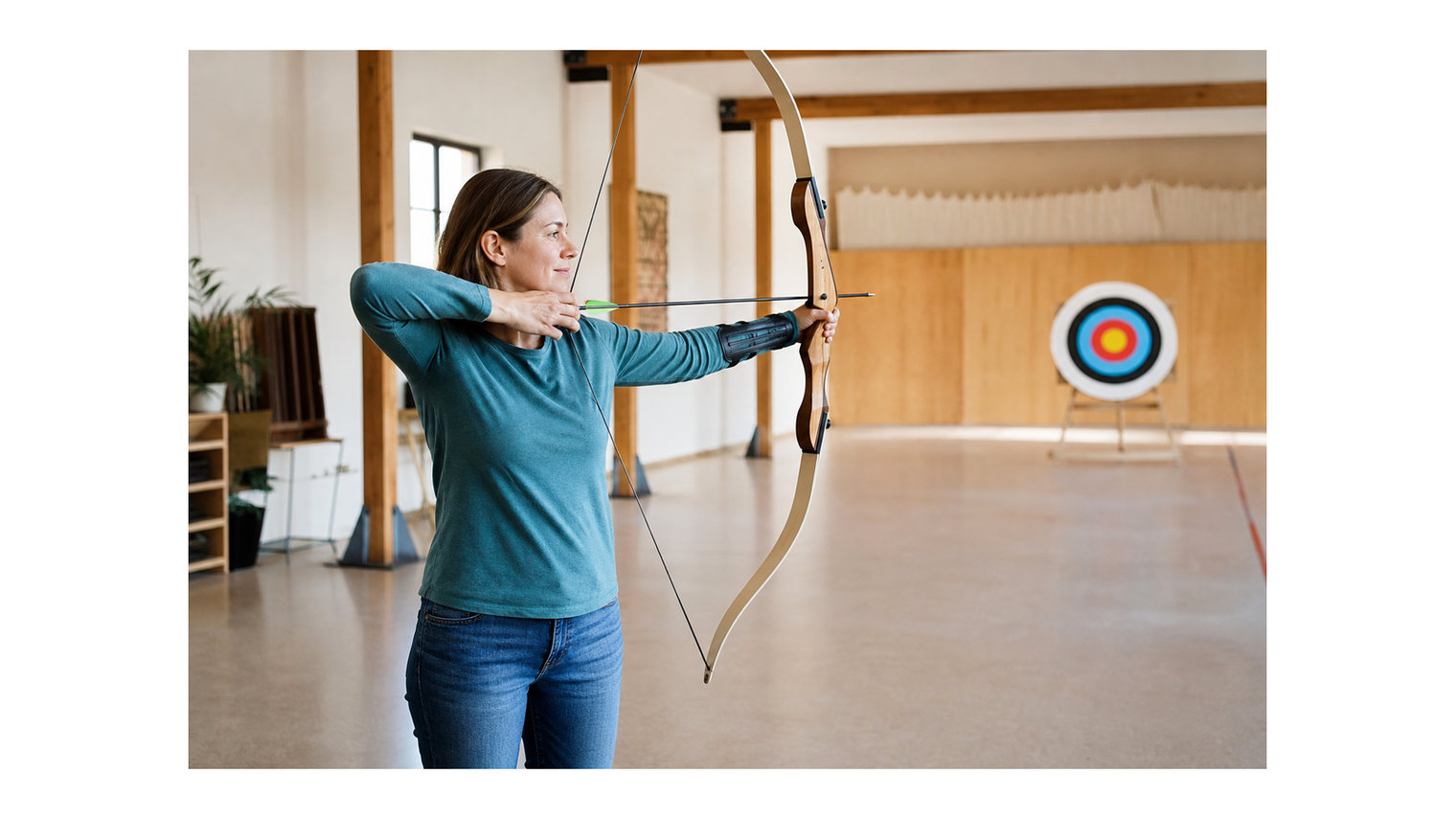
Consider what actually happens when you shoot a bow:
- You stand still or sit at a shooting line.
- You draw the bow to a comfortable anchor point.
- You focus, settle your breath, and release.
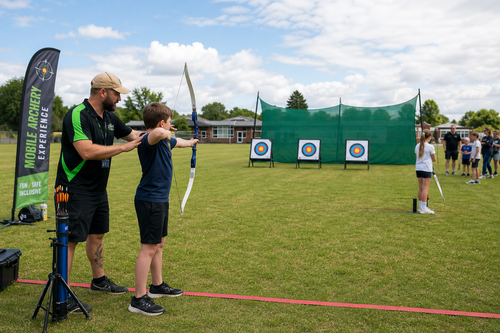
At no point does this demand that you sprint, jump, or react to a moving opponent. The sport is largely self-paced. You set the rhythm. And because draw weights on modern bows are highly adjustable — especially on recurves and compounds — you never have to pull more than your body can comfortably handle. Proper fitting is far more important than raw strength.
What Archery Actually Trains You to Do
When people start shooting regularly, they often notice improvements they didn't expect. Not muscle size or aerobic capacity, but things like:
- Focus and mental stillness — Archery demands that you quiet internal noise and commit to each shot. This is closer to meditation than to athletics.
- Postural awareness — Good form asks your back, shoulders, and core to work together in a stable, aligned position. Over time this becomes second nature.
- Fine motor control — The release, the grip, the anchor — these are small, precise movements that improve with repetition, not with physical power.
- Breathing management — Controlling your breath at full draw is a subtle but real skill that sharpens the more you practice.
None of these qualities are exclusive to athletes. They're available to anyone willing to show up consistently and pay attention to their body.
Form and Technique: The Real Competitive Edge
Ask any experienced archer what separates a good shooter from a poor one, and they'll tell you the same thing: technique. A person with average fitness and excellent form will outshoot a strong person with poor mechanics every single time at the range.
This is actually great news for beginners who aren't coming in with a sporting background. You aren't unlearning bad habits from other physical disciplines. You start fresh, and the fundamentals you build early will carry you throughout the sport. Key technical elements beginners should focus on early include:
- Stance — keeping feet shoulder-width apart and body aligned to the target
- Grip — holding the bow loosely to avoid torquing the riser on release
- Draw and anchor — pulling to the same point on your face every time
- Back tension — engaging the back muscles to drive the draw, not just the arm
- Follow-through — keeping the bow arm up after the shot until the arrow hits
These fundamentals take time to internalize, but they don't require physical conditioning. They require attention and repetition — which is exactly what a non-athlete can bring to the range without any disadvantage.
Choosing Equipment That Works for Your Body
One of the most common barriers new archers face is starting with equipment that doesn't fit them. Draw length, draw weight, and bow style all need to match the individual shooter — not some arbitrary standard. Using a bow that's too heavy to draw properly will reinforce bad habits and make the experience frustrating from day one.
A few practical guidelines when selecting your first setup:
- Start with a draw weight you can pull smoothly and hold comfortably. For most adults new to the sport, this typically means starting lower and working up gradually.
- Get your draw length measured properly. An ill-fitted bow affects every aspect of your shot, from anchor point to release.
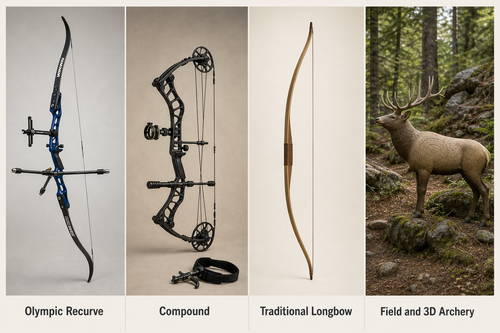
- Choose a bow style that fits your goals. Recurve bows are popular for beginners learning traditional form. Compound bows offer let-off that makes holding at full draw significantly easier — which can be a real advantage if hand or shoulder strength is a concern.
If you're not sure where to start, browsing a well-stocked archery shop with knowledgeable staff can help you match equipment to your actual needs rather than guessing from a product page.
Common Mistakes Beginners Make When Starting Out
Whether or not someone considers themselves athletic, these are the pitfalls that consistently slow progress in new archers:
- Starting with too much draw weight. Ego-driven draw weight selection leads to poor form, fatigue, and injury. There is no shame in starting light and building up over months.
- Skipping the fundamentals. Wanting to shoot at long distances before mastering consistent short-range groups is one of the most common traps. Nail 10 metres before chasing 30.
- Inconsistent anchor points. Touching the string to a slightly different spot on your face with each shot makes grouping nearly impossible to achieve or diagnose.
- Gripping the bow too tightly. A death grip on the riser introduces torque that sends arrows off-target. A relaxed, open grip is one of the hardest habits to build but one of the most impactful.
- Practising bad form at high volume. Shooting hundreds of arrows with poor technique cements mistakes. Fewer, more intentional shots with focused attention on form is always more productive than mindless repetition.
- Ignoring fatigue signals. When your form begins to break down, your session should end. Shooting through exhaustion reinforces errors and risks overuse strain.
The Social and Mental Side of Archery
Beyond technique and equipment, archery offers something that many traditional sports don't: a genuinely welcoming environment where you compete primarily against yourself. Archery clubs and ranges tend to attract people from a wide range of ages, backgrounds, and fitness levels. A retired professional and a teenager just picking up a bow for the first time often share a shooting line without any friction.
This self-referential nature of the sport — where your score today is measured against your score last week, not against someone faster or stronger — makes it particularly well-suited to people who may have felt sidelined or out of place in more physically demanding environments.
The mental discipline that archery builds also has real carry-over benefits. Archers often report improvements in concentration, stress management, and patience that extend well beyond the range. These are not athletic traits. They are human ones.
If you're ready to get started with the right gear for your level, take a look at the range of new archery products available to suit beginners through to experienced shooters.
Frequently Asked Questions
Do I need to be fit to start archery?
No. Basic archery requires very little in the way of cardiovascular fitness or muscular strength, especially when you start with an appropriately weighted bow. You'll develop relevant strength and stamina naturally over time as part of regular practice.
Can people with physical limitations participate in archery?
Archery is one of the most accessible sports available, and it has strong representation in para-sport at the highest competitive levels. Many adaptations exist — from different shooting positions to specialised release aids — that allow people with a wide range of physical conditions to participate and compete meaningfully.
How quickly do beginners typically improve in archery?
Progress varies, but most beginners see noticeable improvement in grouping and consistency within the first few weeks when they focus on foundational technique rather than distance or volume. Working with a coach early on can significantly shorten the learning curve.
What's the biggest thing holding beginners back from enjoying archery?
Usually it's poorly fitted equipment or starting with too much draw weight. Both of these issues cause form to break down before good habits can form. Getting properly set up from the start — either through a club or a knowledgeable retailer — makes a significant difference to how quickly you enjoy the sport.
Getting Started
Archery is genuinely one of the most accessible physical activities available to adults. It asks for attention, not athleticism. If you're someone who's always been curious about the sport but assumed it wasn't for you — the bow doesn't care about your bench press or your 5K time. It only cares whether you show up with patience and a willingness to learn. That's something anyone can bring.