Skip to content
 cust@legendarchery.com
 302 503 5767
 Westfield IN 46074


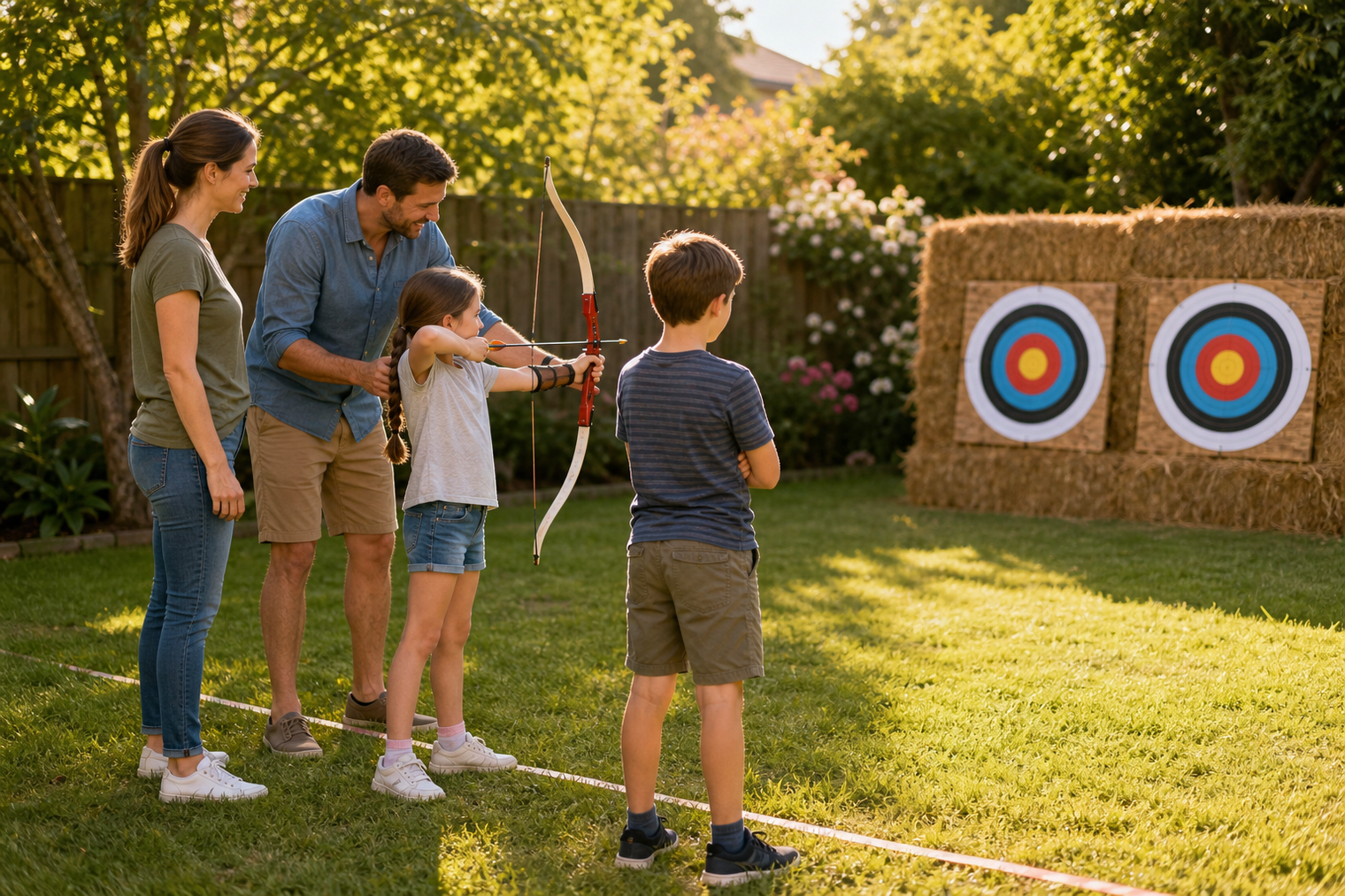
Archery is one of the few sports where an eight-year-old and a fifty-year-old can genuinely compete side by side. The challenge is knowing which formats actually keep everyone engaged rather than waiting around for their turn. This guide covers the game formats, setup tips, and common pitfalls that turn a flat practice session into something the whole family asks to do again.
Why Game Formats Change Everything in Family Archery
Standard target practice — stand here, shoot there, repeat — works well for training. It does not work well when you have mixed ages, mixed abilities, and mixed attention spans. Structured games solve that problem by giving every participant a clear goal, a reason to care about each arrow, and a way to measure progress that does not rely on technical scoring systems most beginners do not understand.
Games also reduce the anxiety that comes with skill comparison. When the format rewards consistency, creativity, or teamwork rather than raw accuracy, newer archers stay motivated and experienced ones find new challenges. That balance is what makes archery games for family fun different from formal practice.
Core Game Formats That Work Across Skill Levels
1. Tic-Tac-Toe Archery
Set up a nine-zone target grid — this can be drawn on a paper face or built from coloured tape on a foam block. Two players or teams take turns shooting, claiming zones by landing an arrow inside them. First to connect three in a row wins. This format is slow enough for beginners, strategic enough for experienced archers, and rounds are short enough to hold a child's attention.
2. Scoring Ladders
Each player starts with a set number of points — say 21 — and must reach exactly zero to win. You subtract whatever score you hit on the target face. The catch: if you go below zero, your score bounces back up. This creates genuine tension on every arrow and naturally teaches distance management and shot selection without lecturing anyone.
3. Challenge Rounds
Write a list of tasks on slips of paper and draw one before each end. Tasks can include shooting with your non-dominant eye closed, shooting from a kneeling position, or aiming at the outer ring only. Handicap tasks for stronger shooters to keep things competitive. This format works especially well when you have a teenager and a younger sibling who would otherwise be at very different scoring levels.
4. Clout-Style Backyard Games
At a safe distance in an open backyard or field, place a hoop or marked circle on the ground and shoot for it with a high arc. Clout-style shooting develops elevation awareness and gives even younger archers a format where strength matters less than reading the flight of the arrow. Always confirm your backstop situation before shooting at ground-level targets in open spaces.
5. Team Relay Shooting
Split into two teams. Each team member shoots one arrow per round, and the team score accumulates across all members. Substituting for a teammate who struggles adds a cooperative element. This format is well-suited to larger family gatherings or group events where keeping score per individual becomes impractical.
Setting Up a Safe, Practical Backyard Range
Before running any game, the setup matters more than the game itself. A poor range layout creates safety issues and slows down the session.
- Target height: The centre of your target should sit at roughly chest height for your shortest participant.
- Backstop: Never rely on the target alone to stop arrows. A hay bale, earth bank, or purpose-built foam backstop behind the target is non-negotiable.
- Shooting line: Mark a clear line everyone shoots from. Mixed distances are fine for handicap games but always establish where the line sits before arrows are drawn.
- Retrieval rules: No one moves downrange until all bows are down, strings undrawn, and a verbal all-clear is given. Reinforce this every session with younger participants.
- Equipment scaling: Match draw weight to the youngest or smallest archer in the group. A bow that is too heavy to hold steady is not safe or fun for anyone. If you need guidance on appropriate starter equipment, browse the archery shop at Legend Archery for options suited to different age groups and draw lengths.
How to Adapt Games for Different Ages
The same game can work for a seven-year-old and a forty-year-old if you adjust the distance, the target size, or the scoring weight. Here is a simple adaptation framework:
- Under 10: Shorter distances, larger target faces, and visual scoring (colour zones rather than numbers) keep things accessible. Prioritise the experience of hitting something over competitive scoring.
- 10 to 14: Introduce light scoring formats like tic-tac-toe or ladder games. This age group responds well to competition when the rules feel fair and the rounds are short.
- 15 and up: Standard target faces at longer distances, challenge rounds, and handicap scoring formats work well. Older teens often benefit from a clear technical focus — form, anchor point, follow-through — embedded within the game structure.
- Adults with no archery background: Keep the first session almost entirely game-based. Formal instruction during a social session often kills the mood. Let the games surface the technique questions naturally.
Common Mistakes Families Make When Setting Up Archery Games
These patterns come up repeatedly when groups are new to running structured sessions:
- Too many rules too soon: Complex scoring formats overwhelm beginners. Start with one simple game and introduce variations in a second or third session.
- Mismatched equipment: Letting a small child use an adult recurve because it is the only bow available creates frustration and poor form habits. Equipment must fit the archer, not the other way around. If you are kitting out a family for the first time, checking a range of outdoor archery supplies helps you find appropriate options without overcomplicating the decision.
- Skipping the safety briefing: Even in a casual backyard context, a two-minute safety briefing before the first arrow keeps everyone on the same page. It is not overkill — it is the difference between a good session and an incident.
- Only tracking scores, not effort: For younger archers especially, recognising effort and improvement matters more than the final number. A child who knocks down their first balloon should get a bigger reaction than a veteran hitting a nine.
- Letting sessions run too long: Archery uses muscles and concentration in ways that creep up on people. Forty-five minutes is usually a better target than a full two-hour session for mixed-age groups. End while people still want more.
- Shooting in poor light or adverse conditions: Wind affects arrows noticeably, even at short distances. Rain and low light reduce visibility and reaction time. Pick calm conditions, particularly for children who are still developing spatial awareness around equipment.
Building a Routine That Keeps Families Coming Back
The families who stay with archery long-term are usually the ones who built a routine before the novelty wore off. A few practical anchors help:
Rotate who picks the game each session. Giving children ownership of the format increases buy-in significantly. Keep a simple notebook of scores and game formats used — it creates a low-key record of progress and gives everyone something to reference. Introduce one new game per month rather than rotating constantly, which gives everyone time to actually improve at each format before moving on.
When you are ready to expand your setup with additional targets, arrow rests, or replacement arrows suited to outdoor use, exploring a dedicated outdoor archery supplies range makes it straightforward to find equipment that suits your pace of play.
Frequently Asked Questions
What age is a good starting point for kids joining family archery games?
Most children can begin with supervised archery from around age six or seven, provided the equipment is appropriately sized — typically a very low draw weight recurve or a purpose-built youth bow. The key factor is not age alone but whether the child can follow safety instructions consistently and hold a bow without straining.
Do you need a lot of space to set up backyard archery games?
Not necessarily. Many family game formats work well at distances between five and fifteen metres. What matters more than raw space is having a solid backstop behind the target and clear sightlines so no one is in the shooting lane. Even a modest garden can work if it is set up correctly.
What do beginners usually get wrong when they try archery games for the first time?
The most common issues are gripping the bow too tightly, plucking the string on release, and anchoring inconsistently. These are technique problems, but in a game context they usually surface as frustration rather than a recognised technical flaw. A quick three-point form check before the session — grip, anchor, release — reduces these problems without turning the session into a formal lesson.
How do you keep mixed skill levels competitive without it feeling unfair?
Handicap distances work well — stronger archers shoot from further back. Game formats that reward consistency over raw score, like ladder or tic-tac-toe variants, also level the playing field naturally. The goal is for every participant to feel that their shots matter, regardless of where they are in their development.
Getting the Most Out of Every Session
The best archery sessions for families are the ones with clear structure, appropriate equipment, and short enough rounds that everyone stays sharp. Pick one game, set up safely, and adjust the format as you go. The technique improves naturally when people are engaged — the games are the vehicle, not the end goal.