Skip to content
 cust@legendarchery.com
 302 503 5767
 Westfield IN 46074



Comics, films, and fantasy fiction have given us some of the most iconic archers in popular culture. But strip away the costumes and ask a real question — who would actually win in a battle of the bows? The answer depends less on superpowers and more on bow mechanics, shooting form, and tactical awareness. Let's run through the contenders and judge them the way a bow technician would.
The Contenders: Fiction's Most Famous Archers
Before picking a winner, it helps to understand what each fictional archer is actually working with. Equipment matters enormously in real archery, and these characters each represent a distinct shooting style and bow type.
Green Arrow (DC Comics)
Oliver Queen is consistently depicted using a recurve-style longbow, though modern comic runs have given him compound variants. His signature advantage is his trick arrow arsenal — explosive tips, grappling hooks, net arrows — which are creative but tactically situational. In terms of raw shooting form, Green Arrow is often drawn with reasonable technique: high anchor point, full draw, relaxed grip. His background as a survivalist gives him credibility as a practical archer.
Hawkeye (Marvel Comics)
Clint Barton is Marvel's dedicated marksman and is usually shown using a compound bow, though his draw weight and setup vary wildly depending on the writer. Hawkeye's defining trait isn't just accuracy — it's situational adaptability. He regularly shoots on the move, from elevated positions, under pressure, and in low-light conditions. From a real-world perspective, those are genuinely difficult skills that separate competent archers from elite ones.
Katniss Everdeen (The Hunger Games)
Katniss uses what is clearly a recurve bow throughout the series, starting with a basic hunting bow and eventually receiving a custom high-tech recurve. Her style is instinctive shooting — no sights, no stabilizers, rooted in years of practical hunting experience. In real archery terms, instinctive shooting at moving targets in unpredictable environments is one of the hardest disciplines to master.
Legolas (Middle-earth)
The elven archer from Tolkien's world is essentially a fantasy benchmark. His bow is a classic Galadhrim recurve in the films. The physics-defying shots aside, Legolas represents the archetype of a lifelong archer — someone whose form is so ingrained it becomes unconscious. That concept maps directly to real archery: elite shooters don't think about the shot, they execute it.
Judging by Real Archery Principles
If we apply genuine archery criteria to score these characters, a few key factors decide the outcome:
- Consistency under pressure: Can the archer maintain form when fatigued, injured, or distracted?
- Equipment suitability: Is the bow matched to the shooting scenario — range, speed, precision?
- Shot selection: Does the archer know when not to shoot as much as when to release?
- Adaptability: Can they switch targets, adjust for wind or elevation, and work without ideal conditions?
- Form discipline: Anchor point consistency, back tension, follow-through — the fundamentals that real coaches hammer home.
Measured this way, Hawkeye edges ahead on tactical adaptability, while Katniss scores highest on practical instinctive accuracy. Green Arrow's trick arrows give him range versatility but introduce mechanical complexity — in a real-world scenario, a specialty arrow that fails at the wrong moment is a liability. Legolas, of course, operates outside physics, so he's more of a benchmark than a fair competitor.
What Bow Type Would Actually Win?
This is where the discussion gets genuinely useful for real archers. In a head-to-head combat scenario with no supernatural elements, the bow type matters:
Compound Bows
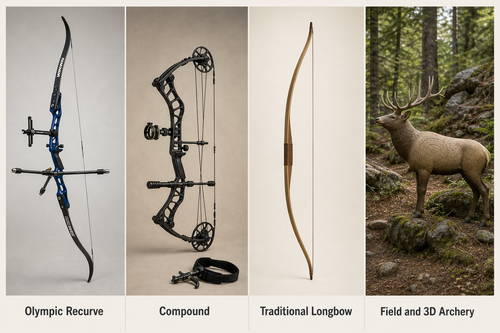
The let-off system on a compound bow allows an archer to hold at full draw with significantly less effort. In a prolonged engagement, this is a real advantage — less muscle fatigue means more consistent shots over time. Compounds also typically generate higher arrow speeds with less physical effort, which matters at longer ranges. Hawkeye's compound setup gives him a mechanical edge in sustained scenarios.
Recurve Bows
Recurve bows are simpler, lighter, and faster to nock and draw from a standing start. For ambush shooting, tight-space movement, or rapid successive shots, a well-tuned recurve can outperform a compound. Katniss's recurve style — instinctive, fluid, and unencumbered by accessories — suits close-to-medium range hunting-style engagements perfectly. If you're curious about recurve options for real-world practice, Legend Archery carries a solid range of take down recurve bows worth exploring.
Common Mistakes Fictional Archers Make (That Real Archers Shouldn't Copy)
Comics and films are full of archery technique errors that get normalised through repetition. Here are the biggest ones real archers should avoid:
- Holding the bow sideways: The tilted bow looks cinematic but reduces accuracy and string clearance significantly.
- No arm guard: Almost every fictional archer shoots bare-armed. In real shooting, a forearm strike from the string is painful and disrupts form immediately.
- Drawing to the chin or chest instead of a consistent anchor: Hollywood archers rarely show a defined anchor point. Real accuracy depends on identical anchor placement every single shot.
- Over-drawing compound bows: Hawkeye is frequently shown at full draw for extended periods in combat. On a real compound, you draw, aim briefly, and release — holding too long causes fatigue and form breakdown.
- Nocking speed over nocking correctly: Rapid nocking looks impressive. Incorrectly indexed arrows cause poor flight and, in real hunting or field archery, missed shots.
What Real Archers Can Take From This
The debate over fictional archers is fun, but it points to something genuinely useful: understanding why certain techniques work and what equipment suits different goals. Whether you're drawn to the elegance of recurve shooting or the mechanical precision of a compound, your development as an archer comes from consistent practice with appropriate gear.
If you're building out your kit — from arrows to accessories — browsing outdoor archery supplies is a practical starting point for matching your equipment to your shooting style.
Frequently Asked Questions
Who would realistically win between Green Arrow and Hawkeye?
Applying real archery logic, Hawkeye's compound bow gives him a mechanical advantage in sustained shooting due to let-off reducing draw fatigue. Green Arrow's trick arrows add versatility but also points of failure. In a straight accuracy contest over multiple shots, Hawkeye holds a slight edge on equipment alone.
Does Katniss Everdeen use good archery form?
Her instinctive recurve style is actually one of the more realistic depictions in popular fiction. Instinctive shooting is a legitimate discipline used by field archers and hunters. The films show reasonable draw and follow-through, though like all screen archery, technique is occasionally sacrificed for dramatic framing.
Would trick arrows actually work in real archery?
Some concepts — blunt tips, broadheads, judo points — are real specialty arrowheads used in hunting and field archery. Explosive or grappling arrows exist only in fiction. The additional weight and altered aerodynamics of specialty tips do genuinely affect trajectory, which is why real archers tune their setups carefully for each arrow type.
How can I improve my understanding of different bow types?
Hands-on experience is the fastest teacher. Shoot both recurve and compound setups if you have access. Pay attention to how draw weight, let-off, and arrow spine interact. Talking to experienced archers at a shop or club accelerates learning significantly — and if you want to browse options, Legend Archery's archery shop covers a wide range of bow styles to compare.
The Verdict
In a comic book archery battle judged by real-world mechanics, Hawkeye wins on sustained tactical shooting, Katniss wins on instinctive close-range accuracy, and Green Arrow wins on scenario versatility. Legolas wins if the laws of physics take the day off. The more interesting takeaway is that each character represents a genuine archery discipline — and understanding those disciplines makes you a more informed and capable archer yourself.