Skip to content
 cust@legendarchery.com
 302 503 5767
 Westfield IN 46074


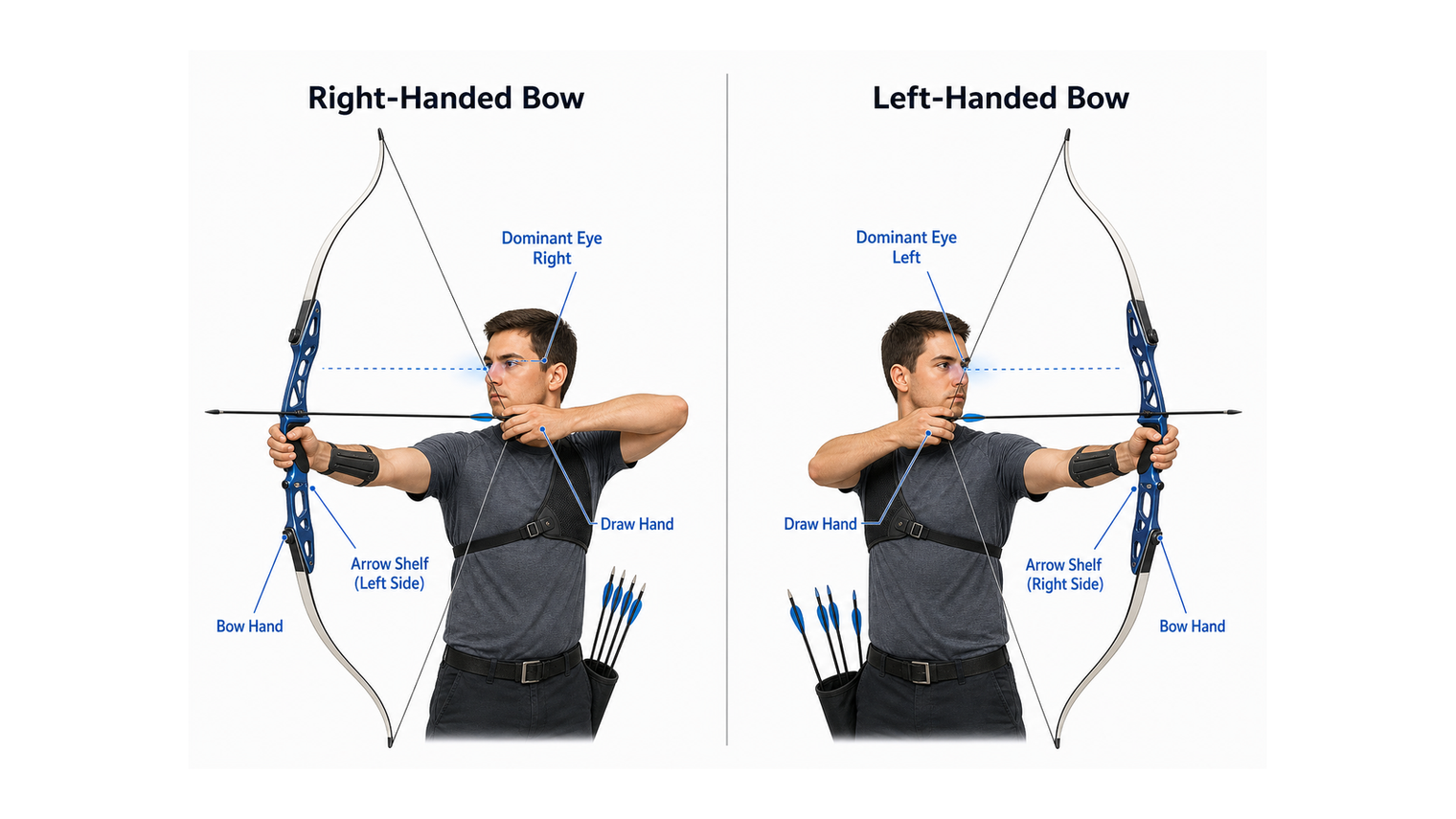
One of the first questions new archers face is whether they should shoot a right or left handed bow. It sounds simple, but the answer isn't always what you'd expect — and getting it wrong early can mean months of frustrating form issues down the line. Here's how to make the right call from the start.
What Does "Right Handed" or "Left Handed" Actually Mean on a Bow?
This is where a lot of beginners stumble. A right-handed bow is held in the left hand and drawn with the right hand. A left-handed bow is held in the right hand and drawn with the left hand. The "handedness" refers to your drawing hand, not the hand that holds the bow.
On recurve and traditional bows, the arrow rest and sight window are cut into opposite sides of the riser depending on orientation. On compound bows, the cable guard and shelf position change accordingly. These aren't interchangeable — using the wrong orientation affects arrow flight, sight alignment, and overall accuracy.
Why Eye Dominance Matters More Than Hand Preference
Most people assume bow orientation follows their writing hand. That's a reasonable starting point, but it misses a critical factor: eye dominance.
Your dominant eye is the one your brain relies on most for aiming. When both eyes are open during a shot, your dominant eye takes over — and if it's on the opposite side from your draw hand, you'll naturally fight your aim every time you shoot.
Here's the key principle:
- Right-eye dominant archers generally shoot right-handed
- Left-eye dominant archers generally shoot left-handed
- Hand preference is secondary to eye dominance when there's a conflict
This is especially important for beginners who haven't yet built ingrained shooting habits. It's far easier to adapt your drawing hand early than to fight dominant eye interference for years.
How to Test Your Dominant Eye
Testing eye dominance takes about thirty seconds and needs no equipment:
- Extend both hands in front of you and form a small triangle with your thumbs and forefingers
- With both eyes open, centre a distant object — a light switch, a doorknob — inside the triangle
- Close your left eye. If the object stays centred, you are right-eye dominant. If it jumps out of the triangle, you are left-eye dominant
- Repeat with the other eye closed to confirm
Do this test before purchasing any equipment. Instructors at clubs and archery ranges run this check routinely, and for good reason — it's the single most important factor in choosing bow orientation for a new shooter.
What If You're Cross-Dominant?
Cross-dominance means your dominant eye and dominant hand are on opposite sides — for example, you write with your right hand but your left eye is dominant. This is more common than most people realise, affecting a significant portion of the population.
There's no single correct answer here, but two practical approaches work well:
- Shoot to match your dominant eye. A right-handed person with a dominant left eye learns to shoot left-handed. This feels awkward at first but tends to produce better long-term accuracy, particularly in target archery and field shooting where precision matters most.
- Close one eye when aiming. Some archers simply close their non-dominant eye during the shot, neutralising the conflict. This works, though it does limit depth perception and can introduce slight tension in the face and neck over time.
For young beginners especially, building to match eye dominance pays off. If you're shopping for a first bow for a child, checking their dominant eye before buying is worth the extra minute. Many youth bows are available in both orientations, so getting it right upfront saves the cost of replacing equipment.
Does Bow Style Change Anything?
The same principle applies across all bow types — recurve, compound, traditional longbow, and barebow. However, there are a few practical notes by style:
Recurve Bows
Recurve risers are handed, meaning a right-hand riser and a left-hand riser are different physical components. When setting up a recurve bow, the orientation determines which side the arrow shelf is cut on, where the plunger button seats, and how the sight mounts. Swapping handedness on a recurve means replacing the riser entirely.
Traditional Bows
The same applies to traditional archery. Most traditional recurve bows are built with a defined shelf and grip orientation. Some simple longbows can be shot off either side of the hand, but purpose-built traditional bows are still handed in most cases.
Compound Bows
Compound bows are firmly handed due to the cam system, cable routing, and peep sight position. Shooting a compound bow in the wrong orientation isn't just uncomfortable — it's mechanically incorrect and can affect the draw cycle and arrow rest function.
Common Mistakes Beginners Make
- Assuming handedness matches writing hand. Many beginners buy a right-handed bow because they're right-handed, without ever testing their dominant eye. This is the most frequent and costly mistake.
- Skipping the eye dominance test. It takes thirty seconds. There's no good reason to skip it.
- Buying second-hand before checking orientation. A good deal on a used bow means nothing if it's the wrong hand. Always confirm orientation before purchasing.
- Assuming it's too late to switch. Some archers shoot for months with the wrong orientation before getting assessed. Switching early is always easier than switching after building bad compensatory habits.
- Ignoring mild cross-dominance. Weak dominance — where one eye isn't strongly dominant — can shift with fatigue, lighting, and stress. Archers with weak or mixed eye dominance benefit from working with a coach to find a consistent approach rather than guessing.
A Practical Decision Framework
If you're still unsure, this straightforward process covers the majority of situations:
- Run the dominant eye test described above
- If your dominant eye matches your dominant hand, choose the matching bow orientation
- If you're cross-dominant and new to archery, seriously consider shooting to match your dominant eye
- If you're cross-dominant and already have strong hand motor habits (e.g., a professional athlete or tradesperson), closing one eye while shooting may be the more practical solution
- When in doubt, get a single session with a qualified archery coach before spending money on equipment
Frequently Asked Questions
I'm right-handed — does that mean I need a right-handed bow?
Usually yes, but not always. If your left eye is dominant, you may actually perform better with a left-handed bow. Test your dominant eye first, then decide. Hand preference and eye dominance align in most people, but not everyone.
Can I just switch to the correct orientation later if I buy the wrong bow?
On recurve and compound bows, no — handedness is built into the hardware. You'd need to replace the riser or the whole bow. It's much more cost-effective to check orientation before buying rather than after.
What if my dominant eye changes or I can't tell which eye is stronger?
Weak eye dominance is real and can be inconsistent. In this case, a coach can help you run multiple tests in different conditions and guide you toward a consistent approach. Some archers with genuinely ambiguous dominance do fine closing one eye; others benefit from training one eye to take over through consistent practice.
Does it matter as much for casual backyard shooting versus competition?
It matters at every level, but the impact is most visible when accuracy is the goal. Casual plinking at close range can mask the issue. The moment you try to shoot groups at distance or pursue any kind of scoring, mismatched orientation becomes a clear limiting factor.
Final Thought
The decision of whether to shoot a right or left handed bow comes down to one quick test and an honest assessment of your eye dominance. Get that right before anything else, and the rest of your setup choices become far simpler. If you're helping a newer shooter or picking up a first bow, starting with the correct orientation is the single best investment you can make in long-term accuracy.