Skip to content
 cust@legendarchery.com
 302 503 5767
 Westfield IN 46074


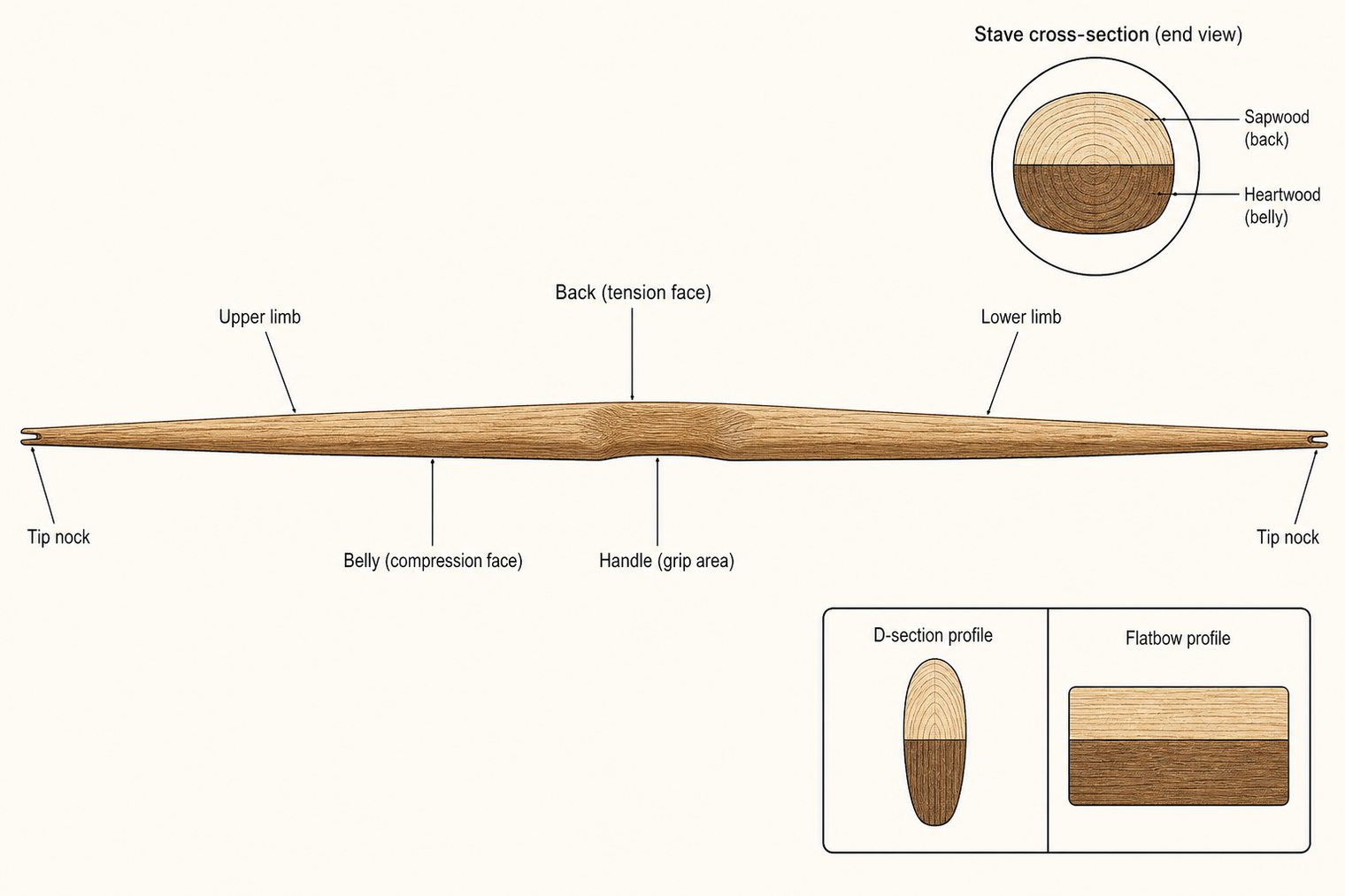
What Is a Self Bow?
A self bow is a bow made entirely from a single piece of wood — no laminations, no fibreglass backing, no composite layers. The same stave that bends when you draw is the same material that stores and releases energy. That simplicity is both the appeal and the challenge. Unlike modern laminated or take down recurve bows, a self bow lives or dies by the quality and preparation of the wood itself.
Understanding how these bows work gives any archer a deeper appreciation for the physics behind every bow design that followed.
Why Self Bows Still Matter
At first glance, a one-piece wooden bow might seem like a relic. But traditional archery is growing, and self bows sit at the heart of that revival for good reasons.
- They teach fundamentals. A self bow offers no mechanical assistance. Every flaw in form shows up immediately in accuracy and consistency.
- They deepen material knowledge. Choosing the right stave, understanding wood grain, and learning how wood responds to humidity all translate into better judgment about any bow.
- They connect to history. From English warbows to Japanese yumi to Native American flatbows, the self bow shaped archery culture across every continent.
- They are accessible. A well-prepared stave of the right species is all you need. There are no riser components, no limb bolts, and no separate strings to source for different modules.
Even if you primarily shoot modern equipment, spending time with a primitive one-piece bow shifts how you think about draw weight, brace height, and limb flex.
Core Principles of Self Bow Design
The Back and the Belly
Every bow has a back — the side facing away from the archer — and a belly, the side facing the archer. In a self bow, these two surfaces do fundamentally different jobs. The back is under tension when the bow is drawn. The belly is under compression. Wood handles tension and compression very differently, and matching the wood species to those forces is the first design decision.
For the back, many traditional bowyers follow the annual ring of the wood. This keeps the back fibres intact and dramatically reduces the risk of the back lifting or separating under tension. For the belly, the wood needs enough compressive strength to take repeated loading without taking a permanent set — a permanent bend in the direction of the draw, often called string follow.
Wood Species and Their Properties
Not every timber is suitable for a self bow. The species used historically were chosen through centuries of trial and failure. Here are the most proven options:
- Osage orange (hedge apple): Widely considered the best self bow wood in North America. Dense, resilient, and highly resistant to string follow. It handles both tension and compression well, which makes it forgiving of minor errors in design.
- English yew: The classic warbow material. The sapwood (light-coloured, outer wood) handles tension; the heartwood (darker, inner wood) handles compression. Yew naturally provides the two-material ideal in a single piece of wood.
- Black locust: A strong alternative to Osage with similar density. Easier to source in some regions.
- Ash: A more flexible choice that suits flatbow designs. It has a tendency to take more string follow than denser species but is easier to work and widely available.
- Hazel: Historically used for lighter hunting bows. It bends well but suits lower draw weights.
Avoid species with pronounced interlocked grain, excessive knots, or wide growth rings, as these create weak points under load.
Bow Geometry: Flatbow vs. D-Section Longbow
Self bows come in two broad geometrical families. A flatbow has wide, flat limbs that distribute stress across a larger cross-section. This reduces the stress per unit area and allows the limb to bend more deeply without failure — making flatbows well suited to species like ash. A D-section longbow (as in the English warbow tradition) uses narrower, thicker limbs with an oval or D-shaped cross-section, relying on wood density and depth to handle stress.
The choice of geometry should follow the wood. Forcing a D-section design onto a species better suited to a flatbow is one of the most common reasons self bows fail.
Practical Guidance for Getting Started
Sourcing a Stave
You have two routes: buy a prepared stave from a specialist supplier, or cut and season your own. Seasoned staves bought from reputable bowyers are the safest starting point for beginners. Look for straight grain, minimal knots, and consistent taper. A stave that has been air-dried for at least one to two years is far more stable than green wood.
If you cut your own, split (do not saw) the stave from the log where possible. Splitting follows the grain. A saw cuts across fibres, which weakens the back and creates points of failure under tension.
Tillering
Tillering is the process of removing wood from the belly to achieve an even bend throughout the limbs. It is methodical, slow work. A tiller tree — a notched board used to hold the bow at progressive draw lengths — lets you observe the limb shape as you work.
- Start at low draw weight and short draw length.
- Mark stiff spots with chalk and remove material only from those areas.
- Increase draw length incrementally, checking tiller at every stage.
- Aim for a smooth arc through both limbs with no hinges or flat spots.
Rushing tillering is the single most common cause of bow failure. Take off less material than you think you need, then check again.
Strings for Self Bows
The string you use affects the bow's performance and longevity. Traditional materials include linen, hemp, and sinew, but many modern traditional archers use Dacron bowstrings, which offer durability and low stretch without the high tension of modern synthetic fast-flight materials. Fast-flight strings are generally not recommended for self bows because the sudden shock they transmit can fracture wood limbs not designed to absorb it.
Common Mistakes Beginners Make
- Choosing the wrong wood species. Using a soft or unsuitable timber and expecting performance comparable to Osage or yew leads to disappointment and broken staves.
- Ignoring the grain on the back. Cutting through the annual ring on the back introduces tension failures. Following the ring is not optional — it is structural.
- Over-bracing. Setting the brace height too high increases stress on the limbs and dramatically raises the risk of failure. Start low and increase cautiously.
- Drawing too far too early. Test a new bow at short draw lengths before working up to full draw. Never put full weight on a partially tillered bow.
- Skipping seasoning. Green wood bows take set quickly and often fail. Patience in seasoning saves the bow.
- Copying modern recurve geometry. Self bows do not have the laminated structure that allows a recurve to handle the stress of recurved tips. Attempting to add heavy recurve to a self bow without the appropriate design knowledge leads to tip failure.
Frequently Asked Questions
What exactly counts as a self bow?
A self bow is any bow made from a single continuous piece of wood, without lamination or composite materials added to the back, belly, or limbs. A small amount of natural material such as sinew or rawhide applied as a backing is sometimes debated, but the defining characteristic is a single wooden stave as the primary structural element.
Does the type of wood really make that much difference?
Yes, significantly. Wood species vary in their ability to handle tension, compression, and repeated bending cycles. A species well suited to self bow construction will store energy efficiently and resist taking a permanent set. A poor choice will lose performance quickly and is more likely to fail under load. This is not a minor variable — it is one of the most important decisions in the entire process.
What mistakes do beginners most often make when starting with a self bow?
The most common are rushing the tillering process, using unseasoned wood, ignoring the grain direction on the back, and setting brace height too high before the bow has been properly worked in. All of these are avoidable with patience and methodical progression.
Can you improve at understanding self bows without making one yourself?
Yes. Shooting one regularly teaches you how the bow behaves under draw and release. Reading bowyer literature, watching tillering demonstrations, and handling different wood species all build intuition. You do not have to build a bow to develop a genuine understanding of how they work — but building one will accelerate that understanding considerably.
Bringing It Together
Self bows are unforgiving, demanding, and deeply rewarding. The knowledge required to design, prepare, and shoot one well underpins almost every principle in bow mechanics. Whether you are drawn to primitive archery as a craft, a historical interest, or simply a way to develop a more grounded archery practice, the one-piece wooden bow is an excellent place to start. If you are also exploring modern traditional options alongside your study of primitive designs, browsing take down recurve bows offers useful context for how far bow engineering has developed from the single stave.