Skip to content
 cust@legendarchery.com
 302 503 5767
 Westfield IN 46074


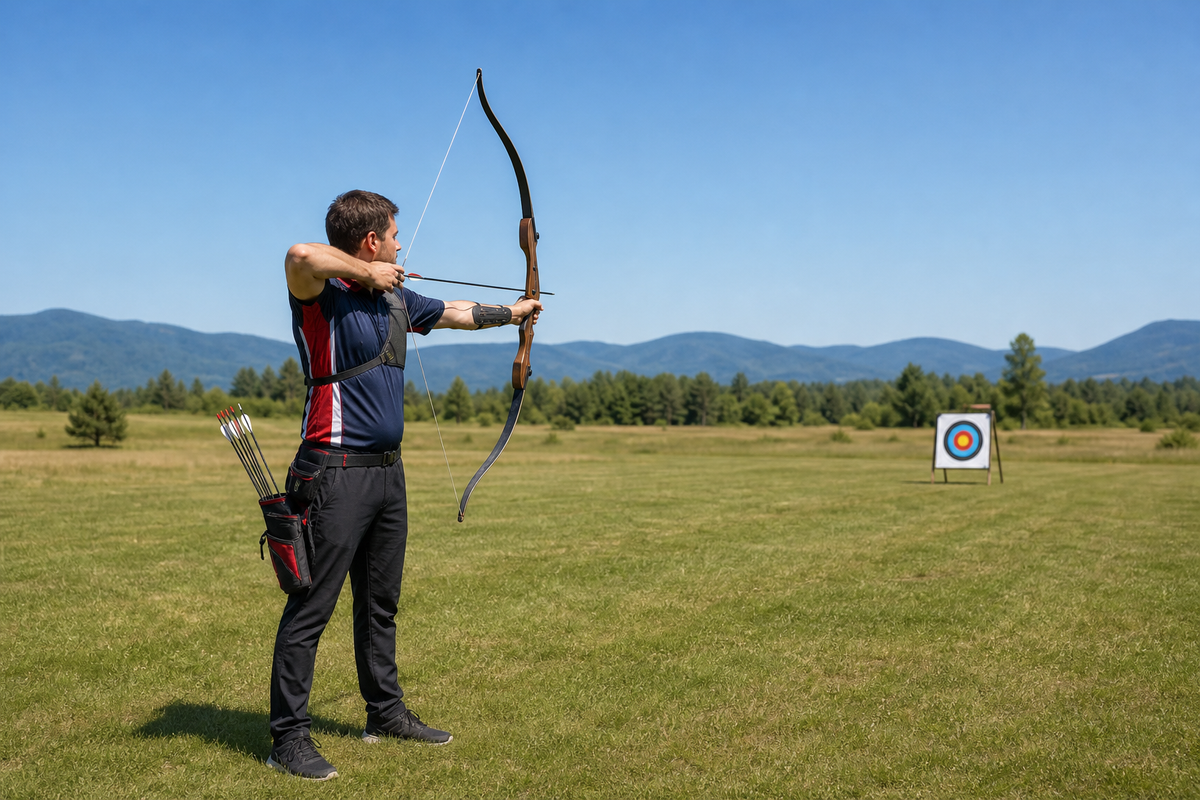
If your arrows are falling short or grouping inconsistently at longer distances, the fix usually isn't a new bow — it's a combination of refined technique, matched equipment, and deliberate practice. This guide is for recurve archers who can shoot comfortably at short range and want to extend that competence to 30, 40, or 50 metres with real consistency.
Why Distance Matters More Than Most Archers Realise
Shooting at longer distances exposes every flaw in your form that short-range shooting hides. A slight torque in your grip, an inconsistent anchor point, or a rushed release might cost you only a few centimetres at 18 metres — but at 50 metres, those same errors move your arrow half a target face. Working on distance isn't just about bragging rights; it actively improves your overall accuracy at every range.
What You Need Before You Start
Before changing anything about how you shoot, make sure your setup is actually capable of supporting longer distances. Shooting further with underpowered or mismatched equipment creates bad habits that are hard to undo.
- Draw weight: Most adult archers need at least 28–32 lbs to shoot effectively at 50 metres. If your limbs are under that threshold, you may need to upgrade. Explore the recurve bow range at Legend Archery to find limbs suited to your draw length and target distance.
- Arrow spine: Arrows that are too weak or too stiff for your draw weight will fly unpredictably at distance. Recheck your spine selection whenever you change draw weight.
- Arrow length: Longer arrows are heavier and slower. If you've been shooting arrows cut longer than necessary, trimming them to the correct length can noticeably improve trajectory.
- Sight or point-of-aim reference: Shooting barebow at extended distances is achievable, but you need a clear, repeatable aiming reference — whether that's a sight pin, a string picture, or a known point-of-aim on the target.
- A consistent anchor point: At distance, even a 2–3mm variation in your anchor position changes where your arrow lands significantly.
Step-by-Step: How to Shoot Further With Your Recurve Bow
This process assumes you're already shooting with reasonable form at short range. Work through these steps in order rather than jumping to the fun part of standing at 50 metres.
Step 1 — Establish a Rock-Solid Anchor
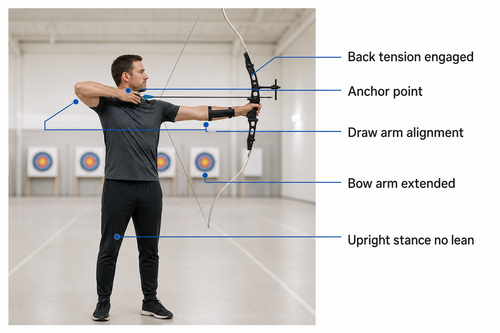
Your anchor is the foundation of repeatable distance shooting. Common anchor points include the index finger touching the corner of the mouth, the thumb touching the jawline, or the string touching the tip of the nose and the chin simultaneously. Choose one and commit to it completely. Film yourself from the side to confirm you're hitting the same position every draw.
Step 2 — Strengthen Your Back Tension
Distance shooting demands more from your back muscles than short-range work. Many archers rely too heavily on their arm and shoulder at close range and get away with it. At 40+ metres, the bow arm wobbles and the draw arm creeps unless you're actively engaging your rhomboids and rear deltoid through the shot. Focus on the feeling of your shoulder blades drawing toward each other as you reach full draw and hold through the clicker or your natural expansion point.
Step 3 — Dial In Your Sight or Aiming Reference
Move your sight up (or adjust your point-of-aim higher) incrementally as you increase distance. The standard approach is to confirm your 20-metre zero first, then step back to 30 metres and adjust, then to 40 metres, and so on. Rushing this process by jumping straight to 50 metres usually results in frustration and wasted arrows. Keep a written log of your sight marks at each distance — it saves significant time at every future session.
Step 4 — Work the Distance Progressively
Add distance in 5–10 metre increments. Shoot at least three to five ends at each new distance before moving back further. If your groups open up dramatically or arrows start keyholing, stop and diagnose the cause before continuing. Common culprits at this stage are arrow spine mismatch, deteriorating form under the increased load, or inconsistent release timing.
Step 5 — Develop a Consistent Follow-Through
Follow-through is often ignored because it happens after the arrow has left the bow — but your body's anticipation of the release begins before it, and that anticipation causes flinching, punching, and bow dropping. Train yourself to hold your bow arm up and keep your drawing hand back against your face or neck until the arrow visibly hits the target. This discipline alone can tighten groups at distance by a surprising margin.
Step 6 — Manage Physical Fatigue
Higher draw weights at longer sessions fatigue your rotator cuff and back faster than you expect. Fatigue causes form breakdown, which causes bad habits to ingrain. Keep your early long-distance sessions shorter — quality ends over quantity. As your strength builds over weeks and months, volume can increase safely.
Common Mistakes to Avoid
- Jumping to maximum distance too quickly — Form falls apart under the pressure of unfamiliar distances. Build up gradually.
- Ignoring arrow flight — Wagging, fishtailing, or porpoising arrows at distance are equipment signals, not form signals. Check your nocking point height, plunger tension, and spine match before assuming it's your technique.
- Gripping the bow too tightly — Grip tension causes horizontal stringing at any distance, but it's far more punishing at 50 metres. Keep a relaxed, open bow hand.
- Skipping the warm-up — Cold muscles at high draw weights invite injury. Always start a long-distance session with lighter work at closer range.
- Changing too many variables at once — New arrows, new draw weight, and new distance at the same session make it impossible to isolate what's working and what isn't.
- Relying only on feel — Record your sessions on video or use a training partner to give feedback. What feels correct often isn't, especially under fatigue.
How to Tell If You're Actually Improving
Progress at longer distances isn't always obvious session to session. Here's how to measure it meaningfully:
- Group size, not score: Track the diameter of your arrow groups rather than just your score. Tightening groups at 40 metres — even if they're not centred yet — means your form is becoming more consistent.
- Arrow pattern analysis: High groups suggest a low anchor or too much elevation. Left or right stringing often points to grip torque or inconsistent draw elbow position. Use the pattern to diagnose the fault.
- Consistency across ends: One good end doesn't mean much. Five consecutive ends with similar group placement does. That's the standard worth chasing.
- Shoulder and back fatigue location: If you feel your back engaging and tiring after a long session, that's a good sign. If your shoulder joint or bicep is taking the strain, your form still needs work.
If you're shooting a traditional setup and want to extend your range without a sight, the same principles apply — but point-of-aim adjustments and string-walking technique (where legal in your format) become especially important. Browse the traditional recurve bow options at Legend Archery if you're considering a setup better suited to barebow long-distance shooting.
Frequently Asked Questions
How do I actually get more distance without losing accuracy?
The most reliable route is a combination of slightly higher draw weight, correctly spined arrows, and consistent back tension through the shot. Chasing raw distance by simply increasing draw weight without fixing form usually makes accuracy worse. Work on the technique steps above first — the distance follows naturally.
What mistakes wreck distance shooting the fastest?
Punching the trigger (releasing early by jerking your fingers open), dropping the bow arm before the arrow clears the rest, and using arrows that are too lightly spined for your draw weight. Any one of these alone can completely derail long-distance grouping. All three together make consistent shooting nearly impossible.
Do I need special equipment to shoot at longer distances?
Not necessarily special — but your draw weight, arrow spine, and sight setup all need to be appropriate for the distances you're targeting. A bow that shoots beautifully at 18 metres may simply be too light to stabilise arrows effectively at 50 metres. Check your setup against the distance requirements before assuming it's a technique problem.
How do I know if my longer distance shooting has actually improved?
Measure group diameter across multiple ends, not just your best end. Consistent group placement — even if off-centre — is the key indicator of improving form. Once your groups are tight and consistent, you adjust your sight or point-of-aim to centre them. That's the correct sequence.
Getting the Right Setup for the Work Ahead
Extending your effective range is one of the most rewarding progressions in archery, but it requires honesty about both your technique and your equipment. Work through the steps methodically, resist the urge to jump distances too quickly, and use your arrow patterns as diagnostic tools rather than just a score. If your current bow is limiting your progression, the recurve bow range at Legend Archery includes options across a wide range of draw weights and styles to support serious distance work.