Skip to content
 cust@legendarchery.com
 302 503 5767
 Westfield IN 46074


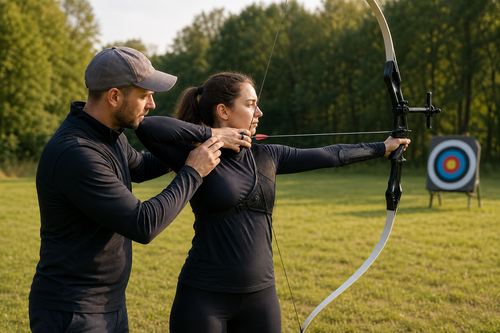
Selecting the right bow for you is less about brand loyalty and more about matching equipment to your body, goals, and shooting style. Get it right early and progression feels natural. Get it wrong and you risk building bad habits, struggling with form, or losing interest entirely. This guide walks through everything you need to consider before committing to a bow.
Why Your First Bow Choice Matters More Than You Think
Many beginners assume they can work around an ill-fitting bow with enough practice. Experienced coaches will tell you otherwise. A bow that is too heavy to draw smoothly, too long for your frame, or poorly suited to your intended discipline will actively work against your development. Muscle memory forms quickly in archery, and if you are compensating for the wrong equipment from day one, those compensations become habits.
Beyond technique, there is also a safety and enjoyment angle. A bow that consistently feels awkward to shoot makes sessions frustrating rather than rewarding. Equipment that fits your physiology and goals keeps you on the range longer and progressing faster.
Understanding the Main Bow Types
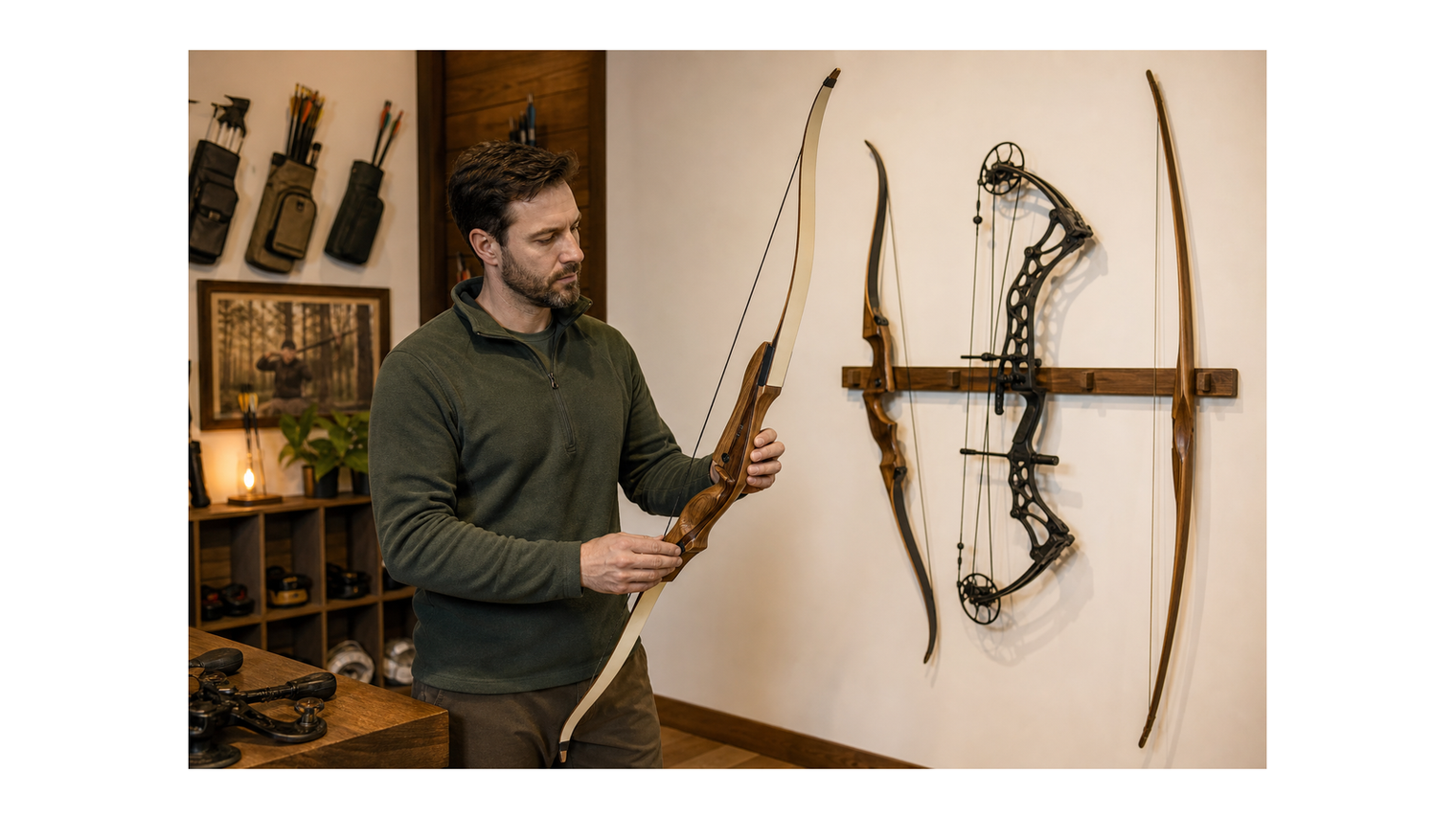
Before anything else, you need to understand what each bow type is built for. The three most common options a new archer encounters are the recurve, the compound, and the traditional longbow.
Recurve Bows
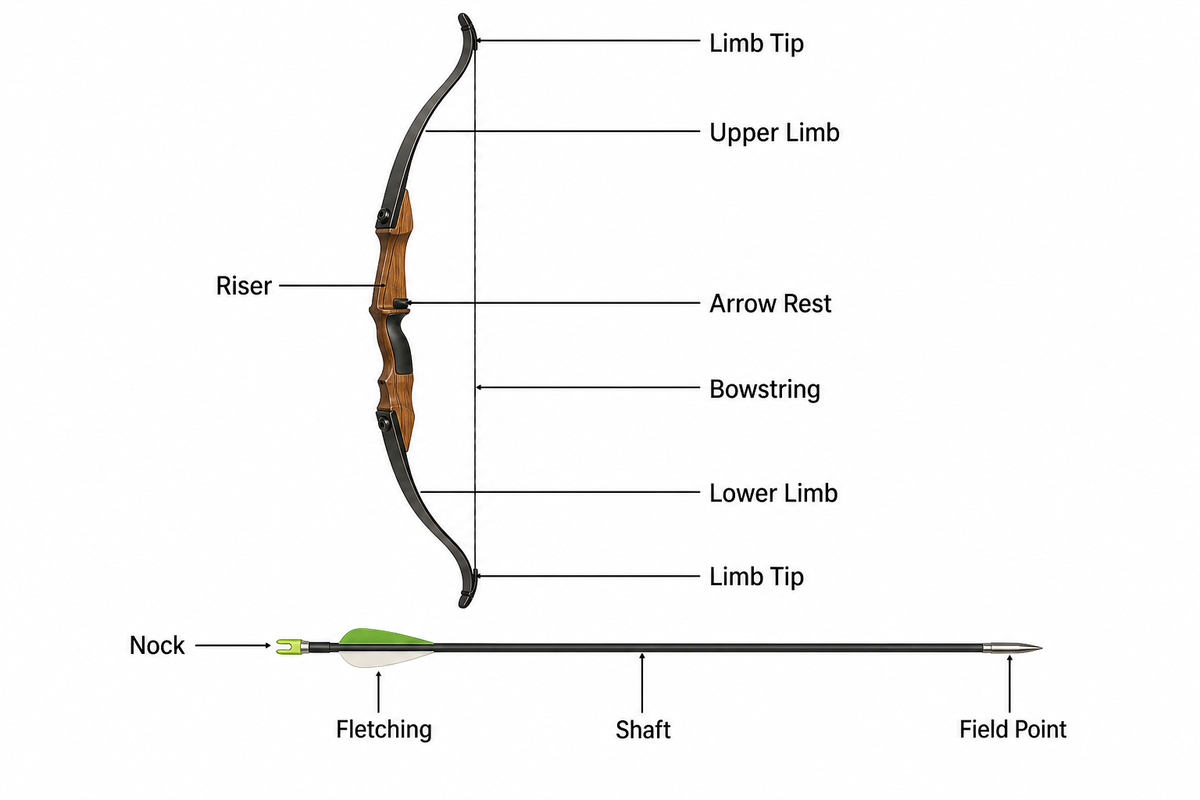
The recurve is arguably the most versatile starting point. Its limbs curve away from the archer at the tips, which stores more energy than a straight limb design and produces a relatively smooth draw. Recurve bows are used across Olympic target archery, field archery, and casual shooting alike. They are also the required format for Olympic competition, which matters if that path interests you.
Takedown recurves — where the limbs detach from the riser — offer particular value for beginners. They allow you to upgrade limbs as your draw weight needs change without buying a completely new bow. If you are exploring the recurve bow category, look for a takedown design with a comfortable riser length for your height.
Traditional Recurve and Longbows
Traditional archery strips equipment back to its simplest form — no sights, no stabilisers, no mechanical aids. Shooting instinctively requires a different kind of mental focus and spatial awareness. It takes longer to build accuracy, but many archers find the process deeply rewarding. If that appeals to you, exploring a traditional recurve bow is a logical starting point rather than jumping straight to a more complex setup.
Compound Bows
Compound bows use a cam-and-pulley system to reduce the holding weight at full draw — known as let-off. This allows a shooter to hold at full draw for longer with less muscular effort, which aids in aiming. Compounds are common in 3D archery, bowhunting, and certain target disciplines. They require more setup and tuning knowledge upfront, which can make them a steeper learning curve for a complete beginner.
The Numbers That Actually Matter: Draw Length and Draw Weight
Two measurements have the greatest practical impact on whether a bow fits you correctly.
Draw Length
Draw length is the distance from the grip to the string at full draw, and it is largely determined by your arm span and body proportions. A common rough estimate is to divide your full arm span (fingertip to fingertip with arms outstretched) by 2.5. For example, a 180 cm arm span suggests an approximate draw length of around 28 inches.
Shooting with a draw length that is too long encourages overextension and string-slap. Too short and you lose power and accuracy. For recurve shooters, a properly fitted arrow length and a riser suited to your draw length will handle most of this. Compound shooters need a bow with an adjustable draw length module or a specifically fitted cam system.
Draw Weight
Draw weight is measured in pounds and describes the peak force required to draw the bow. This is where beginners most commonly go wrong — choosing too much draw weight too soon.
A useful guide for adults starting out:
- Recurve beginners (adult): 20–30 lbs is a sensible starting range for building form without fatigue
- Intermediate recurve: 30–40 lbs as strength and technique develop
- Compound beginners: Many entry-level compounds have an adjustable range, often 15–70 lbs, allowing gradual increases
- Younger archers: Lighter poundage — often 10–20 lbs — to prioritise safe technique over power
The most important test is whether you can draw the bow smoothly, hold for a few seconds with control, and release consistently — not whether the number sounds impressive.
Matching Your Bow to Your Archery Goals
Bow selection should always connect back to what you actually want to do with archery.
- Target archery competition: A recurve with a sight and stabiliser system is the standard path
- Casual backyard or club shooting: Almost any properly sized recurve or entry-level compound works well
- 3D or field archery: Compounds are popular here, though recurve is also common
- Traditional and instinctive shooting: A traditional recurve or longbow suits this purpose
- Young or junior archers: A properly sized youth bow with appropriate draw weight prevents injury and builds technique correctly
If your goals evolve over time — which they usually do — choosing adaptable equipment at the start (like a takedown recurve) means you are not replacing everything from scratch.
Common Mistakes When Choosing a Bow
These are the errors that experienced archers see most often in beginners:
- Starting with too much draw weight. Chasing higher poundage before your form is solid leads to poor technique, fatigue, and sometimes injury.
- Buying a bow based on looks alone. Aesthetics matter for enjoyment, but they should follow a sound equipment decision rather than drive it.
- Skipping professional advice. A session at a club or pro shop where someone watches you draw and checks your measurements is worth far more than online speculation.
- Ignoring dominant eye. Eye dominance can affect which hand you shoot with. A left-eye dominant archer shooting a right-handed bow will struggle with consistency. Always check before buying.
- Assuming more expensive means better for a beginner. Mid-range, well-fitted equipment almost always outperforms expensive gear that does not suit your current skill level or physical dimensions.
- Forgetting that accessories matter too. Arrows that are too stiff or too weak for your bow's draw weight will behave unpredictably regardless of bow quality. Match your arrows to your setup from the start.
Getting a Proper Fit Before You Buy
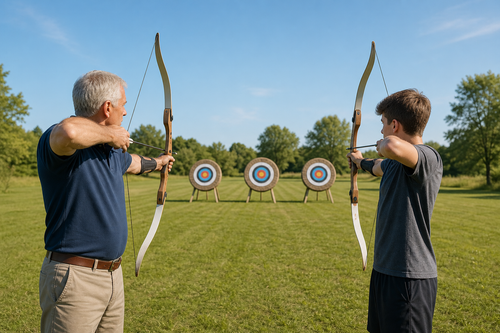
The single best move any new archer can make is to visit a club or archery retailer and actually shoot several different bows before committing. Many clubs offer beginner experience sessions that allow you to try equipment under supervision. This removes the guesswork around draw length preference, bow weight feel, and general comfort in a way no article can replicate.
If that is not possible, focus on:
- Calculating your draw length using the arm span method above
- Starting conservatively on draw weight
- Choosing a bow from a category that aligns with your stated goals
- Reading the manufacturer's recommended height and draw length ranges for specific models
Frequently Asked Questions
How do I know which draw weight to start with?
Start lighter than you think you need. For most adult beginners on a recurve, 20–28 lbs allows you to focus on form without fatigue. You can progress to heavier limbs once your technique is consistent. Drawing too much weight too early is one of the most common causes of shoulder strain and technique problems in new archers.
Does it matter which hand I shoot with?
Yes, and it is not always your writing hand. Eye dominance plays an important role. A right-eye dominant archer typically shoots a right-handed bow (the bow held in the left hand). Check your dominant eye before purchasing — there are simple tests you can find at any archery club or pro shop.
What mistakes do beginners usually make when picking their first bow?
The most common issues are choosing too much draw weight, not accounting for draw length, and buying without trying. Many beginners also overlook the importance of arrow spine — the arrows need to be correctly matched to the bow's draw weight and draw length to fly consistently.
Is a recurve or compound better for a complete beginner?
There is no universal answer, but most coaches recommend a recurve for its simplicity, lower maintenance, and the strong foundation it builds in form and technique. A compound's mechanical advantages can mask technique flaws early on. That said, if your interest lies specifically in 3D archery or bowhunting, starting on a compound makes practical sense.
Final Thoughts
The right bow is the one that fits your body, suits your goals, and lets you focus on developing sound technique. Prioritise draw length accuracy, start with manageable draw weight, and choose a bow type that genuinely aligns with how you want to shoot. Everything else — brand, finish, accessories — comes after those fundamentals are sorted.