Skip to content
 cust@legendarchery.com
 302 503 5767
 Westfield IN 46074


What Are Release Aids and Why Do They Matter?
A release aid is a mechanical device used by compound bow shooters to draw, hold, and fire the string cleanly. Rather than pinching the string with bare fingers, you attach the device to a D-loop on the bowstring and trigger the release at full draw. The result is a cleaner, more consistent arrow departure — which directly affects accuracy at any distance.
For any compound archer moving beyond the beginner stage, the choice of release tool is one of the most impactful equipment decisions you will make. A poorly matched device creates flinching, punching, and inconsistent shots. The right one builds confident, repeatable form.
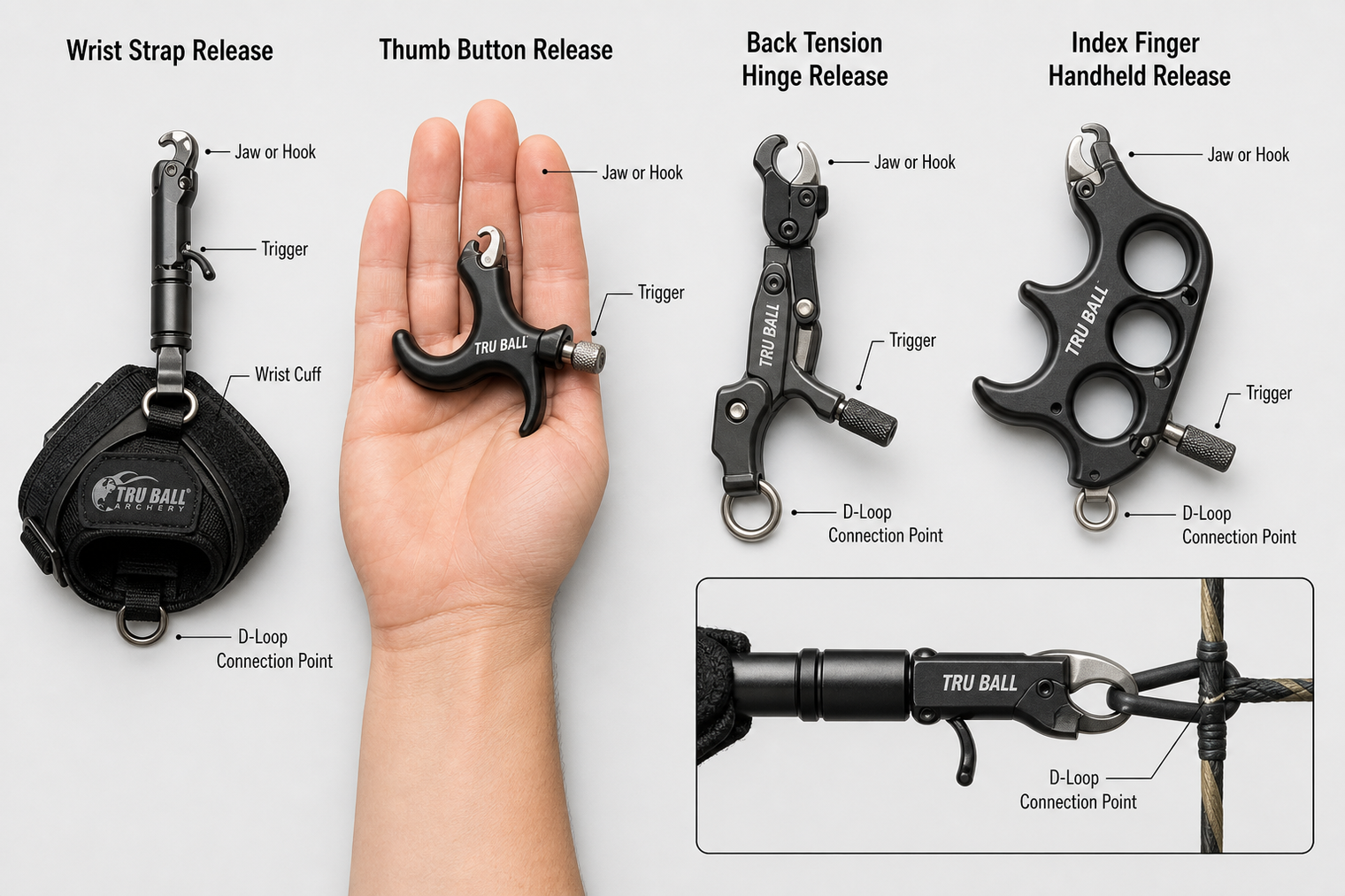
The Four Main Types of Release Aids
Understanding the category differences is the first step toward making a smart purchase. Each type has a different mechanical action and suits a different style of shooting.
Wrist Strap Releases
These are the most common entry point. A cuff wraps around your wrist, and a jaw or hook clips onto the D-loop. You fire by pressing a trigger with your index finger. Because the draw weight transfers through your wrist and forearm rather than just your fingers, they are forgiving to hold at full draw for extended periods.
Wrist strap models are widely used in bowhunting because they are fast to attach and difficult to drop. If you are buying your first compound release, this category is typically where to start.
Thumb Button Releases
Handheld devices with a thumb-activated trigger. You hold the body in your palm and fire by pressing the button with your thumb. This design encourages a slightly more relaxed grip and is popular among target archers who want a different feel from a wrist strap without committing to a back tension device.
Because thumb releases require deliberate trigger mechanics, they can help archers who have developed a trigger-punching habit with wrist strap models.
Back Tension Releases
Sometimes called hinge releases, these have no external trigger. They fire when the shooter rotates the device to a set angle — usually achieved by engaging the back muscles and pulling through the shot. The firing is almost a surprise, which eliminates anticipation and flinching entirely.
These are considered advanced tools. They reward correct form but punish poor technique visibly and immediately. Most coaches recommend them only once a shooter has solid fundamentals.
Index Finger and Four-Finger Handheld Releases
These sit between wrist straps and thumb releases in terms of mechanics. They are held in the hand with multiple fingers, and the trigger is pulled with the index finger. They offer precise control and are common in 3D competition and field archery.
How to Choose the Right One for Your Shooting Style
Matching the device to how and why you shoot matters more than brand loyalty or price point.
- Bowhunting in the field: A wrist strap release with a reliable safety mechanism is the practical choice. Speed of attachment and security during a draw matter in hunting scenarios.
- Target archery or 3D competition: Many competitors move toward thumb or back tension releases over time for greater shot control and consistency.
- New to compound shooting: Start with a wrist strap. Focus on learning to fire without flinching before experimenting with other types.
- Struggling with punching the trigger: A thumb release or a back tension device can help break the habit by changing the firing mechanics entirely.
Head length and jaw size also matter. The device must fit your draw hand comfortably and attach cleanly to your D-loop without excessive play. When evaluating options, check whether the trigger travel and sensitivity are adjustable — this is especially important as your form matures.
The Legend XT520 Archery Release Pouch is worth considering if you want a dedicated storage solution that keeps your release accessible and protected between sessions.
Key Features to Evaluate Before You Buy
- Trigger sensitivity adjustment: A trigger that is too light causes accidental fires; one that is too heavy causes flinching. Adjustability is a genuine advantage.
- Jaw or hook design: Single-jaw, double-jaw, and rope-style jaws each behave slightly differently on the D-loop. Try to handle each type before committing.
- Cuff or strap security: For wrist strap models, a velcro cuff is common and adjustable, while buckle designs offer a more locked-in feel.
- Rotation or swivel: Some devices allow the head to rotate, which reduces torque when drawing and at full draw.
- Build quality: Look at the materials used in the jaw mechanism. This is a high-stress component that should be machined from quality alloy, not cast pot metal.
If you are exploring the broader category of mechanical release options, it helps to understand how each type connects to the bowstring and what the draw cycle feels like before you settle on a style.
Common Mistakes Beginners Make with Release Aids
Getting the wrong device is only one problem. How you use it matters just as much.
- Punching the trigger: Anticipating the shot and jabbing at the trigger causes the bow hand to react before the arrow leaves the string. This is the single most common accuracy problem among compound archers.
- Gripping the handle too tightly: On handheld models especially, death-gripping the body torques the bow at the shot. The handle should rest in a relaxed hand.
- Not setting the trigger sensitivity correctly: Leaving the factory setting without adjustment means the device may not suit your hand size or shooting style.
- Clipping onto the bowstring instead of the D-loop: Always attach to a properly tied D-loop. Attaching directly to serving causes wear and can affect nocking point consistency.
- Neglecting maintenance: Moving parts accumulate debris, especially in hunting environments. A stiff or gritty trigger is a form problem waiting to happen.
Frequently Asked Questions
What exactly does a release aid do that fingers can't?
Fingers on a string create lateral pressure during the draw and release, which can push the string slightly off the center line. A mechanical device contacts the string via a D-loop and releases it cleanly with no finger interference. This reduces string oscillation at the shot and improves consistency, especially at longer distances.
Why does the type of release matter so much for accuracy?
Each type fires differently, which means the mental process of executing a shot changes with the device. A trigger release trains a different motor pattern than a back tension device. Archers who switch types often experience a temporary drop in consistency before adapting. Choosing a type that suits your shooting context from the start reduces this disruption.
What mistakes do beginners typically make when starting out with a release aid?
The most common early mistake is developing trigger punch — the habit of anticipating the shot and firing early rather than executing a clean surprise break. This is reinforced by using a release with a very light or unforgiving trigger before you have built consistent back tension and shot execution habits. Starting with a moderate trigger weight and focusing on follow-through helps prevent this from becoming ingrained.
How do you improve your use of a release aid over time?
Blank bale shooting — firing at a close target with no aiming pressure — isolates your shot execution and helps you feel what a clean trigger break and follow-through should feel like. Video review of your release hand and bow arm at the shot is also useful. Many competitive archers also work with a coach specifically to refine release mechanics, since it is difficult to self-diagnose punching or torque issues without external feedback.
Putting It Together
Selecting a release aid is not just a gear decision — it shapes how you develop as a compound archer. Start with a type that matches your current skill level and shooting purpose, evaluate adjustability and fit carefully, and take the time to build clean shot execution habits from the beginning. When you are ready to explore options, browsing current archery products is a practical way to compare what is available across different styles and price points.