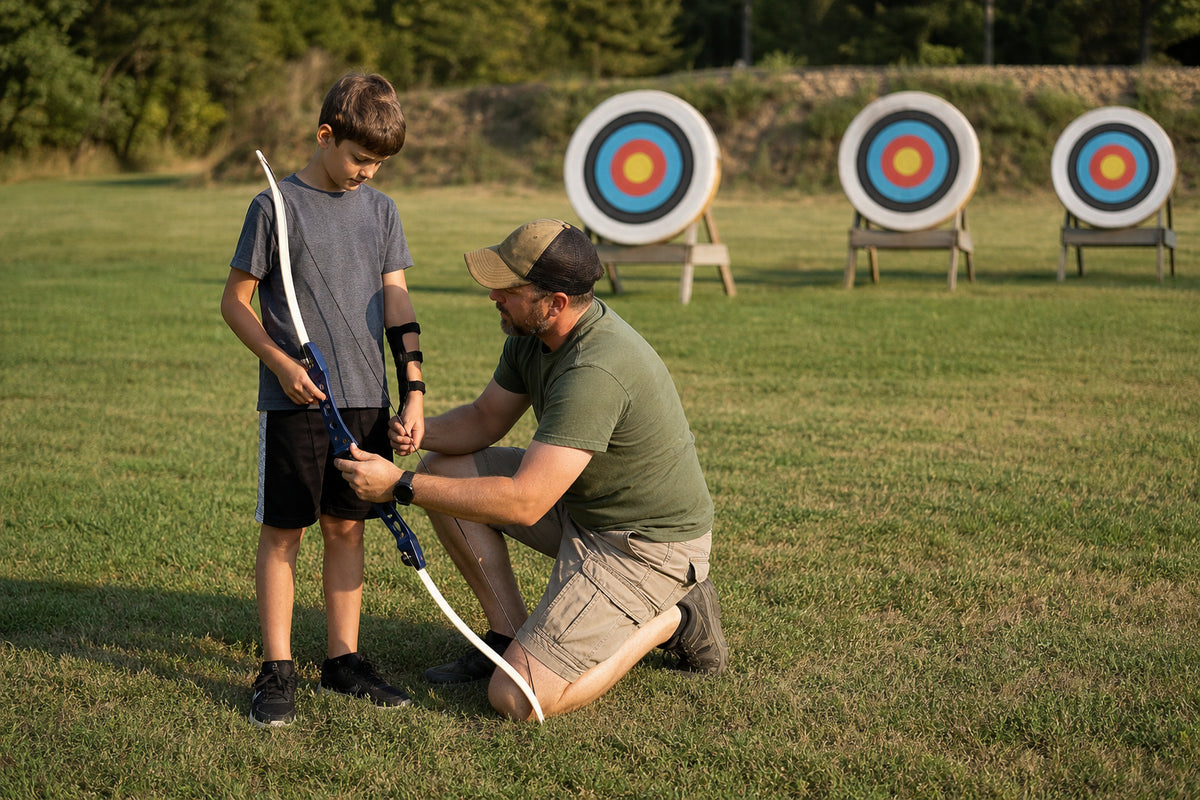
Getting a young archer set up correctly makes an enormous difference in how quickly they progress and how much they enjoy the sport. The wrong draw weight, poorly fitted equipment, or an incorrect draw length can build bad habits or cause discouragement before the first real session is finished. This guide walks parents and coaches through fitting, setting up, and safely getting a young archer shooting with good form from day one.
Why Fit Matters Before the First Shot
Before a young archer picks up a bow, three factors should shape how it's fitted: physical size, age and strength, and the context in which they'll be shooting. These three variables affect draw length, draw weight, and how the equipment should be set up.
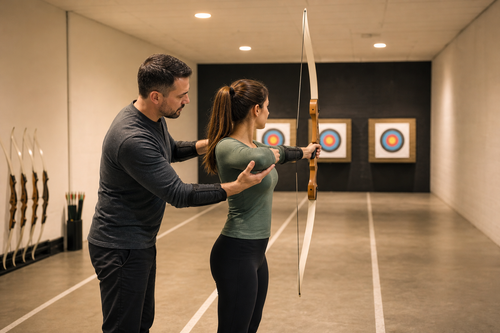
- Draw length: This is the most critical measurement. A bow set to the wrong draw length will cause a child to anchor incorrectly, strain their shoulder, and develop compensations that are difficult to unlearn. Draw length is measured from the nocking point to the grip pivot point at full draw. For youth shooters, this should be measured by a coach or pro shop — not estimated by age alone.
- Draw weight: Youth archers almost always start with too much draw weight. A bow that's too heavy to draw smoothly will cause them to torque the bow, punch the trigger, or collapse at full draw. Starting light and building strength over months is far more effective than starting heavy.
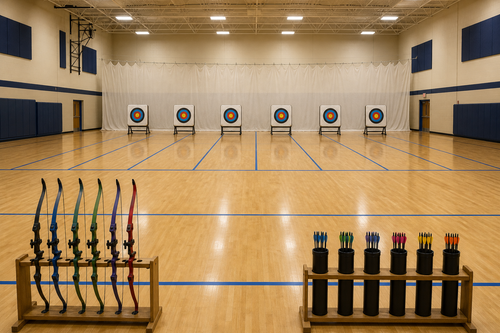
- Shooting context: Is the child joining a school or club program, shooting recreationally in the backyard, or showing early competitive interest? Each scenario affects how a coach will set the bow up and how much adjustment room matters.
A Quick Note on Bow Types
Youth archers typically shoot a recurve, a compound, or occasionally a traditional stick bow or longbow, and each handles and sets up a little differently — a recurve is the usual starting point in club and school programs, a compound is more common in youth hunting and 3D programs, and traditional bows show up mostly in informal or historical settings. A coach or program director is best placed to say which fits a specific child's situation; this guide focuses on getting whatever bow a young archer is using fitted and set up correctly.
Measuring Draw Length and Setting a Safe Draw Weight
For most children starting out, draw weights between 10 and 20 pounds are appropriate for recurves; younger or smaller children may start even lower. For youth compound shooters, a coach will typically look for an adjustable draw weight range rather than a fixed weight, since the ability to increase draw weight as the child develops strength matters far more than starting at a weight that looks impressive on paper but causes poor form.
Children grow fast, so equipment with genuine adjustability — interchangeable limbs on a recurve riser, or draw length modules on a compound cam — keeps a bow fitted correctly for longer. Bow length also affects stability and string angle: for recurves, a bow between 54 and 62 inches suits most youth archers in the 8–14 age range, depending on their draw length, since a bow that's too short creates a severe string angle at full draw, increasing finger pinch and reducing accuracy.
Setting Up Youth Archery Equipment Correctly
Even correctly fitted equipment can underperform if it isn't set up properly. Here are the key setup steps that apply to most youth situations:
- Have draw length measured by a knowledgeable coach or pro shop technician before configuring a bow.
- Set brace height within the manufacturer's recommended range and check it before every session, as strings can stretch during the break-in period.
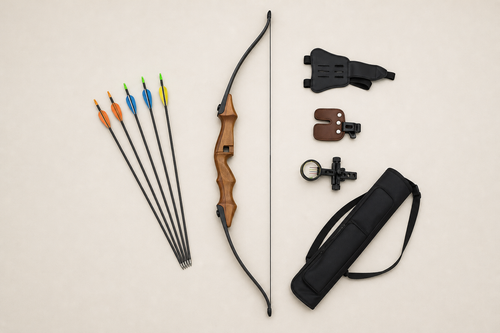
- Ensure arrows are correctly spined for the draw weight and draw length of the shooter. Under-spined arrows cause paradox issues that look like form problems.
- Fit the armguard snugly but without restricting circulation — it should stay in place through repeated shots. Archery accessories like armguards and grip protection can make a real difference in comfort and consistency for newer shooters.
- Adjust the arrow rest and nocking point so the arrow sits level or very slightly above center shot.
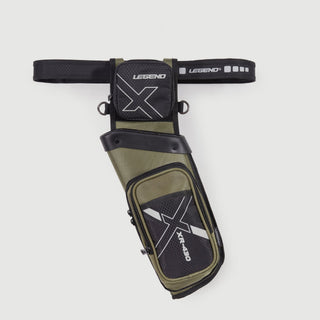
For parents transporting equipment, an archery backpack designed to carry a takedown recurve and accessories can simplify the trip to and from the range considerably.
Common Fit and Safety Mistakes to Avoid
- Overestimating draw weight: This is the most common mistake. A child who can't draw the bow smoothly will develop compensations that are genuinely difficult to correct later.
- Skipping the draw length measurement: Setting up a bow without a proper draw length measurement is essentially guessing. It's a measurement that takes two minutes at a pro shop and affects everything else.
- Using oversized equipment "to grow into": An oversized bow creates immediate form problems and is harder to shoot safely. Proper fit now matters more than future-proofing.
- Ignoring arrows: Arrows are half the equation. Incorrectly spined or adult-length arrows cut down to fit a child are common — and they behave differently than arrows built to the correct spine and length from the start.
Frequently Asked Questions
How do I know what draw weight is right for my child?
A general starting point for most children between ages 8 and 12 is somewhere between 10 and 20 pounds. Smaller or younger children may start even lower. The practical test is whether they can draw the bow smoothly to their anchor point without straining, shaking, or twisting their body. If they can't, the weight is too heavy. A coach or pro shop can assess this in person far more accurately than any weight-by-age chart.
How is a young archer's draw length measured?
Draw length is measured from the nocking point to the grip pivot point at full draw, and it's best done in person by a coach or pro shop rather than estimated from a child's age or height. Getting this number right is the single biggest factor in whether a young archer anchors and releases consistently.
What should I check before a young archer's first session?
Confirm draw length has been measured, brace height is within the manufacturer's range, arrows are correctly spined for the shooter's draw weight and length, and the armguard fits snugly without restricting circulation. These checks take a few minutes and prevent most of the early frustration that causes kids to lose interest.
What's the most common mistake parents make when setting up a young archer?
Setting the draw weight too high is the single most common problem. It leads to poor form almost immediately, and correcting those habits takes far more time than simply starting at the right weight from the beginning.
Conclusion
Getting a young archer's setup right comes down to accurate fit, an appropriate draw weight, and a few setup habits repeated before every session. Measure before adjusting anything, start lighter than feels necessary, and recheck fit often as the child grows. A young archer whose equipment fits them correctly is far more likely to stick with the sport and develop real skill over time. The same fit-first approach applies to adult beginners too — see our guide to setting up your first archery bow for the equivalent walkthrough.