Skip to content
 cust@legendarchery.com
 302 503 5767
 Westfield IN 46074


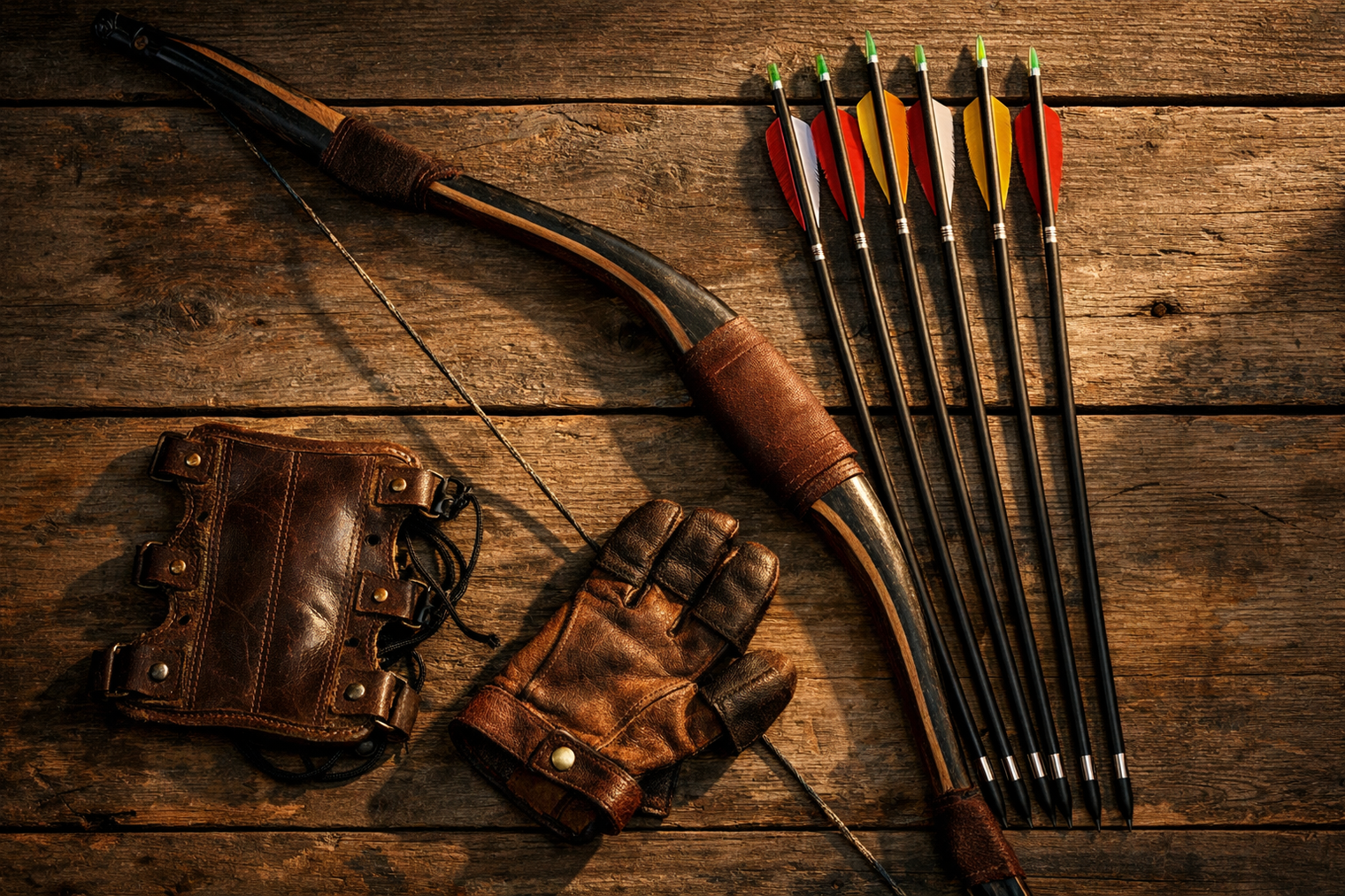
Most people know archery involves a bow and an arrow. Far fewer know that the sport predates written history, that the human body adapts structurally to practise it, or that its Olympic format has changed dramatically over the past century. Whether you are picking up a bow for the first time or you have been shooting for years, these facts offer a fresh lens on a discipline that never stops being fascinating.
1. Archery Is One of the Oldest Surviving Sports
Archaeological evidence places the earliest bows at roughly 10,000 years old, discovered in northern Europe. Archery predates agriculture in some regions, meaning humans were honing this skill before they settled in permanent communities. That continuity from ancient survival tool to modern competitive sport is almost unmatched in human history.
2. The Word "Archer" Has Latin Roots
The term comes from the Latin arcus, meaning bow or arc. The same root gives us words like "arc" and "arcade." English inherited the word through Old French during the medieval period, when mounted archers were a decisive military force across Europe and Asia.
3. Archery Was Removed from — and Returned to — the Olympics
Archery featured in the 1900, 1904, 1908, and 1920 Summer Olympics, then disappeared entirely until 1972. The gap lasted over fifty years. When it returned, the format had modernised significantly, with standardised distances and equipment rules that transformed it into the precision sport seen today. It has remained a permanent fixture ever since.
4. The Human Body Physically Adapts to Repeated Practice
Serious recurve and compound archers often develop measurable asymmetry in their shoulder and upper-back musculature over years of consistent training. The drawing arm and the bow arm both work under very specific loads, and the body responds accordingly. This is part of why coaches emphasise correct form from day one — bad habits compound alongside the muscle development.
5. "Robin Hood" Is a Real Archery Term
Splitting one arrow with another is not just movie legend. It happens in competitive shooting and has a proper name: a Robin Hood. It occurs when a second arrow hits the nock of an already-embedded arrow with enough force to split it or lodge inside it. It is celebrated, but it also destroys both arrows — a costly moment of brilliance.
6. Compound Bows Were Only Invented in the 1960s
Holless Wilbur Allen filed the patent for the compound bow in 1966, making it a genuinely modern invention in a sport with ancient roots. The eccentric cam system that lets the draw weight "let off" near full draw was revolutionary. It allowed shooters to hold at full draw for longer without muscle fatigue, improving accuracy in hunting and target shooting alike. If you want to explore modern compound and recurve options, Legend Archery's online shop carries a wide range of both styles.
7. Arrow Spine Is a Science, Not a Guess
Every arrow flexes as it leaves the bow — this is called the archer's paradox. The spine rating of an arrow describes its stiffness and determines how much it bends under the force of release. Match the spine incorrectly to your draw weight and draw length, and accuracy suffers regardless of how well you shoot. Arrow selection is one of the most technically detailed decisions in the sport.
8. Mounted Archery Is a Competitive Discipline in Its Own Right
Shooting from horseback at full gallop is not a lost art. Mounted archery competitions are held internationally, governed by bodies such as the International Mounted Archery Federation. Competitors must nock, draw, aim, and release within seconds while managing a moving horse. It remains one of the most demanding combinations of two separate athletic skills in any sport.
9. The Longest Recorded Flight Shot Exceeds Two Kilometres
Flight archery — where the sole goal is maximum distance rather than accuracy — has produced extraordinary records. Shots exceeding 1,400 metres have been recorded using traditional-style equipment, while specialist flight bows with modern materials have pushed distances even further. These bows bear little resemblance to target or hunting bows; they are optimised entirely for energy transfer and aerodynamics.
10. Archery Is Recognised as One of the Most Accessible Sports for People with Disabilities
Para-archery has been part of the Paralympic Games since the very first edition in Rome in 1960. The sport can be adapted for a wide range of physical conditions, including shooting from a wheelchair or using adaptive release aids. World Archery governs both able-bodied and para classifications under a unified framework, reflecting how versatile the mechanics of archery genuinely are.
Why These Facts Matter Beyond Trivia
Understanding the depth of archery's history and science tends to improve how people approach practice. Knowing that arrow spine is a physical phenomenon, not a preference, encourages beginners to take equipment matching seriously. Knowing that the sport survived fifty years of Olympic absence and came back stronger suggests a level of cultural staying power worth respecting. If you are just starting out and want to read more background on the sport's lesser-known history, the Legend Archery blog covers additional archery facts worth exploring.
Common Mistakes Beginners Make When Learning About Archery
Getting the context of the sport wrong early on can set unrealistic expectations. Here are the most frequent misconceptions new archers carry:
- Assuming compound bows are always better than recurves. Each style serves different goals, and recurve shooting develops fundamentals that compound shooting can mask.
- Ignoring arrow selection entirely. Beginners often buy whatever arrows come with a starter kit without checking spine compatibility. Mismatched arrows are one of the leading causes of early frustration.
- Underestimating the physical demands. Because archery looks calm, new shooters often skip conditioning. The shoulder and back fatigue experienced after a full practice session surprises almost everyone in their first month.
- Treating form as optional in early stages. Muscle memory forms quickly. Poor habits embedded in the first few weeks take significantly longer to undo than they took to form.
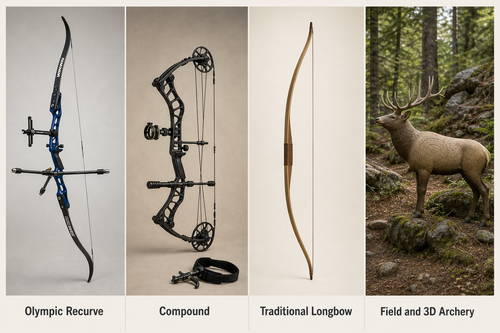
- Confusing Olympic recurve with barebow. Both use recurve bows, but Olympic recurve allows a sight, stabiliser, and clicker. Barebow does not. They are scored and classified separately in competition.
How to Build a Genuine Understanding of the Sport
Reading about archery covers context, but there is no substitute for time on the range. A few practical approaches that experienced archers recommend:
- Spend at least the first month focusing exclusively on form drills rather than scores.
- Ask an experienced coach or pro-shop staff to assess your arrow spine before buying in volume.
- Watch competition footage — especially recurve barebow and traditional longbow events — to appreciate how varied the discipline actually is.
- Keep a practice log. Progress in archery is incremental and easy to miss without a record to reference.
For those who are ready to invest in proper equipment, browsing quality outdoor archery supplies with knowledgeable support makes the early stages considerably less frustrating.
Frequently Asked Questions
How old is archery really?
The oldest confirmed bows date back approximately 10,000 years, though arrowheads suggest projectile hunting may be even older. Archery likely predates agriculture in several parts of the world.
Why did archery disappear from the Olympics for so long?
After 1920, a lack of standardised international rules made competition between countries inconsistent and difficult to organise fairly. It was not until World Archery established a unified format that the sport could return as a credible Olympic discipline in 1972.
Does arrow spine really affect accuracy that much?
Yes, significantly. An arrow with the wrong spine for your setup will flex unpredictably through the archer's paradox, causing inconsistent groupings even when your form is sound. It is one of the first technical details worth getting right.
Can someone with no athletic background do well in archery?
Archery rewards consistency, patience, and attention to detail more than raw athleticism. Many successful competitive archers came to the sport without a strong athletic background. Physical conditioning helps, but it is far from the only path to improvement.
A Final Thought
Archery carries 10,000 years of human ingenuity in a sport that still rewards the same qualities it always has: patience, precision, and a willingness to understand the tools you are working with. The facts above are a starting point. The range is where the real education happens.