Skip to content
 cust@legendarchery.com
 302 503 5767
 Westfield IN 46074


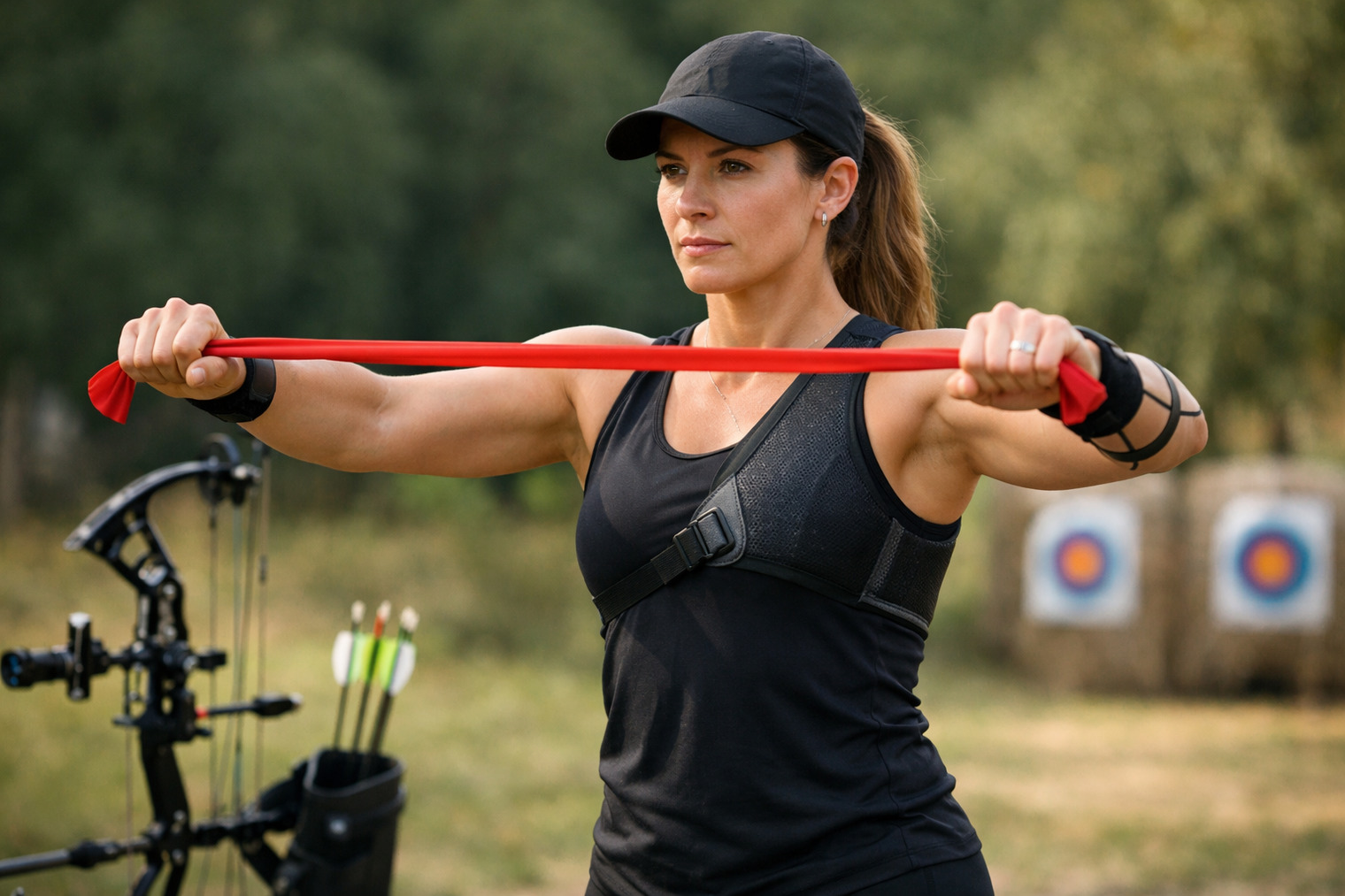
If your groups are inconsistent or you fatigue during longer sessions, the problem is often physical rather than technical. Archery exercises target the specific muscle groups that control your draw, hold, and release — and building that foundation pays off faster than most archers expect. This guide breaks down what to train, how to train it, and what to avoid.
Why Physical Training Matters for Archery
Archery looks deceptively passive from the outside. In reality, holding a drawn bow recruits the rotator cuff, rhomboids, trapezius, serratus anterior, and core stabilisers simultaneously. Shooting 100 to 150 arrows in a practice session puts significant cumulative load on those structures.
Archers who neglect targeted conditioning tend to compensate with poor form under fatigue — creeping the draw hand forward, collapsing the bow shoulder, or gripping the bow too tightly. Structured physical preparation reduces those compensations and protects against overuse injuries that are common in the shoulder and elbow.
[product-tabs]
Beyond injury prevention, stronger and more enduring muscles allow you to hold at full draw longer and more steadily. That extra stability has a direct and measurable effect on accuracy, particularly at longer distances or in competition conditions where nerves already increase muscle tension.
Core Principles of Archery-Specific Fitness
Before jumping into specific movements, it helps to understand what archery actually demands from the body. Training randomly at the gym will produce general fitness but not the specific neuromuscular control that archery requires. Keep these principles in mind:
- Scapular stability comes first. The shoulder blade must stay set and controlled through the entire draw cycle. Exercises that train scapular retraction and depression are foundational, not optional.
- Strength and endurance both matter. You need enough raw strength to draw your bow cleanly, but also the muscular endurance to repeat that movement dozens of times without degradation.
- Unilateral training is more specific than bilateral. Because archery loads one side of the body differently from the other, single-arm and single-side exercises tend to transfer better than two-handed movements.
- Core stability is not the same as core strength. Archery requires the core to resist rotation and maintain posture under load — anti-rotation and isometric holds are more relevant than crunches or sit-ups.
- Recovery matters as much as training load. Tendons and rotator cuff tissue adapt more slowly than muscle. Progressing draw weight or training volume too quickly is one of the most common sources of injury in archery.
Practical Archery Exercises to Build Shooting Strength
1. Band Pull-Aparts
Hold a resistance band at shoulder height with both hands, arms extended. Pull the band apart by driving both hands out to the sides, squeezing the shoulder blades together at the end range. This directly trains the rhomboids and rear deltoids — the muscles responsible for keeping the draw elbow moving in the right plane. Start with a light band and focus on controlled movement rather than speed.
2. Single-Arm Cable or Band Rows
Using a cable machine or anchored band, perform a slow row with the draw-side arm. Focus on initiating the movement from the shoulder blade rather than the elbow. This mirrors the back-tension technique that experienced archers use to trigger a clean release. Three sets of 12 to 15 reps with a moderate load works well for most archers.
3. Rotator Cuff External Rotation
With the elbow bent at 90 degrees and held against your side, use a light band or dumbbell to externally rotate the forearm away from the body. This is one of the most important movements for long-term shoulder health in archery. The external rotators are chronically underworked in most people and are frequently the site of overuse injuries in archers who increase draw weight too quickly.
4. Bow-Arm Plank Holds
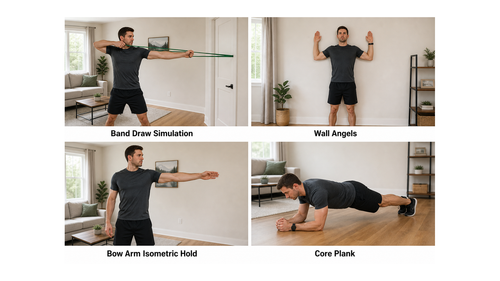
A standard forearm plank held for 30 to 60 seconds builds the anti-rotation core stability that keeps your torso square through the shot. Progress to a side plank to train lateral stability — particularly useful for archers who notice their hip drifting during the draw or at full hold.
5. Face Pulls
Using a cable machine with a rope attachment set at head height, pull the rope toward your face while driving the elbows wide and high. This trains external rotation under load and directly reinforces the position the draw shoulder should be in at full draw. It is a staple exercise in many sport-specific shoulder programmes and transfers well to archery.
6. Resistance Band Bow Simulation
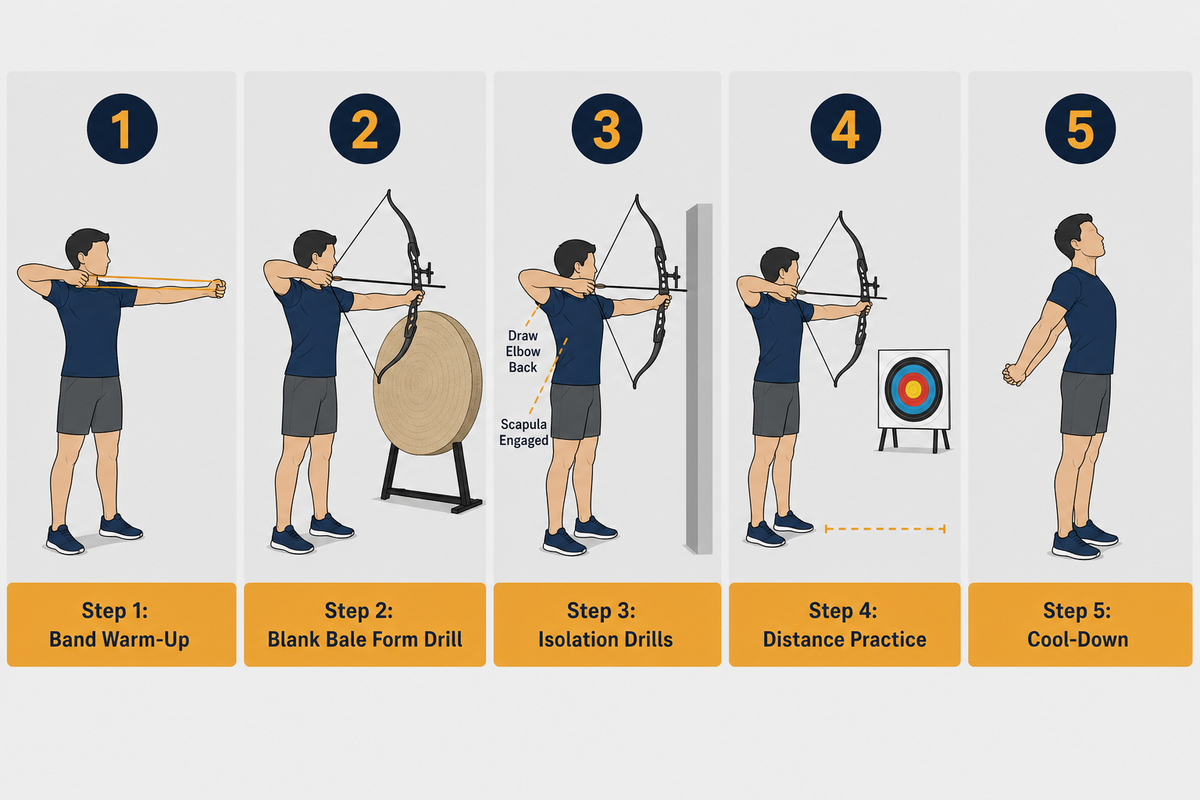
Anchor a resistance band at a fixed point and mimic your draw stroke from anchor to full draw position. Hold briefly at the end of the movement. This exercise trains the exact motor pattern used during shooting without the cognitive load of aiming, making it useful for reinforcing back-tension and consistent anchor points. Use it as a warm-up before shooting or as a supplementary drill on non-shooting days.
7. Dead Hangs and Shoulder Mobility Work
Hanging from a pull-up bar for 20 to 30 seconds decompresses the shoulder joint and improves overhead mobility. Archers who shoot compound bows with high draw weights, or recurve archers who shoot with a high draw arm, often benefit significantly from improved shoulder mobility and capsule health.
Common Mistakes Archers Make with Physical Training
- Training the front of the body more than the back. Push-ups and bench press are fine for general fitness, but they reinforce internal shoulder rotation. Archers need a higher volume of pulling and external rotation work to maintain balance and protect the shoulder.
- Ignoring the bow arm side. The bow arm works just as hard as the draw arm. It must hold steady under load, absorb the bow's forward thrust at release, and maintain consistent wrist and elbow alignment. Training only the draw side creates muscular imbalances.
- Progressing draw weight without building the prerequisite strength. Jumping to a heavier bow before the supporting muscles are ready is the most reliable path to a rotator cuff injury. Fitness should lead equipment progression, not follow it.
- Skipping a warm-up before shooting sessions. Cold muscles and tendons are more prone to strain. Even five minutes of band work and shoulder circles before picking up the bow reduces injury risk and improves early-session form.
- Treating archery practice as the only training needed. Shooting arrows does develop shooting-specific conditioning, but it cannot replace structured off-bow training — especially for archers who only shoot once or twice per week.
Building a Weekly Routine
You do not need to spend hours in the gym to see real improvement. Two dedicated training sessions per week, each lasting 20 to 30 minutes, can produce meaningful results within a few months. A simple structure might look like this:
- Session A: Band pull-aparts, external rotation, face pulls, plank holds
- Session B: Single-arm rows, bow simulation with band, dead hangs, side planks
Add a 5-minute warm-up of shoulder circles, thoracic rotation, and light band work before every shooting session. As your shooting volume increases — particularly when preparing for competition — consider adding a third session and including more endurance-focused holds and lighter band work with higher repetitions.
If you are also updating your equipment to match your improved physical capacity, browsing Legend Archery's online shop is a practical starting point for finding bows and accessories suited to your current level.
Frequently Asked Questions
Do I need to go to a gym to train for archery?
No. A set of resistance bands and a small amount of floor space is enough to cover most of the essential movements. Bands are particularly well-suited to archery training because they provide accommodating resistance — the tension increases as you extend into the draw position, which mirrors what the muscles experience during an actual shot.
How long before physical training actually improves my shooting?
Most archers notice reduced fatigue within four to six weeks of consistent training. Improvements in hold steadiness and shot consistency typically become apparent over a two to three month period. Tendons and connective tissue take longer to adapt than muscle, so patience and progressive overload matter more than intensity.
What mistakes do beginners usually make when starting archery fitness training?
The most common errors are starting with resistance that is too heavy, focusing exclusively on the draw arm, and skipping mobility work entirely. Beginners often underestimate how much the shoulder and upper back need to be specifically conditioned before increasing bow draw weight. Starting light, moving correctly, and building volume gradually will produce better long-term outcomes than rushing the process.
Can I do these exercises even if I'm already shooting regularly?
Yes, and it is recommended. Regular shooting builds shooting-specific endurance but does not adequately address strength imbalances or rotator cuff health. Off-bow training complements rather than competes with your shooting practice. Just manage the total volume carefully during periods of high shooting load to avoid overtraining the shoulder.
Putting It Together
Archery exercises are not a substitute for time on the range — but they are what allows your range time to compound over months and years without injury interruptions. Focus on scapular control, external rotation, and core stability, keep the training consistent, and let your shooting reflect the physical foundation you are building. If you are looking to pair your training with the right equipment, Legend Archery's outdoor archery supplies covers a broad range of gear suited to archers at every stage of development.