Skip to content
 cust@legendarchery.com
 302 503 5767
 Westfield IN 46074


Getting into archery feels exciting right up until you realise how much gear exists and how little consensus there seems to be online. This ultimate beginners guide to archery cuts through the noise with practical, sequenced advice — what to learn first, what to buy second, and what mistakes to sidestep entirely. Whether you are drawn to target shooting, field archery, or just backyard practice, the foundations are the same.
Why Starting Correctly Matters More Than Starting Fast
Archery has a low barrier to entry but a surprisingly high penalty for poor early habits. Unlike many sports, bad form in archery tends to get reinforced with repetition rather than corrected by it. Drawing too much weight too soon is the single most common reason new archers quit — it causes shoulder fatigue, teaches a flinching release, and makes accuracy nearly impossible to develop. The good news is that starting correctly is not complicated. It just requires understanding a few fundamentals before touching the gear.
Understanding the Main Bow Types
Before spending a single dollar, you need to understand which bow category fits your goals. Each type has a distinct feel, learning curve, and equipment cost.
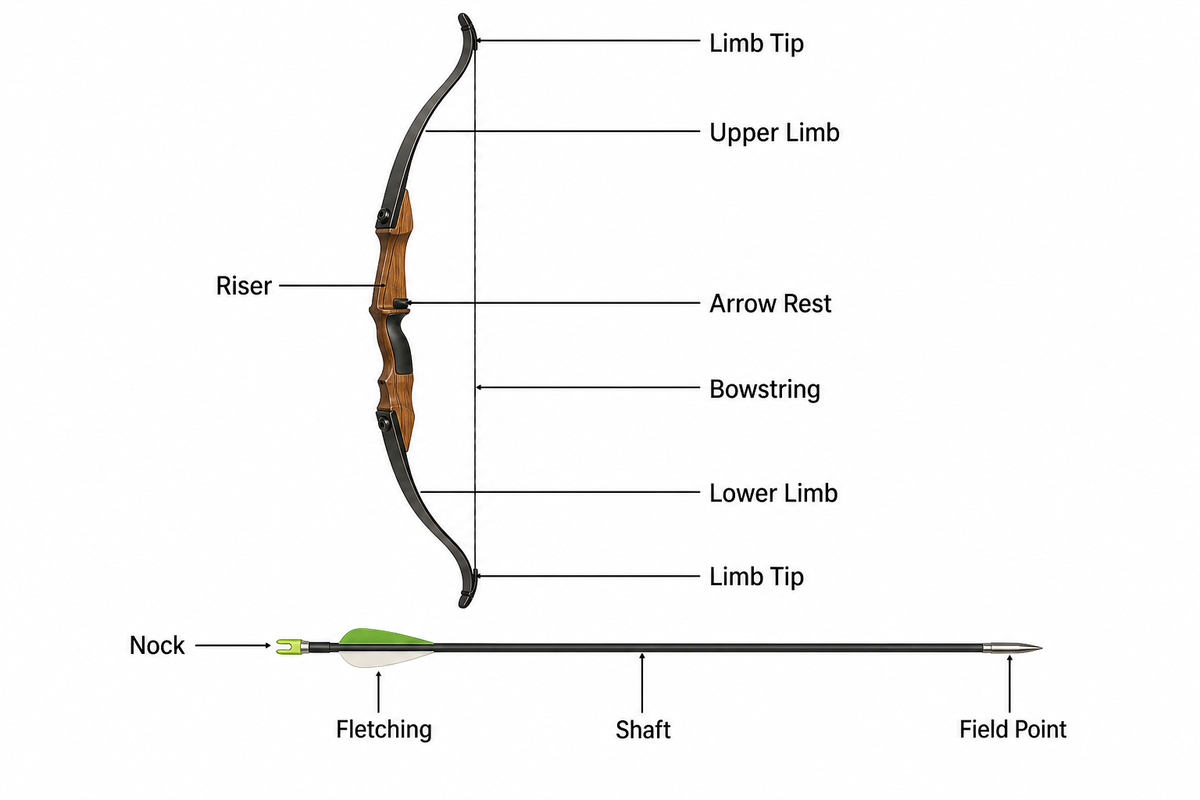
- Recurve bow: The most widely recommended starting point. Simple mechanics, forgiving on budget, and used in Olympic competition. A recurve teaches form honestly because there is no mechanical advantage hiding your errors.
- Compound bow: Uses a cam and pulley system to reduce the holding weight at full draw. Popular for hunting and 3D archery. Slightly more complex to set up but highly accurate once tuned correctly.
- Traditional longbow: No sights, no stabilisers — just the archer and the bow. A rewarding challenge, but not the fastest path to consistent accuracy for most beginners.
- Barebow recurve: A recurve shot without sights. A middle ground between traditional feel and modern equipment that is growing in popularity at club level.
Most archery coaches recommend a recurve bow for first-time shooters because the equipment is accessible, affordable, and the form it demands transfers well to any bow type you pick up later.
Core Principles Every New Archer Must Understand
Draw Weight
Draw weight is the force required to pull the bowstring to full draw, measured in pounds. New archers almost always choose too much. A common guideline is to start at a draw weight where you can complete 30 to 40 clean shots without your form breaking down. For most adults, that sits somewhere between 20 lb and 30 lb on a recurve. Children and younger teens typically start lower. You can always move up — you cannot undo months of reinforced bad technique caused by overpowering yourself.
Draw Length
Draw length is the distance from the grip to the anchor point when you are at full draw. An incorrect draw length causes inconsistent anchor points, poor string alignment, and string slap on the forearm. A rough estimate of your draw length is your full wingspan in inches divided by 2.5, though a proper measurement at an archery shop is always more reliable.
Dominant Eye vs Dominant Hand
Most archers shoot on the same side as their dominant eye, not their dominant hand. Eye dominance is more important than hand dominance in archery because your aiming eye does the work. If your dominant eye and dominant hand are on opposite sides, it is worth doing a simple dominant eye test before deciding which-handed bow to buy. Getting this wrong means having to relearn everything later.
Stance and Posture
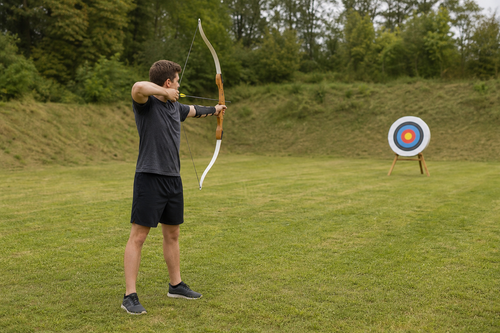
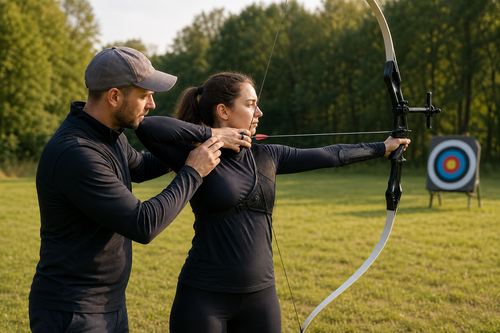
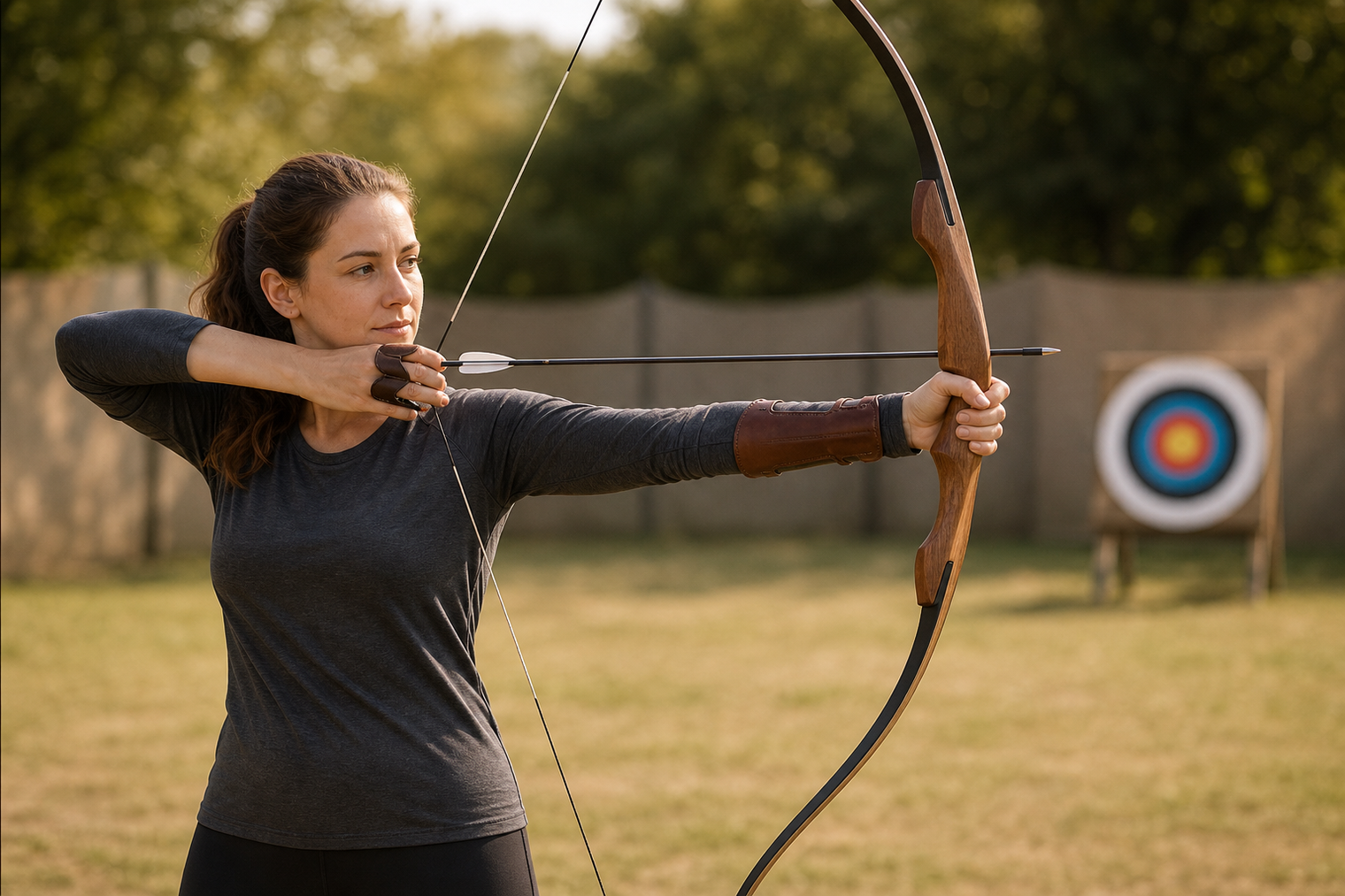
A square or open stance with shoulders relaxed and the bow arm slightly bent at the elbow forms the foundation of consistent shooting. New archers often lock their bow arm straight, which leads to string contact with the inner forearm — a painful and discouraging experience. A good armguard is non-negotiable early on, not because string slap is inevitable, but because it provides feedback and confidence while your form develops.
Practical Guidance: Building Your First Setup
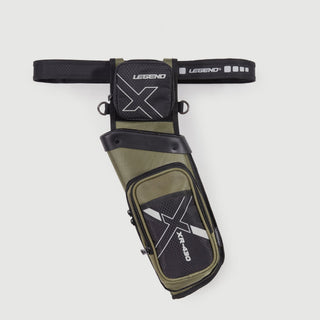
Once you understand the fundamentals above, you are ready to think about gear. A beginner recurve setup does not need to be expensive. A well-made starter bow, a set of matched arrows, a finger tab or glove, an armguard, and a quiver will get you shooting properly. Quality arrows matched to your draw length and bow weight matter more than most new archers expect — an arrow that is too lightly spined for your bow will fly erratically regardless of how good your form is.
- Bow: Choose a takedown recurve so you can swap limbs as you progress without replacing the entire bow.
- Arrows: Carbon arrows in the correct spine rating for your setup. Ask for guidance on spine selection before buying.
- Tab or glove: Protects your draw fingers and promotes a cleaner release than bare fingers.
- Armguard: Standard protection while your form develops.
- Target and backstop: A foam boss or compressed straw target rated for your draw weight.
If you are unsure where to start browsing gear, Legend Archery's online archery shop carries a broad selection of beginner-appropriate equipment across all bow types and budgets.
Common Mistakes New Archers Make
Understanding what goes wrong early helps you avoid the frustration that causes most beginners to lose interest within the first few months.
- Starting with too much draw weight. Already covered above, but worth emphasising — this is the number one issue coaches see with new archers.
- Buying mismatched arrows. Arrow spine must be matched to your bow's draw weight and your draw length. Generic arrows sold without this guidance are usually a poor fit.
- Skipping form practice to focus on distance. Shooting at 5 to 10 metres with good form builds better habits than shooting at 20 metres with poor form. Expand your distance only once your groupings are consistent at shorter range.
- Ignoring the anchor point. A repeatable anchor point — where the string and hand come to rest on your face at full draw — is essential for consistent accuracy. Many beginners treat it casually.
- Releasing too soon (anticipating). Jerking the release before reaching full draw is a tension response. It causes shots to fly low and left (for right-handed archers) and is difficult to correct once embedded.
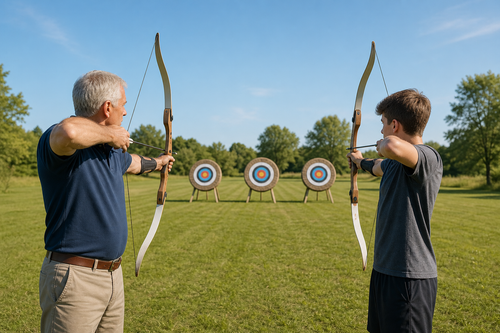
- Not getting a lesson. Even one or two sessions with a qualified coach shortens the learning curve dramatically. Most archery clubs offer beginner courses that cover the fundamentals in a structured way.
Progressing Beyond the Basics
Once you are shooting consistently at short distance with clean form, progression becomes about refinement rather than radical change. This is when archers start exploring sights, stabilisers, clickers, and different arrow types. It is also the point where understanding your bow's tuning — bare shaft testing, paper tuning, nocking point placement — becomes relevant and genuinely interesting. Compound bow shooters will want to explore release aids at this stage, which significantly change the feel of the shot cycle.
For those who want to explore the full range of equipment options as they progress, browsing new archery products can help you understand what is available at each level without committing to purchases before you are ready.
Frequently Asked Questions
What does a beginner actually need before buying their first bow?
Before purchasing anything, a new archer should understand draw length, confirm eye dominance, and have a realistic draw weight target in mind. Knowing your bow type preference — recurve, compound, or traditional — also narrows the decision significantly. If you can, get a brief lesson or visit a local club to try equipment before buying.
Who is this kind of guide most useful for?
Anyone who has decided they want to try archery but feels overwhelmed by the equipment choices, terminology, and conflicting advice online. It is also useful for parents researching archery for their children, since youth sizing and draw weight requirements differ considerably from adult recommendations.
What beginner mistakes can I avoid by doing some research upfront?
The biggest avoidable mistakes are buying too much draw weight, purchasing arrows without checking spine rating, and skipping form fundamentals to shoot at longer distances too soon. Research before buying saves money and prevents the discouragement that comes from poorly matched equipment.
Should I learn form before buying gear, or buy gear first?
Ideally, both happen close together — but understanding the basics of stance, draw weight, and draw length before finalising a purchase means you are far less likely to buy the wrong setup. Many beginners buy first and then discover their arrows are mismatched or their draw weight is too heavy. A single beginner course or lesson before purchasing solves most of this.
Getting Started With Confidence
Archery rewards patience and deliberate practice. The archers who progress fastest are rarely those who bought the most equipment — they are the ones who spent time on form fundamentals early and matched their gear carefully to where they actually are, not where they hope to be. Start light, stay consistent, and treat every session at short distance as useful rather than beneath you. The distance and accuracy come naturally from there.
When you are ready to build your setup, outdoor archery supplies from Legend Archery covers everything from starter recurve packages to arrows, accessories, and targets suited to new shooters.