Skip to content
 cust@legendarchery.com
 302 503 5767
 Westfield IN 46074


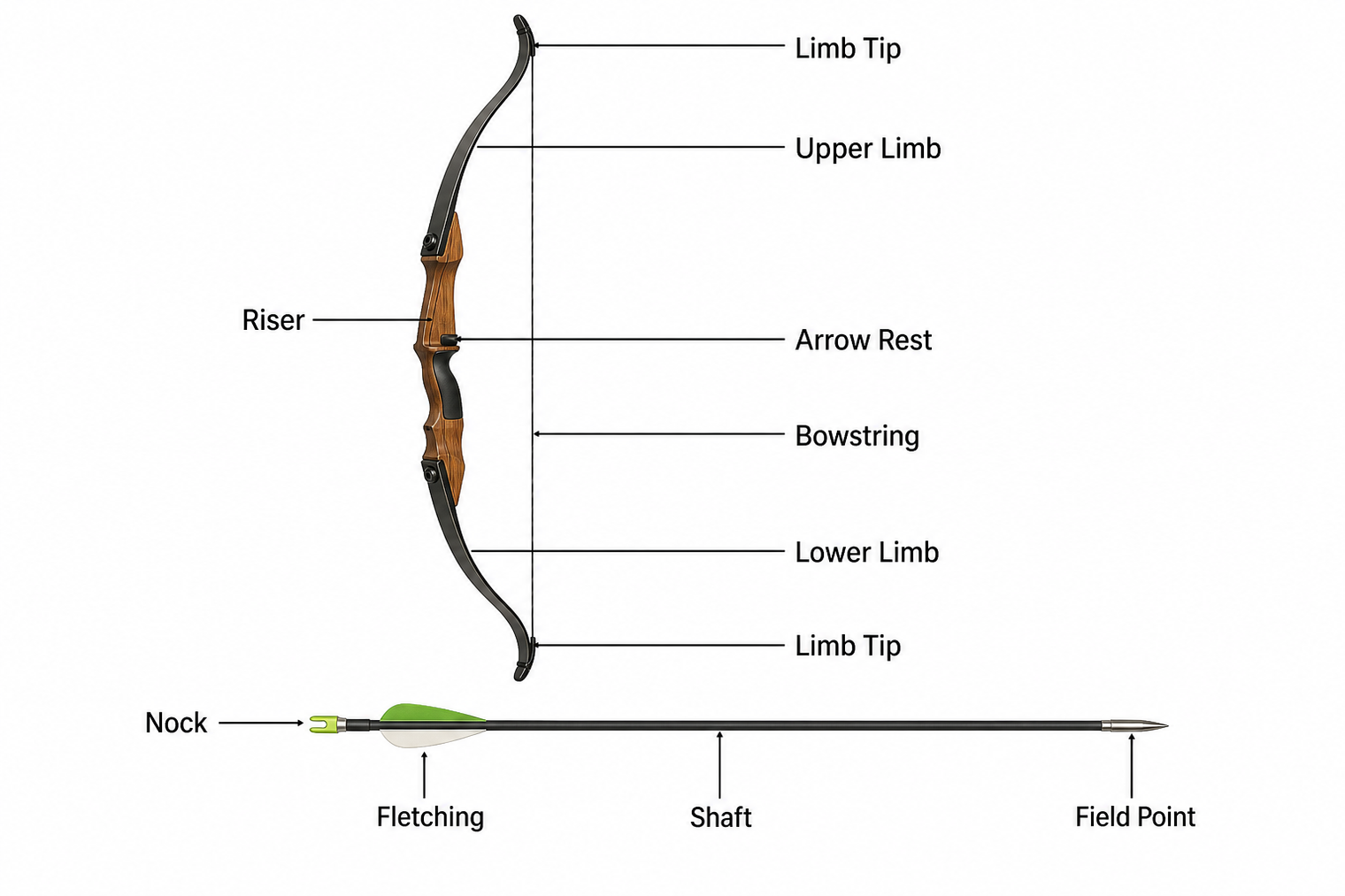
A bow and arrow looks simple, but the way it stores and releases energy explains almost everything about shooting well. This beginner's guide is for anyone new to archery who wants to understand the equipment before buying or shooting it. It covers how the system works, the main parts and bow types, and what that means for your first sessions.
What Is a Bow and Arrow, Really?
At its core, a bow and arrow is an energy transfer system. The archer draws the bowstring back, bending the limbs and storing potential energy. The moment the string is released, that energy converts to kinetic energy and drives the arrow forward. Simple in concept, but the mechanics behind accuracy, consistency, and equipment selection run surprisingly deep — and understanding the fundamentals makes every session on the range more productive.
Why Understanding This System Matters
Archery attracts people from all backgrounds: competitive athletes, hunters, historical enthusiasts, and casual hobbyists. But beginners who skip the foundational knowledge tend to develop bad habits early, choose the wrong equipment, or injure themselves unnecessarily. Knowing how the system works — not just what to buy — gives you a durable base to build on regardless of which discipline you pursue.
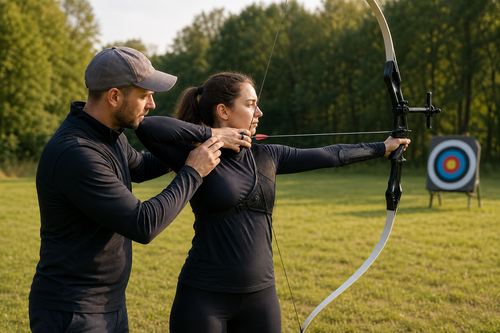
It also helps you communicate with coaches and pro shop staff. If you can describe what your arrow is doing at the target and why you think it's happening, you get better advice faster. That shortcut alone saves months of frustrating trial and error.
The Core Components of a Bow
Every bow, regardless of style, shares a handful of essential parts. Understanding what each one does demystifies a lot of the jargon you'll encounter.
The Riser
The riser is the central handle section of the bow. It's where you grip the bow with your bow hand and where accessories like sights, arrow rests, and stabilizers attach. Risers are typically made from aluminum, carbon, or wood depending on the bow type and price point. A well-designed riser sits comfortably in the hand and keeps the bow balanced during the shot.
The Limbs
The limbs extend from the top and bottom of the riser. When you draw the bowstring, the limbs flex and store energy. When you release, they snap back and transfer that energy to the arrow. Limb material — fiberglass, carbon, or laminated wood — affects how smoothly the bow draws and how efficiently it delivers energy. Most modern takedown bows allow you to swap limbs to change draw weight as your strength improves, which makes them an excellent long-term investment for new archers.
The Bowstring
The string connects the two limb tips and is what the archer draws back. Modern bowstrings are made from high-performance synthetic fibers like Dyneema or Fast Flight, which stretch very little and transfer energy efficiently. Traditional setups sometimes use natural materials, which have a different feel and require more maintenance. String condition matters more than beginners expect — a fraying or damaged string should be replaced before shooting.
The Arrow Rest and Shelf
The arrow needs to sit somewhere while you draw and aim. On traditional bows this is often a simple shelf cut into the riser. On modern recurves and compounds you'll typically see a separate rest — a small device that holds the arrow in position and minimizes contact during the shot, which improves consistency.
Arrow Anatomy: More Than Just a Stick
Arrows are not interchangeable sticks. Each component affects how the arrow flies, how it groups at distance, and whether it's safe to shoot from your specific bow.
- Shaft: The main body of the arrow. Made from wood, aluminum, carbon, or composite materials. Shaft stiffness — called spine — must match your bow's draw weight and arrow length. A mismatched spine causes erratic flight.
- Nock: The plastic clip at the back of the arrow that attaches to the bowstring. It must seat snugly but release cleanly at the shot.
- Fletching: The fins near the back of the arrow that stabilize it in flight. Traditional bows often use real feathers; modern arrows typically use plastic vanes. Fletching shape and size affect both speed and stability.
- Point or Tip: The front end of the arrow. Field points are used for target practice; broadheads are designed for hunting. Never mix arrow weights or tip types when setting up a consistent practice session.
If you want to go deeper on how these components interact, the Legend Archery bow and arrow overview covers the topic in helpful detail.
The Main Types of Bows
Not every bow is built for the same purpose, and choosing the wrong style for your goals creates unnecessary frustration.
Recurve Bows
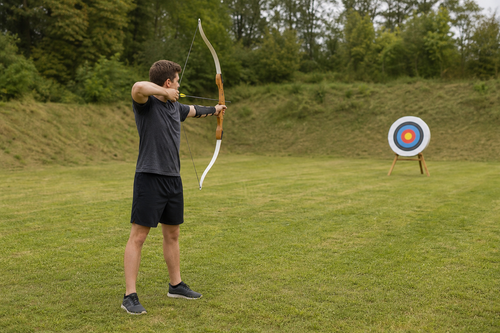
The recurve is the most widely used bow in modern target archery and the only bow style contested at the Olympic Games. The limb tips curve away from the archer when unstrung — that curve gives the design its name and increases the energy stored in the limbs relative to bow length. Recurves are available in a wide range of draw weights and are generally the recommended starting point for new archers because the technique transfers well to other styles and coaching resources are abundant.
If you're considering getting started, exploring a recurve bow is a practical first step for most archers.
Traditional Bows
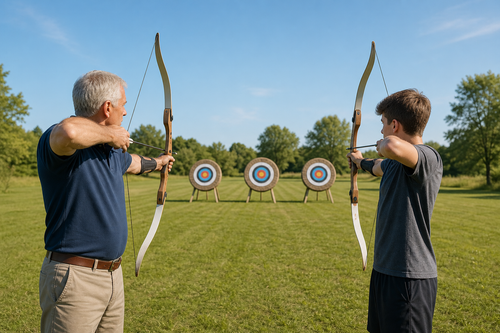
Traditional archery covers longbows, selfbows, and traditional recurves shot without sights or mechanical aids. The appeal is the direct connection to historical archery and the instinctive shooting style it develops. Traditional recurves in particular are a popular entry point because they're forgiving on budget but still reward good technique. If the barebow, back-to-basics experience interests you, a traditional recurve bow is worth a closer look.
Compound Bows
Compound bows use a system of cams and cables to reduce the holding weight at full draw — this is called let-off. An archer drawing a 60-pound compound might only feel 15 to 20 pounds at full draw, which allows longer aiming time and less physical fatigue. Compounds are popular in hunting and 3D archery but have a steeper learning curve in terms of setup and tuning. They are not typically recommended as a first bow unless you have direct access to a qualified technician for setup support.
Youth Bows
Purpose-built for younger or smaller-framed shooters, youth bows offer lower draw weights and shorter draw lengths that make learning safer and more enjoyable. Starting a child on an adult bow that's too heavy leads to poor form and discouragement. If you're buying for a young archer, purpose-built options designed around appropriate sizing make a genuine difference in how quickly they progress.
Common Mistakes Beginners Make
Most early-stage problems in archery trace back to one of the following:
- Choosing too high a draw weight: The most common beginner error. If you can't hold the bow at full draw comfortably, you can't aim properly, and you'll develop compensating movements that become habits. Start lighter than you think you need to.
- Mismatching arrow spine to draw weight: Arrows that are too weak or too stiff for your setup fly unpredictably. Always confirm arrow spine before purchasing.
- Skipping a physical warm-up: Archery uses muscles in the back, shoulders, and rotator cuff that most people underuse in daily life. Cold muscles are more prone to strain and produce less consistent shots.
- Ignoring form in favour of shooting volume: Repetition reinforces whatever habit you're currently practicing — good or bad. Ten shots with deliberate attention to technique are more valuable than a hundred rushed shots.
- Not getting the bow fitted or set up properly: Draw length, brace height, and nocking point position all affect how a bow feels and performs. A bow that isn't set up for your body measurements will fight you at every session.
Frequently Asked Questions
How do I know what draw weight to start with?
Most adult beginners do well starting between 20 and 30 pounds on a recurve. If you can draw, hold, and aim without your bow arm trembling or your form collapsing, the weight is appropriate. You can always increase as your back and shoulder muscles strengthen. Younger archers typically start even lower, often between 10 and 20 pounds depending on age and build.
Does arrow length matter, or can I use any arrow with any bow?
Arrow length absolutely matters. An arrow that is too short can fall off the rest during draw, which is a safety hazard. Too long and you sacrifice efficiency and accuracy. Arrow length is determined by your draw length plus a small safety margin — typically an inch or two beyond the back of the bow at full draw. Have a coach or shop measure your draw length before buying arrows.
What's the biggest form mistake that beginners don't notice themselves?
Gripping the riser too tightly. Most beginners white-knuckle the bow because it feels more controlled, but a tight grip introduces torque at the moment of release and scatters groups. The bow hand should be relaxed, with pressure only across the thumb pad, and the bow should be allowed to fall forward naturally after the shot. A wrist sling keeps the bow from hitting the floor without requiring a death grip.
Is it better to learn on a recurve or go straight to a compound?
For most people, starting on a recurve builds a cleaner foundation. The feedback from a recurve is more immediate — flaws in form show up directly in the arrow's flight, which accelerates learning. Compounds mask some errors through their mechanical advantages, which can delay the development of good technique. That said, if hunting is your primary goal, working with a qualified instructor on a properly fitted compound from the start is a reasonable path.
Getting Started With Confidence
Archery rewards patience and process over raw enthusiasm. Understanding how the equipment works — the limbs storing energy, the arrow spine matching draw weight, the release mechanics affecting flight — gives you a practical framework for diagnosing problems and improving steadily. If you're ready to look at equipment, start with a bow that fits your draw length and a draw weight you can handle comfortably, and go from there.