Skip to content
 cust@legendarchery.com
 302 503 5767
 Westfield IN 46074


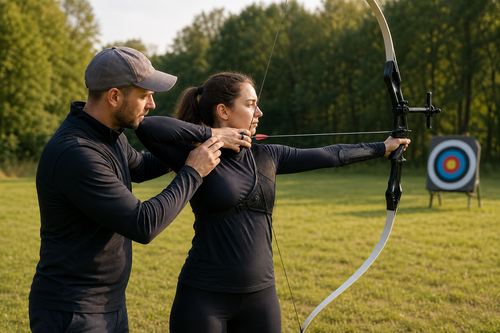
Many archers use the terms coach and instructor interchangeably, but they describe genuinely different roles. Knowing the difference between an archery coach and instructor helps you find the right person at the right stage of your development — whether you're picking up a bow for the first time or pushing toward competitive goals.
Why the Distinction Actually Matters
Hiring the wrong type of support is one of the most common and quietly expensive mistakes archers make. A beginner who works with a performance coach before they understand basic form can end up with ingrained bad habits that are harder to undo later. Conversely, a competitive archer who sticks with introductory instruction will plateau quickly because the feedback they receive is not calibrated to their level.
Understanding these roles also helps clubs, parents, and individual archers set realistic expectations. An instructor is not failing if they don't provide individualised performance analysis — that simply isn't their function. A coach who runs a large beginner group session may not be working to their strengths either. Both professionals serve the sport, just at different points on the development pathway.
What an Archery Instructor Does
An archery instructor is primarily focused on introducing people to the sport safely and correctly. Their role is structured around delivering foundational knowledge to beginners or casual participants, often in group settings such as taster sessions, school programmes, or club induction courses.
- Safety briefings and range management: Instructors are trained to run safe archery environments, covering equipment handling, range commands, and conduct rules.
- Teaching basic technique: Stance, grip, anchor point, and release — the building blocks that every new archer needs to understand before progressing further.
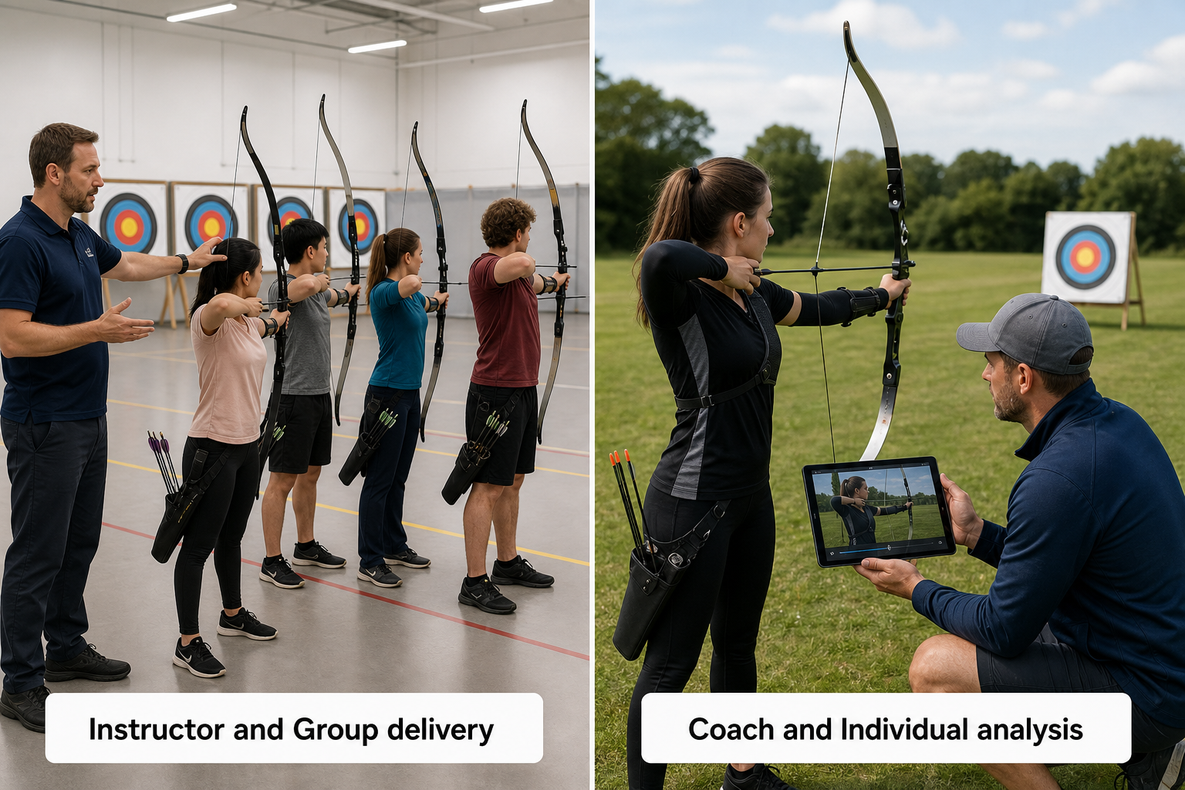
- Group delivery: Instructors typically work with multiple participants at once, making their approach more standardised and less individually tailored.
- Equipment familiarisation: Helping beginners understand the difference between bow types, arrow selection basics, and how to use the gear provided.
Instructor qualifications vary by country and governing body, but they generally represent the entry-level certification pathway in archery education. In many regions, completing an instructor course takes a weekend or a short series of sessions.
What an Archery Coach Does
A coach operates at a different level of engagement. Rather than introducing the sport, a coach works with developing or experienced archers to refine technique, improve consistency, and build toward specific performance outcomes. Coaching is less about group management and more about individual analysis.
- Individualised feedback: Coaches observe and analyse each archer's form in detail, identifying patterns in errors rather than just correcting isolated shots.
- Goal-setting and periodisation: Effective coaches help archers structure their training over weeks and months, not just within a single session.
- Mental performance: At more advanced levels, coaching often incorporates elements of focus, pressure management, and competition preparation.
- Technical progression: From tuning a recurve or compound bow to refining the back-tension in a release, coaches work in much finer detail than instructors typically do.
- Video and data analysis: Many coaches use slow-motion footage or shot data to show archers things that are invisible in real time.
Coaching certifications tend to involve more coursework, observed practice hours, and ongoing professional development. Senior or high-performance coaches may work with national squads or elite competitors.
Where the Roles Overlap — and Where They Don't
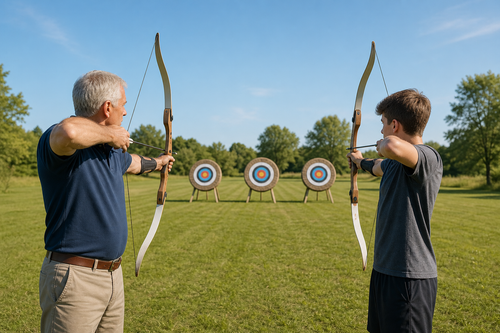
It's worth noting that some experienced professionals hold both qualifications and can move between instructing and coaching depending on who they're working with. A club-based coach might run a beginner session one morning and do one-on-one performance work with a junior competitor that afternoon. What matters is whether the style and content of the session matches the archer's current needs.
The clearest way to think about it: instruction is about introducing the sport, coaching is about improving within it. Both are essential, and neither role is more valuable than the other — they simply serve different parts of the journey.
Practical Guidance: Choosing the Right Support
Before reaching out to a local club or searching for private tuition, consider where you are in your archery development:
- Complete beginner: Start with a qualified instructor or a beginner course. You need a safe, structured introduction to the fundamentals before anything else.
- Intermediate archer with bad habits: A coach is likely the better choice here. They can diagnose what's going wrong and build a correction plan rather than just demonstrating the ideal technique.
- Club member preparing for competition: Seek out a coach with experience in your bow style — recurve, compound, or barebow — who understands the demands of competition archery specifically.
- Youth archer with a parent or guardian involved: Consider whether the adult also needs some education on what good archery training looks like, to avoid unhelpful interference or unrealistic expectations at home.
If you're also looking to invest in the right equipment alongside your training, browsing the archery shop at Legend Archery is a good way to understand what's available for different skill levels without committing to a purchase before you've had proper guidance.
Common Mistakes Archers Make Around Coaching and Instruction
- Assuming any experienced archer can coach: Shooting well and teaching well are separate skills. A high-scoring archer without coaching education may give advice that works for their own style but is counterproductive for yours.
- Skipping instruction and going straight to self-teaching: Online videos are useful supplements, not replacements for live instruction. Early technique problems are much harder to fix once they become automatic.
- Staying with instruction too long: Once you've completed beginner courses and can shoot safely and consistently, continuing in group instruction settings without individual coaching can slow your development significantly.
- Confusing certification level with quality: A Level 1 instructor who is experienced, attentive, and genuinely invested in your progress can be more valuable than a higher-certified coach who is disengaged or overbooked.
- Not asking about specialisation: Compound and recurve coaching require different knowledge sets. Always ask about a coach's background in your specific discipline.
How Governing Bodies Define These Roles
Most national archery federations — including World Archery member associations — have defined qualification pathways that separate instructor and coach levels formally. While the exact titles and levels vary by country, the underlying structure is fairly consistent: instructor qualifications focus on safe group delivery, and coach qualifications build progressively toward individual and high-performance work.
If you're choosing someone to work with, asking to see their governing body qualification is entirely reasonable. Reputable professionals will have no hesitation sharing this. For club programmes or formal competition pathways, many governing bodies also require that coaches and instructors hold current certifications and safeguarding checks.
For archers who are also equipping themselves properly for training or competition, outdoor archery supplies cover a wide range of what you'll need once your technique is taking shape under proper guidance.
Frequently Asked Questions
Is a coach always better than an instructor for improving my shooting?
Not necessarily — it depends entirely on where you are in your development. If you haven't yet learned the fundamentals properly, instruction is the right starting point. Coaching becomes more valuable once you have a solid foundation and are working toward consistency or competition goals.
Can one person be both an archery coach and instructor?
Yes, many archery professionals hold both qualifications. What matters is whether the session they're delivering is appropriate for your current level. A good practitioner will adjust their approach based on who they're working with, not just which certificate is framed on their wall.
How do I find a qualified archery coach or instructor near me?
The best starting point is your national or regional archery federation's website, which usually maintains a directory of qualified practitioners. Local clubs affiliated with the national body are also a reliable route, as their staff typically hold verified credentials.
Why do some archers plateau even when they're taking regular lessons?
Plateaus often happen when the type of support doesn't match the archer's current needs. If you've been in group instruction for a long time without individual feedback, moving to one-on-one coaching can make a significant difference. Plateaus can also come from insufficient practice volume, poor equipment setup, or mental blocks that require a different kind of coaching intervention.
Final Thoughts
The difference between an archery coach and instructor is not about one being superior — it's about function, context, and stage of development. Instructors build the foundation; coaches develop what's built on top of it. Understanding which one you need right now is one of the most practical decisions you can make as an archer, and getting it right will save you time, money, and frustration on the range.