Skip to content
 cust@legendarchery.com
 302 503 5767
 Westfield IN 46074


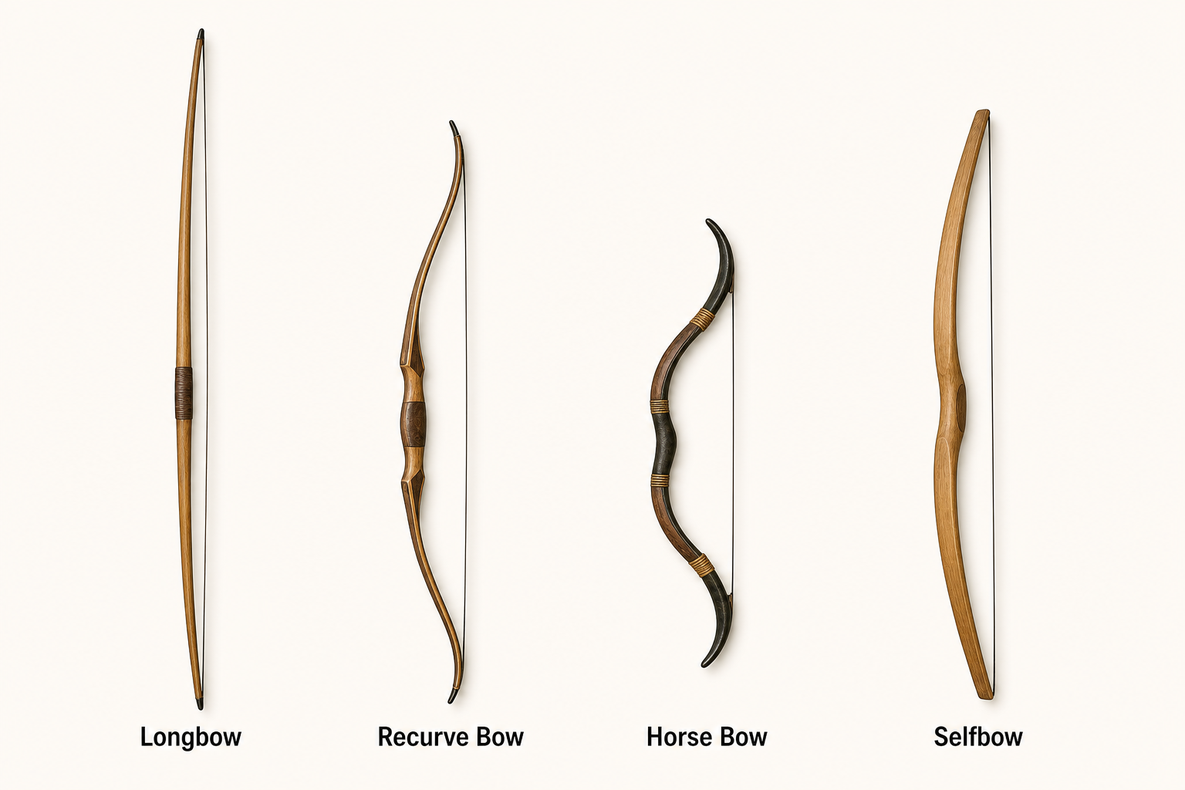
If you're stepping into traditional archery, the first real decision you face is which bow style to shoot. The types of traditional bows available today range from simple self-bows carved from a single piece of wood to sophisticated laminated recurves used in Olympic competition. Each design has a distinct shooting feel, learning curve, and practical use case. This guide breaks down the main categories clearly so you can make an informed choice.
Why Understanding Bow Types Actually Matters
Choosing the wrong bow style early on is one of the most common reasons beginners plateau or lose interest. A bow that doesn't suit your body mechanics, draw length, or intended use will fight you at every session. Beyond personal fit, each traditional bow style rewards slightly different technique. Knowing why a longbow behaves differently from a recurve — or why a horse bow feels nothing like either — gives you a foundation that makes everything else easier to learn.
The Main Types of Traditional Bows Explained
The Longbow
The longbow is the most stripped-back design in traditional archery. Its limbs are straight or very slightly curved when unstrung, and the riser (the handle section) is typically narrow and rounded — sometimes called a "D-bow" because of its profile when strung. English warbows were longbows, but modern versions are far more refined.
- Limb construction: Usually a single wood stave (selfbow) or a laminated combination of hardwood and softwood layers.
- Length: Typically 64 to 72 inches from tip to tip, which distributes the bend across a longer arc and reduces limb stress.
- Shooting feel: Slower, deeper draw cycle with a smooth, gradual resistance buildup. There is no shelf or arrow rest on most traditional longbows, so the arrow sits on the hand.
- Best for: Archers who want the most historically grounded experience, or those who prefer a forgiving, relaxed shooting style.
The longbow is unforgiving in one specific way: because the grip is narrow and the bow has no stabilisers, torque from the bow hand is immediately visible in the arrow flight. It builds excellent form discipline over time.
The Recurve Bow
The recurve gets its name from the tips of the limbs, which curve away from the archer when the bow is unstrung. When drawn, those curved tips store and release energy more efficiently than a straight limb, producing higher arrow speed at comparable draw weights.
- Limb construction: Laminated layers of fibreglass, wood, and sometimes carbon. Modern limbs are highly engineered for consistency.
- Riser design: Wider and more ergonomic than a longbow grip, often with a cut-out shelf that supports the arrow above the hand.
- Shooting feel: Slightly quicker draw cycle than a longbow, with a sharper energy transfer at release. More feedback through the riser.
- Best for: Target archery, beginners who want faster skill progression, and archers planning to compete.
The recurve is the most versatile traditional style. It adapts to a wide range of accessories — from a basic arrow rest to a full Olympic sight and stabiliser setup — while remaining legal in traditional and barebow archery competitions when shot without those additions. If you're exploring traditional recurve bows, the range of options available today makes it easy to grow into the bow as your skills develop.
The Takedown Recurve
A takedown recurve is simply a recurve bow with detachable limbs. The riser and limbs bolt together, which means you can swap limbs as your draw weight requirements change — or break the bow down for travel and storage. For most beginners, a takedown model is the most practical entry point into traditional archery.
- Practical advantage: One riser can accept multiple sets of limbs across different draw weights.
- Portability: A disassembled takedown fits into a compact bow bag, making it easy to transport.
- Cost efficiency: Upgrading limbs is far cheaper than buying a new bow as your strength and technique improve.
Legend Archery carries a range of take down bows suited to different experience levels, making it straightforward to find a setup that grows with you.
The Horse Bow (Asiatic Bow)
The horse bow is a compact, deeply recurved design originating from the steppe cultures of Central and East Asia. Its most recognisable features are the prominent recurved tips (called siyahs) and a relatively short overall length — often under 55 inches — that was designed for shooting from horseback.
- Limb construction: Traditionally horn, sinew, and wood composites. Modern versions use fibreglass laminates to replicate the performance characteristics.
- Shooting style: Horse bows are typically shot with a thumb ring rather than the Mediterranean three-finger draw used for longbows and recurves.
- Shooting feel: Highly reactive with a sharp, punchy release. The deep recurve stores a lot of energy in a short package.
- Best for: Archers interested in mounted archery, historical accuracy, or simply a unique shooting experience.
The thumb draw technique required for horse bows has a steeper learning curve than the finger draw, so most instructors recommend building your foundation on a recurve or longbow first.
The Selfbow and Flatbow
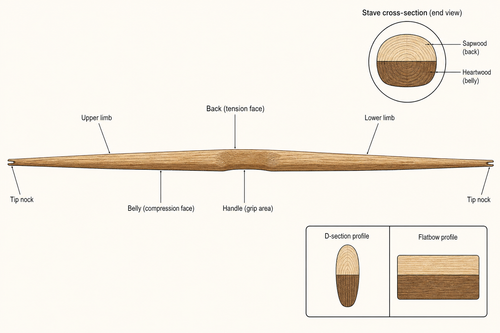
A selfbow is made from a single piece of wood — no laminates, no fibreglass. It is the oldest form of bow construction and requires skilled craftsmanship to select the right wood and shape the stave correctly. A flatbow is a close relative: it has a wider, flatter limb profile that distributes stress across more wood, often making it easier to build than a rounded stave selfbow.
- Common woods: Yew, osage orange, black locust, and ash are traditional favourites, each with different performance characteristics.
- Durability concern: Selfbows are more sensitive to humidity and temperature changes than laminated bows. They require careful storage and maintenance.
- Who shoots them: Primarily bowyers, historical re-enactors, and dedicated traditional archers seeking the most authentic connection to the craft.
How to Choose Between Styles: Practical Guidance
The right bow style depends on three core factors: your intended use, your current physical fitness, and how you learn best.
- If you want to compete: A recurve gives you the most flexibility, since it suits both barebow and Olympic-style formats.
- If you're drawn to history: A longbow or selfbow provides the most authentic connection to historical archery traditions.
- If you travel frequently or shoot at multiple venues: A takedown recurve is the most practical choice by a wide margin.
- If you want to try mounted archery or Asian styles: Start with a horse bow from a reputable maker, and invest time in learning the thumb draw properly.
- Draw weight matters more than bow type at first: Regardless of style, starting too heavy damages form and causes injury. Most adults begin between 20 and 35 lbs and increase gradually.
Whichever style you choose, your bowstring choice also has a real impact on performance and longevity. A quality string matched to your bow's specifications — such as a reliable Dacron bowstring for recurve bows — reduces limb stress and improves consistency.
Common Mistakes Beginners Make When Choosing a Traditional Bow
- Buying too much draw weight too soon. This is the single most common error. High poundage wrecks form before it has a chance to develop.
- Choosing a bow based on appearance alone. A bow needs to fit your draw length and body size, not just look impressive.
- Ignoring bow length relative to draw length. A short bow shot at a long draw creates acute string angles that pinch fingers and reduce accuracy.
- Assuming all recurves are the same. The difference between a one-piece recurve and a takedown recurve is significant in terms of flexibility and long-term value.
- Skipping professional setup or tuning. Even a well-made traditional bow needs to be properly timed and the brace height set correctly before it performs well.
- Overlooking arrow spine selection. Matching arrow stiffness to draw weight and bow type is as important as the bow choice itself.
Frequently Asked Questions
What's actually the difference between a longbow and a recurve?
The core difference is limb geometry. A longbow has straight or barely curved limbs, while a recurve has tips that curve away from the archer. That curve stores more energy over a shorter draw, making recurves generally faster and more efficient at the same draw weight. Longbows tend to feel smoother and are considered more forgiving of minor form errors in some respects, though they demand consistent technique.
Is a recurve or a longbow better for a complete beginner?
Most archery coaches recommend starting with a takedown recurve. The riser geometry is easier to grip consistently, the arrow shelf helps with arrow alignment, and the ability to swap limbs as you progress makes it a better long-term investment. Longbows are excellent — but the narrow grip and hand-shelf style require slightly more developed technique to get clean arrow flight.
Can I shoot a horse bow if I've only used a recurve before?
Yes, but expect a meaningful adjustment period. The thumb ring draw is biomechanically different from a finger draw, and the reactive release of a deeply recurved short bow amplifies any grip or timing errors. Spending a session or two with an experienced horse bow archer or a qualified coach before going solo is well worth it.
How do I know what draw weight to start with?
A simple guideline: if you can draw, hold at full draw for three seconds, and release smoothly without straining, the weight is appropriate for learning. If you're struggling to reach full draw or your bow arm shakes noticeably, the draw weight is too high. Most beginners do well between 20 and 30 lbs for the first six to twelve months.
Finding Your Style
Traditional archery rewards patience and curiosity. Most archers eventually try more than one bow style before settling on a favourite — and some never settle at all. Start with a style that suits your current goals and physical condition, learn it properly, and let your experience guide what comes next. The bow you begin with is a starting point, not a lifelong commitment.