Skip to content
 cust@legendarchery.com
 302 503 5767
 Westfield IN 46074


Picking the right draw weight for a recurve bow is one of the first — and most consequential — decisions you'll make as an archer. Too light and you'll outgrow it in weeks. Too heavy and you'll develop poor form or, worse, strain your shoulders before you've developed any real technique. This guide cuts through the noise and gives you the practical framework to choose correctly the first time.
Why Draw Weight Matters More Than Most Beginners Realise
Draw weight — measured in pounds (lbs) at a standard 28-inch draw length — determines how much force you need to pull the bowstring back to full draw. It directly affects arrow speed, shooting distance, physical demand, and long-term physical health.
For target archers, getting the weight right means you can hold steady at full draw long enough to aim with precision. For hunters or traditional archers, it affects whether your arrows carry enough kinetic energy at distance. For beginners of any kind, it determines whether you'll still be practising archery in six months or quietly nursing a rotator cuff injury.
The single biggest mistake new archers make is treating draw weight as a badge of credibility. It isn't. It's a technical variable — and matching it to your body and goals is what separates smart archers from frustrated ones.
Core Principles for Choosing Recurve Bow Draw Weight
Body Size and Physical Strength
Your physical build is the starting point, not your ambition. General guidelines used by coaches and clubs worldwide tend to follow these ranges:
- Young beginners and children (ages 8–12): 10–15 lbs is typically appropriate. The goal is to reinforce clean form without physical fatigue.
- Teenage archers (ages 13–17): 15–25 lbs depending on build and upper body development.
- Adult beginners (regardless of fitness level): 20–30 lbs is widely recommended. Even strong adults are often surprised by how demanding correct recurve technique feels at the back muscles.
- Experienced adult archers: 30–45 lbs covers most competitive target archery and recreational shooting. Olympic-level recurve archers frequently shoot in the 36–42 lb range.
- Traditional and hunting archers: Weights above 45 lbs are used, but only after building technique progressively. Most jurisdictions that permit bow hunting specify a minimum draw weight; check local regulations before purchasing.
These are ranges, not rules. A petite adult woman who trains consistently may outperform a larger adult who started at too high a weight and developed compensatory technique to cope with the load.
The Role of Draw Length
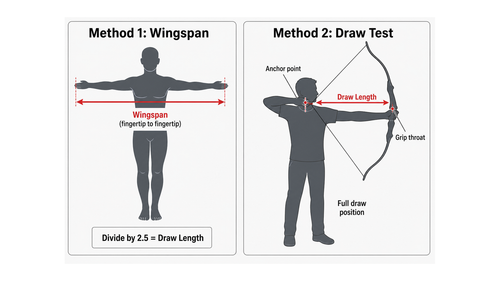
Draw weight ratings on recurve bows are calibrated at a 28-inch draw length. If your draw length is shorter — say 25 inches — the actual force you're pulling will be lower than the stated poundage. Conversely, archers with longer draws beyond 28 inches are effectively pulling more than the stated weight. This is why two archers shooting the same bow can experience it very differently. Know your draw length before finalising any purchase.
Your Shooting Purpose
What are you shooting for? The answer changes everything:
- Target archery at indoor distances (up to 18m): Lower poundage is completely viable and actually preferred by many coaches for technique development.
- Outdoor target archery (up to 70m or beyond): You'll generally need at least 30 lbs to get arrows to distance with proper trajectory.
- Field archery or 3D: Varied terrain and distances push most archers toward 30–40 lbs for practical performance.
- Traditional instinctive shooting: Many traditional archers shoot between 35–55 lbs, but only after years of progressive training. Explore the traditional recurve bow options available if this style appeals to you.
How to Test Whether a Draw Weight Fits You
Before committing to a bow, there's a simple self-check used by many coaches. Stand naturally and perform a smooth draw. You should be able to:
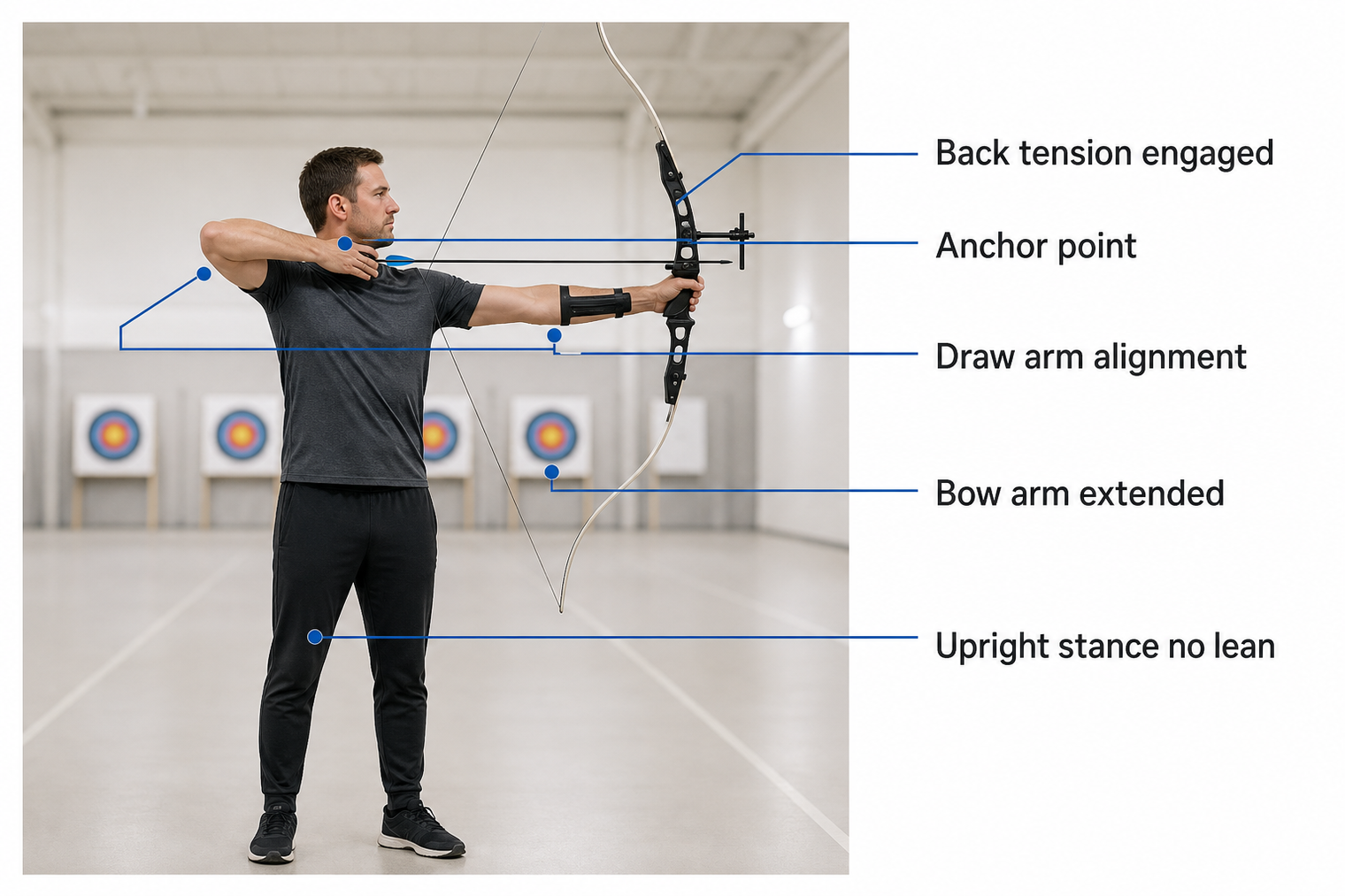
- Draw to full anchor without recruiting your neck or leaning your torso back
- Hold at full draw comfortably for at least 5–8 seconds without shaking
- Execute a clean, controlled release without punching or grabbing at the trigger point
- Repeat the process for a minimum of 30–40 arrows without your form breaking down
If you cannot do all four of these, the weight is too heavy for where you are right now. This is not a permanent limitation — it's a starting point. Most archers progress to higher poundages steadily within 12–18 months of regular practice.
If you're shopping for a new bow and want to explore models across multiple weight ranges, the recurve bow range at Legend Archery covers entry-level through intermediate options with clearly listed draw weight specifications.
Building Draw Weight Over Time
Progressive loading is a principle borrowed from strength training and it applies directly to archery. Your draw muscles — primarily the rhomboids, trapezius, and posterior deltoids — need time to adapt to the repetitive loading demands of archery.
A sensible progression looks something like this:
- Start at a weight where 60 arrows per session feels manageable with clean technique throughout
- Once that volume feels easy and your coach or video review confirms consistent form, consider moving up by 2–4 lbs
- Never jump more than 4–5 lbs at once on a recurve bow
- If you switch to a heavier limb set and your groups open up significantly, reduce volume temporarily rather than reducing weight — your nervous system often needs a few sessions to recalibrate
On a takedown recurve, upgrading limbs is cost-effective and practical. You keep the riser and simply swap to heavier limbs when ready. This is one of the strongest arguments for investing in a quality takedown design from the start.
Common Mistakes Archers Make With Draw Weight
- Starting too heavy: The most frequent error. Archers who start above their capacity tend to develop a 'creep' at full draw, a punch-and-release reflex, or a dominant bow arm as compensation. These faults are harder to unlearn than they are to avoid.
- Assuming gym strength translates directly: Bench press strength has very limited carry-over to drawing a recurve correctly. The specific muscles used in a proper back-tension draw are undertrained in almost everyone at first.
- Ignoring form breakdown during a session: If your last 20 arrows of a session look nothing like your first 20, the weight is working against your development, not for it.
- Choosing weight based on what other archers shoot: Someone else's draw weight is their business. Your starting point is based on your body, your technique level, and your goals.
- Neglecting warm-up: Cold muscles pulling a heavy draw weight is a reliable path to injury. A short warm-up routine before picking up any bow is non-negotiable.
Frequently Asked Questions
What draw weight should a complete beginner start with?
Most adult beginners do well starting between 20 and 28 lbs. This range allows you to focus entirely on technique — stance, anchor, back tension, release — without muscular fatigue overriding your learning. Children typically start lower, often between 10 and 15 lbs depending on age and size.
Can I get too comfortable at a low draw weight and stop progressing?
This is a real concern for competitive archers but less so for recreational shooters. If your goal is performance — longer distances, tighter groups, outdoor rounds — then yes, you'll eventually need to work up to a poundage appropriate for those demands. If you're shooting for enjoyment and fitness, there's no obligation to keep increasing weight. Shoot what lets you shoot well and shoot often.
What mistakes do beginners make when they choose too much draw weight?
The most visible problems are: breaking at the elbow rather than the shoulder during the draw, anchoring inconsistently because they're rushing to get the draw over, punching the trigger to release rather than maintaining back tension, and flinching in anticipation of the shot. All of these create habits that can take months of deliberate practice to correct.
How do I know when I'm ready to move up in draw weight?
A good indicator is when your current weight feels like it offers no challenge across a full session of 60 or more arrows, your groups are consistent from shot to shot, and your coach or a video review shows no technique breakdown at the end of a session. At that point, increasing by 2–4 lbs is a natural next step.
Choosing With Confidence
Draw weight is a starting point, not a ceiling. Choosing a poundage that suits where you are today — physically and technically — is the decision that builds a sustainable archery practice. Once your technique is established and your specific draw muscles are trained, working upward is straightforward. If you're ready to explore your options, take the time to review available models, confirm the draw weight specifications, and match them honestly to your current ability level.