Skip to content
 cust@legendarchery.com
 302 503 5767
 Westfield IN 46074


Most accuracy problems in recurve shooting trace back to one moment: the release. It happens in a fraction of a second, yet it determines where the arrow goes more than almost any other part of the shot. Understanding what a correct release actually involves — and what it does not — is fundamental to improving your consistency on any target.
Why the Release Is So Often Misunderstood
New shooters tend to think of the release as an active movement — something you do to let the arrow go. Experienced archers know the opposite is true. In a well-executed recurve shot, the release is a consequence of other things happening correctly, not a deliberate action in its own right. That distinction changes everything about how you train it.
Because the release happens so fast, it is also hard to self-diagnose without video or a coach. Archers often feel like they are doing one thing while their string hand is doing another. This gap between perception and reality is why technique work on the release requires patience and a structured approach.
[product-tabs]
Core Principles of a Correct Recurve Release
1. The Hook and Finger Placement
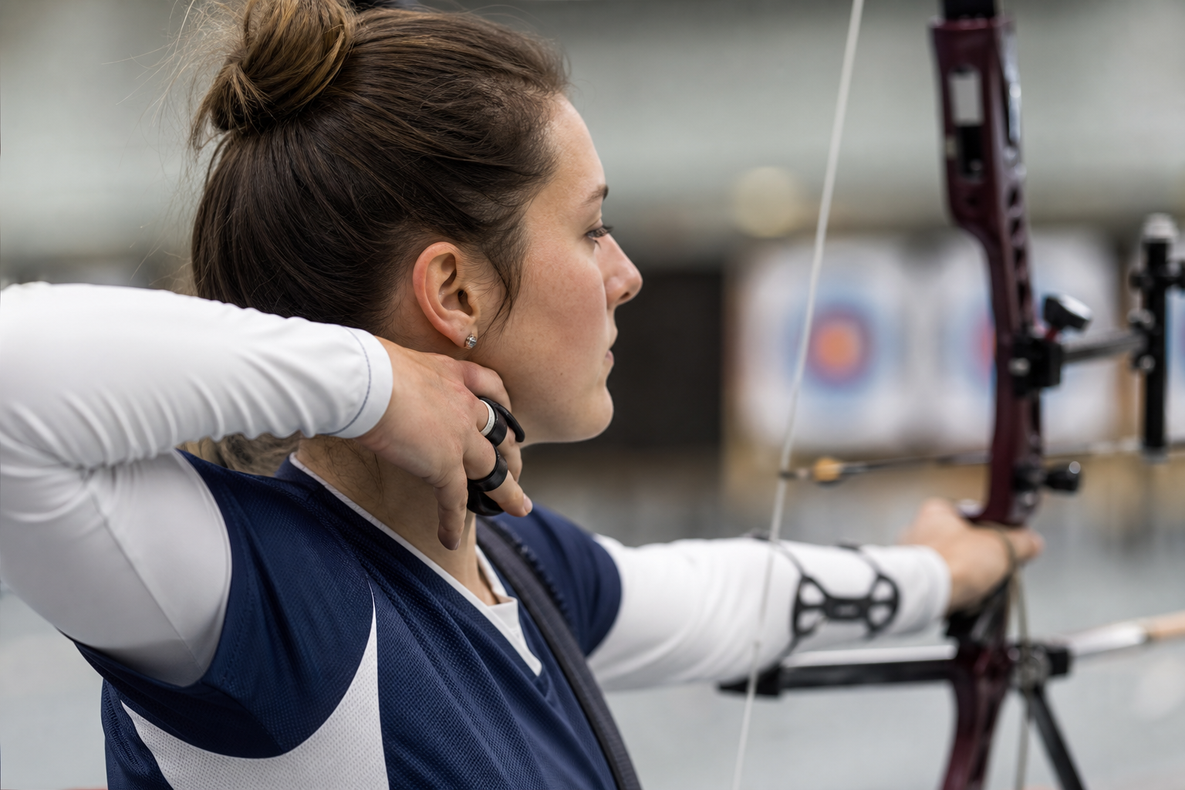
Everything starts at the hook. For most recurve archers, the string sits in the first groove of the index, middle, and ring fingers — sometimes called the deep hook. The fingers curl around the string under tension, not gripping it tightly like a handle. Excess tension in the fingers during the draw is one of the fastest routes to a poor release.
The thumb and little finger should be relaxed and tucked away from the string. Any contact from these fingers during the shot will influence the release unpredictably.
2. Back Tension and Loading the Shot
A clean release depends on what is happening in the back, not the fingers. As you reach full draw and begin your transfer into the clicker or your anchor point, the dominant movement should be a squeezing of the shoulder blades — specifically, drawing the elbow of the string arm back and down. This is what archers refer to as back tension.
When back tension is working correctly, the fingers do not need to consciously open. The shoulder blade movement pulls the elbow through, the string hand travels back along the face and neck, and the fingers simply fall open as a result. The arrow leaves cleanly because the string was never gripped — it was only held in a relaxed hook until the back did its job.
3. The Role of the String Hand After Release
Watch any elite recurve archer at full extension and notice what the string hand does after the arrow leaves. It does not fly outward, drop down, or freeze in place. The hand continues traveling back along the cheek and neck in a relaxed arc — often called the follow-through of the string hand.
This movement is not cosmetic. If the string hand stops abruptly or moves in an inconsistent direction, it means tension was present in the fingers or wrist during the shot. Consistent follow-through is evidence of a relaxed, repeatable release.
4. The Bow Hand and Reaction
A correct release also shows in the bow hand. The bow arm should stay up and in line with the target after the shot. The bow itself will tip forward if the grip is relaxed — and it should. A bow that stays rigidly in place or that the archer grabs after the shot suggests the bow hand was too tense during the release. A wrist sling or finger sling allows the bow to move naturally without being dropped.
Practical Guidance for Training the Release
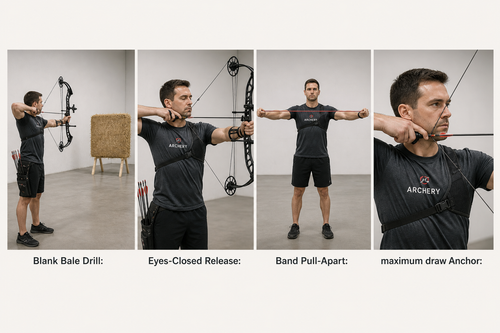
- Use a blank bale at close range. Shooting at a blank bale (a target with no scoring face) from one to two metres removes the distraction of where the arrow lands. This lets you focus entirely on how the shot feels, especially the string hand movement and follow-through.
- Try the clicker as a feedback tool. For recurve archers using a clicker, it creates a consistent trigger point for the back tension movement. If you are consistently struggling to pass through the clicker smoothly, it is often a sign that the release is being forced rather than executed through the back.
- Film yourself from behind. A short video clip from behind the string arm is one of the fastest ways to see whether your string hand is moving consistently after the shot. Look for direction, speed, and whether the wrist remains soft.
- Resistance band exercises off the bow. Drawing and holding with a resistance band while focusing on the back tension movement builds muscle memory and proprioceptive awareness without putting arrows downrange.
- Work with a coach on live feedback. There is no substitute for having someone watch your release in real time. A coach can see things that video misses, particularly in the timing of finger relaxation relative to back tension.
Common Mistakes with Recurve Release Technique
- Plucking the string. This is the most common error. The archer actively pulls the fingers away from the string sideways rather than letting them relax and fall open. It causes the string to kick sideways on release, affecting arrow flight significantly.
- Freezing at full draw. Some archers stop their draw movement before the shot fires and try to hold the aim until they consciously decide to release. This leads to a forced, unrepeatable finger action. The shot should be a continuing motion, not a pause-and-fire.
- Collapsing the draw length. Losing a centimetre or two of draw as the shot fires is called collapsing. It often happens when the archer anticipates the shot and unconsciously eases forward. This removes all the back tension built up during the draw cycle and results in a weak, inconsistent release. For related reading on draw cycle issues, see our overview of overdrawn archery technique.
- Too much grip pressure in the bow hand. A tight bow hand affects the whole shot but is particularly damaging at the moment of release. The bow torques in the hand and the arrows scatter horizontally. Keep the contact point in the heel of the palm low and relaxed — good heel technique in archery is closely linked to a cleaner release on the bow arm side.
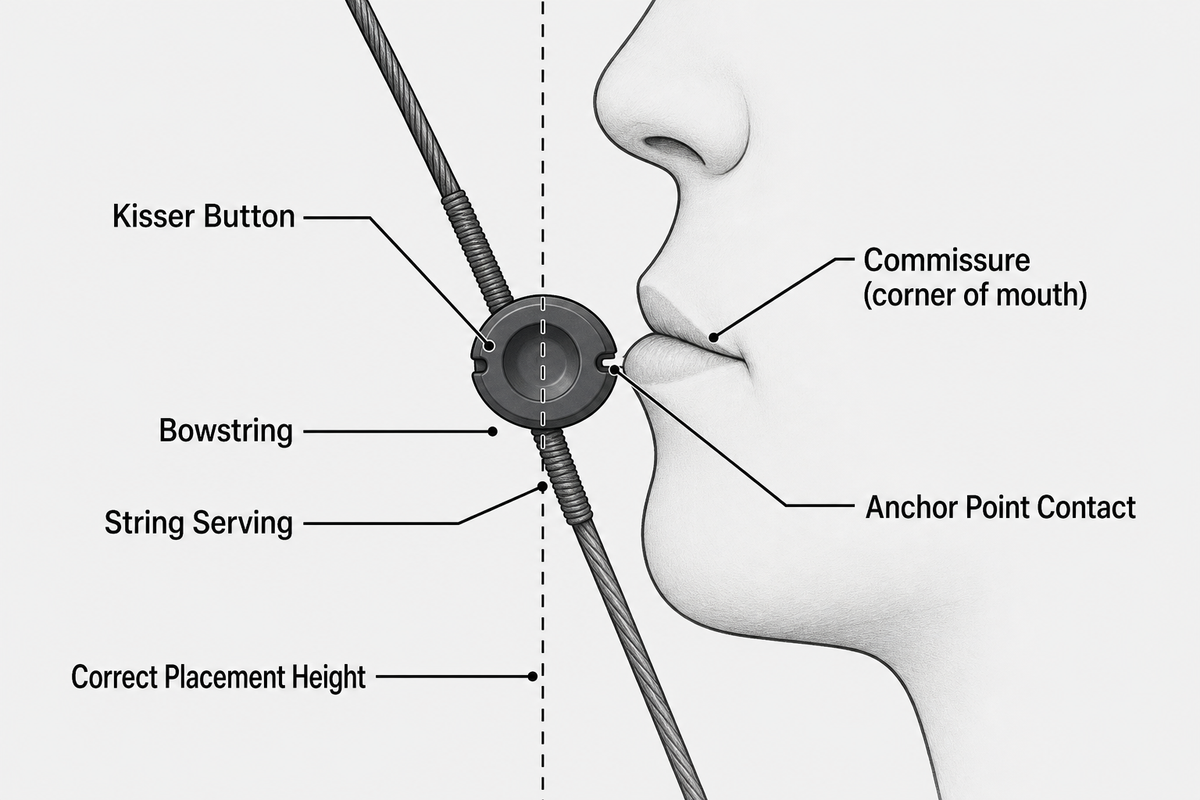
- Rushing through anchor. Skipping or shortcutting the anchor point means the back tension sequence never has time to set up properly. Every consistent release starts with a consistent, fully settled anchor.
Building Consistency Over Time
The release is not a technique you fix once and move on from. Even competitive archers return to release fundamentals when their scores plateau or their groupings become erratic. Think of it as a recurring checkpoint rather than a beginner skill.
Structure your training so that some sessions are purely technical — lower arrow count, deliberate focus on the feel of each shot — while others build volume. Mixing the two in every session can lead to reinforcing bad habits under fatigue. Short, focused blank bale work before distance shooting is a routine many coaches recommend as standard practice.
Frequently Asked Questions
Is the recurve release something you actively do, or does it just happen?
Ideally, it happens as a result of correct back tension movement rather than a conscious finger action. Thinking of the release as something to do usually introduces tension and inconsistency. Train the back tension movement and let the fingers respond to it.
Why do my arrows keep grouping to one side even though my aim looks correct?
Horizontal grouping errors — arrows landing consistently left or right of where you aimed — are a classic symptom of a plucking release or wrist tension in the string hand. Check whether your string hand is moving straight back after the shot or drifting to the side. Video from behind is very revealing for this.
What do beginners get wrong most often with their release?
The most common beginner error is actively opening the fingers to let the string go, rather than letting the back do the work. Related to this is collapsing — easing off the draw just before the shot, which ruins the tension that makes a clean release possible. Both habits are best addressed early with blank bale work and coaching.
How long does it take to develop a consistent release?
There is no universal answer, but most archers start to feel a noticeable difference within a few weeks of dedicated practice focused on back tension. Building a truly reliable release — one that holds up under competition pressure — typically takes months of consistent, structured work. Progress is rarely linear, and plateaus are normal.
Conclusion
A clean recurve archery release technique is built on relaxation, back tension, and repeatable movement — not on trying harder or gripping tighter. Fix the anchor, load the back, stay soft in the fingers, and the shot will follow. Most consistency problems in recurve shooting either start with the release or end there. Give it the focused attention it deserves and the rest of your form will improve alongside it.