Skip to content
 cust@legendarchery.com
 302 503 5767
 Westfield IN 46074


Getting bow length wrong is one of the most common and costly mistakes new archers make. The wrong length creates torque, kills accuracy, and makes consistent shooting nearly impossible. This guide is for anyone buying their first bow or upgrading — whether you're looking at a recurve, a traditional longbow, or helping a younger shooter find a proper fit.
Why Bow Length Actually Matters
Bow length influences how smoothly the string travels, how much stack you feel at full draw, and how forgiving the bow is when your form isn't perfect. A bow that's too short for your draw length will feel harsh and unstable at full draw. A bow that's too long can feel sluggish and harder to maneuver, especially in tight spaces like a hunting blind or a 3D course.
For recurve shooters specifically, length also affects brace height stability and limb angle — both of which directly influence arrow flight. Getting this measurement right before you buy saves time, money, and frustration.
What You Need Before You Start
You only need a few basic items to size yourself correctly:
- A tape measure or arrow length gauge — a standard fabric or metal tape measure works fine
- A helper — measuring your own draw length accurately is difficult alone
- Your height — useful as a rough cross-check, though not the primary measurement
- Your intended shooting style — target, field, hunting, and traditional shooting each have slightly different preferences for bow length
No special tools are required. If you're at a pro shop, they may use an arrow with draw length markings, but a tape measure and the method below produces the same result at home.
[product-tabs]
Step-by-Step: How to Choose Bow Length
Step 1 — Measure Your Wingspan
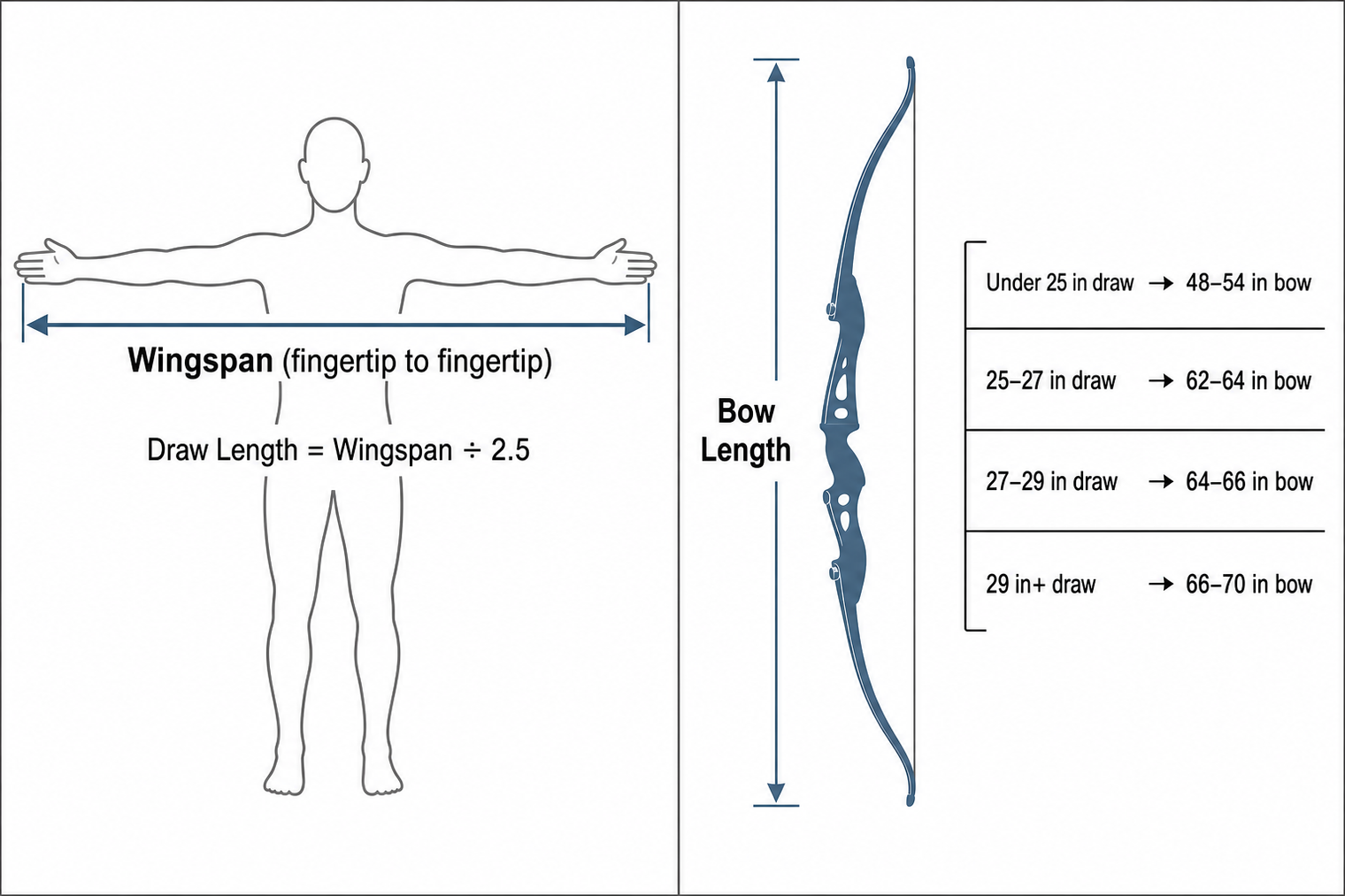
Stand upright with both arms extended straight out to your sides, parallel to the floor. Have your helper measure fingertip to fingertip across your chest. Do not flex your fingers or stretch — stand naturally. Record this number in inches.
Step 2 — Calculate Your Draw Length
Divide your wingspan measurement by 2.5. This gives you your approximate draw length in inches. For example, a wingspan of 70 inches divided by 2.5 equals a draw length of 28 inches. This formula is widely used as a reliable starting point.
If you have access to a bow with a draw check arrow, you can also anchor the nock at your mouth corner, draw to your natural anchor point, and read the measurement directly from the arrow shaft. This method is slightly more precise for shooters with proportions that differ from average.
Step 3 — Match Draw Length to Bow Length
Once you have your draw length, use the following general sizing ranges as a guide:
- Draw length under 25 inches — bow length of 48 to 54 inches is typically appropriate (common for youth shooters)
- Draw length 25 to 27 inches — bow length in the 62 to 64 inch range
- Draw length 27 to 29 inches — bow length of 64 to 66 inches is the standard adult range
- Draw length 29 inches and above — bow lengths of 66 to 70 inches provide the best angle and stability
These ranges apply primarily to recurve and traditional bows. Compound bows use a different system where draw length is mechanically set using modules or cams, making overall bow length less critical to the sizing process.
If you're shopping for a recurve bow, you'll find that most manufacturers publish recommended draw length ranges for each bow length, so always check the model specifications before purchasing.
Step 4 — Factor in Your Shooting Purpose
Draw length gives you a baseline, but your intended use should refine the decision:
- Target archery — longer bows in the 66 to 70 inch range are preferred for their stability and smoother draw cycle
- Field or 3D archery — mid-length bows (64 to 66 inches) offer a balance of maneuverability and stability
- Hunting — shorter bows are often chosen for easier handling in confined spaces, as long as they still suit the archer's draw length
- Traditional styles — longbow and traditional recurve bow shooters often prefer longer bow lengths to reduce finger pinch and improve feel at anchor
Step 5 — Size Younger Shooters Differently
Children and teenagers grow quickly, so sizing should account for current draw length rather than anticipated growth. A bow that's too long for a young archer is difficult to control and develops poor habits. For most youth shooters, a shorter bow matched to their current draw measurement is the right call. You can explore dedicated options at the youth bow range, which covers smaller draw lengths and appropriate poundage levels for developing archers.
Common Mistakes to Avoid
- Using height as the only measurement — height provides a rough estimate but ignores arm span variation. Always use wingspan and draw length as primary inputs.
- Buying a bow that matches a future draw length — your draw length may increase slightly as strength develops, but starting on a bow that's already too long for you builds bad habits from day one.
- Ignoring finger pinch — if your draw length is at the upper limit for a given bow length, shooting with three fingers on the string will cause discomfort and string angle problems. Go up a size when you're near the boundary.
- Applying compound sizing logic to recurves — these are different systems. A compound bow's axle-to-axle length does not function the same way as a recurve bow's overall length.
- Skipping the purpose check — two archers with the same draw length may legitimately choose different bow lengths depending on how and where they shoot.
How to Confirm You've Sized Correctly
After you receive your bow, there are a few practical checks that confirm you made the right call:
- String angle at full draw — with three fingers on the string, your drawing fingers should not feel pinched or cramped. The angle between the string and your drawing hand should feel open and comfortable.
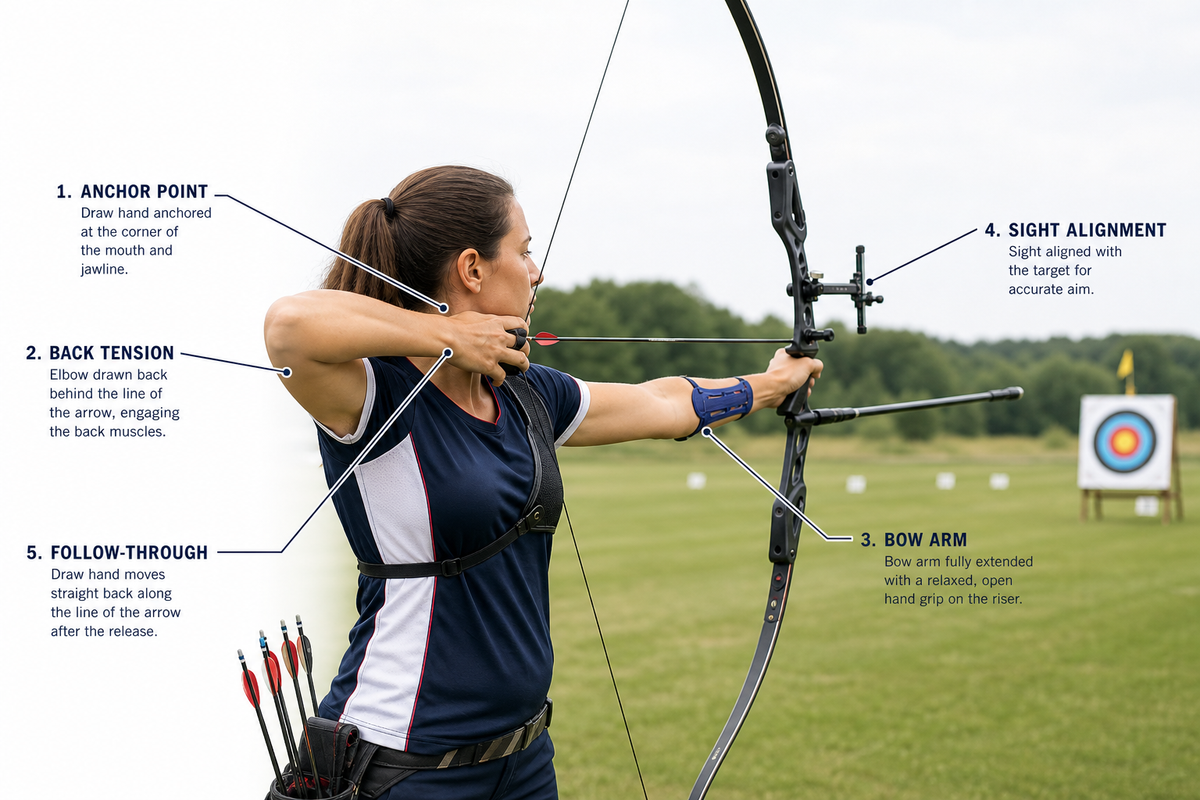
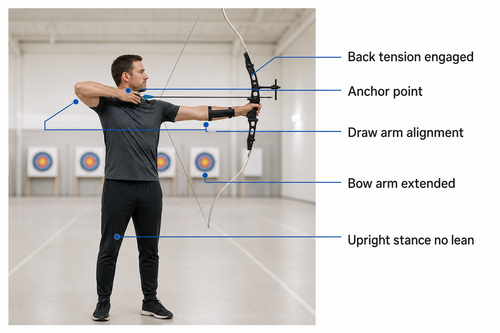
- Anchor consistency — you should be able to reach your anchor point naturally without feeling like you're over-drawing or that the bow is stopping you short.
- Limb tip clearance — when drawing on the range, the limb tips should not interfere with your sight picture or feel unstable.
- Accuracy at distance — good arrow groups at 18 to 20 meters suggest the bow is behaving consistently, which is a strong indirect indicator that fit and length are appropriate.
If any of these checks raise a concern, revisit your draw length measurement before changing equipment. Form issues can mimic sizing issues, so have an experienced archer or coach observe your shot before concluding the bow length is wrong.
Frequently Asked Questions
How do I actually measure draw length if I'm doing it alone?
The wingspan method described above is the most practical solo-friendly approach — measure fingertip to fingertip and divide by 2.5. For a more precise result, ask someone at a local pro shop or archery club to assist with a draw check arrow. A few minutes of in-person help produces a more reliable measurement than estimates alone.
What mistakes do people make when sizing a bow length?
The biggest ones are using height instead of wingspan, buying ahead for growth, and ignoring the intended shooting discipline. Each of these leads to a bow that feels wrong to shoot even when the draw weight is appropriate.
Do I need any special tools to figure out bow length?
No. A tape measure, a helper, and a basic knowledge of your shooting goals are all that's required. Specialized tools like draw check arrows are useful but not essential for getting a reliable starting measurement.
How do I know if my bow length is actually right once I start shooting?
Comfortable finger clearance at full draw, a natural and repeatable anchor point, and consistent arrow groups are the clearest signs. If something feels off, revisit your draw length measurement and check your form before changing equipment.
Final Thoughts
Bow length is a foundational decision that shapes every session you shoot. Take the time to measure accurately, match the result to your discipline, and resist the temptation to size up for the future. A well-fitted bow is one of the simplest ways to make learning archery faster and more enjoyable from the first arrow.