Skip to content
 cust@legendarchery.com
 302 503 5767
 Westfield IN 46074


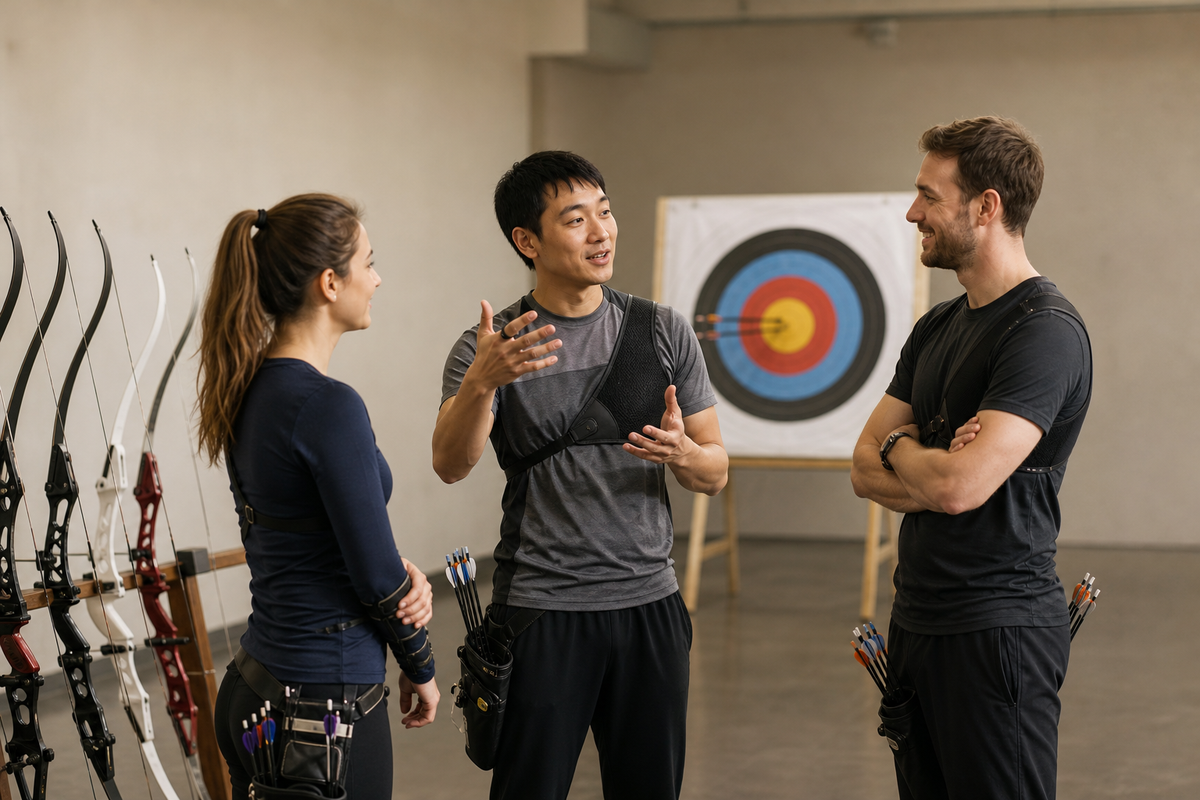
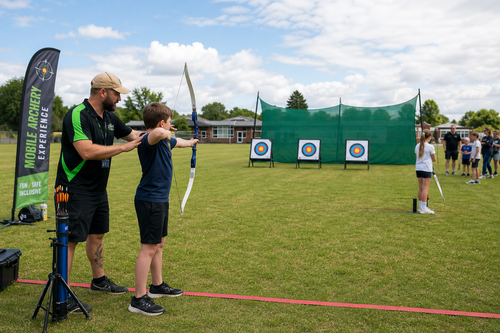
Walk onto any archery range and within five minutes you'll hear phrases that make no obvious sense: someone got a robin hood, another shooter is fighting target panic, and the coach just told a student to stop punching the trigger. Archery has a surprisingly rich unofficial vocabulary that never makes it into manufacturer manuals. This guide breaks down the most useful slang, explains where it comes from, and helps you use it correctly.
Why Archer Slang Actually Matters
It might seem like casual vocabulary is optional knowledge, but on a range or at a club, not understanding the language creates real friction. Coaches give feedback using shorthand. Hunting partners coordinate using field terms. Tournament archers call scores and situations using a shared code. If you don't know the words, you miss the meaning behind the instruction or the correction.
There's also a safety dimension. Terms like dry fire, nocking point, and brace height carry specific technical weight. Misunderstanding them isn't just an embarrassment — it can lead to equipment damage or injury. The informal language of archery often carries serious information inside a casual delivery.
Finally, knowing how experienced archers talk signals to your peers and coaches that you've done the work. Language is part of joining any skilled community, and archery is no different. If you're still building your foundational understanding of what the sport involves, this overview of who an archer actually is is a solid starting point before diving deep into the vocabulary.
Core Archer Slang You Need to Know
The terms below are organized by category. Some are widely used across all disciplines; others belong to specific niches like bowhunting or traditional archery.
Shot Execution and Form
- Punching the trigger (or punching): Anticipating the shot and jerking the release aid before the pin has settled. One of the most common form breakdowns in compound archery.
- Creeping: Allowing the draw hand to move forward slightly toward the bow just before or during the shot. It bleeds energy out of the draw and kills consistency.
- Plucking: Pulling the string hand away from the face laterally at release instead of allowing a clean back-tension-driven follow-through. Causes inconsistent arrow flight.
- Chicken winging: Letting the bow elbow collapse inward during the draw cycle, usually resulting in string slap on the forearm.
- Death grip: Gripping the bow handle too tightly, transferring torque into the riser and sending shots off-plane.
- Target panic: A psychological and muscular condition where an archer loses control of shot timing when the sight picture approaches the target. Can manifest as punching, freezing, or involuntary release. For a deeper look at the freeze component, see this breakdown of archer freeze.
Equipment Slang
- Spine: The stiffness rating of an arrow shaft. Archers talk about arrows being weak or stiff in spine relative to their setup, not in the material sense.
- Tune: The overall adjustment state of a bow and arrow combination. A bow is either in tune or out of tune. Getting a bow tuned often refers to paper tuning, French tuning, or walk-back tuning.
- Bare shaft: An unfletchted arrow used during tuning to diagnose form and rest position issues. Shooting bare shafts is a diagnostic tool, not a finished setup.
- Peep: Short for peep sight, the small ring threaded into the bowstring on a compound bow that aligns with the sight at full draw.
- D-loop (or dee loop): A small loop of cord tied onto the bowstring at the nocking point, used to attach a mechanical release aid.
- Let-off: The percentage of peak draw weight held at full draw on a compound bow. High let-off means you're holding a small fraction of the total draw weight at anchor.
- Brace height: The distance from the deepest part of the grip to the string at rest. Shorter brace heights generally produce faster arrows but are less forgiving of form errors.
Range and Scoring Slang
- Robin hood: Splitting one arrow with another arrow already in the target. Named after the legendary feat. It destroys both arrows and is simultaneously impressive and expensive.
- Gold: The center scoring zone on a target face. Saying someone hit gold means they scored maximum points, regardless of the actual color used on that face.
- Clean end: Shooting all arrows in an end (a scoring round of shots) without a miss or scoring drop.
- Blow-through: An arrow that passes through a 3D target or field target completely rather than sticking. Usually means under-spine or too much kinetic energy for the foam density.
- Walk-back: A tuning method where the archer shoots at increasing distances from a single aiming point to check horizontal drift. Also used as a verb — to walk-back a bow.
Bowhunting-Specific Lingo
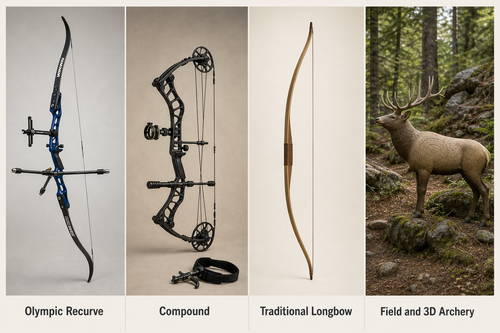
- Fixed blade vs. mechanical: Broad head categories. Hunters regularly debate these in shorthand. A mechanical (or expandable) opens on impact; a fixed blade is always open.
- Pass-through: When an arrow exits the far side of an animal. Generally considered a positive sign for blood trail and recovery.
- FOC (front of center): The percentage of total arrow weight located in the front half. High FOC promotes better penetration and more stable flight for hunting setups.
- Quartering away / quartering to: Shot angle descriptions. Quartering away is a preferred angle because it exposes vital organs while angling the arrow toward the opposite shoulder for a pass-through.
- Rut: The breeding season for deer. Used constantly in bowhunting conversation as a time reference and behavioral predictor.
Traditional Archery Terms
- Instinctive: A shooting style where the archer uses no mechanical sight and develops aim through subconscious calibration from repetition. Often misunderstood as meaning no technique — it requires significant practice.
- Gap shooting: A sightless aiming method where the archer uses the arrow tip as a reference point and consciously adjusts the gap between the tip and target based on distance.
- Thumb ring: A traditional release aid used in Eastern archery traditions, especially in cultures where the thumb draw was standard. Distinct from the Mediterranean draw used in Western traditions.
- Archer's paradox: The physical phenomenon where an arrow flexes around the riser during release and still achieves accurate flight. Understanding this helps traditional archers tune their setups without a launcher rest. If this is new to you, this explanation of the archer's paradox covers the physics in detail.
Common Mistakes Beginners Make with Archery Vocabulary
- Using bow and arrow interchangeably with their plural forms incorrectly. Beginners often say arrows when describing the bow or vice versa in conversation. It seems trivial, but it causes real confusion when a coach is diagnosing equipment problems.
- Calling everything a crossbow. Crossbows are a distinct category. Referring to a compound bow as a crossbow in front of experienced archers will raise eyebrows.
- Misusing draw weight vs. holding weight. Draw weight is the peak poundage during the draw cycle. Holding weight is what you hold at full draw after let-off. These are not the same number on most compound bows.
- Treating spine as a fixed property. Arrow spine behaves differently depending on draw length, point weight, and bow poundage. A shaft that is correctly spined for one setup may be completely wrong for another.
- Confusing anchor with draw length. Your anchor is where your draw hand consistently contacts your face at full draw. Your draw length is a physical measurement. They are related but not the same thing.
- Assuming instinctive shooting requires no training. This is one of the most persistent misconceptions in traditional archery. Instinctive aiming requires extensive deliberate practice to develop reliable subconscious calibration.
How to Build Your Archery Vocabulary Naturally
The fastest way to absorb the informal language of archery is exposure in context. Watching experienced archers shoot and listening to coaching conversations teaches vocabulary faster than any glossary. When you hear a term you don't recognize, ask immediately — most experienced archers are happy to explain.
Online communities and archery forums also carry a high density of slang in use. Reading threads where archers troubleshoot equipment or discuss shot breakdowns gives you vocabulary in context rather than in isolation. Similarly, watching tournament footage with commentary exposes you to how officials and experienced competitors refer to equipment, shot calls, and scoring situations.
If you're working with a coach, ask them to narrate their observations using the correct technical terms, even if the concept behind the word is simple. Building the vocabulary in parallel with building the skill accelerates both.
Frequently Asked Questions
What does archer slang actually mean in practice?
It refers to the informal, non-standardized language that archers use on ranges, in clubs, and in online communities to describe techniques, equipment states, and phenomena that don't always have formal names. Much of it developed organically from observation and tradition rather than official documentation.
Does it really matter if I don't know all the terms?
You can learn to shoot accurately without knowing the vocabulary, but your ability to receive coaching feedback and communicate problems with instructors or peers will be slower. Coaches often use shorthand that assumes shared vocabulary, and missing that shorthand means missing part of the correction.
What's the most common mistake beginners make when using archery terminology?
Conflating related but distinct terms, especially around draw length, anchor point, and spine. These concepts are genuinely different, and mixing them up makes it harder for coaches to identify what's actually going wrong with your form or equipment.
How long does it take to feel comfortable with archery vocabulary?
Most archers feel reasonably fluent after a consistent season of shooting with others and receiving regular coaching. Passive exposure through forums, coaching sessions, and club shooting accelerates this significantly compared to learning in isolation.
Final Thoughts
Archery's unofficial vocabulary is a living part of the sport's culture. The terms covered here represent the most commonly encountered language across compound, traditional, and bowhunting contexts. As your experience grows, you'll encounter regional variations and discipline-specific terms that don't appear in any formal guide — and that's part of what makes the language worth learning firsthand.