Skip to content
 cust@legendarchery.com
 302 503 5767
 Westfield IN 46074



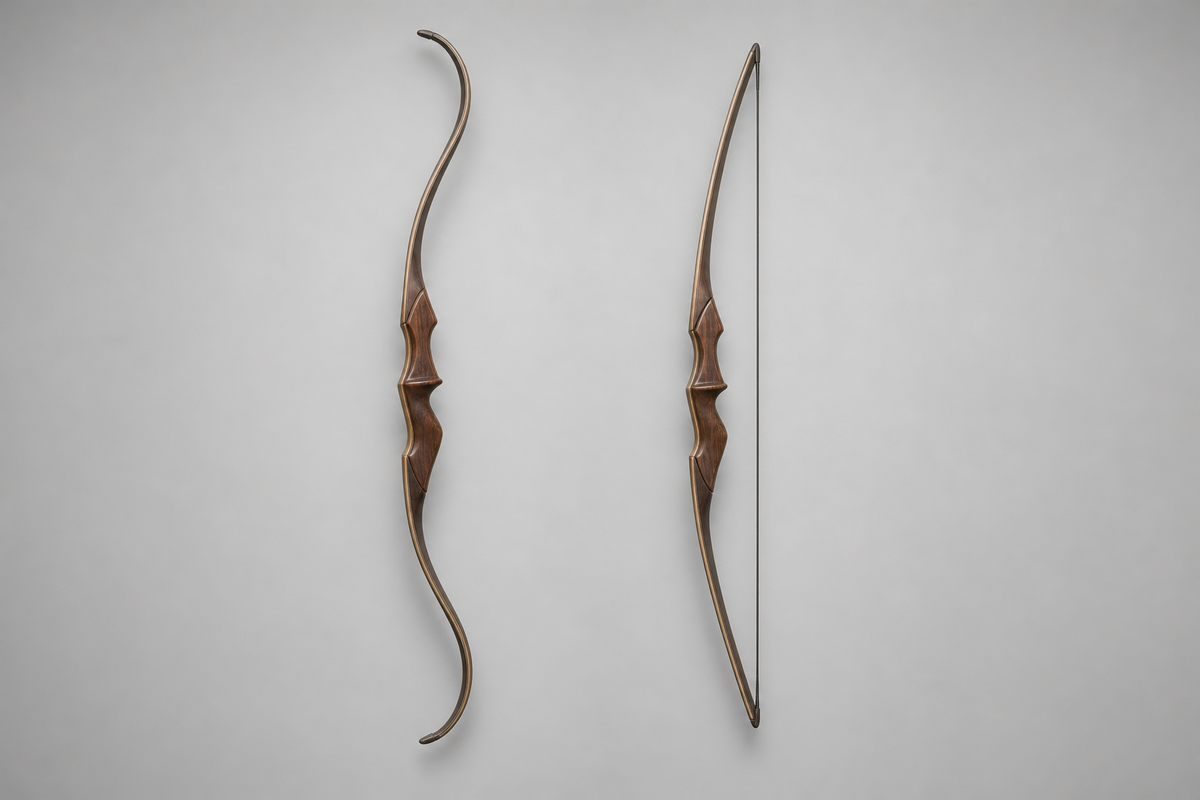
The answer is simpler than most beginners expect: a recurve bow is named for exactly what its limbs do. The tips curve away from the archer when the bow is unstrung — they recurve, bending back in the opposite direction from a conventional bow. That single design choice has shaped archery for thousands of years and still drives most equipment decisions today.
The Shape Behind the Name
On a standard longbow, the limbs form a gentle arc that always curves toward the archer. Unstring it and that curve relaxes, but it never reverses direction. A recurve bow is fundamentally different. When unstrung, the limb tips bend forward — away from the shooting side — creating a characteristic S-shaped or C-shaped profile depending on the style.
When the string is attached and the bow is at rest, those reversed tips are pulled back into a neutral position. At full draw, the geometry of the recurved tips creates a mechanical advantage that a straight limb simply cannot match at the same draw length. The result is that the limbs store more energy across a shorter physical length, releasing it more efficiently when the arrow is loosed.
This is the core engineering reason the design exists and the reason the name stuck: the limbs literally recurve.
A Brief History of the Recurved Limb
Recurved limb geometry is ancient. Nomadic cultures across Central Asia, the Middle East, and East Asia developed composite recurve bows thousands of years ago, primarily because the design allowed a powerful bow to be built short enough to use on horseback. A longbow of equivalent power would have been impractical for a mounted archer.
Those early bows were made from layered horn, sinew, and wood — each material contributing tension, compression, or flexibility to the limb. Modern recurve bows use fiberglass, carbon fiber, and engineered wood laminates to achieve similar structural goals with greater consistency and durability.
The Olympic recurve bow used in competitive target archery today is a direct descendant of that ancient engineering. The shape is the same; the materials and precision are not. If you want a deeper look at how that history connects to modern equipment choices, the traditional recurve bow overview is worth reading before you shop.
How the Recurved Tip Actually Affects Performance
Understanding the mechanics helps archers evaluate equipment rather than just taking marketing claims at face value. Here is what the recurved limb tip does during the shot cycle:
- Higher energy storage at brace: Even before draw begins, the recurved tips introduce string tension that a straight limb does not have. The bow is already partially loaded.
- Longer effective power stroke: As the archer draws, the string angle at the tip changes more dramatically than it would on a longbow, which means the limbs are working harder across the same draw length.
- Faster acceleration off the string: Because the limbs store more energy and release it quickly, arrow speed tends to be higher compared with a straight-limbed bow of similar draw weight and length.
- Slightly more critical tuning: The additional energy also means that timing, arrow spine, and brace height all matter more. A well-tuned recurve is very efficient; a poorly tuned one can be loud and inconsistent.
Recurve vs. Longbow: Practical Differences for Buyers
Archers shopping for their first traditional bow often compare these two styles. The naming difference reflects a real performance and handling difference:
- Physical length: Recurve bows are typically shorter for the same draw weight, making them more maneuverable in tight spaces or when traveling.
- Arrow speed: For equivalent draw weight and draw length, recurves generally produce higher arrow velocity than a longbow of the same length.
- Forgiveness: Many experienced archers describe longbows as more forgiving of minor form flaws because the limbs store less energy and release more gradually. A recurve amplifies both good and poor technique.
- Noise and hand shock: A properly tuned recurve is smooth and quiet. An untuned one can produce significant vibration. Longbows tend to be naturally quieter without extra tuning work.
- Takedown options: Most modern recurve bows are takedown designs, meaning the riser and limbs separate for transport and storage. Most traditional longbows are one piece, which affects how you carry and store them.
Common Mistakes Beginners Make When Choosing a Recurve
Knowing the name and the shape is useful, but buying decisions often go wrong for predictable reasons. Watch out for these:
- Choosing draw weight based on ego rather than ability. A 40 lb recurve is not entry level. Most coaches recommend 20–28 lb for adult beginners learning form. Higher draw weights ingrain bad habits quickly.
- Ignoring draw length when selecting bow length. A bow that is too short for your draw length will feel stacked and harsh at full draw. Bow length recommendations exist for a reason — follow them.
- Buying a one-piece bow before knowing your preferred setup. A takedown recurve lets you swap limbs as your strength and skill develop. A one-piece bow locks you into one draw weight.
- Overlooking transport and storage from day one. A takedown recurve can be packed into a proper bag or backpack, protecting the limbs and riser from impacts. Leaving limbs loose in a car or closet warps them over time.
- Confusing Olympic recurve and barebow recurve. Both use recurved limbs, but the equipment rules and sight systems differ significantly. Know which discipline you are pursuing before spending money on accessories.
Protecting Your Equipment Once You Choose
Once you understand what the recurved limb design demands mechanically, proper storage and transport start to make more sense. Limbs are under significant pre-stress even at brace, and impact or pressure in the wrong place can cause delamination or set — a permanent change in limb geometry that kills performance.
A dedicated recurve bag keeps limbs padded and separated, the riser protected, and accessories organized in one place. For archers who commute to a club or travel to competitions, the Artemis Recurve Bow Backpack from Legend is worth considering: it uses thick expanded foam padding on all surfaces to absorb drops and impacts, fits risers up to 27 inches, and includes a telescopic arrow case that extends to 32 inches — all in a pack that weighs less than 4 lbs. For those who prefer a hard case or different carry format, Legend's recurve bow case collection covers a range of protection options.
Frequently Asked Questions
Why do the limb tips curve forward on an unstrung recurve?
That forward curve is what defines the design. When the string is fitted, the tips are pulled back toward neutral. At full draw, they create a mechanical advantage that stores more energy than a straight limb of the same length. The pre-tension in the system is part of what makes recurves efficient.
Is a recurve bow harder to shoot than a longbow?
It depends on what you mean by harder. A recurve is generally less forgiving of form errors because it stores and releases energy more aggressively. Longbows are often described as more instinctive and smoother, but they also produce less speed for equivalent draw weight. Neither is objectively harder — they reward different things.
Does draw weight feel different on a recurve compared with a compound bow?
Yes, significantly. A compound bow uses a cam system that reduces peak draw weight at full draw — this is called let-off. A recurve has no let-off. The peak weight is at full draw, which is why holding technique and back tension matter so much in recurve shooting.
Can a takedown recurve be packed into a backpack for travel?
Yes, and this is one of the major practical advantages of the takedown design. With the limbs detached and the riser separate, a recurve can fit into a purpose-built backpack or bag. Purpose-made recurve backpacks include limb sleeves or padded dividers that protect the limbs from contact damage during transport.
Wrapping Up
The name says everything: the limbs recurve, and that geometry is the source of the bow's efficiency, its history, and its continued dominance in Olympic and traditional archery alike. Knowing what the shape does mechanically puts you in a much better position to choose the right bow, the right draw weight, and the right setup for your goals — rather than buying on looks alone.